Canada fights COVID-19 ‘health crisis’ with travel curbs, billions in spending
Advertisement
Read this article for free:
or
Already have an account? Log in here »
To continue reading, please subscribe:

Digital Subscription
One year of digital access for only $205*
- Enjoy unlimited reading on winnipegfreepress.com
- Read the E-Edition, our digital replica newspaper
- Access News Break, our award-winning app
- Play interactive puzzles
*First annual payment billed as $205.00 + GST for one year. This annual subscription will automatically renew at $233.00 + GST every 52 weeks (10% off the regular annual price of $259.35). Offer available to new and qualified returning subscribers only. Cancel any time.
To continue reading, please subscribe:
Add Free Press access to your Brandon Sun subscription for only an additional
$1 for the first 4 weeks*
- Enjoy unlimited reading on winnipegfreepress.com
- Read the E-Edition, our digital replica newspaper
- Access News Break, our award-winning app
- Play interactive puzzles
*Your next Brandon Sun subscription payment will increase by $1.00 and you will be charged $17.95 plus GST for four weeks. After four weeks, your payment will increase to $24.95 plus GST every four weeks.
Read unlimited articles for free today:
or
Already have an account? Log in here »
Hey there, time traveller!
This article was published 13/03/2020 (2371 days ago), so information in it may no longer be current.
TORONTO – The suspension of Parliament, billions of dollars in extra federal spending, and recommendations against leaving the country were among extraordinary steps public and private sector organizations were taking Friday to try to curb a pandemic that has sparked concerns Canada is headed for a recession.
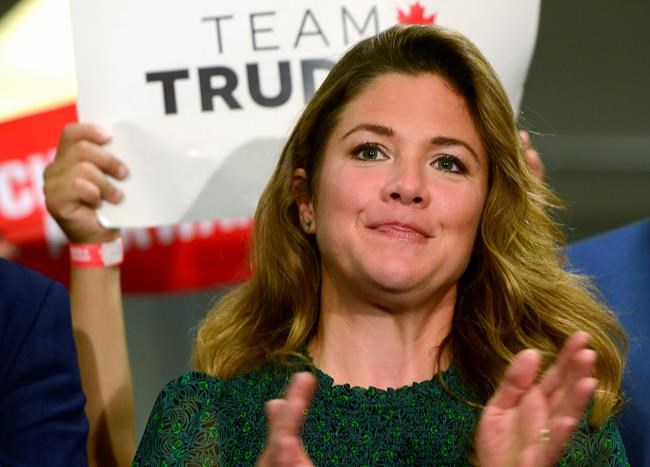
The all-party decision to stop sitting in the House of Commons until April 20 came as Prime Minister Justin Trudeau remained in precautionary self-isolation along with his wife Sophie Gregoire Trudeau, who is in quarantine with a mild case of COVID-19.
“It is an inconvenience and somewhat frustrating,” Trudeau said from outside his home in Ottawa. “We are all social beings after all. but we have to do this because we have to protect our neighbours and our friends —especially our more vulnerable seniors and people with pre-existing conditions.”
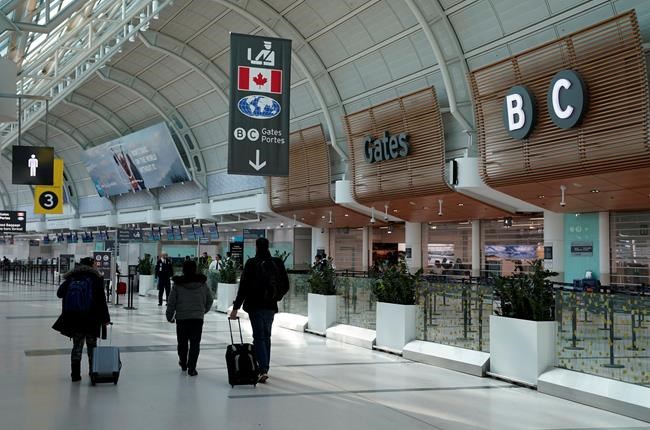
The government, Trudeau said, was planning to restrict arriving international flights to unspecified airports to enable more stringent screening. Cruise ships with more than 500 people on board were also barred from docking in Canada until at least July 1, a blow for docks and tourism-dependent jobs.
Travel restrictions and fears have already begun to take hold. The union representing hundreds of WestJet flight attendants said it was expecting the layoff of more than half its members given soaring flight cancellations, according to an internal memo obtained by The Canadian Press.
Trudeau acknowledged the outbreak’s financial impact but said the government had “significant fiscal firepower” to cushion the blow.
“No one should have to worry about paying rent, buying groceries or additional child care because of COVID-19,” Trudeau said. “We will help Canadians financially.”
While financial markets bounced back somewhat from Thursday’s jaw-dropping plunge, the Royal Bank and CIBC warned of economic storm clouds on the horizon. Canada, the banks predicted, could fall into a recession in light of COVID-19 and the steep decline in oil prices sparked by Saudi Arabia’s increased production.
Finance Minister Bill Morneau addressed the concerns by announcing a stimulus program worth $10 billion to help business weather what he called the “health crisis.” The Bank of Canada said it was cutting its key rate by 50 basis points to 0.75 per cent.
“We have your back,” Morneau said. “We are going to do whatever it takes.”
Premier John Horgan said the B.C. and federal governments are looking to help companies and their employees who may have to stay home from work to ride out the pandemic.
In B.C., that means the province’s balanced budget may take a hit, Horgan said.
“I did not seek election and I did not want to form a government just to balance a budget,” he told a news conference in Victoria.
Canada has recorded almost 200 COVID-19 cases and one death in a pandemic that has swept much of the world. Experts say the disease poses little risk to most people, and one of the most effective measures is to wash your hands and maintain at least a metre distance from others.
Countries such as China, where the virus originated, and Italy have already taken drastic measures to curb its spread. U.S. President Donald Trump, who has faced fierce criticism of his handling of the epidemic, declared a national state of emergency on Friday, a rare move that unlocks up to US$50 billion in federal money for battling coronavirus.
“This will pass, and we’re going to be even stronger for it,” Trump said.
Canada’s chief public health officer, Dr. Theresa Tam, advised against any travel abroad as case numbers continued to rise. The medical officer of health in Ontario, which reported 19 new cases Friday, warned against gatherings of more than 250 people.
Quebec, with 17 total confirmed cases, said it was closing schools, colleges, universities and most child-care centres for two weeks.
New Brunswick also announced it is closing public schools, starting Monday, for two weeks.
Toronto’s landmark CN Tower, a major tourist attraction, was closing to visitors as theatre companies tried to reassure reluctant patrons. Cineplex, for example, said it was rolling out “enhanced cleaning protocols,” while Toronto’s TIFF Bell Lightbox theatre said it would limit tickets for the next four weeks. It asked movie-goers to maintain a three-seat distance.
The House of Commons also said it was cancelling all public tours until April 20 and national museums said they were shutting their doors Saturday until further notice.
Thursday had marked a dramatic ramping up of measures to curtail the spread of the virus. Numerous major entertainment and sports events — the Juno Awards and professional hockey among them — were cancelled. Ontario said it would close its schools for two weeks after March break.
Similar announcements continued on Friday, with Manitoba saying it would shutter schools, while various colleges and universities cancelled in-person classes.

“Take care of yourselves and each other,” Rhonda Lenton, president of Toronto’s York University, said.
Nova Scotia, which had yet to see a COVID-19 case, said public sector workers and public school children would have to self-isolate for two weeks on returning to Canada from abroad, though it was unclear how that could be enforced. The province also advised against social gatherings larger than 150 people.
Many mosques cancelled Friday prayers, though some opted to limit the size of gatherings to under 250 people.
Meanwhile, Cardinal Thomas Collins announced that all of the churches in the Archdiocese of Toronto would be closed for public mass on Sunday.
This report by The Canadian Press was first published March 13, 2020
Related Articles
Don't travel outside country, says Canada's top public health doctor
Advertisement Advertise With Us
Advertisement Advertise With Us