Abnormal becoming new normal amid tight COVID-19 restrictions, more cases
Advertisement
Read this article for free:
or
Already have an account? Log in here »
To continue reading, please subscribe:
Digital Subscription
One year of digital access for only $1.44 a week*
- Enjoy unlimited reading on winnipegfreepress.com
- Read the E-Edition, our digital replica newspaper
- Access News Break, our award-winning app
- Play interactive puzzles
*Billed as $5.77 plus GST every four weeks. After 52 weeks, price increases to the regular rate of $19.95 plus GST every four weeks. Offer available to new and qualified returning subscribers only. Cancel any time.
To continue reading, please subscribe:
Add Free Press access to your Brandon Sun subscription for only an additional
$1 for the first 4 weeks*
- Enjoy unlimited reading on winnipegfreepress.com
- Read the E-Edition, our digital replica newspaper
- Access News Break, our award-winning app
- Play interactive puzzles
*Your next Brandon Sun subscription payment will increase by $1.00 and you will be charged $17.95 plus GST for four weeks. After four weeks, your payment will increase to $24.95 plus GST every four weeks.
Read unlimited articles for free today:
or
Already have an account? Log in here »
Hey there, time traveller!
This article was published 19/03/2020 (2407 days ago), so information in it may no longer be current.
TORONTO – Canadians and their governments scrambled on Thursday to come to grips with the COVID-19 pandemic as case numbers rose, social distancing ramped up, and everyday life morphed into an abnormal new normal that could last months.
Amid growing and widespread economic turmoil, isolation measures that have shuttered bars, restaurants and entertainment venues have idled a dizzying number of workers. Distress hotlines have seen a surge in calls and battered women’s shelters are bracing themselves.
One person now out of work, Lisa Warren, spoke of the disbelief at learning this week that both her jobs were gone — as a manager in a community centre and as a hotel painter.
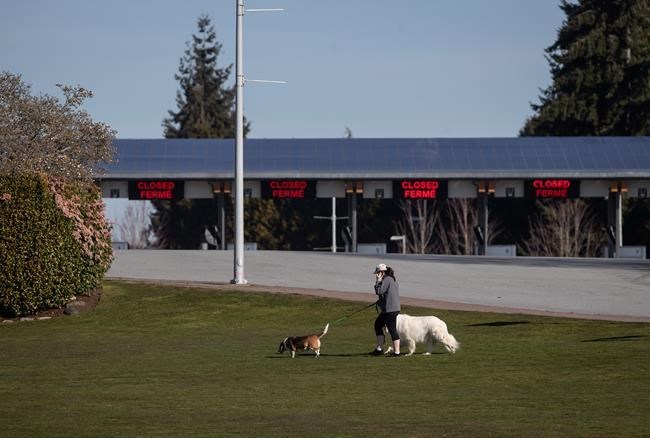
“I was shocked that day and the next morning and I woke up and had crazy anxiety,” Warren said from Vancouver. “Everything of a sudden became real. I have to change my daily approach.”
Thursday was another day full of COVID-19 developments across the country.
An investigation is underway in at least two provinces after a Saskatchewan doctor who attended a curling bonspiel in Edmonton tested positive for COVID-19.
Dr. Allan Woo, president of the Saskatchewan Medical Association, said in a letter to members that he tested positive for the virus Wednesday night.
“I attended a curling bonspiel held March 11-14 in Edmonton,” he said in the letter Thursday. “This bonspiel is an annual event that usually attracts 50-60 physicians from Western Canada.
“I believe I contracted the COVID-19 virus at this bonspiel.”
Alberta’s chief medical officer of health, Dr. Deena Hinshaw, said she was made aware of the positive tests on Thursday morning.
The event had more than 70 curlers but she said she does not know if they were all in the same place at the same time.
“Then there was a banquet that had about 45 attendees.”
Hinshaw said the person who Dr. Woo could have contracted COVID-19 from someone who had recently come from Las Vegas.
The Saskatchewan Medical Association said it doesn’t know how many physicians from the province attended the event.
Doctors Manitoba said in an email that it’s aware of three doctors from the province who participated in the bonspiel, all of whom are self-isolating.
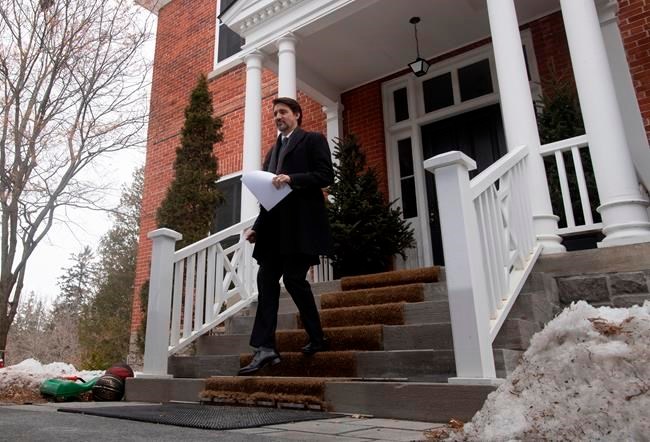
Prime Minister Justin Trudeau, who has promised billions in financial help to soften the devastating economic blow, urged people on Thursday to self-isolate as he acknowledged the “difficult and extraordinary” measures now in place might last weeks or months.
“There’s no doubt, these are uncertain times,” Trudeau said from his own self-isolation in Ottawa.
With most airlines drastically curtailing operations, thousands of people have been stranded abroad. In one case, a tour group of Canadians has been stuck in Peru, which shut its borders on Monday for at least 15 days.
“There is a big feeling of helplessness,” Amit Konorty, whose 24-year-old son is among the stranded, said from Toronto. “It’s very scary.”
Trudeau said he had spoken to Air Canada and WestJet about finding ways to help Canadians get back to a country struggling to slow infection rates.
An Ontario health unit reported the province’s second death linked to the illness as cases jumped to a total of 257. Canada as a whole is now closing in on 900 cases, 12 of them fatal.
Eight of the fatalities have occurred in British Columbia, which has also surpassed the 270-case mark, while Quebec — with one death — has topped 120 cases.
Alberta recorded its first death from COVID-19. Hinshaw said the man who died was in his 60s and had underlying health conditions. The province is now reporting 146 infections.
It appears he contracted the virus in the community and not through travel, she said.
Most people with COVID-19 show mild symptoms, with the elderly and those with underlying health problems at greater risk. The federal government says frequent hand-washing and keeping at least two metres from others is the most effective way to prevent the spread of the highly contagious virus.
To ensure isolation, New Brunswick became the latest province to declare a state of emergency. British Columbia, Saskatchewan, Manitoba and Ontario. Quebec, Prince Edward Island and Newfoundland and Labrador have declared public health emergencies.
Premier Blaine Higgs of New Brunswick said too few people were avoiding public gatherings. All non-essential retail businesses were ordered shut.
Fears of even tougher anti-virus measures prompted hundreds of people to line up at liquor and cannabis stores in Prince Edward Island on Thursday. Ontario’s online cannabis store also reported high demand.
Trudeau said details of the closure of the Canada-U.S. border to all “non-essential” travel would come within in a day or so.
In line with others entering Canada, all would-be refugees arriving at the Roxham Road border crossing into Quebec from New York state will be quarantined in temporary housing for 14 days, Deputy Prime Minister Chrystia Freeland said. She also said she had spoken to all the premiers about the issue.
The fast spread of the virus prompted hundreds of doctors, nurses and activists to call on provincial governments to ensure immediate access to free health care for recent immigrants and other newcomers. Typically, new arrivals — including Canadians returning from longer stretches abroad — must wait at least three months for provincial health coverage.
“We are deeply concerned about these pre-existing barriers to health care for uninsured individuals in Canada, and the potential public health implications in the context of a pandemic,” the group OHIP For All said in an open letter to Ontario’s premier and health minister.
Ontario Health Minister Christine Elliott said Thursday the province was looking to change the rules for returning Canadian citizens, and anyone needing care would get it.

As the country grapples with how to stem the disease’s spread and its unprecedented economic fallout, scam artists have been taking full advantage. Ploys include sending people messages they have tested positive and directing them to call a number, where they are asked to provide credit card and other information.
The Canadian Anti-Fraud Centre has flagged several COVID-19-related scams and warned against providing financial information under such circumstances.
Meanwhile, Sunwing said in a news release that it is offering available seats on its repatriation flights from southern destinations to stranded Canadians, free of charge.
Passengers should present themselves to the Sunwing Airlines check-in counter, and any available seats will be offered to Canadians or Canadian permanent residents free of charge, it said.
This report by The Canadian Press was first published March 19, 2020.