

What will the ‘new normal’ be?
Let's hope Beautiful Game learns a few things from shutdown
Advertisement
Read this article for free:
or
Already have an account? Log in here »
To continue reading, please subscribe:

Digital Subscription
One year of digital access for only $205*
- Enjoy unlimited reading on winnipegfreepress.com
- Read the E-Edition, our digital replica newspaper
- Access News Break, our award-winning app
- Play interactive puzzles
*First annual payment billed as $205.00 + GST for one year. This annual subscription will automatically renew at $233.00 + GST every 52 weeks (10% off the regular annual price of $259.35). Offer available to new and qualified returning subscribers only. Cancel any time.
To continue reading, please subscribe:
Add Free Press access to your Brandon Sun subscription for only an additional
$1 for the first 4 weeks*
- Enjoy unlimited reading on winnipegfreepress.com
- Read the E-Edition, our digital replica newspaper
- Access News Break, our award-winning app
- Play interactive puzzles
*Your next Brandon Sun subscription payment will increase by $1.00 and you will be charged $17.95 plus GST for four weeks. After four weeks, your payment will increase to $24.95 plus GST every four weeks.
Read unlimited articles for free today:
or
Already have an account? Log in here »
Hey there, time traveller!
This article was published 20/03/2020 (2339 days ago), so information in it may no longer be current.
What will sports look like when all this has passed? That is, of course, assuming that professional spectator sports will pick up right where they left off last week, the COVID-19 pandemic having merely interrupted our pastimes and not more intrinsically altered them. I wonder if the latter isn’t what we’re headed for. Perhaps it’s actually where we, and they, should aim.
Allow me to unpack that thought.
My own relationship with sports was essentially modified during the 2004-05 National Hockey League lockout, when an entire season was lost as players and owners remade their economic relationship. At the end of the 2003-04 campaign, and even after the September World Cup and the weeks and months that followed — a time spent hoping for a new collective bargaining agreement and the commencement of the schedule — I would have told you in no uncertain terms that hockey was my favourite sport.
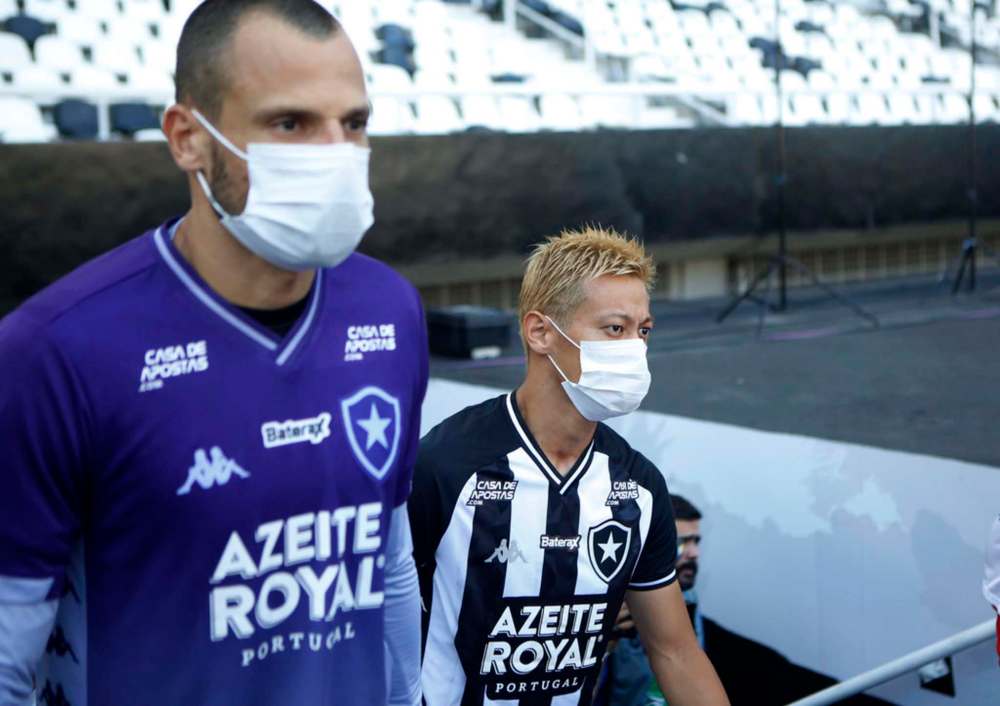
What I learned, and what life continues to teach me, is that people are always more adaptable than we think. We fill voids in our lives relatively quickly; we find new things, new ways to occupy our time and thoughts; we move on.
This is hardly a new-found notion. Indeed, in his 1832 novella Colonel Chabert, Honore de Balzac showed readers how even the return of the dead, or of the assumed dead, can be at once a source of pain and, rather more selfishly, of inconvenience.
Balzac’s protagonist, Hyacinthe Chabert, is pronounced dead following the Napoleonic-era Battle of Eylau. His presumed widow, the future Countess Ferraud, remarries and has two children with her new husband, also ascending the social ladder with Count Ferraud. When Chabert inevitably returns, he finds Paris and France to have moved from empire to restoration, and his wife to have moved on from him. He is out of place, a nuisance.
“Have I not been authorized to form other ties?” asks Countess Ferraud. Replies Chabert: “The dead are very wrong to come back to life again.”
Incidentally, one of the things to which I moved on in the winter of 2005 was literature. The other, as you’ll know from these pages, was soccer. Granted, I had enjoyed soccer for some time, but the absence of hockey, the release of its grip, allowed the beautiful game to reach out and grab me. And it hasn’t let go, until now.
I suspect I’ll still follow soccer as closely post-Covid-19 as I did pre-pandemic. After all, I do so professionally, so its presence in my life, its occupation of my attention, is tied up with things like bank balances and bill payments. But what will soccer look like when it comes back? What will professional sports look like? Will normalcy resume, or will a new normal commence?
One of the post-NHL lockout “normals” was, and remains, the prevalence of televised poker. I wonder if the next few months won’t similarly shift Esports from the niche to the mainstream. No doubt a good number of Gen Z gamers will be hoping for exactly that.
More practically, it’s expected that a lot of the people who previously filled stadiums will have considerably less disposable income when sports restart than they enjoyed even earlier this month. How will the sports business respond to that? Will teams enact price freezes or even reductions for tickets and concessions? Will they, against all sense, become even more the hobbies of the rich, further exacerbating a socio-economic division the pandemic is already widening?
And what of the premium channel and streaming packages? Will they continue to drive the industry six months, a year, two years from now? Will teams and leagues on already precarious economic ground be swallowed up by a coronavirus sinkhole?
It seems reasonable to assume that professional sports, at the very least, won’t be identical to what they were in February 2020. But if we’re being optimistic, we can also expect them to not only respond to a new normal, but to also be outgoing in earning back a public attention that inevitably latched on to other things in the meantime.
An industry that works to serve the leisure hours of the public instead of taking it for granted? Now there’s a heartening thought.
“My dear friend,” Countess Ferraud says affectionately to Colonel Chabert, “we will talk all this over later when our hearts have rested.”
Spot-kicks
• It was only Thursday that the Turkish Super Lig was finally suspended due to COVID-19, and it took the acrimonious exit of a high-profile player to force the Turkish Football Federation’s hand. Former Chelsea midfielder John Obi Mikel expressed his frustration with the situation in Turkey, remarking on Instagram that the “season should be cancelled as the world is facing such turbulent times.” On Wednesday he and Trabzonspor parted ways through mutual consent, and less than 24 hours later the Super Lig had postponed play indefinitely.
• In happier news — and perhaps a harbinger, eventually, in Europe and North America — the Chinese Super League could decide next week to kick off its season on April 25. There were no new coronavirus cases reported in China on Thursday after only one positive test on Wednesday.

• Meanwhile, Japan’s J1 League will hold a Wednesday meeting with an eye to resuming the schedule on April 3. South Korea’s basketball league may also restart later this month.
• Arsenal manager Mikel Arteta has completed his period of quarantine after testing positive for coronavirus and the Gunners have reopened their London Colney training centre and Hale End academy facility.
jerradpeters@gmail.com
Twitter @JerradPeters
Our newsroom depends on a growing audience of readers to power our journalism. If you are not a paid reader, please consider becoming a subscriber.
Our newsroom depends on its audience of readers to power our journalism. Thank you for your support.
Our newsroom depends on a growing audience of readers to power our journalism. If you are not a paid reader, please consider becoming a subscriber.
Our newsroom depends on its audience of readers to power our journalism. Thank you for your support.
Related Articles
Former Real Madrid president dies from coronavirus
Advertisement Advertise With Us
Advertisement Advertise With Us