

Growing uncertainty
Farmers selling to restaurants feeling the pinch, while direct sales to consumers spike
Advertisement
Read this article for free:
or
Already have an account? Log in here »
To continue reading, please subscribe:
Monthly Digital Subscription
$1 per week for 24 weeks*
- Enjoy unlimited reading on winnipegfreepress.com
- Read the E-Edition, our digital replica newspaper
- Access News Break, our award-winning app
- Play interactive puzzles
*Billed as $4.00 plus GST every four weeks. After 24 weeks, price increases to the regular rate of $19.95 plus GST every four weeks. Offer available to new and qualified returning subscribers only. Cancel any time.
Monthly Digital Subscription
$4.99/week*
- Enjoy unlimited reading on winnipegfreepress.com
- Read the E-Edition, our digital replica newspaper
- Access News Break, our award-winning app
- Play interactive puzzles
*Billed as $19.95 plus GST every four weeks. Cancel any time.
To continue reading, please subscribe:
Add Free Press access to your Brandon Sun subscription for only an additional
$1 for the first 4 weeks*
*Your next subscription payment will increase by $1.00 and you will be charged $16.99 plus GST for four weeks. After four weeks, your payment will increase to $23.99 plus GST every four weeks.
Read unlimited articles for free today:
or
Already have an account? Log in here »
Hey there, time traveller!
This article was published 31/03/2020 (2214 days ago), so information in it may no longer be current.
It feels like eons ago that farmer Jeff Veenstra sat across the table from Winnipeg restaurateurs and worked out their order schedule of fresh, locally grown vegetables for the season.
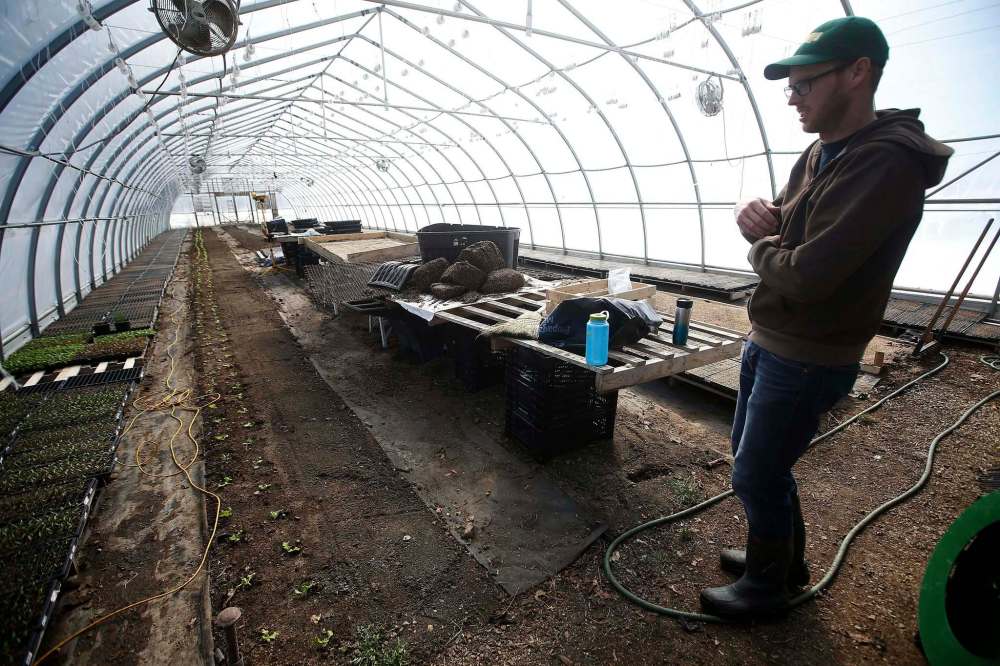
Those meetings took place in January when there was no sense of the disruption the novel coronavirus would cause the local food industry. Now, non-essential businesses are shuttering, with many restaurants having already closed before the provincial order was given. Consequently, Veenstra finds himself having to make critical decisions about how to run his organic farm — Wild Earth Farms, located just outside Oakbank — with no solid information on what the future holds.
“Unpredictability is huge at this moment,” he said, reflecting the key concern of many of the province’s small farmers.
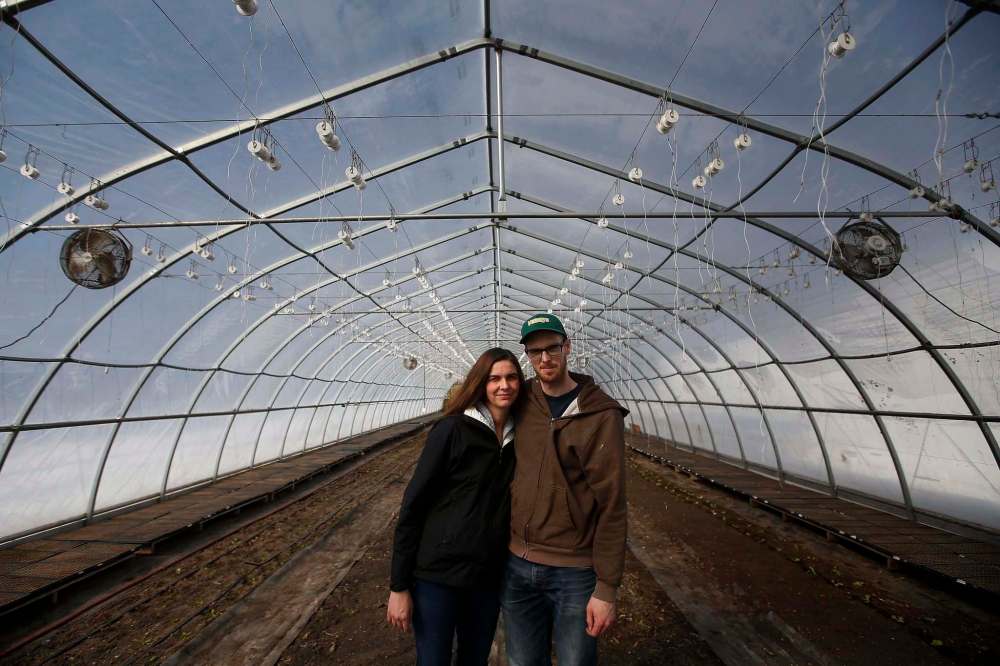
About 60 per cent of Veenstra’s sales are typically to restaurants and through farmers markets; places like Deer + Almond, Crampton’s Market, and Wienerpeg. Now only three of the 18 businesses he counted on for sales are open, and they’re limited to delivery and takeout options.
Veenstra is hoping sales of the community produce boxes he offers on the farm’s website pick up, because that might determine whether he goes through with the growing season and hires on a summer staff this year or not. It’s a decision he’s still grappling with, but he needs to make it this week.
“We’re still a relatively new business, we’ve been doing this for nine years, but the first few years that we started were so small. But we’ve come to rely on this farm to support our family in the last few years,” he said. “If we just shut down now, and just cancelled the whole season, we might be OK.
“But there’s a lot of concern, having that instability of owning a business, and the fact that this could potentially happen again, and also how long of an impact this is going to have on the economy.”
However, things aren’t bleak on all fronts. While people aren’t going to eat out anymore, many are stocking up their freezers and pantries for more home-cooked meals.
Brad Anderson runs a family farm just south of Cypress River, and is the president of the Harvest Moon Local Food co-op —headquartered in Clearwater — which sells products from a number of farms directly to consumers. Anderson says while he was previously accustomed to selling selling grass-fed beef to Stella’s restaurants and others, which have now closed, he is seeing direct-to-consumer sales go through the roof — he estimates they’ve more than doubled.
“And at the same time all of the stores that we sell in have increased orders substantially,” Anderson told the Free Press.
But even that success is hard to trust. Anderson doesn’t know if sales will be sustained or if it is simply going up momentarily while people stock up. If people are facing layoffs in the province, he doesn’t know how significant sales drops could be for local farmers.
Farmers markets are also trying to figure out how to navigate this new world, and to do it safely so that producers can get their products to market. Businesses that distribute food and farm byproducts are permitted to stay open, according to the province’s latest health order closing non-essential services. But St. Norbert Farmers’ Market, for example, is still trying to change how it does things so there are fewer people on-site at once. This involves implementing a new online pre-order system for pickup at the market.
Organizations like Direct Farm Manitoba are working on similar adaptations.
Phil Veldhuis is the treasurer for the St. Norbert Farmers’ Market and the president of Direct Farm Manitoba — as well as the owner of Phil’s Honey — and he says these challenges are certainly not affecting all producers equally. Those with the internet infrastructure to sell directly to customers were miles ahead in this instance. Those who relied on restaurant sales are feeling the pinch.
“This has been a real nice reminder of how important simple, local food supply chains are. They have a resilience and dependability to them that other trucked-in food from California doesn’t. So I think what we need to do is make sure that folks who want to participate in (the local food movement) now don’t get disappointed,” Veldhuis said.
Jeanette Sivilay is the co-ordinator of the City of Winnipeg’s food council advisory committee, and she says she’s happy to see that farmers markets are being recognized as essential in this time, as it offers producers a bit of much-needed normalcy.
“We don’t necessarily know what the future holds and now is the time that a lot of food producers are planning for the upcoming season,” Sivilay said.

Veenstra says he’s keeping an optimistic outlook, even though he’s up against some pretty bleak choices in the coming days.
“It’s extremely stressful,” Veenstra said. “But I just feel like it’s going to be OK. I have no reason or rhyme to say it’s going to be OK, but I have a feeling it will be.”
sarah.lawrynuik@freepress.mb.ca
Twitter: @SarahLawrynuik
History
Updated on Thursday, April 9, 2020 3:01 PM CDT: corrects article to note they sell grass-fed beef to Stella's