WHO issues guidelines for lifting COVID-19 restrictions. Is Canada ready?
Advertisement
Read this article for free:
or
Already have an account? Log in here »
To continue reading, please subscribe:

Digital Subscription
One year of digital access for only $205*
- Enjoy unlimited reading on winnipegfreepress.com
- Read the E-Edition, our digital replica newspaper
- Access News Break, our award-winning app
- Play interactive puzzles
*First annual payment billed as $205.00 + GST for one year. This annual subscription will automatically renew at $233.00 + GST every 52 weeks (10% off the regular annual price of $259.35). Offer available to new and qualified returning subscribers only. Cancel any time.
To continue reading, please subscribe:
Add Free Press access to your Brandon Sun subscription for only an additional
$1 for the first 4 weeks*
- Enjoy unlimited reading on winnipegfreepress.com
- Read the E-Edition, our digital replica newspaper
- Access News Break, our award-winning app
- Play interactive puzzles
*Your next Brandon Sun subscription payment will increase by $1.00 and you will be charged $17.95 plus GST for four weeks. After four weeks, your payment will increase to $24.95 plus GST every four weeks.
Read unlimited articles for free today:
or
Already have an account? Log in here »
Hey there, time traveller!
This article was published 14/04/2020 (2322 days ago), so information in it may no longer be current.
OTTAWA – Federal and provincial officials are starting to discuss how and when to start reopening schools and businesses but Prime Minister Justin Trudeau warned Tuesday the full-scale lockdowns most Canadians are living with right now will remain in place for at least several more weeks.
Similar discussions are happening around the world, as many countries are starting to show some positive signs of slowing the spread of COVID-19 — even as experts warn limited testing in most places could be masking the real picture of the disease.
The World Health Organization is trying to inject some co-ordination into these decisions, releasing new guidelines Tuesday for what should be in place before easing restrictions.
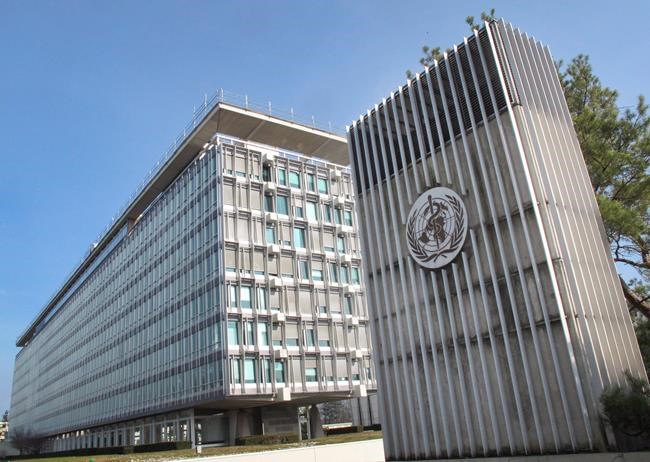
“The way down is much slower than the way up,” Tedros Adhanom Ghebreyesus, director-general of the WHO, said in a speech Monday. “That means control measures must be lifted slowly, and with control. It cannot happen all at once.”
The WHO guidelines outline six areas officials must consider if they are to look at resuming activities. Here is where Canada stands on each of them.
1. Is transmission of the virus under control?
Short answer: We’re not testing enough to know.
What the experts say: Eleanor Fish, a professor of immunology at the University of Toronto, said testing must become much more widespread before we really understand the state of community transmission.
Alison Thompson, a public health professor in the Leslie Dan Faculty of Pharmacy at the University of Toronto, said it takes a significant amount of time between a confirmed infection and fully tracing a person’s contacts and testing them, to know whether that confirmed infection has resulted in many more infections.
“We have to make sure it actually is levelling off, or that community transmission has actually ground to a halt, which can take quite awhile,” she said.
If restrictions are removed too quickly, thousands of people with COVID-19, who may not know they are infected, could potentially spread it fast and wide, she said.
Thompson also said it’s time to stop thinking of the pandemic in terms of health versus the economy. If there isn’t a healthy workforce the economy will continue to suffer, she said.
“We may see some short-term gains if we did ease up on some of these restrictions,” she said. “But in the long run if we end up with an out-of-control situation with COVID, the economy will take much, much longer to recover.”
2. Is the health-care system equipped to detect, test, isolate and treat every case, and trace every person who came into contact with a positive case?
Short answer: Not yet.
What the experts say: Timothy Sly, professor emeritus at Ryerson University’s school of occupational and public health, said Canada has done “an abysmal job” at testing and tracing.
“We have a situation now essentially where we’re groping along in the dark in terms of finding out who in fact is virus positive and who’s virus negative. We’ve done an abysmal job at that,” said Sly, who specializes in epidemiology.
Sly pointed to an especially woeful rate in Ontario where Premier Doug Ford has vowed to perform 8,000 tests daily by Wednesday, up from about 5,000. Alberta is among Canada’s testing leaders with about 7,400 tests conducted daily, which Sly said is still not enough.
Still, he acknowledged there have been hurdles beyond Canada’s control that have handcuffed efforts — notably, global shortages of equipment including swabs and laboratory chemicals needed to process test samples.
Sly said Health Canada’s recent approval of a rapid, mobile hand-held testing device from an Ottawa company should help, as will a series of expanded testing criteria that various provinces have adopted in recent days.
Jianhong Wu, a distinguished research professor at York University who has led multiple national projects on SARS, pandemic influenza and immunization evaluation, said there is a close relationship between contact tracing, testing and social distancing.
“If you don’t do well in one component, you need to significantly magnify your effort in other components,” he said.
Sly said provinces are largely trying to contact people exposed to a confirmed case by telephone, which is not sustainable given the soaring number of cases.
He pointed to countries such as South Korea, which have employed cellphone data to track possible contacts. He said that is much more effective, but it would raise privacy issues.
“People are going to be hollering and screaming about that but it does seem to work,” he said.
3. Are outbreaks minimized in special settings like health facilities and nursing homes?
Short answer: No.
What the experts say: Risks remain dangerously high in hundreds of nursing homes across the country.
Quebec, where long-term care centres have been particularly hard hit, announced Tuesday that inspections have identified 41 seniors residences that require special monitoring because of a high number of COVID-19 cases. Premier Francois Legault on Tuesday appealed for people with experience in health care to help out in understaffed long-term care facilities.
Canada’s chief public health officer, Theresa Tam, said Monday nearly half of the country’s deaths from the novel coronavirus have come from long-term care facilities, and she predicted the number will increase despite provinces’ efforts to fight the problem.
Twenty-nine residents in a 65-bed nursing home in Bobcaygeon, Ont., have died amid the pandemic. Another facility in Toronto recorded 22 deaths by Monday, while the Lynn Valley Care Centre in North Vancouver, B.C., has had 18 residents die. In many facilities workers are also getting sick in high numbers.
After the Lynn Valley Care Centre outbreak, British Columbia moved to stop staff from working in multiple facilities as a way to slow the spread of the virus. Ontario made the same move Tuesday.
Isaac Bogoch, an infectious-disease specialist at the University of Toronto and the University Health Network, feels that strategy, along with limiting visits with seniors and infection-prevention methods, could go a long way in minimizing risks for possible subsequent waves of COVID-19 among the elderly.
Canada now has guidelines for helping to protect long-term care residents and workers, but Tam indicated this week the outbreaks are the biggest concern that has arisen in Canada’s COVID-19 situation over the last two weeks.
4. Are there measures in workplaces and schools to prevent the spread of the virus?
Short answer: Not yet.
What the experts say about workplaces: In most provinces, only essential businesses like grocery stores and pharmacies can remain open. All others must operate with employees working from home. If they can’t do that, they must close. Restaurants can generally only allow takeout or delivery.
Many businesses report being too focused on setting their employees up to work from home, and haven’t yet begun to think about what to do to reopen.
Provinces and business groups say it’s too early to speculate on which measures can be lifted. Any shift in approach would come at the advice of the chief medical health officer “and with extreme caution so as to avoid a resurgence of the virus as has been seen in other jurisdictions,” said Hayley Chazan, a spokeswoman for Ontario Health Minister Christine Elliott.
The Canadian Chamber of Commerce says it wants clear advice from public health authorities before restrictions loosen.
“We fully expect that there will unfortunately be an instance where an employee does test positive. What does that mean for the workplace? Does there have to be a total shutdown? A deep clean?” asked Mark Agnew, the chamber’s senior director of international policy.
Sector-specific rules will remain critical as the lockdown starts to lift, he said, noting that retailers, meat processors and refrigerator technicians might all require different protocols around physical distancing and personal protective equipment.
What the experts say about schools: Kids, while less susceptible to the novel coronavirus, are well equipped to transmit it.
“Children are generally less compliant with effective hand hygiene, and they don’t necessarily control their secretions,” said Dr. Nisha Thampi, infection prevention and control lead at Children’s Hospital of Eastern Ontario in Ottawa. “That presents an exposure risk to the staff as well as to other children.”
The Public Health Agency of Canada has stopped short of recommending specific changes schools could make to their operations, but did offer more general guidance for schools in February, before Canada began to really experience the impact of COVID-19. That included regular hand-washing and supervised use of hand sanitizer, education on proper “respiratory etiquette” such as covering coughs and sneezes, ramped-up cleaning and disinfection routines within school buildings, and reinforcement of “no sharing” policies.
Thampi said medical experts will also have to craft advice that strikes a balance between student safety and developmental needs.
“Children have always seen school as being a social environment,” she said, adding many are no longer getting that kind of stimulation in the era of physical distancing. “How can we be sensitive to that while also teaching them about infection-prevention strategies?”
5. Are the risks of importing more cases from outside the country being managed?
Short answer: Mostly yes.
What the experts say: The federal government has adopted once-unthinkable measures over the past month to keep more cases of COVID-19 from arriving in Canada. Those include banning most non-Canadians from entering the country and a 14-day mandatory quarantine for anyone who does.
On Tuesday, Ottawa upped that game again, now requiring anyone arriving to explain their quarantine plan and if it’s not good enough, they will be forced to stay in federal sites.
The trouble is that Canada is heavily reliant from both an economic and social perspective on foreign trade and immigration. That means it can’t keep the border closed forever.
“We have done a lot, but economically it’s not sustainable,” said Daniel Beland, director of the McGill Institute for the Study of Canada.
Experts say there is a variety of potential avenues to reopen the border and manage the risk.
Being able to screen potential visitors, preferably with on-the-spot testing at airports and other ports of entry, would make it much easier to identify carriers and either bar them from coming into Canada or put them into quarantine.
Steven J. Hoffman, a York University professor and the scientific director of the Canadian Institutes of Health Research’s Institute of Population and Public Health, said the 14-day quarantine “could be the enabler that allows government to reopen our borders, particularly if that system is really up and running and fully implemented. And enforced in a way that we can have confidence in it.”
There could also be more targeted travel restrictions for visitors from different countries, depending on how those countries are managing the virus, though experts acknowledge partial bans and quarantine requirements could create challenges and anger.
Beland nonetheless believes Canadians will need to accept that there will be changes in the way they travel, similar to how the 9/11 terrorist attacks led to increased security measures.
6. Are local communities are educated, engaged and empowered to adjust to the “new norm”?
Short answer: Maybe
What the experts say: Canadians have been inundated with warnings from political leaders and public health experts for weeks now to be prepared for bad news. Trudeau has not been shy about making sure people know that until there is a vaccine, we are all going to have to get used to having at least some restrictions on our movements and behaviours.
In Canada, most experts think the number of cases is going to peak this month. The data based on the limited epidemiology Canada has shows the number of cases was doubling every three to four days in the last two weeks of March, but had slowed to doubling every five to eight days in the first two weeks of April.
But officials also warn of more than one wave, with flare-ups and new infections continuing for months. A vaccine is at least 12 to 18 months away, and the “new norm” really means longer-term adjustments to limit the impact of those new outbreaks.
There have been warnings from some experts around the world that things like live concerts and massive public gatherings for sporting events won’t be safe for months to come.
Hoffman said he thinks Canadians must get ready for an up-and-down scenario, “where first the government lessens these restrictions and then a couple weeks later has to tighten them again in light of new data and new information about where spread is happening or how it’s happening.”
This report by The Canadian Press was first published April 14, 2020.
— With files from Mia Rabson and Lee Berthiaume in Ottawa, Kelly Geraldine Malone in Winnipeg, Cassandra Szklarski and Michelle McQuigge in Toronto, and Christopher Reynolds and Julian McKenzie in Montreal.
Related Articles
Liberals ease rules on COVID benefit
Advertisement Advertise With Us
Advertisement Advertise With Us