Flood costs in Canada could nearly triple by 2030 with no mitigation

Advertisement

Advertise with us

OTTAWA - The yearly bills from overflowing rivers and rising seas in Canada could nearly triple by 2030 if Canada doesn't do more to improve flood protection, a new analysis suggested Thursday.

Read this article for free:


or

Already have an account? Log in here »

To continue reading, please subscribe:

Subscribe and receive a limited-edition Free Press branded hat or tote.

Digital Subscription

One year of digital access for only $205*

  • Enjoy unlimited reading on winnipegfreepress.com
  • Read the E-Edition, our digital replica newspaper
  • Access News Break, our award-winning app
  • Play interactive puzzles

*First annual payment billed as $205.00 + GST for one year. This annual subscription will automatically renew at $233.00 + GST every 52 weeks (10% off the regular annual price of $259.35). Offer available to new and qualified returning subscribers only. Cancel any time.

To continue reading, please subscribe:

Add Free Press access to your Brandon Sun subscription for only an additional

$1 for the first 4 weeks*

  • Enjoy unlimited reading on winnipegfreepress.com
  • Read the E-Edition, our digital replica newspaper
  • Access News Break, our award-winning app
  • Play interactive puzzles
Start now

*Your next Brandon Sun subscription payment will increase by $1.00 and you will be charged $17.95 plus GST for four weeks. After four weeks, your payment will increase to $24.95 plus GST every four weeks.

Hey there, time traveller!
This article was published 23/04/2020 (2315 days ago), so information in it may no longer be current.

OTTAWA – The yearly bills from overflowing rivers and rising seas in Canada could nearly triple by 2030 if Canada doesn’t do more to improve flood protection, a new analysis suggested Thursday.

The Aqueduct Floods project of the Washington-based global think tank World Resources Institute found the number of people around the world affected by floods each year will more than double from about 65 million in 2010, to more than 132 million in 2030. The total annual damage to urban assets, including homes, businesses and public infrastructure, will exceed more than US$700 billion.

Comparatively, flooding has cost the world a little more than US$1 trillion over the last three decades, the report said, meaning with no action, it will soon cost the world in less than two years what it cost over the last 30.
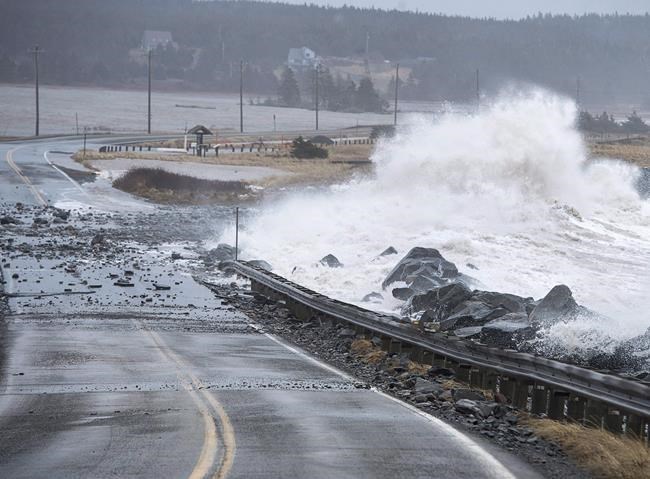
Waves pound the shore on a closed section of Highway 207 in Lawrencetown, N.S. on Friday, Jan. 5, 2018. A new analysis of flood risk suggests the yearly bills from overflowing rivers and rising seas could nearly triple by 2030, if Canada doesn't do more to improve flood protection. THE CANADIAN PRESS/Andrew Vaughan

While the report raises the most serious concerns for countries in Southeast Asia, including India, Pakistan and Indonesia, Canada will not be spared. The institute found in 2010, flood damage to urban areas, including homes, businesses and public infrastructure, totalled around US$2.4 billion. By 2030, if nothing more is done to prevent or mitigate flood damage, that price tag will be closer to US$6.6 billion.

At the same time the number of Canadians directly impacted will grow from about 200,000 in 2010, to more than 350,000 in 2030. By 2050, the annual cost could exceed US$14 billion and affect 431,000 people.

Coastal flooding in particular is going to get much worse. In 2010, fewer than 1,400 people were affected in Canada, and the urban cost was about US$122 million. By 2030, with current mitigation measures in place, that cost will be 13 times as big, exceeded US$1.65 billion, and the number of people affected will grow to nearly 17,000.

Samantha Kuzma, one of the authors of the flooding project report, said climate change will be responsible for about one-third of the increased flood risks, but most can be blamed on population and economic growth that will see more people and businesses set up in areas becoming more prone to flooding. About one-quarter of the increased risk of coastal flooding can be blamed on subsidence, or the gradual sinking of land.

Kuzma said the costs could change dramatically if countries make flood mitigation a priority, with an estimate that Canadians can prevent more than $2 in damage costs for every $1 spent on things like dikes, berms and drainage.

“I hope this inspires us to invest in preparedness,” said Kuzma. “It’s worthy of our attention.”

Blair Feltmate, head of the Intact Centre on Climate Adaptation at the University of Waterloo, said the World Resources Institute report adds the weight of a very credible organization to research that is warning the world that floods are going to be bigger, happen more often and cost us more money and lives, if we don’t start acting.

Feltmate said Canadians are mostly lucky that this spring has thus far not turned out to be a major flood problem so far. He asked how people would manage COVID-19 lockdowns and physical distancing if they needed to be sandbagging properties or evacuating to local community centres.

“It’s just pure dumb luck,” he said. “Luck is not the policy you want to depend on.”

Feltmate said the report’s figures would be even higher if it added urban flooding from major rainstorms. He said in Canada, the impact of basement flooding is a major part of the problem.

This report by The Canadian Press was first published April 23, 2020.

Report Error Submit a Tip

More Stories

Executive exodus continues at Shared Health with three recent departures

Chris Kitching 5 minute read Preview

Executive exodus continues at Shared Health with three recent departures

Chris Kitching 5 minute read Sunday, Aug. 23, 2026

Manitoba’s provincial health authority is looking for its fourth chief financial officer since 2023 and additional replacements after the recent departures of three executives.

Read
Sunday, Aug. 23, 2026

Senior’s family frustrated by Manitoba Housing’s response to apartment’s bedbug infestation

Malak Abas 5 minute read Preview

Senior’s family frustrated by Manitoba Housing’s response to apartment’s bedbug infestation

Malak Abas 5 minute read Yesterday at 6:00 AM CDT

The family of a senior who left his Manitoba Housing apartment after two years of bedbug infestations is accusing the provincial body of being ineffectual and irresponsible in its treatment of the persistent pests.

The senior had lived at the Columbus Courts building at 253 Edgeland Blvd., since 2011, but when he began getting severe skin rashes all over his body about two years ago, his son began to worry.

They found out the 14-storey building was being sprayed for bedbugs after an infestation had impacted several units. After multiple rounds of pesticide treatments, the problem has not subsided, the son told the Free Press.

“They come in, they spray pesticides and then they leave. And it’s been completely ineffectual,” he said. “My dad keeps seeing the bedbugs even the day after the treatments and continuously, they’ve just gotten worse and worse.”

Read
Yesterday at 6:00 AM CDT

Puzzles Palace

1 minute read Monday, Jul. 27, 2026

To solve our puzzles, please subscribe with this special offer: |

Bombers late-game defensive errors boil down to technique

Taylor Allen 4 minute read Preview

Bombers late-game defensive errors boil down to technique

Taylor Allen 4 minute read Yesterday at 7:09 PM CDT

It feels silly to criticize the Winnipeg Blue Bombers’ defence on their latest showing.

To go on the road, force three turnovers, and hold the No. 1-ranked team in the West Division to 22 points is an impressive feat that should be heaped with praise.

But in the final minute of the game, the unit needed to tackle better.

With the score tied 19-19, the Edmonton Elks faced a second and three from their own 46-yard line when running back Justin Rankin squeezed through three defenders for a 16-yard gain.

Read
Yesterday at 7:09 PM CDT

Entrepreneurial spotlight finds IndigiHub

Aaron Epp 4 minute read Preview

Entrepreneurial spotlight finds IndigiHub

Aaron Epp 4 minute read Yesterday at 8:11 PM CDT

The list of accolades keeps getting longer for the Winnipeg-based founder of IndigiHub, an online resource for Indigenous entrepreneurs.

In February, Zachary Flett was named one of three finalists for the Indigenous Innovation Award at North Forge’s inaugural DARE Innovation Awards. In May, he received the Community Impact Award at the Manitoba Tech Awards.

Earlier this month, Flett was selected as one of five finalists in the Indigenous division at the Young Entrepreneur of the Year Awards, a national competition that saw more than 650 people nominated across 10 categories.

The recognition feels good, Flett said, but at the same time, he wants to keep the focus off himself and on his product.

Read
Yesterday at 8:11 PM CDT

Practice — and superstition — makes perfect

Grace Penner 5 minute read Preview

Practice — and superstition — makes perfect

Grace Penner 5 minute read Yesterday at 6:45 PM CDT

It seems the words routine and superstition blend together for the Winnipeg Goldeyes.

While the players have a set pre- and post-game timetable — whether or not they label all game-day routines as superstitions — it’s clear they have their own internal rules that must be followed.

For pitcher James Bradwell, though he believes he doesn’t have any crazy pre-game rituals that need to be upheld, he knows what works and sticks to it.

“I will always put my right sock on before my left, right cleat on before my left,” the North Vancouver product said, having only started these routines after joining the Fish.

Read
Yesterday at 6:45 PM CDT