Manitoba greenhouse gas emissions keep rising

Advertisement

Advertise with us

Manitoba is among several provinces lagging behind in efforts to reduce Canada's greenhouse gas emissions, according to the newest data released in the federal government’s inventory report. 

Read this article for free:


By clicking the button above, an account will be created and you will begin to receive some of our recommended newsletters. You may opt out of any newsletter by visiting your Email and Communication Preferences page or by clicking "unsubscribe" at the bottom of any email.

or

Already have an account? Log in here »

To continue reading, please subscribe:

Digital Subscription

One year of digital access for only $1.44 a week*

  • Enjoy unlimited reading on winnipegfreepress.com
  • Read the E-Edition, our digital replica newspaper
  • Access News Break, our award-winning app
  • Play interactive puzzles

*Billed as $5.77 plus GST every four weeks. After 52 weeks, price increases to the regular rate of $19.95 plus GST every four weeks. Offer available to new and qualified returning subscribers only. Cancel any time.

To continue reading, please subscribe:

Add Free Press access to your Brandon Sun subscription for only an additional

$1 for the first 4 weeks*

  • Enjoy unlimited reading on winnipegfreepress.com
  • Read the E-Edition, our digital replica newspaper
  • Access News Break, our award-winning app
  • Play interactive puzzles
Start now

*Your next Brandon Sun subscription payment will increase by $1.00 and you will be charged $17.95 plus GST for four weeks. After four weeks, your payment will increase to $24.95 plus GST every four weeks.

Hey there, time traveller!
This article was published 27/04/2020 (2366 days ago), so information in it may no longer be current.

Manitoba is among several provinces lagging behind in efforts to reduce Canada’s greenhouse gas emissions, according to the newest data released in the federal government’s inventory report. 

Canada emitted 729 megatonnes of carbon dioxide equivalent in 2018 — a 15-Mt increase from 2017, and a single megatonne decrease from the evaluation of emissions in 2005. 2018 is the latest data available due to the lag time in reporting.

Canada has promised to decrease its annual emissions by 30 per cent from 2005 levels by 2030, but the latest projections demonstrate the country will miss that mark. The federal analysis attributes emissions increases year-over-year from 2017 to higher fuel consumption for transportation, winter heating and oil and gas extraction.
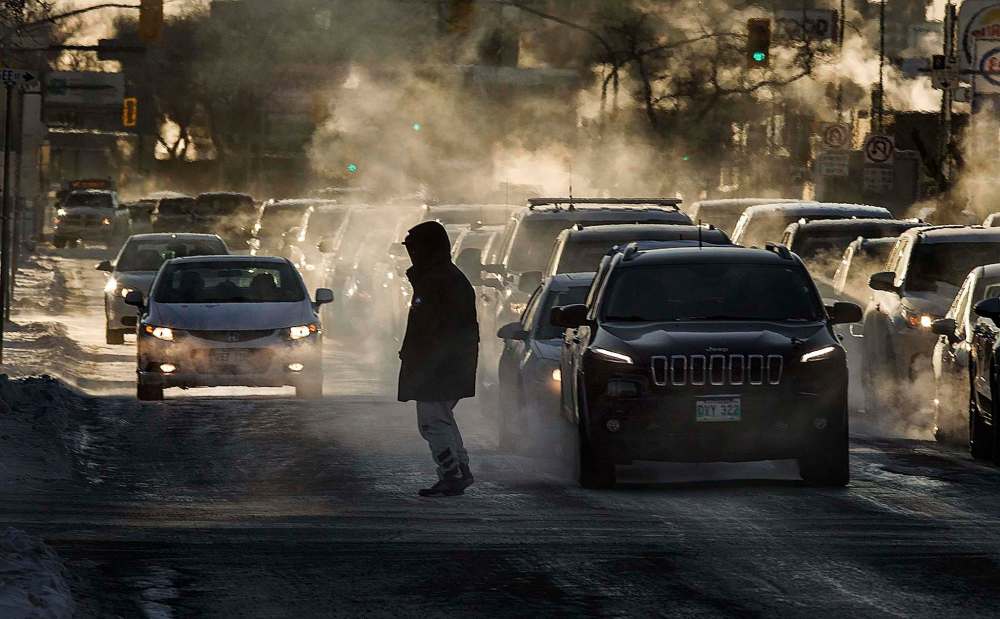
PHIL HOSSACK / WINNIPEG FREE PRESS FILES
Manitoba's emissions have increased by 8.3 per cent since 2005, to 21.8 megatonnes in 2018 from 20.1 Mt of CO2 equivalent in 2005. It marks the third-most significant growth rate among provinces.
PHIL HOSSACK / WINNIPEG FREE PRESS FILES Manitoba's emissions have increased by 8.3 per cent since 2005, to 21.8 megatonnes in 2018 from 20.1 Mt of CO2 equivalent in 2005. It marks the third-most significant growth rate among provinces.

Half of the country’s provinces and territories have moved in the right direction in lowering emissions, while the other half have increased emissions — in some instances, drastically.

Manitoba’s emissions have increased by 8.3 per cent since 2005, to 21.8 megatonnes in 2018 from 20.1 Mt of CO2 equivalent in 2005. It marks the third-most significant growth rate among provinces (fifth if the territories are also considered). Alberta experienced a growth rate in the same period of 14 per cent, while Saskatchewan’s emissions grew by 12 per cent.

Ontario had the most significant drop in emissions across the country since 2005, due in large part to the closure of coal-fired power plants. However emissions did rise by 10 Mt again year-over-year from 2017 to 2018.

While emissions increases in a province such as Alberta can largely be attributed to one industry (oil and gas extraction), the increases in Manitoba are more spread out across industries and sources.

In Manitoba, ground transportation is one area that has recorded a significant increase. In 1990, 3.26 megatonnes were estimated to have been emitted by the province’s cars and trucks; by 2005, that had risen by 28 per cent.

Figures from 2018 show road transportation in Manitoba has risen by 84 per cent since 1990, and 44 per cent since 2005, accounting for roughly 27.6 per cent of the province’s total emissions in 2018.

In an email statement to the Free Press, Minister of Conservation and Climate Sarah Guillemard said the provincial government is committed to its goal of a one-megatonne decrease in emissions between 2018 and 2022 (a roughly four per cent decrease).

“Manitoba should be assessed on what is achieved by year 5, not by year 1,” she said. “To date, our actions demonstrate our commitment towards achieving that goal.”

Guillemard added new provincial initiatives were launched in 2019 and 2020, so the impact of those programs wouldn’t yet be seen.

Earlier this year, the province announced it would be implementing its own carbon tax, but the move was backtracked with the arrival of the COVID-19 pandemic and the subsequent economic impacts.

The recent greenhouse gas emission figures are disconcerting for climate advocates: not only is Manitoba and Canada not decreasing emissions fast enough, they’re even moving in the wrong direction still.

“Manitoba has reached a record high. We’ve got more emissions than we’ve ever seen before,” said Curt Hull, project director of Manitoba’s Climate Change Connection, an online resource centre.

Hull pointed to the findings of the Intergovernmental Panel on Climate Change — an international consortium of scientific experts — that has given the world just a matter of years to change its course and reduce emissions if catastrophic changes are to be avoided.

“We need to be on a trajectory that is dramatically different from what we’re on right now,” Hull said. “The trend line is up, not down. And we all need to very, very seriously look at reducing our emissions — and I mean that at the government level and the individual level.”

sarah.lawrynuik@freepress.mb.ca

Twitter: @SarahLawrynuik

History

Updated on Monday, April 27, 2020 9:58 PM CDT: Updates lede paragraphs.

Report Error Submit a Tip

More Stories

Consumer apprehension grows as US retailers adopt AI-assisted pricing tools

Dee-ann Durbin And Anne D'innocenzio, The Associated Press 7 minute read Preview

Consumer apprehension grows as US retailers adopt AI-assisted pricing tools

Dee-ann Durbin And Anne D'innocenzio, The Associated Press 7 minute read Updated: 6:00 PM CDT

U.S. consumers aren't just frustrated with high prices. They're angry and confused about the increasingly high-tech ways that restaurant chains and major retailers are setting those prices.

Digital price tags are rapidly replacing paper ones in grocery aisles. Artificial intelligence tools help businesses decide what to charge by predicting how customers might respond. Terms like “dynamic pricing” and “surveillance pricing” are stirring anxiety on social media, where users wonder if different people are getting different prices for the same product.

Americans have grown accustomed to changing prices when booking flights, hotel rooms and rides, but the prospect of everyday spending shaped by algorithms they don’t understand and personal data they may not realize they’re sharing has touched a nerve.

“There are major tensions happening right now between who’s really going to have the power with some of these algorithms and usage of bots and AI: the companies or the shopper,” said Katie Thomas, who leads an internal consumer behavior think tank at the management consulting firm Kearney.

Read
Updated: 6:00 PM CDT

Contractor overcharged city more than $40M during police HQ construction: report

Joyanne Pursaga 4 minute read Preview

Contractor overcharged city more than $40M during police HQ construction: report

Joyanne Pursaga 4 minute read Updated: 2:28 PM CDT

The final public inquiry report into construction of Winnipeg Police Service headquarters concludes there was misconduct and inflated costs and calls on the city to make changes to prevent the project’s shortcomings from being repeated.

Problems related to the headquarters at 245 Smith St. have plagued the city for more than a decade. First expected to cost $135 million, the price soared to $214 million, and included expenses related to flood damage and security upgrades.

An external audit found the project was severely mismanaged. RCMP completed a lengthy investigation into fraud and forgery allegations but no criminal charges were laid.

During the inquiry, a forensic accountant estimated $45 million to $50 million in excess claims were filed. Armik Babakhanians, owner of main headquarters contractor Caspian Projects, strongly denied allegations that his company overcharged the city.

Read
Updated: 2:28 PM CDT

Clay Stevenson credits therapeutic side of hockey in learning to live with mother’s suicide

Mike McIntyre 7 minute read Preview

Clay Stevenson credits therapeutic side of hockey in learning to live with mother’s suicide

Mike McIntyre 7 minute read 5:43 PM CDT

Hockey has always been more than just a game to Clay Stevenson. That was especially true after he suffered the biggest loss of his life: his mother, Holly, died by suicide seven years ago.

Read
5:43 PM CDT

Tire store theft sting nets four arrests

Free Press staff 2 minute read Preview

Tire store theft sting nets four arrests

Free Press staff 2 minute read 2:46 PM CDT

Four people have been arrested after the Winnipeg Police Major Crimes Unit launched an investigation into several break-ins and thefts targeting tire retailers in the city.

Between Sept. 12 and 29, police responded to multiple commercial break-ins resulting in estimated losses of between $50,000 and $60,000, police said in a news release.

During that time, retail stores in the 1600 block of Kenaston Boulevard and the 800 block of Leila Avenue also reported theft of merchandise valued at approximately $3,250 combined.

On the evening of Sept. 26, one of the suspects used false identification to rent a truck from a commercial rental company.

Read
2:46 PM CDT

Detox centre ready but staffing challenges persist

Scott Billeck 6 minute read Preview

Detox centre ready but staffing challenges persist

Scott Billeck 6 minute read 2:01 AM CDT

Peter McMullen’s decade-long struggle with addiction gives him insight into the challenges Lighthouse Mission hopes to address with a new Main Street detox facility focused on connecting people with longer-term treatment.

McMullen, executive director of Lighthouse Mission, knows how difficult it can be to navigate Winnipeg’s addiction treatment system, particularly when someone is ready to seek help but the services they need aren’t immediately available.

Now, after years of planning and a lengthy renovation of two century-old buildings, the downtown organization is preparing to open a 10-bed detox facility at 667 and 669 Main St., with five beds each for men and women.

The facility could begin accepting clients as early as November, provided Lighthouse Mission can overcome one final hurdle: recruiting enough staff to operate it.

Read
2:01 AM CDT

New twist in Hellebuyck saga, suspension ends Friday

Ken Wiebe 7 minute read Preview

New twist in Hellebuyck saga, suspension ends Friday

Ken Wiebe 7 minute read Saturday, Oct. 17, 2026

Connor Hellebuyck has played the reverse Uno card. What we don’t know is if he has any intention of coming back to friendly Manitoba or if this is simply the latest attempt to put the Winnipeg Jets' feet to the flames in an effort to move him to an American market.

Read
Saturday, Oct. 17, 2026