With knowledge from past outbreaks, many Indigenous people return to traditional medicines
First Peoples stricken by devastating diseases since first contact with Europeans

Advertisement
Read this article for free:
or
Already have an account? Log in here »
To continue reading, please subscribe:

Digital Subscription
One year of digital access for only $205*
- Enjoy unlimited reading on winnipegfreepress.com
- Read the E-Edition, our digital replica newspaper
- Access News Break, our award-winning app
- Play interactive puzzles
*First annual payment billed as $205.00 + GST for one year. This annual subscription will automatically renew at $233.00 + GST every 52 weeks (10% off the regular annual price of $259.35). Offer available to new and qualified returning subscribers only. Cancel any time.
To continue reading, please subscribe:
Add Free Press access to your Brandon Sun subscription for only an additional
$1 for the first 4 weeks*
- Enjoy unlimited reading on winnipegfreepress.com
- Read the E-Edition, our digital replica newspaper
- Access News Break, our award-winning app
- Play interactive puzzles
*Your next Brandon Sun subscription payment will increase by $1.00 and you will be charged $17.95 plus GST for four weeks. After four weeks, your payment will increase to $24.95 plus GST every four weeks.
Read unlimited articles for free today:
or
Already have an account? Log in here »
Hey there, time traveller!
This article was published 02/05/2020 (2298 days ago), so information in it may no longer be current.
Since the start of the pandemic, this newspaper has reported on ways different religions are responding. One group that has not been featured is Indigenous people. This isn’t because nobody wants to. It’s just it’s not easy to do.
For one thing, there are no Indigenous spirituality offices you can call for official comment. And even if you could, there are thousands of Indigenous nations, which makes any generalization impossible.
For another, there is no sense of a division between spirituality and the rest of life for Indigenous Peoples. Even asking the question seems foreign to how they live.
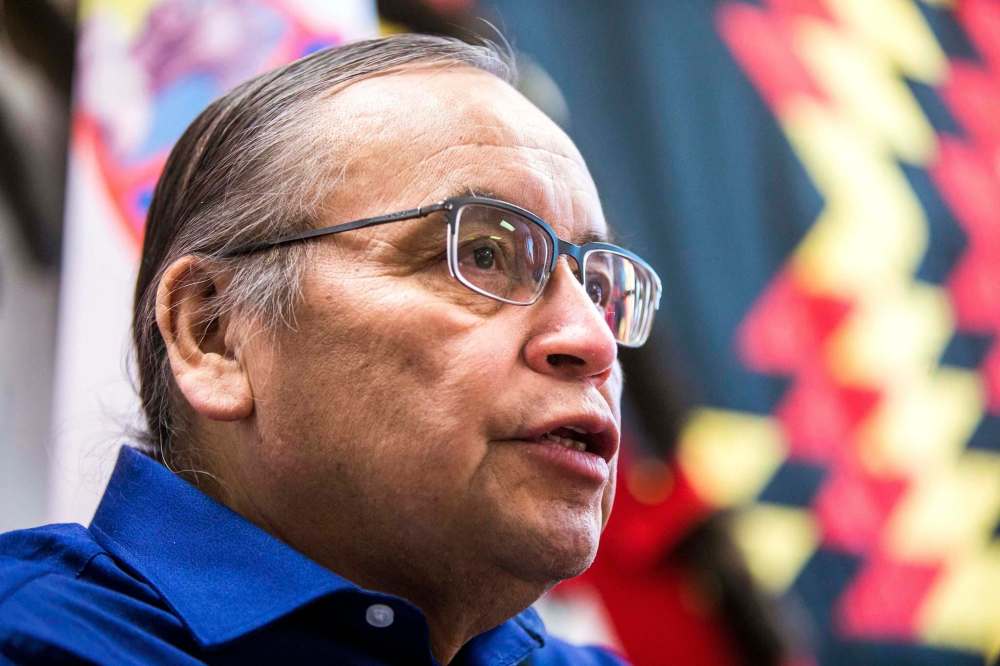
As for COVID-19, it’s a very real threat to Indigenous people. How are they integrating their traditional practices and beliefs with social distancing, wearing masks, washing hands and modern medical technology? With help from Niigaan Sinclair, who teaches native studies at the University of Manitoba and writes about Indigenous issues for the Free Press, I decided to find out.
First off, it’s important to note COVID-19 is not the first pandemic faced by Indigenous people.
Since their first contact with Europeans, Indigenous populations encountered new and devastating diseases. Most notably, smallpox wiped out entire communities, leading Indigenous Peoples to develop practices and medicines to battle the sickness.
Indigenous people were also hit hard by the deadly 1918 Spanish flu. In northern Manitoba, communities like Norway House experienced the sickness nearly six months after the south had finished with their first wave. They lost a fifth of their population.
Meanwhile, tuberculosis and other outbreaks were common at residential schools. Children were regularly quarantined and many died.
Indigenous nations know about sickness and pandemics, in other words, and developed practices to deal with them.
For example, when sicknesses historically entered communities, medicine people incorporated quarantine practices and social-distancing practices. These could involve creating controlled movement zones in communities, signified by hanging an individual’s or family’s possessions in a tree.
Communities would often work together to combat the sickness, sometimes putting aside centuries of conflict. The dead would be buried together in burial mounds, and medicines would be shared.
Indigenous Peoples also included European medicines in their practices. Treaty Six, signed by Crown representatives and Cree, Assiniboine and Ojibwa leaders in 1876 in Saskatchewan, included requirements for a “medicine chest” to be provided to help Indigenous communities combat sickness.
As for COVID-19 today, Terry Nelson, former chief of the Roseau River reserve, is talking to people in his community about ways to address the virus.
In addition to following practices such as social distancing, he suggests using traditional medicines such as bark from fir trees, yarrow and sage, which treat various ailments such as coughs and colds.
In addition, he is talking to younger people about the science behind traditional medicines, how to find and collect them, and their connection to spiritual practices.
“It’s part of the revival of traditional knowledge,” he says, pointing out that traditional societies like the Midéwiwin are specialists in medicinal practices, incorporating dance, song and story into a sense of health.
This is important, he notes, since knowledge of traditional medicines have been lost in communities due to the Indian Act and residential schools.
“Because of the persecution of our people, this knowledge went underground,” Nelson says, adding now it is being shared widely.
Terry’s brother Charlie, a Midéwiwin elder, is also speaking to young people about how ceremonies and traditional teachings can give them a framework for dealing with COVID-19.
This includes gathering and using natural medicines to promote “wellness” and address various ailments.
One of the biggest challenges Indigenous peoples will experience during this pandemic is an inability to feast and attend large gatherings, such as funerals and sundances, he says.
“These will have to be greatly restricted,” he explains, “but when this is over we can look forward to gathering again.”
For Wanda Levasseur, a member of Ebb and Flow First Nation and elder in residence at the University of Manitoba, this is the time for staying home and “burning our medicine, sage and cedar” — anti-bacterial and cleansing agents for the air.

She also advocates drinking boiled pine and cedar bark and needles, which are high in vitamin C. While drinking them, people should also “pray to the Creator for protection” from the virus. This not only creates a sense of connectedness but mental well-being, she notes.
For Indigenous people, Levasseur points out, the plant world “is sacred,” helping Indigenous communities build their relationships with the universe and each other.
“When people go out into the woods and forests to find these medicines, they reconnect themselves with the Creator,” she adds.
For Sinclair, all of this adds up to a “sense of community that bridges space, time, and the worst of conflict, something that brings light and hope during the darkest of times. That is the best medicine of all.”
faith@freepress.mb.ca
The Free Press is committed to covering faith in Manitoba through our Religion in the News project. This reporting continues because readers like you step forward to fund it.
Donate now to support our reporting on religion.
Your donation is eligible for a charitable tax receipt.
BECOME A FAITH JOURNALISM SUPPORTER
Our newsroom depends on a growing audience of readers to power our journalism. If you are not a paid reader, please consider becoming a subscriber.
Our newsroom depends on its audience of readers to power our journalism. Thank you for your support.
The Free Press is committed to covering faith in Manitoba through our Religion in the News project. This reporting continues because readers like you step forward to fund it.
Donate now to support our reporting on religion.
Your donation is eligible for a charitable tax receipt.
BECOME A FAITH JOURNALISM SUPPORTER
Our newsroom depends on a growing audience of readers to power our journalism. If you are not a paid reader, please consider becoming a subscriber.
Our newsroom depends on its audience of readers to power our journalism. Thank you for your support.
Advertisement Advertise With Us
Advertisement Advertise With Us
The Free Press acknowledges the financial support it receives from members of the city’s faith community, which makes our coverage of religion possible.