Increased demand as more surgeries resume concerns Canadian Blood Services

Advertisement

Advertise with us

OTTAWA - Canadian Blood Services says the resumption of elective surgeries following months of COVID-19 lockdown is putting a worrisome drain on the national blood supply.

Read this article for free:


or

Already have an account? Log in here »

To continue reading, please subscribe:

Subscribe and receive a limited-edition Free Press branded hat or tote.

Digital Subscription

One year of digital access for only $205*

  • Enjoy unlimited reading on winnipegfreepress.com
  • Read the E-Edition, our digital replica newspaper
  • Access News Break, our award-winning app
  • Play interactive puzzles

*First annual payment billed as $205.00 + GST for one year. This annual subscription will automatically renew at $233.00 + GST every 52 weeks (10% off the regular annual price of $259.35). Offer available to new and qualified returning subscribers only. Cancel any time.

To continue reading, please subscribe:

Add Free Press access to your Brandon Sun subscription for only an additional

$1 for the first 4 weeks*

  • Enjoy unlimited reading on winnipegfreepress.com
  • Read the E-Edition, our digital replica newspaper
  • Access News Break, our award-winning app
  • Play interactive puzzles
Start now

*Your next Brandon Sun subscription payment will increase by $1.00 and you will be charged $17.95 plus GST for four weeks. After four weeks, your payment will increase to $24.95 plus GST every four weeks.

Hey there, time traveller!
This article was published 08/06/2020 (2252 days ago), so information in it may no longer be current.

OTTAWA – Canadian Blood Services says the resumption of elective surgeries following months of COVID-19 lockdown is putting a worrisome drain on the national blood supply.

The number of donors that can be accepted at blood clinics is limited to respect physical-distancing restrictions.

Donations had initially dropped about 20 per cent because of concerns about the novel coronavirus and, with the suspension of elective surgeries, the demand for blood was down about 15 per cent.
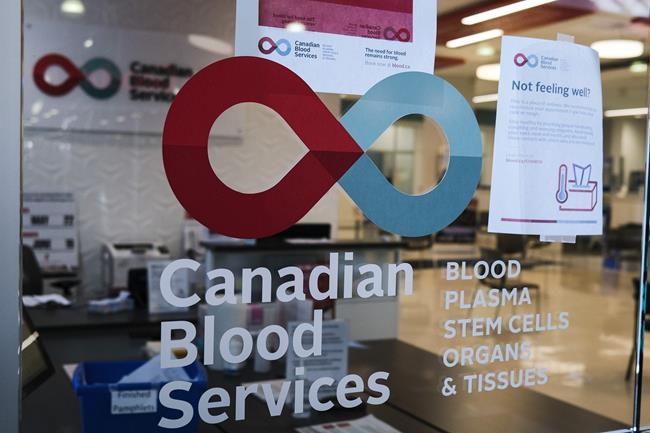
A blood donor clinic pictured at a shopping mall in Calgary, Alta., Friday, March 27, 2020, amid a worldwide COVID-19 flu pandemic. THE CANADIAN PRESS/Jeff McIntosh

The agency has been able to keep pace with demand until now.

“It’s a return to a new normal,” said Peter MacDonald, director of donor relations.

“What we’ve seen in the last couple of weeks is hospital demand has started to return to pre-COVID levels with the restrictions being lifted as provinces have started to open up. There’s now a backlog of elective surgeries that might require blood and blood products.”

About 400,000 of Canada’s 37 million residents give blood on a regular basis.

Canadian Blood Services operates a national inventory that allows products to be regularly shifted around the country to meet hospital and patient needs.

But the inventory has a shelf life — a year for frozen plasma, 42 days for red blood cells and five days for platelets — so the supply is no longer meeting demand.

MacDonald said O-negative blood is already showing a shortage with other types not far behind.

“We’re starting this week with a little over 18,000 units in the national inventory and our goal is to run it with between 20,000 and 24,000. We’re a little under right now.”

MacDonald is hoping a return to more mobile clinics across the country beginning in July, including in some communities where they were cancelled, will help with the shortage.

But with Canadians returning to everyday life, he’s worried they might not be as keen on donating blood.

“It is a concern. When the message went out in mid-March our attendance rates improved. It was one of the few things you could do in public, a way to make a difference in your community and we weren’t competing with a lot of other options,” he said.

“There’s a concern that as the weather warms up and the communities and provinces open up again that we could see an increase in our no-shows or cancellations for our appointments.”

It’s National Donor Week and MacDonald hopes people will keep giving before the situation gets any worse.

“It’s important to get the message out in advance of the inventory dipping to any dangerous levels.”

This report by The Canadian Press was first published June 8, 2020

— By Bill Graveland in Calgary. Follow @BillGraveland on Twitter
Report Error Submit a Tip

More Stories

Venezuela: unfinished business for the U.S.

Gwynne Dyer 5 minute read 2:01 AM CDT

Experienced imperialists understand that you can’t just take over a country and expect it to run itself. It takes time and work to turn it into an obedient and profitable colony and two months is not enough. Donald Trump moved on to his next target too soon and given how Iran’s been working out for him, he probably hasn’t thought of Venezuela in months.

U.S. Secretary of State Marco Rubio, who acts as Trump’s viceroy for Venezuela, hasn’t been there since the U.S. kidnapped President Nicolás Maduro and his wife in January. (In fact, he may never have been there at all — I can find no evidence of it.) But he does think about Venezuela. In fact, he controls the country very tightly from his Washington office.

He and Trump’s choice for interim president, Delcy Rodríguez, talk online every day, we are told. (She was the vice-president under Maduro, so she was the obvious choice if Trump wanted a local collaborator with supporters in the army and the secret police.) Rubio collects the government’s income and he tells her what she can spend her share on.

It’s an awkward arrangement, because the cabinet is still the core Chavista leaders, minus only Maduro himself. Trump thinks Rodríguez is a “terrific person” and doesn’t worry about elections: Venezuelans “wouldn’t even know how to have an election right now.” But Rubio understands that they really do expect an election to be part of the “transition.”

Local medical scrubs retailer feeling abandoned by U of M, RRC Polytech nursing programs

Maggie Macintosh 4 minute read Preview

Local medical scrubs retailer feeling abandoned by U of M, RRC Polytech nursing programs

Maggie Macintosh 4 minute read Thursday, Aug. 6, 2026

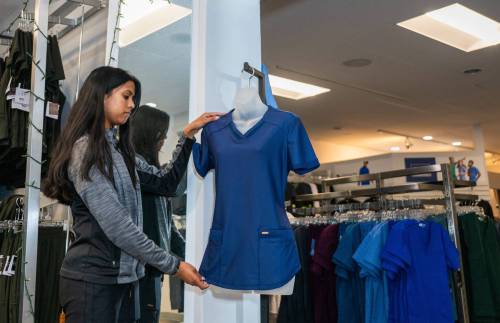
A Winnipeg uniform store is appealing to medical students to shop locally for scrubs this back-to-school season as it grapples with growing competition online and an apparent shutout by local campuses.

Unimor Healthwear has long ordered uniforms in bulk in navy blue, burgundy and pewter, as nurses-in-training are required to wear those colours based on where they’re enrolled in the province.

“It’s not like it used to be,” Evan Schwartz said about customer traffic to his store at 98 Sherbrook St.

The company’s director estimated he spent about $15,000 to stock up on scrubs in pewter in preparation for the launch of Red River College Polytechnic’s upcoming nursing intake.

Read
Thursday, Aug. 6, 2026

Mayoral race grows to 11 candidates

Joyanne Pursaga 2 minute read Yesterday at 3:21 PM CDT

Realtor Brad Gross is the 11th candidate to register for the race to become Winnipeg’s next mayor.

Gross, 60, said improving public safety and renewing roads will be key goals in his campaign.

“I just don’t like the direction the city’s going and it doesn’t seem to be getting better…. A lot of seniors, a lot of people are worried about crime. (And) the streets are just horrible again,” he said.

He said the city should not invest in bike lanes until Winnipeg’s roads are in better condition. He also hopes to provide free bus fares for seniors and gradually add security cameras at all bus shacks with known safety concerns, if elected.

Israel: the new political divide?

David McLaughlin 5 minute read Preview

Israel: the new political divide?

David McLaughlin 5 minute read 2:01 AM CDT

Abdul won and Avi is thrilled.

Federal NDP Leader Avi Lewis emerged from electoral hiding to tell us how it is “exhilarating to witness” a “wave of progressive populism” in the United States. He was referring to the upset winner of Tuesday’s heavily-watched Michigan Senate primary race, Abdul El-Sayed, who barely prevailed over his establishment opponent for the Democratic nomination.

Premier Wab Kinew’s favourite New Democrat (after himself) steadfastly hesitates to take a risk and run for a House of Commons seat in a byelection to kickstart Canada’s version of progressive populism. No hesitation, though, in Lewis immediately basking in the reflected glory of those international comrades and fellow travellers who do.

Writing about the state of Canada’s New Democrats feels like a hate crime — you hate wasting your time — and this is no exception. A better story is what’s driving this modest but undeniable political movement in U.S. politics and whether it might gain traction here in Canada.

Read
2:01 AM CDT

Letters, Aug. 8

7 minute read 2:01 AM CDT

Where is the love?

Re: The true costs of your pet — for everyone (Think Tank, Aug. 7)

Before I put Jerry Storie’s mean-spirited diatribe at the bottom of the cage of my precious lovebirds, Harry and Sally, they need to tell him that not only do pet birds add joy and song to a household, they also represent love for all in the pet kingdom.

Yes, pets cost money but they’re still cheaper than kids. Pets earn their keep just by being the lovable creatures they are. Even those with behaviour problems deserve our care.

Sending the wrong message

Andrea Charron 4 minute read 2:01 AM CDT

The U.S. State Department has announced plans to close five overseas diplomatic posts approved by Congress: Douala, Cameroon (a branch office); St. George’s, Grenada (an embassy); Nagoya, Japan (a consulate); Medan, Indonesia (a consulate); and Winnipeg, Canada (a consulate).

All are located in countries that are partners or allies of the United States.

It is unusual for the United States to reduce its diplomatic footprint. With the exception of some retrenchment efforts during the Trump administration, Washington has generally viewed diplomacy as a force multiplier. Diplomacy is not simply a matter of authority and leverage. It requires sustained local engagement, relationships and presence.

Consulates and branch offices are not the same as embassies. They are smaller missions, headed by consuls or consuls general rather than ambassadors and often provide a more limited range of services. Yet they play a vital political, economic and cultural role, supporting both local populations and American citizens abroad.