History, resistance, reality
Five films exploring Black experience in Canada display diversity of voices
Advertisement
Read this article for free:
or
Already have an account? Log in here »
To continue reading, please subscribe:

Digital Subscription
One year of digital access for only $205*
- Enjoy unlimited reading on winnipegfreepress.com
- Read the E-Edition, our digital replica newspaper
- Access News Break, our award-winning app
- Play interactive puzzles
*First annual payment billed as $205.00 + GST for one year. This annual subscription will automatically renew at $233.00 + GST every 52 weeks (10% off the regular annual price of $259.35). Offer available to new and qualified returning subscribers only. Cancel any time.
To continue reading, please subscribe:
Add Free Press access to your Brandon Sun subscription for only an additional
$1 for the first 4 weeks*
- Enjoy unlimited reading on winnipegfreepress.com
- Read the E-Edition, our digital replica newspaper
- Access News Break, our award-winning app
- Play interactive puzzles
*Your next Brandon Sun subscription payment will increase by $1.00 and you will be charged $17.95 plus GST for four weeks. After four weeks, your payment will increase to $24.95 plus GST every four weeks.
Read unlimited articles for free today:
or
Already have an account? Log in here »
Hey there, time traveller!
This article was published 27/06/2020 (2272 days ago), so information in it may no longer be current.
Film is a powerful tool when attempting to explore complex narratives. Whether we’re far removed from or close and intimate with the characters on screen, film encourages us to listen, reflect and analyze the stories of others, providing an escape from our everyday realities. That’s why movies are so compelling in teaching us about who we are and how we’ve been shaped by our history.
While the exposure of injustice on Black lives is at the centre of today’s public conversation, collective themes of resilience, passion, trauma and revolution echo in narratives of the Black experience in film. As the festival director for the Afro Prairie Film Festival, supporting emerging and established Black Canadian filmmakers on screen and behind the scenes has been my driving force. Hoping to confront and reshape the Eurocentrism of Winnipeg’s arts and film community, being the director of a Black film festival has been an experience of turbulence and progress.

It all started with a question I had back in 2013, when I was introduced to a pioneering Black Manitoba filmmaker.
In February of that year, I attended a tribute retrospective screening for Winston Washington Moxam, whose work captured the essence of navigating as a Black person through the passive, awkward and communal aggressive traits of anti-Blackness in what we call “Friendly Manitoba.”
Little did I know that night would be the influence behind the work I do today. The screening presented four films of Moxam’s career back to back: From the Other Side (1992), The Barbecue (1993), Sand (1999) and his first feature-length, Barbara James (2001), played to a packed house of Winnipeg film enthusiasts, Moxam’s friends and family, and interested community members, such as myself at the time.
As I watched each film, directed and delivered with captivating vulnerability, truth and awareness far ahead of Moxam’s time, I thought, “Why have I never heard of him before?”
It’s a frequently asked question, rooted in frustration for the lack of support and mainstream exposure Black artists continue to suffer from in the Canadian arts world. As we enter into a new stage of national attention on the voices and lives of Black people in Canada and around the world, one thing is clear: our stories will no longer go unheard.
Film is a strong artistic element with which to explore our stories; filmmakers like Moxam give the audience a glimpse into Canada’s backyard, peeking through a window this country has tried to keep shut for too long.
Here are five Black Canadian films that help expose the structural white supremacy in our country that is rooted in anti-Blackness, delivered via an essential medium that forces us to sit and pay attention.
While the rich history of Black cinema in Canada has been neglected in the mainstream Canadian film industry, there are too many brilliant Black Canadian directors to mention. But for today’s conversation, the themes rooted in our collective resistance are, I think, beautifully depicted in these works that speak to the tumultuous times we live in now, but are no stranger to.
Sylvia Hamilton and Claire Prieto’s 1989 National Film Board of Canada documentary, Black Mother Black Daughter, follows the histories of Black women in Nova Scotia, sharing intimate memories of women who fought, contributed and invested in their communities.
This film (available to view for $2.99 at nfb.ca), accompanied by an enduring musical backdrop, not only reminds us of the significance of resistance demonstrated by Black Scotians but provides an insight into the forgotten and misunderstood history of slavery in Canada.
It leaves its audience with an education on the erasure of Black people across the country and what it means to pass on your history; it also reminds viewers that, yes, we have a rich Black history in Canada.
https://www.youtube.com/watch?v=msoBTIv1VqM
The Skin We’re In (2017), directed by Charles Officer and available to stream on CBC Gem, follows acclaimed journalist Desmond Cole as he researches his book of the same name.
Cole’s exploration of Black activism in Canada exposes the age-old convenient ignorance and collective denial of racism in our country, though some of us like to proclaim we are “not as bad as the U.S.”
Through Officer and Cole’s documentation of structural violence inflicted on Black communities across Canada (building off the Black Lives Matter movement), this film interrupts the Canadian ignorance that continues to reject the idea that racism and white supremacy uphold our institutions.
The Skin We’re In gives you the tools to debate the idea that our country is free from oppression the next time you find yourself in a conversation that starts “Canada is not as bad as…”
https://www.youtube.com/watch?v=rpySiSV7XMs
At the risk of making this list seem Toronto-centric, it’s important to note that 80 per cent of Canada’s Black population lives in Ontario. This statistic helps us understand, regionally, the contributions of historical Black activism and sets a strong tone for the history of Black resilience in Canada. Though the struggle is real across the country and around the world, Phillip Pike’s Our Dance of Revolution (2019) — a documentary about the history of Toronto’s Black queer community — speaks to the new leaders of the movement in a community within a community, one that has, at times, been displaced or forgotten about in the history of Black liberation.
The film exposes the invisibility of Black queer leadership and their contributions in the fight for systemic change and justice. Informed by the resilience, vulnerability and tireless direction of radical activists and organizers, Our Dance of Revolution opens the dialogue with the shutdown of Toronto’s Pride by Black Lives Matter Toronto. The film walks through four decades of Black queer rebellion in Toronto from the early days of Blockorama, an annual block party designed to interrupt the whiteness of Pride and dismantle the invisibility of Black queer communities. This documentary amplifies the history of Black queer resistance while making us aware that to deny those activists’ role denies the history of Black liberation in Canada.
Inspired by documentary entitled The Woman I Have Become, Promise Me (2019), directed by Alison Duke, walks through the painful realities of a single-parent family as a young daughter Charlie sticks by her mother Yolonda, who is fighting a battle against HIV/AIDS. As Charlie’s school begins to grow more concerned with her absence and sliding academic engagement, Promise Me exposes the failing education, health and childcare systems disproportionately affecting Black families in Canada.
Duke’s ability to capture the anxiety Yolonda and Charlie experience while trying to manage overwhelming grief and stress, and dealing with state surveillance, educates the audience on how the child welfare system in Canada contributes to the dismantling of Black families. Though the end of the film depicts Charlie’s increasing lack of control over her and her mother’s situation, the love and unbreakable bond between them remind us that family comes in many forms and love is always present even in times of pain.
It’s no coincidence that the suggested films focus on experiences of not just Black communities, but the women and queer folks in those communities. As we see a resurgence of young energy in today’s Black Lives Matter movement, it’s notable that women are at the centre of this momentum. This shows us the importance of reinforcing the stories of Black women and queer voices.

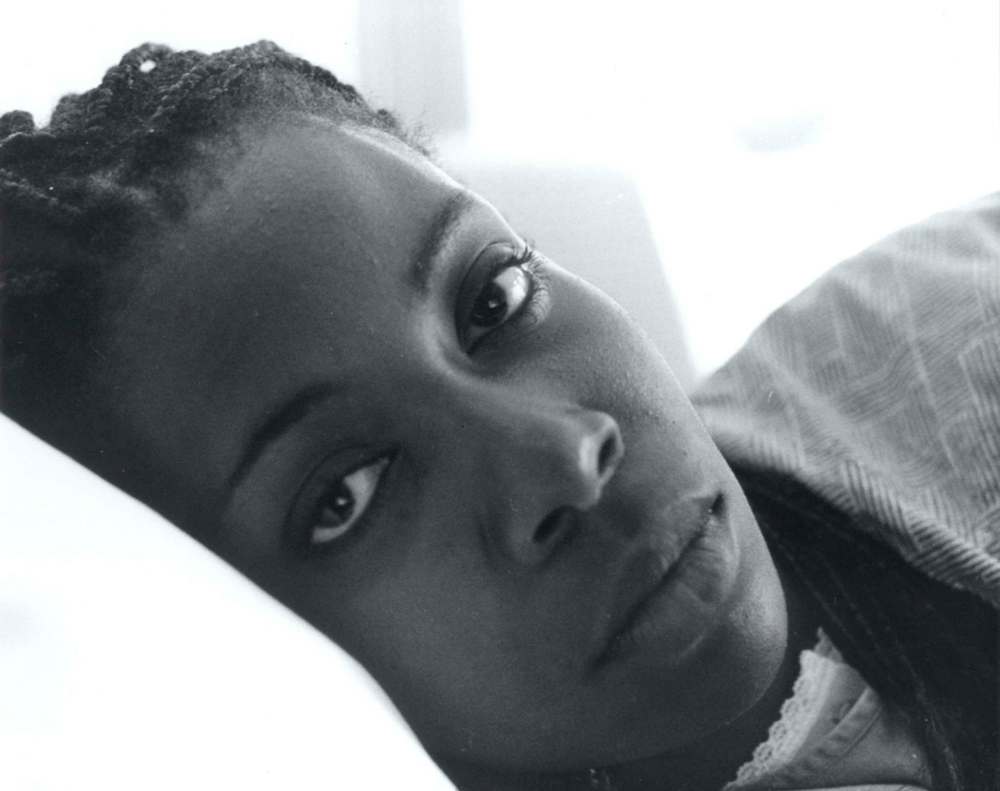
Our last selection takes us back to Winnipeg with Moxam’s Barbara James (2001). Barbara James, a young woman who’s struggling with a contentious relationship with her mother, faces an unplanned pregnancy that forces her to find herself under unforeseen circumstances. Moxam’s intriguing storytelling accurately re-enacts the complexities of interracial-relationships and again masterfully depicts how to navigate whiteness as a Black person in Winnipeg. (Actor Beverly Ndukwu, who is profiled on page G3 of today’s Free Press, plays Barbara as a young girl.)
This was Moxam’s first feature-length film, but his 1993 short film The Barbecue complements the themes in Barbara James: white-fetishization of the Black woman, white-Winnipeg ignorance and racism. It could be considered the Manitoban ‘90s version of Jordan Peele’s acclaimed horror film Get Out in the way it attempts to pinpoint how to stay safe when you’re the only Black person at the long-weekend barbecue, or how to confront the difference between fetishization and appreciation. However you read this film, it’s both comedic and a tad tragic, but appreciates the journey of a Black woman’s healing process and reminds us at no matter what age you are, you can always get a second chance in life.
Exploring Black narratives on screen not only depicts our stories — our history, resilience, pain and vulnerability — but highlights the depths of our shared collective experience in this country. Whether in Halifax, Toronto or Winnipeg, we are in a time where Black voices will no longer go unheard. Using film to dive deeper in the experiences of our communities is a simple, immersive way to explore how our history has shaped our current moment.
The power of Black cinema will always encourage audiences in and outside of the Black community to listen and pay attention. It reminds us that ignorance is a choice, not an option; film can teach us all something about ourselves.
Alexa Joy is a Winnipeg writer, activist and researcher, and the festival director for the Afro Prairie Film Festival.
@MC_Woke