

A summer tradition
Camp Massad provides place 'where the ideals of Jewish identity are cherished and put on display'
Advertisement
Read this article for free:
or
Already have an account? Log in here »
To continue reading, please subscribe:
Digital Subscription
One year of digital access for only $1.44 a week*
- Enjoy unlimited reading on winnipegfreepress.com
- Read the E-Edition, our digital replica newspaper
- Access News Break, our award-winning app
- Play interactive puzzles
*Billed as $5.77 plus GST every four weeks. After 52 weeks, price increases to the regular rate of $19.95 plus GST every four weeks. Offer available to new and qualified returning subscribers only. Cancel any time.
To continue reading, please subscribe:
Add Free Press access to your Brandon Sun subscription for only an additional
$1 for the first 4 weeks*
- Enjoy unlimited reading on winnipegfreepress.com
- Read the E-Edition, our digital replica newspaper
- Access News Break, our award-winning app
- Play interactive puzzles
*Your next Brandon Sun subscription payment will increase by $1.00 and you will be charged $17.95 plus GST for four weeks. After four weeks, your payment will increase to $24.95 plus GST every four weeks.
Read unlimited articles for free today:
or
Already have an account? Log in here »
Hey there, time traveller!
This article was published 27/06/2020 (2170 days ago), so information in it may no longer be current.
Sleepover camp has been a summer tradition in North America since the late 19th century. Sleepover faith-based camps have been a summer tradition for almost as long.
Faith-based camps serve several purposes. They, like all camps, were initially designed to give city kids, and often disadvantaged kids or children of immigrants, the opportunity to escape the crowds, noise and squalidness of the city, commune with nature, and enjoy fresh air and leisure activity. But the interweaving of Bible study and prayer with dodgeball and swimming, also proved a powerful and easy way to forge and reinforce religious values, culture and identity, and give campers the opportunity to meet and mingle with others who shared those identities. It also proved a great way to develop future faith and community leadership.
In a study on the Impact of Jewish Overnight Camp on Jewish Attitudes and Behaviours, the Foundation for Jewish Camping found that the Jewish camp experience significantly increases the likelihood of an adult’s Jewish engagement.
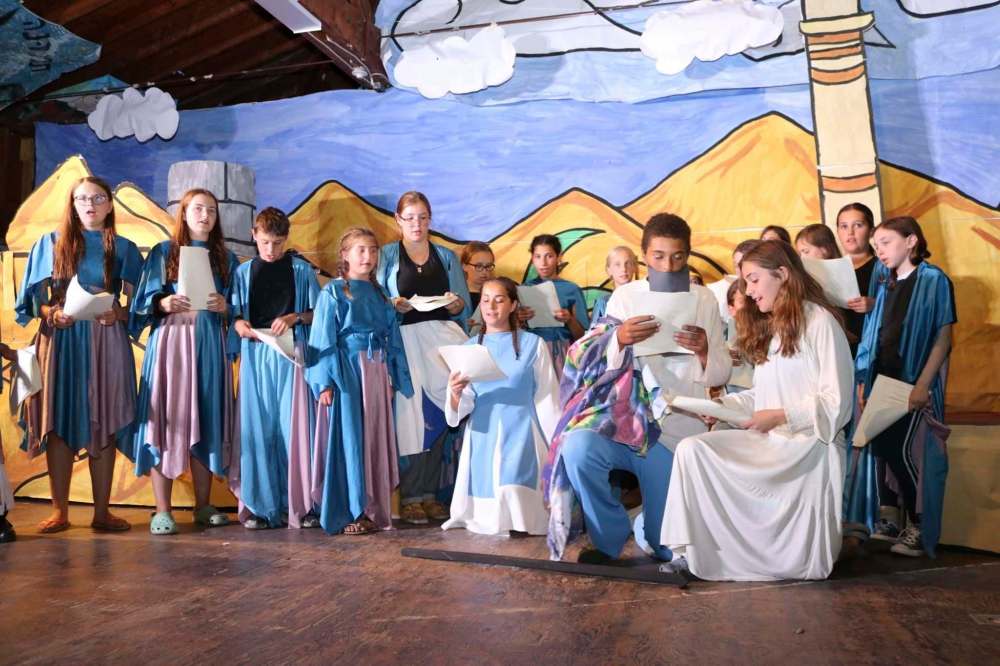
“The bonding experience of camp,” it reported, “not only builds a long-lasting taste and yearning for community; it also creates habits of Jewish practice. It makes Judaism part and parcel of life’s most joyous moments.”
The first Jewish overnight camp in North America was founded in the Berkshires in 1893 for girls working long hours in the swelter and insecurity of the New York garment industry. In the decades that followed, dozens of sleep-away Jewish camps cropped up across Canada and the U.S., reflecting disparate demographics, denominations and ideologies. But whether these camps were Reform, Conservative, Orthodox, Zionist, socialist, secular, Hebrew speaking or Yiddish speaking, independent or affiliated, they shared the same objective. They were all established to make Jewish kids proud of and confident in their Jewish identity.
That objective was and remains the main goal and the main gift of Camp Massad, the Hebrew speaking overnight summer camp founded in Manitoba’s Interlake almost 70 years ago.
“Massad shapes Jewish identity by giving campers a meaningful and inclusive Jewish learning environment where the ideals of Jewish identity are cherished and put on display,” explains Danial Sprintz, the camp’s executive director.
The Hebrew immersion aspect of the camp, he adds, further solidifies that Jewish identity.
Most of the campers and counsellors at Massad are Winnipeggers, but they come from different Jewish backgrounds and experiences. Some attend Jewish day school while others attend schools where they are the only Jewish students. Some are fourth-generation Canadians and other are newcomers to Canada from South America or Belarus. Some are fluent in Hebrew and others have never spoken the language. Some come from religiously observant families and others come from families in which religious observance plays no role.

But at Massad these differences dissolve. Kosher food, Grace-after-meals, morning prayers, and programs and discussions about social justice, Jewish history and Israel are as much a part of the immersive camp experience as team competitions, camaraderie, cheering, singing, skits and sports. Simply by being at Massad, and having fun at Massad, children absorb Jewish practice, culture and ethics.
As a result, at the end of every summer, campers return home knowing a little more and feeling a little prouder about who they are and what they can achieve as Jewish community members.
This summer, the gates of Massad — like the gates of most Manitoba summer camps — will be closed to overnight campers. But the camp may run some day camp programming and offer some online programming as well, perhaps by plugging in to the virtual platform, clickto.camp.
Considering the calibre, creativity and intensity of Massad’s traditional on-site programming, this new pandemic-necessitated programming is certain to be exciting and engaging, and loaded with Jewish content and Jewish pride.
swchisvin@gmail.com
The Free Press is committed to covering faith in Manitoba through our Religion in the News project. This reporting continues because readers like you step forward to fund it.
Donate now to support our reporting on religion.
Your donation is eligible for a charitable tax receipt.
BECOME A FAITH JOURNALISM SUPPORTER
The Free Press acknowledges the financial support it receives from members of the city’s faith community, which makes our coverage of religion possible.