WEATHER ALERT

Mennonite artists’ rich, varied history explored

Advertisement

Advertise with us

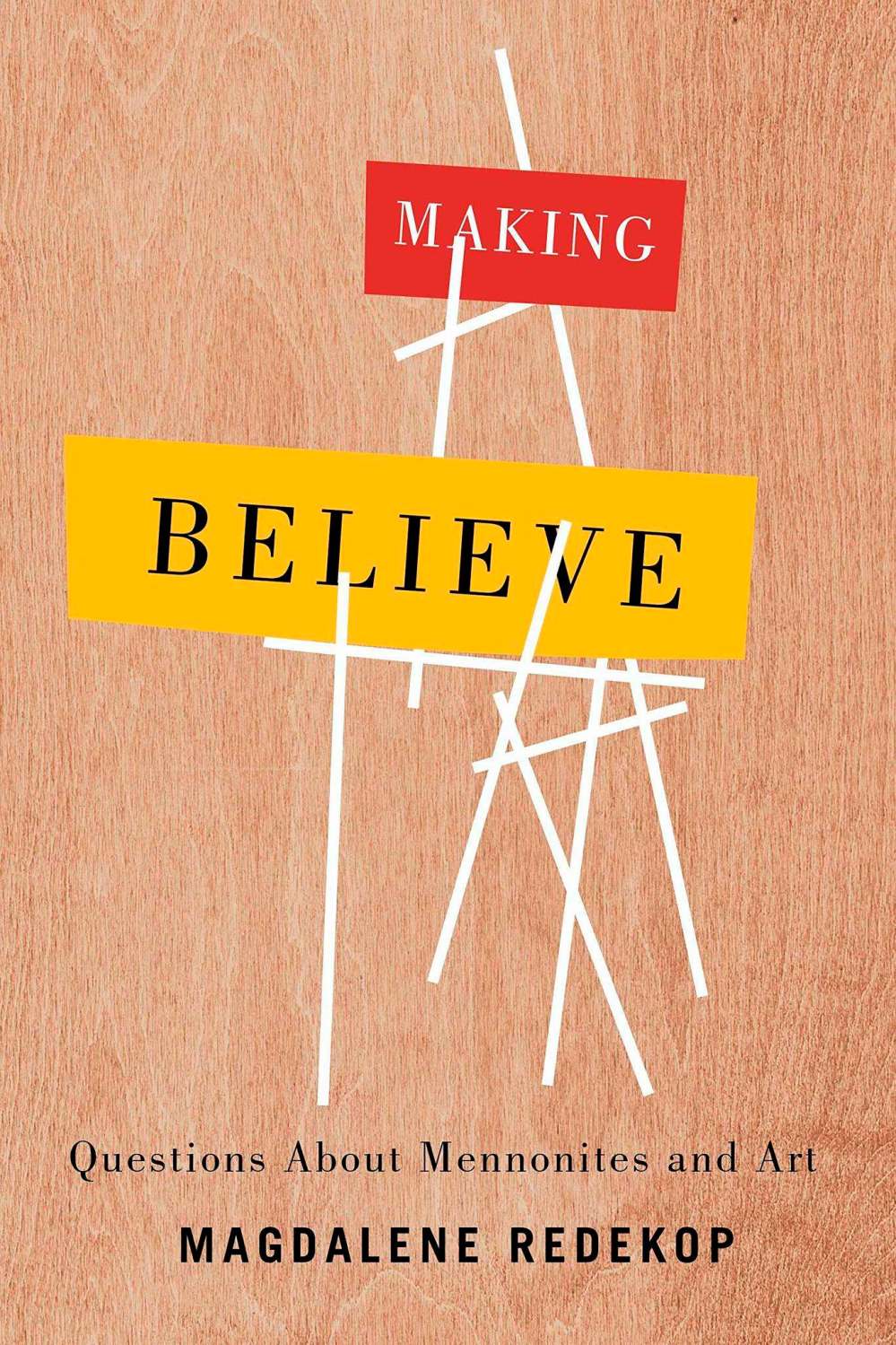
When people think of art, Mennonites might not always be the first group to come to mind. Yet as Magdalene Redekop points out in Making Believe: Questions About Mennonites and Art, creativity through the arts is very much a part of Mennonite life, whether as a means of confirming identity as part of a community or as a means of questioning what it means to be a Mennonite.

Read this article for free:

or

Already have an account? Log in here »

To continue reading, please subscribe:

Subscribe and receive a limited-edition Free Press branded hat or tote.

Digital Subscription

One year of digital access for only $205*

  • Enjoy unlimited reading on winnipegfreepress.com
  • Read the E-Edition, our digital replica newspaper
  • Access News Break, our award-winning app
  • Play interactive puzzles

*First annual payment billed as $205.00 + GST for one year. This annual subscription will automatically renew at $233.00 + GST every 52 weeks (10% off the regular annual price of $259.35). Offer available to new and qualified returning subscribers only. Cancel any time.

To continue reading, please subscribe:

Add Free Press access to your Brandon Sun subscription for only an additional

$1 for the first 4 weeks*

  • Enjoy unlimited reading on winnipegfreepress.com
  • Read the E-Edition, our digital replica newspaper
  • Access News Break, our award-winning app
  • Play interactive puzzles
Start now

*Your next Brandon Sun subscription payment will increase by $1.00 and you will be charged $17.95 plus GST for four weeks. After four weeks, your payment will increase to $24.95 plus GST every four weeks.

Hey there, time traveller!
This article was published 04/07/2020 (2212 days ago), so information in it may no longer be current.

When people think of art, Mennonites might not always be the first group to come to mind. Yet as Magdalene Redekop points out in Making Believe: Questions About Mennonites and Art, creativity through the arts is very much a part of Mennonite life, whether as a means of confirming identity as part of a community or as a means of questioning what it means to be a Mennonite.

Redekop is a professor emeritus of English at the University of Toronto and has been a presenter on the topic of Mennonites and writing. She is also the author of several books, including Mothers and Other Clowns: The Stories of Alice Munro.

Artwork that can be hung on walls or displayed on shelves is a major focus of the book, including such visual artists as Wanda Koop, who founded Art City here in Winnipeg, and the author’s own sister, Elizabeth Falk. The text also features discussions of writing ranging from Thieleman J. Van Bracht’s 17th-century Martyrs Mirror to modern writers such as Rudy Wiebe and Patrick Friesen.
Music is also represented in a discussion of Ben Horch, known for his part in commissioning the Mennonite Piano Concerto by (non-Mennonite) Victor Davies. The author points out that ironically, at least one of the traditional “German” songs that make up the concerto was originally composed in English.

The idea of identity is central to the book as the author examines the ways in which her subjects have embraced or ignored their Mennonite heritage as a faith, an ethnic identity or both. “Identity is always in process, something that we create while interacting with others,” she writes. While some authors and artists have used their creativity to address their Mennonite heritage, others have not.

In her chapter on the “Mennonite Renaissance,” Redekop discusses a crisis in representations of Mennonites going back to the 16th century in Switzerland and the Netherlands, and how people have confronted these ideas. Until the second half of the 20th century, Mennonite participation in the arts was limited but has flourished since then, with poets such as Sarah Klassen and Di Brandt taking their place alongside other writers, painters and more.

Even then, Mennonites have not always known how to represent themselves, as Redekop points out in her chapter “Location, Dislocation.” Here she discusses the limitations of the collection Harvest: Anthology of Mennonite Writing in Canada, with its large sections in German, as well as the Mennonite self-portrayals in Rhubarb magazine and other publications.

Many readers might be intrigued or puzzled by the comparisons Redekop makes between Mennonite literature and other works, such as Mary Shelley’s Frankenstein, while her connection of Reformation leader Menno Simons with the trickster tradition could be especially jarring to some readers. The topics in the book are wide-ranging, covering both the place of Mennonites in the wider artistic community and the author’s own reflections on various aspects of Mennonite history and heritage.

Despite its length and somewhat academic style, Making Believe is a relatively accessible book. The author’s personal anecdotes and frequent references to her own sister’s work help to balance the academic segments of the book, while the extensive historical and literary references give the book an important place in scholarship.

With an extensive bibliography and index, together with photographs of artwork that the author discusses, the book is a useful resource for students of art or Mennonite history, or for anyone interested in learning more about the subject.

Susan Huebert is a Winnipeg writer, editor and pet sitter.
 

Report Error Submit a Tip

More Stories

Safety assessment planned following drownings

Nicole Buffie 4 minute read Preview

Safety assessment planned following drownings

Nicole Buffie 4 minute read Thursday, Jul. 23, 2026

The Manitoba government will conduct an assessment of high-risk trails and areas in its parks system following the drownings of two siblings at Nutimik Lake in the Whiteshell.

Environment Minister Mike Moyes has ordered his department to identify high-risk areas after Maximo Au Ramirez, 10, slipped on rocks near Sturgeon Falls and fell in the lake Saturday. His brother, Aaron Au Ramirez, 13, went in to try to save him.

The body of Aaron was recovered Thursday evening, 24 hours after his brother’s body was found Wednesday.

“We have a lot of beautiful parks and spaces, but to flag any areas that could need greater improvements for safety, and so we’re going to take a really comprehensive approach to ensuring that Manitobans can enjoy nature, but do it in a way that’s safe,” Moyes said Thursday.

Read
Thursday, Jul. 23, 2026

Vacant Bay store on road to redevelopment, St. Vital Centre owner says

Gabrielle Piche 6 minute read Preview

Vacant Bay store on road to redevelopment, St. Vital Centre owner says

Gabrielle Piche 6 minute read Yesterday at 5:29 PM CDT

Entertainment attractions are coming to fill the former Hudson’s Bay space in St. Vital Centre.

Montreal-based real estate firm Leyad, the south Winnipeg mall’s owner, says it is finalizing an agreement for the vacant property. Further details should appear in the next couple months, said president Henry Zavriyev.

“We’re looking at what other types of experiences we can bring to the mall that aren’t just typical retail,” he said during a visit to Winnipeg this week.

“We want to create an experience where you can just come to the mall, hang out here for hours, no matter if you’re a kid, an adult, a retiree.”

Read
Yesterday at 5:29 PM CDT

Animal rescue groups shaken by advocate’s death

Carol Sanders 4 minute read Preview

Animal rescue groups shaken by advocate’s death

Carol Sanders 4 minute read Yesterday at 5:40 PM CDT

A week after an animal rescue volunteer died doing what she loved at Sandy Bay First Nation, the charity she dedicated herself to has paused rescues as groups rally to prevent another mauling.

Winnipeg’s Amanda Nobiss, 37, was found dead July 17 after police were contacted by a friend trying to locate her. She often visited the community 180 kilometres northwest of Winnipeg to save animals.

Several “aggressive dogs” were found near where Nobiss’s body was located, Manitoba First Nation Police Service has said. It did not respond Friday when asked for an update on its investigation into her death.

“What happened is the most tragic, heartbreaking thing that could have possibly happened,” said Chelsea Kork, president of K9 Advocacy Manitoba, the charity Nobiss volunteered with.

Read
Yesterday at 5:40 PM CDT

Hospital window smasher gets 90 days in jail

Tessa Adamski 4 minute read 2:01 AM CDT

BRANDON — A 35-year-old man from The Pas was sentenced to 90 days in jail after he admitted to smashing a garage window in the ambulance bay of the Brandon hospital while intoxicated.

James Constant pleaded guilty in Brandon provincial court on Thursday to mischief under $5,000 and breaching a probation order that prohibited him from possessing weapons. Two additional charges, involving failing to comply with a probation order and possessing a dangerous weapon, were stayed.

On July 15, Constant was taken to the Brandon Regional Health Centre by ambulance after he overdosed and became “aggressive” and “unco-operative” with paramedics, says an agreed statement of facts read in court by Crown attorney Rich Lonstrup.

“He took a piece of wood and smashed the garage-door window within the ambulance bay,” Lonstrup said.

Longtime Assiniboine Park Zoo resident Blizzard the bison dies

Zoe Pierce 2 minute read Preview

Longtime Assiniboine Park Zoo resident Blizzard the bison dies

Zoe Pierce 2 minute read Yesterday at 3:03 PM CDT

Blizzard, the white bison that became one of Assiniboine Park Zoo’s most recognizable residents during nearly 20 years at the facility, has died, the zoo announced Friday.

The zoo said Blizzard’s health declined in recent weeks, so a diagnostic exam was recommended to better understand his condition. He died during the procedure.

Blizzard arrived at Assiniboine Park Zoo in 2006 and went on to become a favourite among visitors, inspiring “millions of visitors with his remarkable presence,” the zoo said in a social media post.

“While all animals in our care are deeply valued, Blizzard held a special place in the hearts of many people and carried profound cultural and spiritual significance for many Indigenous peoples,” the post reads.

Read
Yesterday at 3:03 PM CDT

Dropping the gloves to make the point

Editorial 4 minute read Preview

Dropping the gloves to make the point

Editorial 4 minute read 2:01 AM CDT

In hockey parlance, it’s called “shedding,” the moment in a game when you are forced to deal with an instigator by dropping (shedding) your gloves for an all-out brawl.

That term is a deep cut from hockey culture that Prime Minister Mark Carney — he of the “elbows up” phenomenon — may need to not only embrace but practise more often in the face of yet another round of overly punitive tariffs imposed by United States President Donald Trump.

To be fair, under Carney’s leadership, Canada has not exactly rolled over in the face of Trump’s bully-boy tactics.

Yes, Canada has made concessions to placate Trump to further a new continental trade agreement: investing more money to combat the cross-border flow of fentanyl that isn’t actually happening, stalling efforts to tax streaming companies as most European countries already do, and — most recently — giving Trump a cut of profits from the Canadian-made, Canadian-paid Gordie Howe bridge between Windsor and Detroit.

Read
2:01 AM CDT