

Designing with meadow rues
Liven up your garden with clouds of dainty colour

Advertisement
Read this article for free:
or
Already have an account? Log in here »
To continue reading, please subscribe:

Digital Subscription
One year of digital access for only $205*
- Enjoy unlimited reading on winnipegfreepress.com
- Read the E-Edition, our digital replica newspaper
- Access News Break, our award-winning app
- Play interactive puzzles
*First annual payment billed as $205.00 + GST for one year. This annual subscription will automatically renew at $233.00 + GST every 52 weeks (10% off the regular annual price of $259.35). Offer available to new and qualified returning subscribers only. Cancel any time.
To continue reading, please subscribe:
Add Free Press access to your Brandon Sun subscription for only an additional
$1 for the first 4 weeks*
- Enjoy unlimited reading on winnipegfreepress.com
- Read the E-Edition, our digital replica newspaper
- Access News Break, our award-winning app
- Play interactive puzzles
*Your next Brandon Sun subscription payment will increase by $1.00 and you will be charged $17.95 plus GST for four weeks. After four weeks, your payment will increase to $24.95 plus GST every four weeks.
Read unlimited articles for free today:
or
Already have an account? Log in here »
Hey there, time traveller!
This article was published 15/08/2020 (2194 days ago), so information in it may no longer be current.
Meadow rues give a spectacular show in different areas of the herbaceous border. There are numerous options that will liven up your garden with a profusion of colour in late spring, mid-summer, or as late as mid-September. By this time in August when gardens are feeling the effects of weeks of hot, dry weather, high-impact perennials that are also low-care are especially satisfying.
Meadow rues belong to the buttercup family (Ranunculaceae) whose esteemed members also include clematis, delphinium, monkshood, and ranunculus. The botanical name for meadow rue is thalictrum. You may recognize it from the round, blue-green or gray-green, fern-like foliage but surely grow it for the incredible clouds of dainty flowers. The flowers of meadow rues lack petals and instead the flower form consists of stamens only or a combination of sepals and stamens depending on the variety. But oh, what beautiful texture the airy sprays with their see-through quality will give to your garden. Meadow rues prefer rich, moisture-retentive but well-drained soils in partial shade to full sun. They are virtually pest and disease-free.
My favourite meadow rue is Thalictrum delavayi Splendide. Once I was asked to divide mine and share a piece but I couldn’t bear to — Splendide is so exquisite that I want it all to myself. Now with that confession out in the open, let me tell you what makes Splendide meadow rue one of the most enviable late-summer plants you will ever grow.
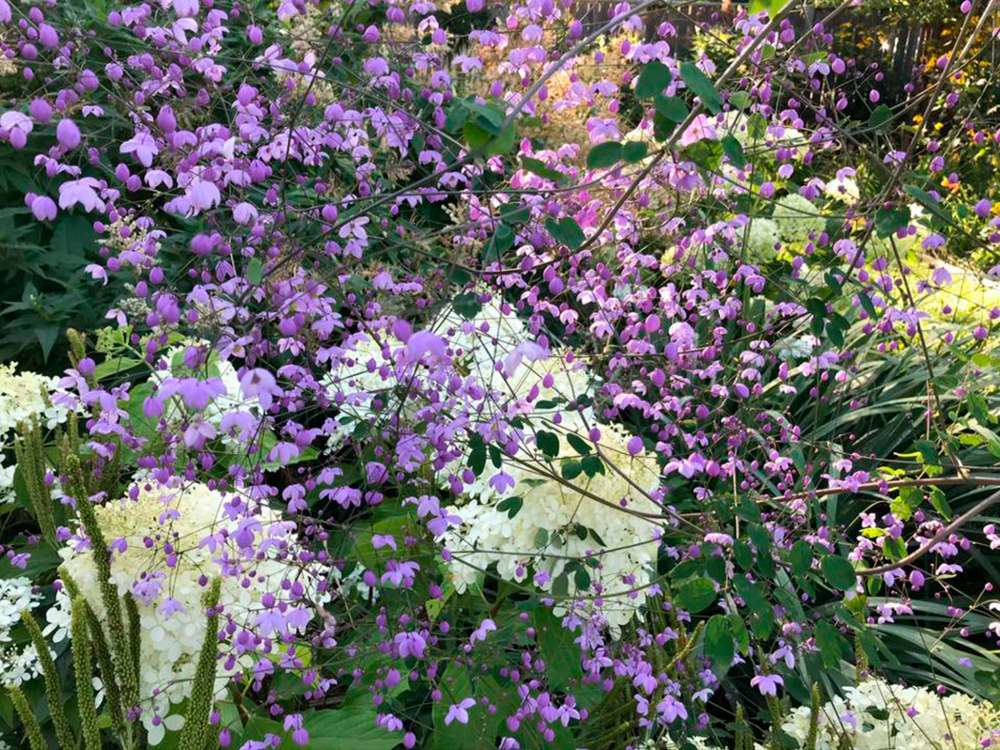
Splendide is splendidly tall (190 cm plus) and elegant. While most meadow rues have sturdy stalks, Splendide’s skinny burgundy legs require staking. Tiny, pearl-like buds on delicate branching begin appearing high above the stalks in early August but then you must wait a couple of weeks before they fully open to cloud-like sprays of lavender flowers with creamy stamens. The transparency floats above most other plants in the late summer garden for a handsome effect. In a part to full shade location, this sterile (seedless) hybrid boasts a long flowering period.
Earlier this summer I purchased Thalictrum rochebruneanum meadow rue (also known as lavender mist meadow rue) at a local garden centre. It blooms from July to September. The tag says it is hardy to zone 4a, prefers well-drained, moderately moist, average soil in a full sun to part shade location and is resistant to both deer and rabbits.
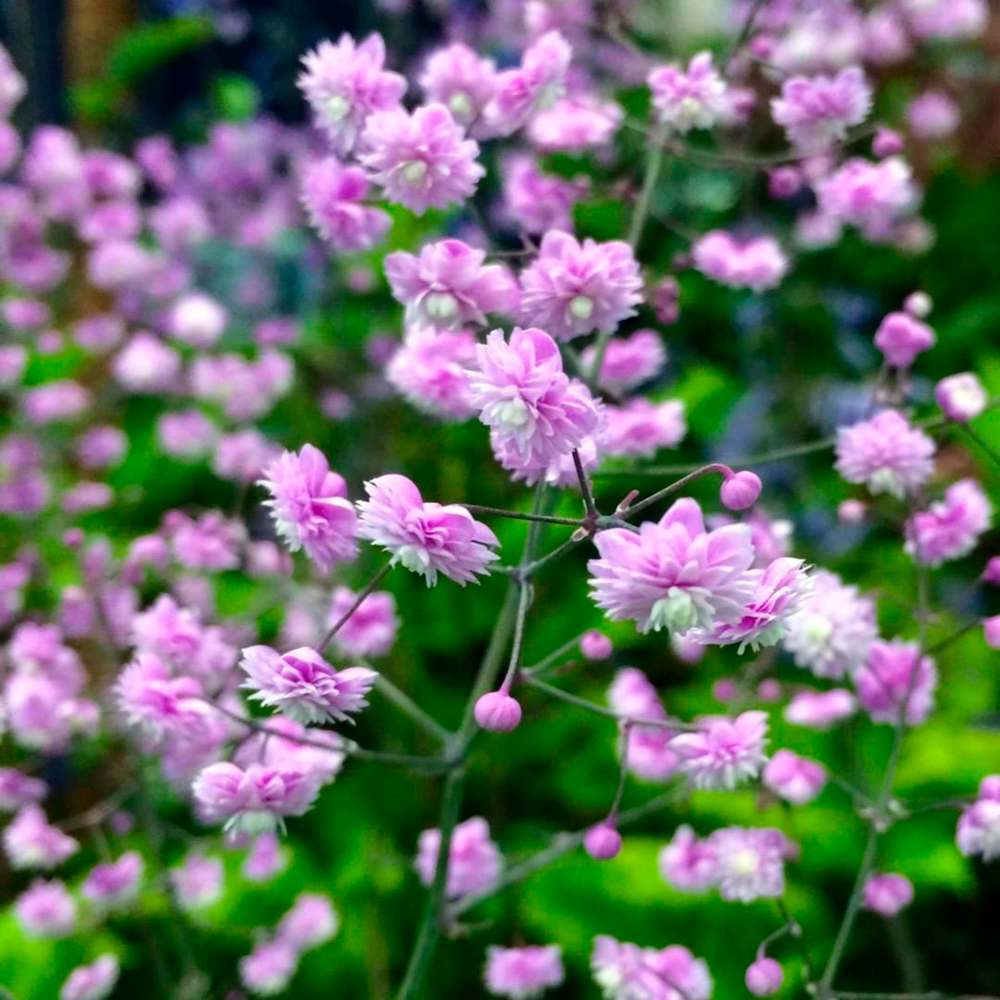
Craig Gillespie, head gardener at Assiniboine Park, says there are three varieties of meadow rue that grow in the English Garden: Thalictrum delavayi Hewitt’s Double, Thalictrum flavum subsp. Glaucum, and Thalictrum aquilegifolium Thundercloud. Hewitt’s Double has fully double lilac-pink flowers with pale yellow stamens that are larger than those of Splendide. The height is approximately 130 cm and it blooms from mid-summer to early autumn. Staking is recommended. Sue MacLeod, Glenlea Nursery, carries Hewitt’s Double but is currently sold out. She says it is great for use in bouquets and combines it with echinops and eryngium.
Thalictrum flavum is commonly known as yellow meadow rue. This unique species is characterized by blue-green foliage and a flower form that consists of stamens only. It blooms mid-June to late July and is a shorter meadow rue at about 150 cm.
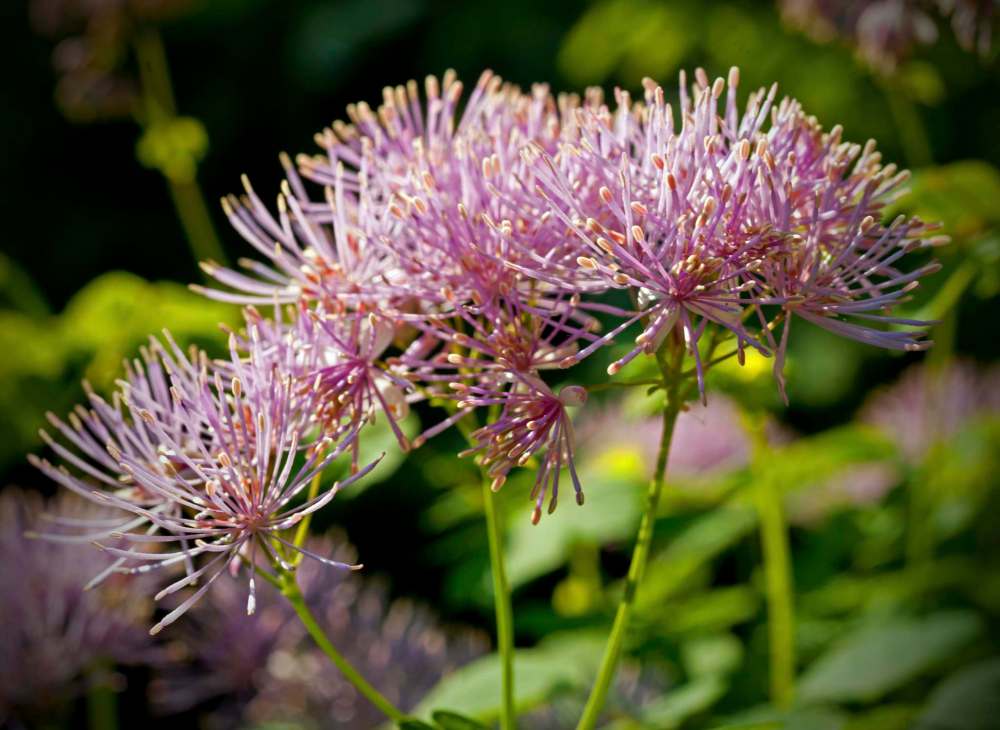
Thalictrum aquilegifolium Thundercloud is a very showy meadow rue with large dark purple flowers like powder puffs that have prominent rosy violet stamens. Aquilegifolium is known as columbine meadow rue. Taller than Splendide, Thundercloud is suited to a part shade location with even moisture.
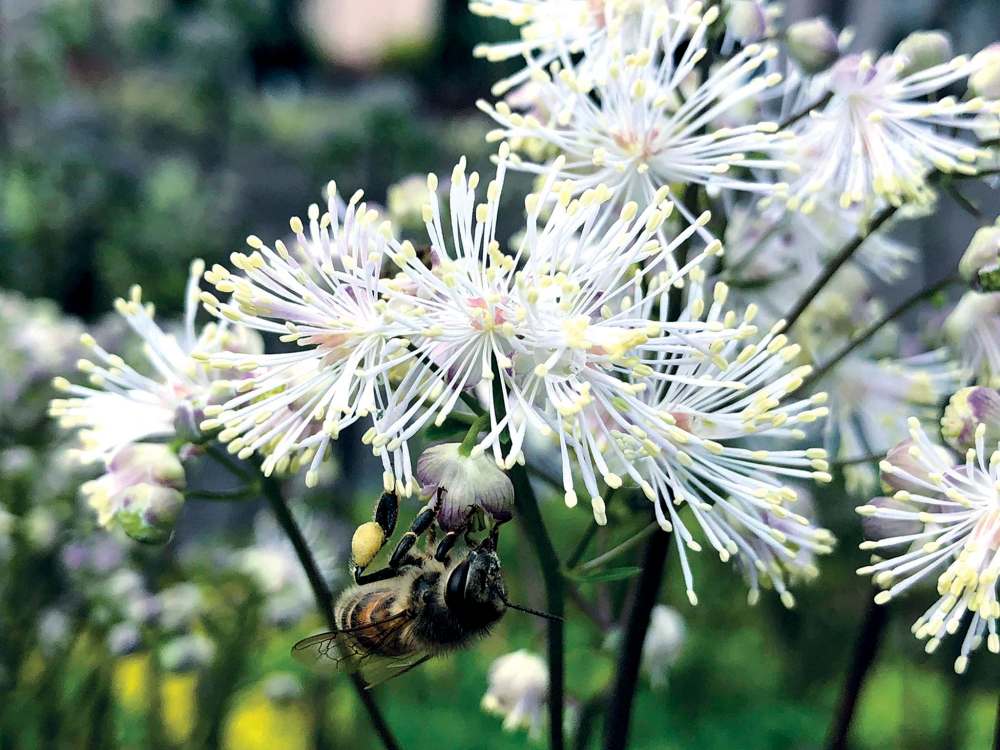
For some reason, the information about zone hardiness as well as the mature height of different meadow rue varieties seems to vary widely. One source may describe a variety as zone 5 while another says the same variety is hardy to zone 3 or 4.
Eileen Rosen is a Charleswood-area gardener who grows meadow rue in her garden and is not deterred by a zone 4 or 5 classification. What is crucial for successfully growing thalictrum, she says, is moist, rich soil.
“Thalictrum is probably my favourite family of plants,” says Rosen. “I love its poise, its grace, and the way the leaves, branches, and flowers form.” One of the frustrations Rosen has is that more varieties of thalictrum are not available locally. Rosen always considers the structure of a perennial — its branching, how it holds its flowers, how it seeds, etc.
Rosen likes Splendide because she feels it is a stronger version of Hewitt’s Double and plants to plant more. She also grows Princess Tukker, a sterile version of T. flavum glaucum. It produces cloud-like sprays of lemon-yellow flowers. Rosen once grew Elin meadow rue, a long-lived, tall and sturdy meadow rue that was like a thalictrum on steroids. It grew so rapidly it threatened to take over her backyard so she dug it out.
Rosen’s soil is exceptional. She makes her own compost and uses it to condition her soil. When planting, she digs a hole that is a little bit deeper than the plant she is planting and adds a spadeful of leaves and another of compost which she then mixes together with some earth before placing the plant on top. Does she have any preference for maple leaves or oak leaves? “A leaf is a leaf,” says Rosen. Nor does she shred the leaves first. Leaves add nutrition to the soil, says Rosen, whereas peat moss offers no nutrition.
In fall, just before freeze-up, Rosen empties bags of stored leaves on top of her zone 4 or zone 5 plants to a depth of 30 cm to 60 cm or more. She has used this method with tremendous success to overwinter tender plants. Again, though, her ability to successfully grow a wide range of plants both tender and hardy starts with beautifully conditioned soil.
“I hate throwing out anything green,” says Rosen. She composts weeds separately by putting them into heavy-duty bags which she seals and places in the sun. “In a couple of years, the roots and leafy parts decompose and you have the most beautiful soil you can imagine.”
If you decide to grow meadow rue, there are varieties that will give your garden a dramatic vertical element as well as compact varieties. Thalictrum aquilegifolium Black Stockings meadow rue has fluffy, stamen-only lavender-pink flower clusters on dark purple stems. The more sun, the darker the stems. Mature height is 121 cm.
Thalictrum aquilegifolium Nimbus White and Nimbus Pink are recent introductions with a compact stature (71 cm) and massive puffs at the top of the foliage. They bloom in the first year but give a better show in the second year. They are hardy to zone 5 so would require some serious winter protection. If your soil is conditioned properly and you have plenty of leaves, it is worth a try.

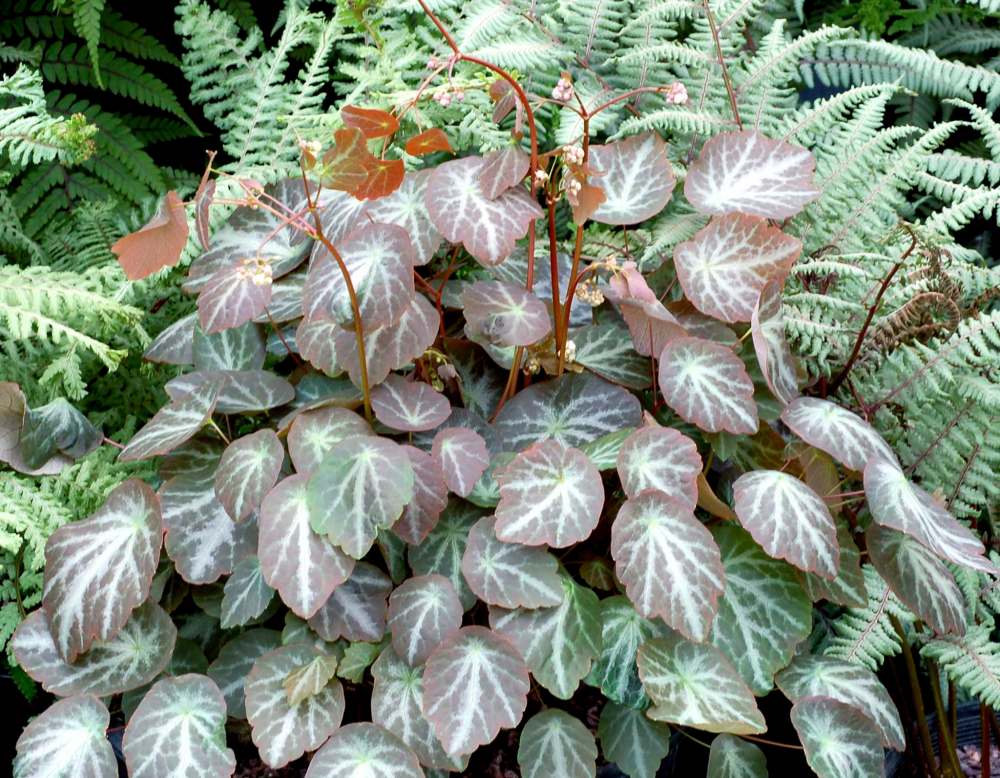
Thalictrum ichagense Evening Star is a unique and unexpected meadow rue. In this case, the emphasis is on the dark blue-green, burgundy-flushed foliage with silver accents. Its rating varies from zone 4 to zone 6 depending on who is selling it.
Would you like to start meadow rue from seed? Mathew McCarthy, The Apocryphal Seed Company, plans to make Thalictrum delavayi available next spring. The seeds germinate in two to three weeks.
colleenizacharias@gmail.com
Colleen Zacharias
Gardening columnist
Colleen Zacharias writes about many aspects of gardening including trends, plant recommendations, and how-to information that is uniquely relevant to Prairie gardeners. She has written a column for the Free Press since 2010 and pens the monthly newsletter Winnipeg Gardener. Read more about Colleen.
Every piece of reporting Colleen produces is reviewed by an editing team before it is posted online or published in print — part of the Free Press‘s tradition, since 1872, of producing reliable independent journalism. Read more about Free Press’s history and mandate, and learn how our newsroom operates.
Our newsroom depends on a growing audience of readers to power our journalism. If you are not a paid reader, please consider becoming a subscriber.
Our newsroom depends on its audience of readers to power our journalism. Thank you for your support.
Colleen Zacharias
Gardening columnist
Colleen Zacharias writes about many aspects of gardening including trends, plant recommendations, and how-to information that is uniquely relevant to Prairie gardeners. She has written a column for the Free Press since 2010 and pens the monthly newsletter Winnipeg Gardener. Read more about Colleen.
Every piece of reporting Colleen produces is reviewed by an editing team before it is posted online or published in print — part of the Free Press‘s tradition, since 1872, of producing reliable independent journalism. Read more about Free Press’s history and mandate, and learn how our newsroom operates.
Our newsroom depends on a growing audience of readers to power our journalism. If you are not a paid reader, please consider becoming a subscriber.
Our newsroom depends on its audience of readers to power our journalism. Thank you for your support.
Advertisement Advertise With Us
Advertisement Advertise With Us