A novel telling
Expansive biography of Timothy Findley chronicles his literary successes and personal struggles
Advertisement
Read this article for free:
or
Already have an account? Log in here »
To continue reading, please subscribe:

Digital Subscription
One year of digital access for only $205*
- Enjoy unlimited reading on winnipegfreepress.com
- Read the E-Edition, our digital replica newspaper
- Access News Break, our award-winning app
- Play interactive puzzles
*First annual payment billed as $205.00 + GST for one year. This annual subscription will automatically renew at $233.00 + GST every 52 weeks (10% off the regular annual price of $259.35). Offer available to new and qualified returning subscribers only. Cancel any time.
To continue reading, please subscribe:
Add Free Press access to your Brandon Sun subscription for only an additional
$1 for the first 4 weeks*
- Enjoy unlimited reading on winnipegfreepress.com
- Read the E-Edition, our digital replica newspaper
- Access News Break, our award-winning app
- Play interactive puzzles
*Your next Brandon Sun subscription payment will increase by $1.00 and you will be charged $17.95 plus GST for four weeks. After four weeks, your payment will increase to $24.95 plus GST every four weeks.
Read unlimited articles for free today:
or
Already have an account? Log in here »
Hey there, time traveller!
This article was published 29/08/2020 (2151 days ago), so information in it may no longer be current.
To this day, many in Canada’s artistic community — actors, dancers, poets and playwrights, musicians, screenwriters, novelists — have a story or three to tell about Tiff, as Timothy Findley was known to his circle of dear friends. Fittingly, in writing about an artist who drew so constantly and explicitly on memory, and who invoked imagination as our most vital resource to save ourselves and the planet from the dire conditions that all of Findley’s art engages, Sherrill Grace recounts some of these stories to fine effect in this prodigiously researched and documented biography — the first fully fleshed account of Findley’s life and art that we have.
Findley was a compulsive and lifelong keeper of journals, and Grace draws extensively on these sources, as well as on two important memoirs, to give us this wonderfully detailed story of Findley’s life. Findley’s Inside Memory: Pages from a Writer’s Workbook (1990) and From Stone Orchard: A Collection of Memories (1998) are invaluable complements to the journals.
Although ultimately best known as a novelist, Findley led many professional lives and aspired to several related vocations, all of these bedeviled by familiar demons. Chief among them was his abiding anxiety over his sexuality during those not-so-distant decades in Canada, the U.K., and elsewhere when homosexuality was persecuted as a crime or, at best, understood as an illness to be cured. There were also his recurring bouts with alcohol, and his tortured conflicts with (and abiding love for) his family, which alternately beset him and nourished him, and which he recreated and conjured with in so many of his works.
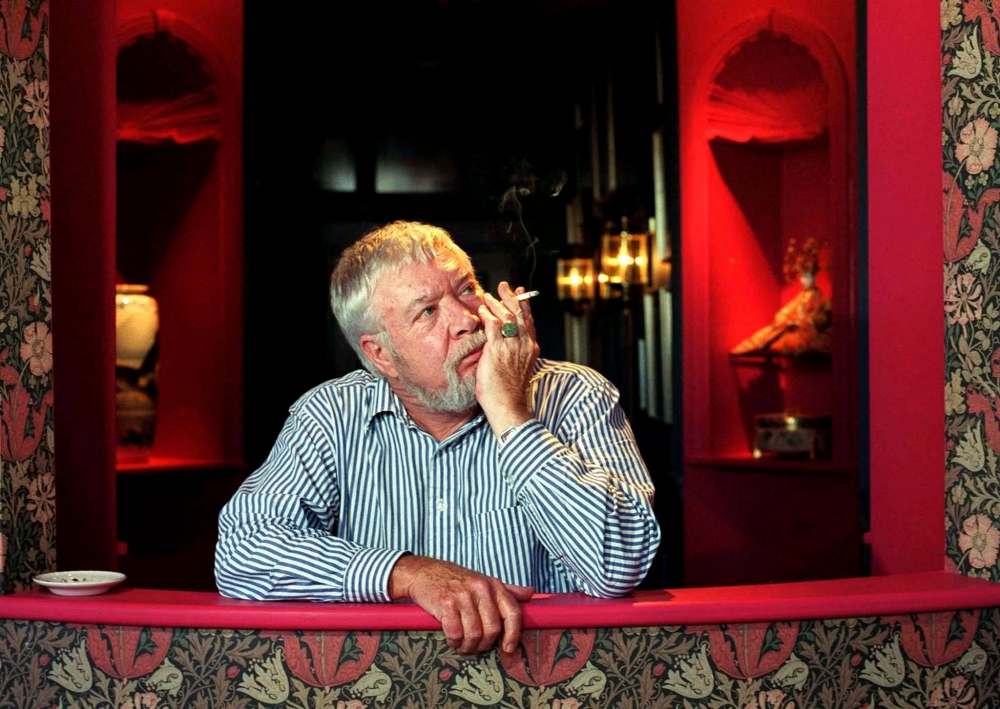
Since the appearance in 1977 of his third novel, the Governor-General’s award-winning The Wars, Findley has been best known in Canada and abroad principally as the award-winning novelist who gave us such a rich procession of fine fictions, among them 1981’s Famous Last Words, 1984’s Not Wanted on the Voyage, 1986’s The Telling of Lies, 1993’s Headhunter (the most neglected of Findley’s major novels, in this reviewer’s opinion), 1995’s The Piano Man’s Daughter and 1999’s Pilgrim. His work has been translated into many languages.
As she narrates Tiff’s life, Grace — an accomplished literary critic as well as a skilled biographer, and as intimately familiar with Findley’s works as with his life — walks us through the novels, plays, memoirs and screenplays in fine detail. On one hand, she shows us the pervasive connections between Findley’s life and his writing; on the other, more vitally, she clearly shows that Findley’s narrative art gives us fully formed fictional characters, themes and plots rather than thinly disguised reproductions of his familiars or the places they lived.
Findley began as an actor, and Grace gives us an evocative portrait of the young Tiff struggling to land roles and establish himself in his first profession — first in Toronto and then in London in the early 1950s, where he lived with Alec Guinness and his family. From the outset, Findley was riven with conflict over his sexuality, which at first alienated him from his family (principally from his father), and drove him to Toronto’s ravines, and then London’s clandestine clubs, to seek illicit hookups. His perennially unhappy older brother Michael was a lifelong drunk whom Findley found repulsive but whom he also loved and tried to help. Findley was very close to his mother; she, like others from his family (including ancestors Findley never knew) resonates amidst some of the more fully formed and complex fictional creations in many of his novels.

As Grace shows us throughout, place was of primary importance to Findley in his art as in his life. Growing up in Toronto, for example, the Rosedale neighborhood he was most familiar with figures crucially in his fiction, most centrally in Headhunter. But the most important place for Findley was Stone Orchard, some two hours’ drive northwest of Toronto in Brock Township, near the town of Cannington. For 30-plus years (1964-1997), Findley lived and worked there with his most enduring and loving partner, Bill Whitehead, who died in 2018 and whose ashes are scattered around the property with Findley’s, who died at age 72 in 2002. The couple lived with a legendary assortment of animals including dogs, horses as well as Findley’s dear blind cat Mottle; as his readers know, animals figure prominently in many Findley fictions.
A welcome feature of Tiff is that Grace sets Findley’s career amidst what she calls “the golden age of Canadian writing” — roughly, the early 1960s to the late 1980s — and shows us his deep involvement with organizations such as the Writer’s Union of Canada (Findley was a founding member) and, throughout, his passion for promoting and contributing to a renascent Canadian culture.
Tellingly, Grace dedicates the biography to Findley’s dearest partner: “In Memory of Bill Whitehead (1931-2018) who made so much possible.” She could be alluding not only to what Whitehead made possible for Findley for all those years, but also to what he made possible for Grace and the splendid biography she has given us.

Tiff was over seven years in the making. It has been well worth the wait.
Neil Besner, who taught Canadian literature at the University of Winnipeg for 30 years, compulsively taught The Wars there and everywhere else.