Athletes made statement last week, but experts say movement needs to continue
Advertisement
Read this article for free:
or
Already have an account? Log in here »
To continue reading, please subscribe:

Digital Subscription
One year of digital access for only $205*
- Enjoy unlimited reading on winnipegfreepress.com
- Read the E-Edition, our digital replica newspaper
- Access News Break, our award-winning app
- Play interactive puzzles
*First annual payment billed as $205.00 + GST for one year. This annual subscription will automatically renew at $233.00 + GST every 52 weeks (10% off the regular annual price of $259.35). Offer available to new and qualified returning subscribers only. Cancel any time.
To continue reading, please subscribe:
Add Free Press access to your Brandon Sun subscription for only an additional
$1 for the first 4 weeks*
- Enjoy unlimited reading on winnipegfreepress.com
- Read the E-Edition, our digital replica newspaper
- Access News Break, our award-winning app
- Play interactive puzzles
*Your next Brandon Sun subscription payment will increase by $1.00 and you will be charged $17.95 plus GST for four weeks. After four weeks, your payment will increase to $24.95 plus GST every four weeks.
Read unlimited articles for free today:
or
Already have an account? Log in here »
Hey there, time traveller!
This article was published 01/09/2020 (2200 days ago), so information in it may no longer be current.
Fergie Jenkins can’t remember having discussions with his teammates about the racism he experienced as a Black, minor-league pitcher in the American deep south in the early 1960s.
Instead, the Chatham, Ont., native endured injustices silently, like when he had to give his white teammates money to buy his meals from diners he wasn’t allowed to sit in, or when he was forced to use segregated public restrooms in certain towns.
Speaking up wasn’t something Jenkins felt he could do back then. And while he’s happy to see Black athletes using their platforms as public figures to protest racism and police brutality now, he wants to see more.

“I think it’s an excellent stand by the players, but are they going to get backed by ownership?” the Baseball Hall of Famer said Monday from his home in Texas.
“The owners and public officials ought to take more of a stand and let the police force know that we’ve had enough. Too many people are shot. A lot of people have died. I mean, it’s incredible.”
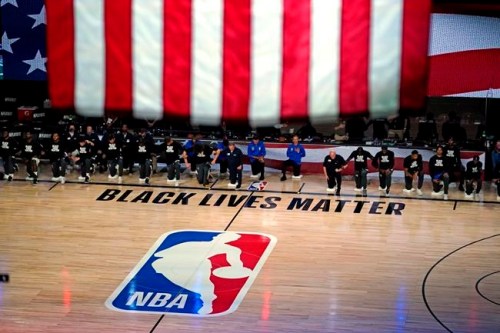
NBA players sparked a wave of postponements across the sports world last week when the Milwaukee Bucks declined to come out of the locker room for their playoff game against the Orlando Magic days after Jacob Blake, a Black man, was shot by police in Wisconsin. The playoffs were subsequently put on hold for two more days.
The WNBA did the same, and professional baseball, soccer, tennis and hockey all followed suit by postponing some or all of their games from Wednesday to Friday.
NBA players agreed to end their strike on three conditions — that the league establish a “social justice coalition” with player representatives; that NBA stadiums are converted into voting locations for the 2020 U.S. election; and that advertising spots promoting “greater civic engagement” are included in televised broadcast of playoff games.
Now that play has resumed across all the leagues that halted last week, Jenkins fears the message NBA players were trying to call attention to will get lost in the box scores. Perhaps, he said, a stronger action was needed.
“Maybe they should have striked the whole playoffs, that would have been a little more dramatic,” Jenkins said. “But at least they let the public know and the owners know that they are going to be firm with their beliefs.”
Athletes protesting social injustice is not new, and Jenkins remembers seeing the criticism American sprinters John Carlos and Tommie Smith received after raising their fists in protest on the Olympic podium in 1968, as well as Muhammad Ali’s exile from boxing after he refused to fight in the Vietnam War.
More recently, there was backlash against quarterback Colin Kaepernick, who has not signed an NFL deal since he first knelt during the American national anthem in 2016. Two years later, Fox News host Laura Ingraham told LeBron James to “shut up and dribble” after the NBA superstar criticized U.S. President Donald Trump.
Nicole Neverson, an associate professor at Toronto’s Ryerson University who teaches a course on the sociology of sport, says she’s hopeful that more athletes will use their platform to advocate for social change.
“I’d like to think that this becomes so normalized that we will come to expect athletes to talk about the news of the day first, then talk about what happened in the game in which they played,” said Neverson, who herself experienced anti-Black racism in sports as a former high-school and college athlete. “In a way, this should be no different from someone using their platform to advocate for more money for cancer research.
“We’re talking about race. We’re talking about people being killed in the streets. If that’s not a cause that an athlete — especially one who understands what it means to be marginalized and oppressed — can (talk about), then this is a very, very troubling world that we live in.”
Players across the NBA and WNBA have been vocal about racism and police brutality since they returned to their pandemic-halted seasons. The Toronto Raptors showed up at the NBA’s Disney World bubble in a Black Lives Matter bus and WNBA players took the court recently in warm-up shirts that had seven bullet holes printed on the back, in reference to the seven shots that hit Blake.
Denver Nuggets star Jamal Murray of Kitchener, Ont., played Sunday’s playoff game while wearing custom-made Adidas shoes with George Floyd and Breonna Taylor’s faces on them, and gave an emotional post-game interview acknowledging the two Black victims, who were killed by police earlier this year.
Yuka Nakamura, an associate professor of kinesiology at York University who specializes in the socio-cultural aspect of sports, says interviews like those are “heart-breaking.”
“What a burden to have to shoulder,” she said. “It’s so painful to be witness to this violence over and over again and then to be asked to speak about it.”
Nakamura was hesitant to say whether people are becoming more comfortable with athletes using their voices to address off-field issues, noting recent backlash like the one against Kaepernick.
She hopes this movement might change that, though.
“There is very recent evidence of this expectation that athletes are only valued for their bodies and not for their minds,” Nakamura said. “But I think with Black Lives Matter becoming such a global movement, such a galvanizing movement, it does make this very unique.
“It seems like the tide is turning in some respects where the backlash will not be tolerated.”
Neverson says it was impressive to see NBA players — as well as women in the WNBA — collectively deciding not to play last week.

But what did it accomplish?
Firstly, there are financial implications in players holding back their labour. But more importantly, Neverson says, it allowed us to see athletes as “people who are critical about the world they live in, just as fans would be.”
“It is rare that Black men have the opportunity to express their concerns over political issues and social injustices and be heard and listened to and taken seriously,” Neverson said.
“And the messages sent is: ‘we know that we are bigger than this sport, and when we band together collectively our voice is big enough to get attention. We know we’re in a moment right now that if we don’t take advantage of in a good way, people are going to assume these issues don’t matter to us.”
This report by The Canadian Press was first published Sept. 1, 2020.