WEATHER ALERT

Hopeful about hunger

Work of Foodgrains Bank more vital than ever, says departing executive director

Advertisement

Advertise with us

During his 23 years as executive director of Canadian Foodgrains Bank, Jim Cornelius witnessed a lot of suffering due to hunger in the developing world, but he never lost hope.

Read this article for free:


or

Already have an account? Log in here »

To continue reading, please subscribe:

Subscribe and receive a limited-edition Free Press branded hat or tote.

Digital Subscription

One year of digital access for only $205*

  • Enjoy unlimited reading on winnipegfreepress.com
  • Read the E-Edition, our digital replica newspaper
  • Access News Break, our award-winning app
  • Play interactive puzzles

*First annual payment billed as $205.00 + GST for one year. This annual subscription will automatically renew at $233.00 + GST every 52 weeks (10% off the regular annual price of $259.35). Offer available to new and qualified returning subscribers only. Cancel any time.

To continue reading, please subscribe:

Add Free Press access to your Brandon Sun subscription for only an additional

$1 for the first 4 weeks*

  • Enjoy unlimited reading on winnipegfreepress.com
  • Read the E-Edition, our digital replica newspaper
  • Access News Break, our award-winning app
  • Play interactive puzzles
Start now

*Your next Brandon Sun subscription payment will increase by $1.00 and you will be charged $17.95 plus GST for four weeks. After four weeks, your payment will increase to $24.95 plus GST every four weeks.

Hey there, time traveller!
This article was published 08/09/2020 (2187 days ago), so information in it may no longer be current.

During his 23 years as executive director of Canadian Foodgrains Bank, Jim Cornelius witnessed a lot of suffering due to hunger in the developing world, but he never lost hope.

“I don’t live with a sense of pessimism,” said Cornelius, 65, whose last day on the job of the Winnipeg-based international relief and development organization was Aug. 31.

While things are not positive when it comes to world hunger now, “in the long view I have seen things get better, conflicts resolved, people go home. I remain hopeful and optimistic,” he said.

Cornelius was born in Saskatchewan and grew up in Kenya as the child of missionary parents. He went to the Foodgrains Bank in 1997 from Eritrea, where he was managing a Canadian government food project.

During his early years at the organization, which is a partnership of 15 churches and church agencies working together to end global hunger, he saw a “definite decline in hunger.”

In the last five or so years, however, it is on the rise again.

“For 15 years I was able to say things are getting better, but now that progress has been halted. There are more people in need of food. It makes the work of the Foodgrains Bank more vital than ever.”
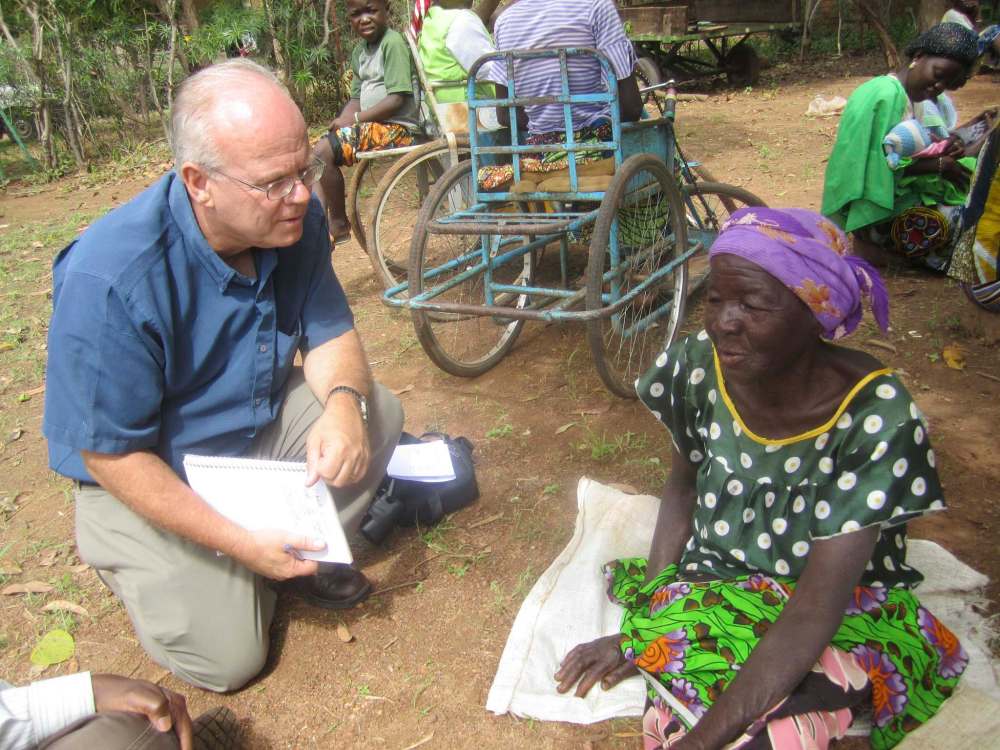
Jim Cornelius interviews Elizabeth Nabaloum, a widow who received food at a Foodgrains Bank-supported food distribution site in Burkina Faso. Elizabeth is one of 288,000 people in 2012 who received help through Foodgrains in the Sahel region of West Africa. (Submitted)

This rise is mostly due to conflict, he said, along with a changing climate that is causing more frequent droughts and storms.

Along with this is the COVID-19 pandemic; poor countries don’t have the capacity or resources to respond to the losses in jobs and other economic setbacks, he said.

Yet he remains hopeful.

When Cornelius started in 1997, Angola was a main recipient of food aid due to a civil war that began in 1975.

“That conflict seemed intractable,” he said. But the war ended in 2002, and now it receives no food aid.

The other thing that sustains him is knowing the Foodgrains Bank is making a difference.

“Without us, the situation would be worse,” he said, noting the organization provided $42.1 million of food assistance to 865,731 people in 34 countries last year.

“That sustains me in my work. Even though things are difficult, Canadians are there through the Foodgrains Bank. We are a vehicle to reach out and be there for families in need.”

Looking back, there are a number of things he feels good about from his time as executive director. This includes how Canadian churches are working together to address hunger.

“They may differ theologically, but all agree that nobody should be left out, that all should be invited to the banquet and have enough to eat,” said the member of Winnipeg’s St. Benedict’s Table Anglican church.

“We all have a deep sense that God does not intend for anyone to go hungry.”
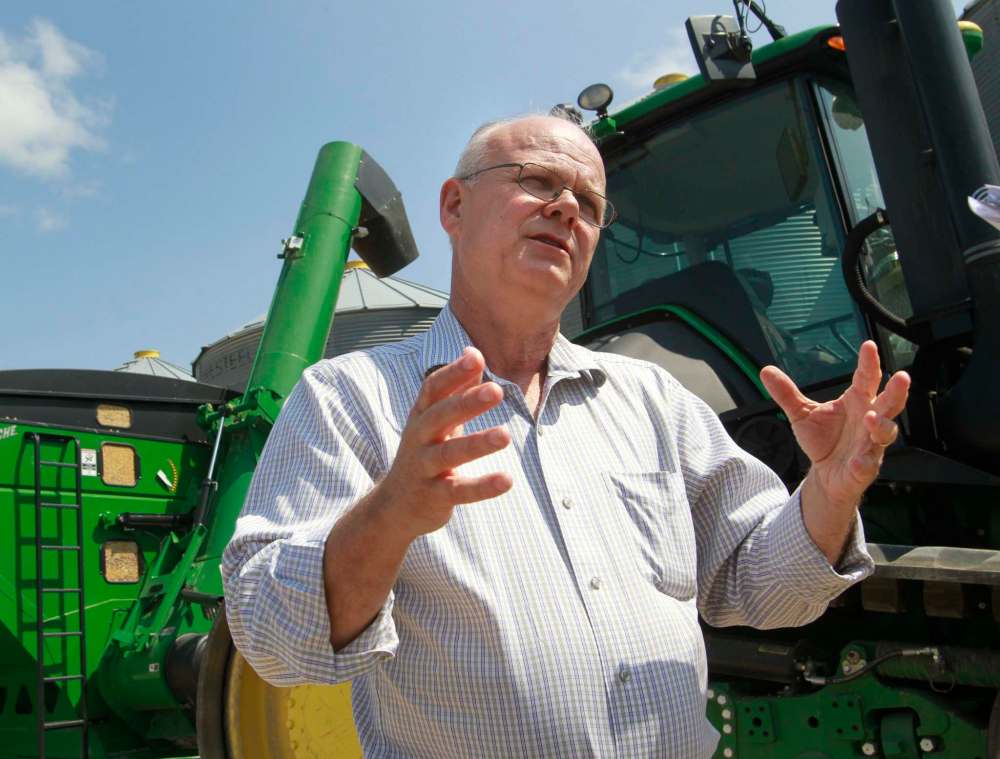
Jim Cornelius, who closed out his time as executive director of the Winnipeg-based Canadian Foodgrains Bank last week, says he remains optimistic about global food security challenges. (Wayne Glowacki / Winnipeg Free Press files)

He also finds satisfaction from a range of factors:

• how the Foodgrains Bank has maintained a positive partnership with the Canadian government, which annually provides a matching grant of $25 million, along with other grants for work in the developing world;

• the leadership role the Foodgrains Bank played in untying food aid — persuading the government to let Canadian NGOs use taxpayers’ money to buy food locally, closer to areas of need in the developing world;

• seeing the Foodgrains Bank expand its mandate beyond humanitarian aid to help poor farmers grow more and better crops;

• and seeing the organization surpass $1 billion in aid delivered since it was founded in 1983.

Another source of satisfaction was meeting supporters, including many farmers, across Canada.

“They have a longstanding commitment to this work,” he said. “There was no better pick-me-up than to visit with farmers who support the Foodgrains Bank. I always returned from those encounters re-invigorated. It reminded me why I am doing what I’m doing.”

“Hunger is not inevitable. It can be ended. It won’t happen tomorrow, it will take time. We have to stay engaged and work at it.”– Jim Cornelius

Of Cornelius’ work at the organization, Mennonite Central Committee executive director Rick Cober Bauman said “Jim has brought a range of qualities to (the job). Significant among them I believe were a steady hand of leadership, deep experience with the Canadian churches as well as in in the international development community in Ottawa, and of course a commitment to the health of the farming community in Canada and internationally. We owe him a deep debt of gratitude.”

Added Nicholas Moyer, CEO of the Canadian Council for International Cooperation, an umbrella group for Canadian non-governmental organizations: “Jim has played a critical role in the sector. He was really good at bringing people and groups from diverse perspectives together to discuss complicated topics. Crucially, he had a vision beyond the foodgrains bank for the health of entire NGO sector and our overall goal of reducing poverty and eliminating hunger.”

Times may be even tougher for the world’s poorest citizens these days because of the pandemic, but as he leaves his role Cornelius is still hopeful.

“Hunger is not inevitable,” he said. “It can be ended. It won’t happen tomorrow, it will take time. We have to stay engaged and work at it.”

Cornelius, who has been succeeded as executive director by Andy Harrington, will remain as an adviser to the foodgrains bank.

faith@freepress.mb.ca
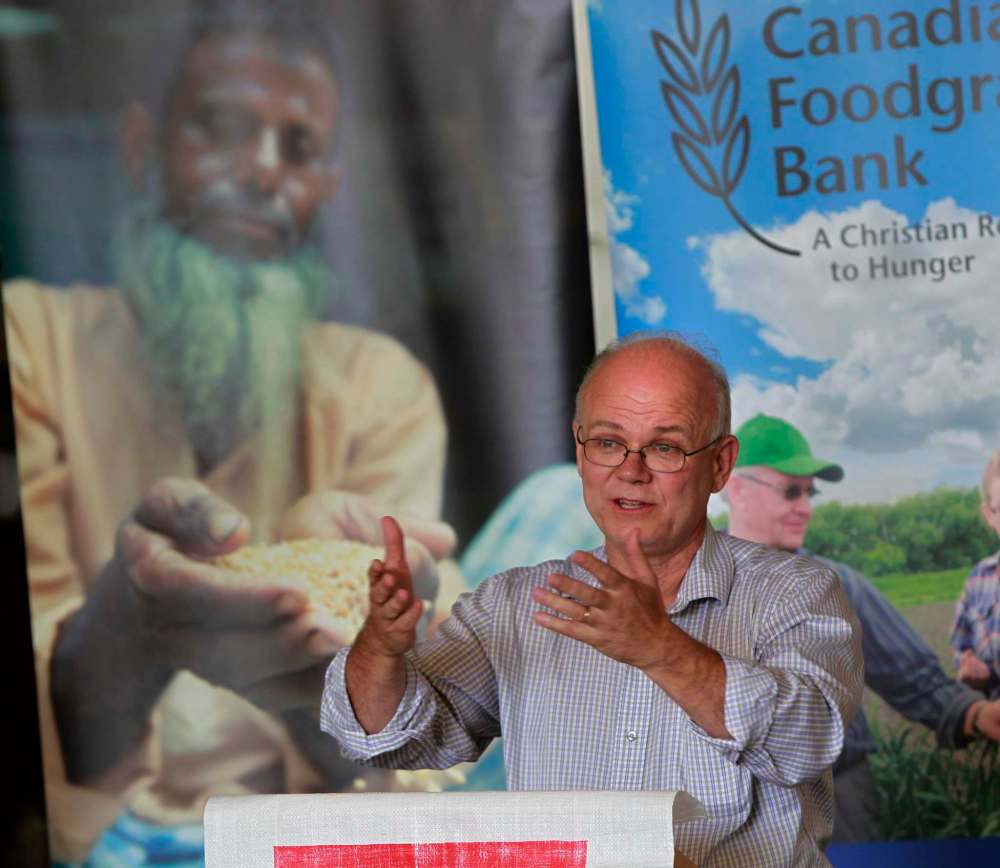
Last year, the Canadian Foodgrains Ban, provided $42.1 million of food assistance to 865,731 people in 34 countries, says Jim Cornelius. (Wayne Glowacki / Winnipeg Free Press files)

The Free Press is committed to covering faith in Manitoba through our Religion in the News project. This reporting continues because readers like you step forward to fund it.

Donate now to support our reporting on religion.

Your donation is eligible for a charitable tax receipt. BECOME A FAITH JOURNALISM SUPPORTER

John Longhurst

John Longhurst
Faith columnist & reporter

John Longhurst has been writing for Winnipeg's faith pages since 2003. He also writes for Religion News Service in the U.S., and blogs about the media, marketing and communications at Making the News.

Our newsroom depends on a growing audience of readers to power our journalism. If you are not a paid reader, please consider becoming a subscriber.

Our newsroom depends on its audience of readers to power our journalism. Thank you for your support.

Report Error Submit a Tip

The Free Press acknowledges the financial support it receives from members of the city’s faith community, which makes our coverage of religion possible.

More Stories

Manitoba selects consulting firm Nueconomy as India trade rep

Gabrielle Piché 3 minute read 6:00 AM CDT

The Manitoba government has hired an India-based consulting firm to act as its new trade representative in the South Asia nation.

It will announce its choice of strategic consulting firm Nueconomy today.

The company — with offices in Delhi, Mumbai and Bangalore — has already begun working with the province. One of its directors attended Fi India, a food ingredients event, last week to promote Manitoba crops such as pulses, according to a company LinkedIn post.

Representatives from Nueconomy weren’t available for comment by print deadline Thursday.

St. Malo’s summer hot spot relies on dedicated community to make sure park-goers can kick back and relax

Melissa Martin 16 minute read Preview

St. Malo’s summer hot spot relies on dedicated community to make sure park-goers can kick back and relax

Melissa Martin 16 minute read 6:00 AM CDT

August 21, 10:10 a.m.There’s nobody on the beach at St. Malo Provincial Park yet, though there’s certain to be plenty of visitors later. It’s shaping up to be a hot late-August Friday in southern Manitoba; the forecast warns of a thunderstorm in the late afternoon, but that won’t stop Manitobans from flocking to savour one of the last great beach days of the summer.

On a typical such weekend, this park, situated just an hour’s drive southeast of Winnipeg, can squeeze up to 2,000 guests onto the sandy crescent of its expansive main beach, and about 600 more on its other bathing-ready shore, which is nestled near the campground and thus long called Camper Beach.

For now, though, the scene around the lake is quiet and picture-perfect. The morning sun sparkles on the lake’s placid grey surface. A gaggle of Canada geese swim lazily, honking at each other. As park manager Bill Prevost pulls up on the beach in a golf cart, he nods at the birds with a wink.

“Did we tell you about the rule?” Prevost quips. “If you come here, you have to take four geese back with you.”

Read
6:00 AM CDT

Ending special duty helps staff cruisers

Editorial 4 minute read Preview

Ending special duty helps staff cruisers

Editorial 4 minute read Yesterday at 6:36 AM CDT

If you’re not from Winnipeg, the first time you see it can be a little alarming.

Read
Yesterday at 6:36 AM CDT

Woman who saved child, father from Red River uncomfortable with hero label

Scott Billeck 5 minute read Preview

Woman who saved child, father from Red River uncomfortable with hero label

Scott Billeck 5 minute read Wednesday, Sep. 2, 2026

A Winnipeg woman who’s been hailed as a hero by police for saving a father and his young child from the Red River says she doesn’t feel like one.

“I’m a mom… and I would do it again,” said Jayclyn Morrissette, who was walking with her neighbour through St. John’s Park on Aug. 24 when they spotted a young girl flailing in the nearby river. “I was meant to be there and that was supposed to happen.”

Morrissette, who spoke to the Free Press Wednesday after police released details about the rescue, said she and her neighbour began looking for the child’s parents and found them at the nearby playground searching for her.

Morrissette waved them over. The father, who she said could not swim, jumped into the river first and immediately began to sink.

Read
Wednesday, Sep. 2, 2026

Reach out after communication breakdown

Maureen Scurfield 5 minute read Yesterday at 2:00 AM CDT

DEAR MISS LONELYHEARTS: I recently heard the love of my life, who got sent off to her aunt’s place in B.C. after she got pregnant, came back to Winnipeg. She lost the pregnancy early on, but her parents wanted to keep us far apart, so she had to stay on with her aunt and uncle and wasn’t allowed phone calls from guys.

Now that she’s finally back in Winnipeg again, I got her new cell number and I called her right away. She said, “You never called me after I was sent away, and I waited for your call every day. How dare you call me now?”

I said, “I didn’t have your new number, and I was scared to call your family here, for it.” She said, “You could have gotten my new number from my sister or any one of my friends if you tried! They kept asking me if you’d called yet. They said it showed you didn’t really care.”

I didn’t know what to say. I was too chicken to stand up to her family. Don’t you think she should stop being cruel to me? What can I say to her?

Explaining Canada’s superior employment rate

Wayne Simpson 5 minute read Preview

Explaining Canada’s superior employment rate

Wayne Simpson 5 minute read 2:00 AM CDT

Donald Trump regularly makes outrageous claims. Fentanyl was pouring across the northern border from Canada and had to be stopped. Canada is nasty to deal with and has the highest tariffs in the world. Canada needs the U.S. but the U.S. doesn’t need Canada. Canadians want to become the 51st state. And so on.

In the latest trade dispute, after Mark Carney walked away from negotiations, Trump made a new claim that Canada’s unemployment rate was 10 per cent and climbing rapidly. Insofar as the unemployment rate is closely monitored, reported monthly, and given similar attention to the rates of inflation and economic growth, the comment was likely intended to signal Canada’s weakness. It fits Trump’s narrative that Canada needs the U.S. for its livelihood and protection and would be better off more directly under U.S. influence as a 51st state, or perhaps a protectorate like the Philippines or Panama in the past.

Fact checkers quickly reported that Canada’s unemployment rate is really 6.4 per cent for July, not 10 per cent, has fallen from 6.9 per cent in April, and is at its lowest rate since May 2024. Some astute observers pointed out that Canada’s method for the calculation of the unemployment rate leads to a higher rate than the U.S. by about one per cent. Under the American methodology, then, our unemployment rate would be 5.4 per cent, not that far off the U.S. July rate of 4.1 per cent.

Detection of unemployment is less straightforward that might appear, as it is sandwiched between the labour force statuses of employment and inactivity at a particular point in time. The internationally established standard for determination of unemployment is the notion of searching for work — you are unemployed if you do not have paid employment and you are looking for work without success. Surveys have been developed to categorize respondents as employed, unemployed or inactive, including the labour force survey (LFS) in Canada and the current population survey (CPS) in the U.S.

Read
2:00 AM CDT