

MCO happy to be Bach with tiny audience
Advertisement
Read this article for free:
or
Already have an account? Log in here »
To continue reading, please subscribe:
Digital Subscription
One year of digital access for only $75*
- Enjoy unlimited reading on winnipegfreepress.com
- Read the E-Edition, our digital replica newspaper
- Access News Break, our award-winning app
- Play interactive puzzles
*Billed as $5.77 plus GST every four weeks. After 52 weeks, price increases to the regular rate of $19.95 plus GST every four weeks. Offer available to new and qualified returning subscribers only. Cancel any time.
Monthly Digital Subscription
$4.99/week*
- Enjoy unlimited reading on winnipegfreepress.com
- Read the E-Edition, our digital replica newspaper
- Access News Break, our award-winning app
- Play interactive puzzles
*Billed as $19.95 plus GST every four weeks. Cancel any time.
To continue reading, please subscribe:
Add Free Press access to your Brandon Sun subscription for only an additional
$1 for the first 4 weeks*
- Enjoy unlimited reading on winnipegfreepress.com
- Read the E-Edition, our digital replica newspaper
- Access News Break, our award-winning app
- Play interactive puzzles
*Your next Brandon Sun subscription payment will increase by $1.00 and you will be charged $17.95 plus GST for four weeks. After four weeks, your payment will increase to $24.95 plus GST every four weeks.
Read unlimited articles for free today:
or
Already have an account? Log in here »
Hey there, time traveller!
This article was published 05/10/2020 (2055 days ago), so information in it may no longer be current.
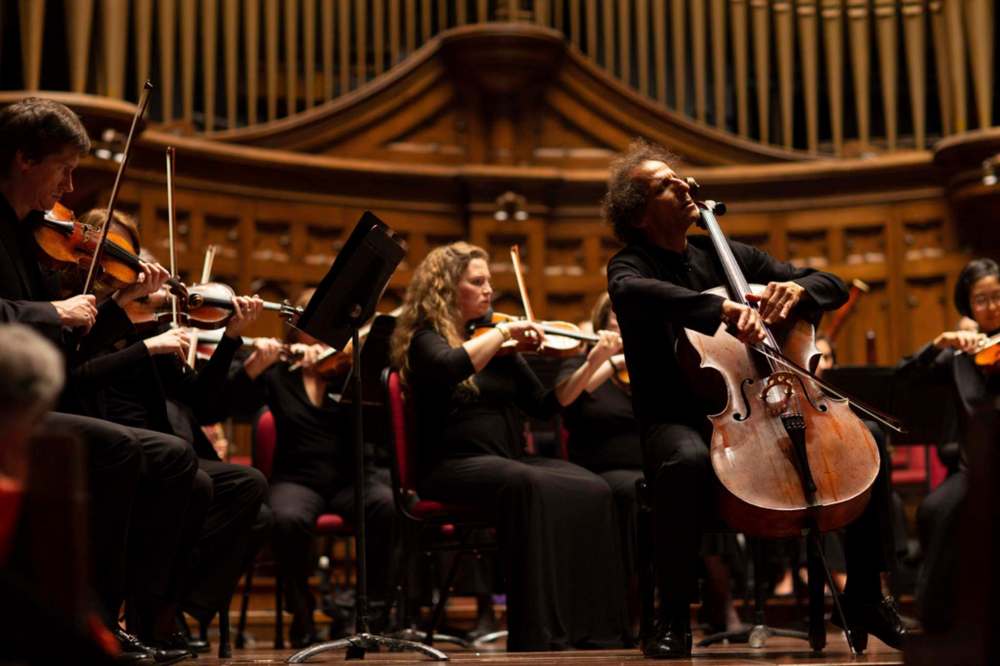
The Manitoba Chamber Orchestra officially launched its 2020-21 season with A Golden Variation on Bach’s Goldberg Variations, an up-close-and-personal program featuring five of Winnipeg’s A-list musicians and tailor made for a bite-sized audience capped at 50 due to provincially mandated health and safety regulations.
Two matinee performances of the 75-minute (no intermission) concert held at the Winnipeg Art Gallery’s Eckhardt Hall, as with all arts organizations everywhere, bore the unmistakable stamp of COVID-19 protocols, with 43 masked audience members arriving for the 3:30 p.m. show carefully screened, sanitized and settled into physically distanced seats. Even the solo artists were kitted out in masks during their performances — not an easy feat losing yourself in musical expression when ostensibly having your face bound in layers of cloth.
There’s sweet poetry that the intimate live concert and the MCO’s first after seven months of virtual silence opened with prayer. Specifically, renowned Scottish percussionist/composer Evelyn Glennie’s glorious chorale Little Prayer, featuring Victoria Sparks that she also performed last April as part of the popular MCO at Home online series.
Sparks is a naturally expressive performer, who brought out the rise and fall of the estimated five-minute piece’s melodic lines with double mallets in hand. Her marimba sounded particularly resonant in the Tyndall stone hall, with the player’s final rush of sound proving that prayer is not always necessarily softly whispered on the breath, but sometimes bellowed as a keening wail from the depths — a piece particularly suited to these challenging times.
She later treated listeners to the world premiere of Manhattan-born, Winnipeg-based jazz pianist/trombonist/composer Jeff Presslaff’s (in attendance) Heaven’s Reflexes, an engaging set of 10 variations on an original theme showing decidedly more bite and edge, and punctuated by plenty of percussive accents, pointillistic effects, jagged dissonances, and sweeping glissandi delivered with aplomb.
Last but not least, we also heard Robert Oetomo’s jazzy arrangement of Harold Arlen’s iconic Somewhere over the Rainbow, now re-imagined as a rhapsodic ear-pleaser with Sparks’ assured performance suggesting that dreams we dare might really just come true.
Other highlights included Winnipeg violinist and MCO concertmaster Karl Stobbe, who, to put it simply, seems to get better with every passing year. He enthralled with two solos including lesser known Bohemian-Austrian composer Heinrich Biber’s Passacaglia for Solo Violin — another greatest hit of MCO at Home — that begins simply with its four-note bass ostinato before scaling heights of increasing complexity, including multiple stops, gossamer light ornamentation and explosive bursts of virtuosic runs.
He also delivered a masterful performance of Eugène Ysaÿe’s Sonata No. 4 for Solo Violin, Op. 27, excerpted from the larger set that the musician recorded on his own album in May 2014 that’s become a calling card for the artist.
Stobbe performed the fiendishly difficult solo with passionate zeal as well as a well-controlled bow, ripping through its declamatory flourishes, cascades of figuration from which emerged pinpricks of melodic tones, and extended pizzicato passages before a final blaze of pyrotechnics that well earned appreciative applause and several mask-muffled bravos.
The second half of the program featured a modern day version of Baroque masterpiece, J. S. Bach’s Goldberg Variations performed by oboist and notably its skilful arranger, Caitlin Broms-Jacobs, bassoonist Allen Harrington and English horn player, Tracy Wright, with the work immortalized in its original keyboard guise by the late, great Canadian pianist Glenn Gould.

The trio of players seated behind their own Plexiglass shields for protection from potentially virus-carrying “droplets” immediately got down to the matter at hand, launching into Broms-Jacobs’ newly re-imagined Diverse Variations, BWV 988 (Goldberg Variations) plaintive opening Aria, on which the subsequent variations are derived with grace and dignity.
Each of these players is a fine soloist in their own right, performing now as a tightly knit, cohesive ensemble in which listeners were able to discern individual contrapuntal lines woven throughout the Baroque tapestry of sound performed sans repeats, which somewhat skewed the architecture of the piece while doubtlessly alleviating the notable taxing technical demands for the double reed players.
However, several balance issues quickly arose, with the always sublime Broms-Jacobs’ fluid phrasing and piercing tones often subsumed by the more fulsome English horn and good-natured bassoon that might have been mitigated by greater physical distancing and strategic spacing between players.
Several variations, and especially those in minor tonality, also felt overly polite, when one longed for more dynamic punch and arguably greater artistic risks being taken. This magnificent work is at its best when it unfolds as a voyage of discovery through its musical hills and dells, ultimately bringing the listener full circle with the reprise of the aria now gaining greater potency by the journey itself. This particular performance felt more a genteel Sunday drive through the countryside — lacking at times in emotional resonance albeit still pleasant and engaging for an autumnal afternoon.
Holly.harris@shaw.ca
Holly Harris writes about music for the Free Press Arts & Life department.
Our newsroom depends on a growing audience of readers to power our journalism. If you are not a paid reader, please consider becoming a subscriber.
Our newsroom depends on its audience of readers to power our journalism. Thank you for your support.