N.S. calls on Ottawa to define a ‘moderate livelihood,’ as fishing dispute boils over

Advertisement

Advertise with us

HALIFAX - Calls for Ottawa to define a "moderate livelihood" fishery mounted on Sunday, as hundreds gathered in support of Indigenous lobster fishers after a heated dispute over treaty rights boiled over.

Read this article for free:


or

Already have an account? Log in here »

To continue reading, please subscribe:

Subscribe and receive a limited-edition Free Press branded hat or tote.

Digital Subscription

One year of digital access for only $205*

  • Enjoy unlimited reading on winnipegfreepress.com
  • Read the E-Edition, our digital replica newspaper
  • Access News Break, our award-winning app
  • Play interactive puzzles

*First annual payment billed as $205.00 + GST for one year. This annual subscription will automatically renew at $233.00 + GST every 52 weeks (10% off the regular annual price of $259.35). Offer available to new and qualified returning subscribers only. Cancel any time.

To continue reading, please subscribe:

Add Free Press access to your Brandon Sun subscription for only an additional

$1 for the first 4 weeks*

  • Enjoy unlimited reading on winnipegfreepress.com
  • Read the E-Edition, our digital replica newspaper
  • Access News Break, our award-winning app
  • Play interactive puzzles
Start now

*Your next Brandon Sun subscription payment will increase by $1.00 and you will be charged $17.95 plus GST for four weeks. After four weeks, your payment will increase to $24.95 plus GST every four weeks.

Hey there, time traveller!
This article was published 18/10/2020 (2186 days ago), so information in it may no longer be current.

HALIFAX – Calls for Ottawa to define a “moderate livelihood” fishery mounted on Sunday, as hundreds gathered in support of Indigenous lobster fishers after a heated dispute over treaty rights boiled over.

Following fierce clashes outside fish plants in southwestern Nova Scotia last week, a lobster pound that stored the catch of Mi’kmaq fishers was burned to the ground early Saturday.

The attacks prompted widespread condemnation, with the NDP’s fisheries critic calling for an emergency debate in the House of Commons on Monday — a call Fisheries Minister Bernadette Jordan answered on Sunday night.
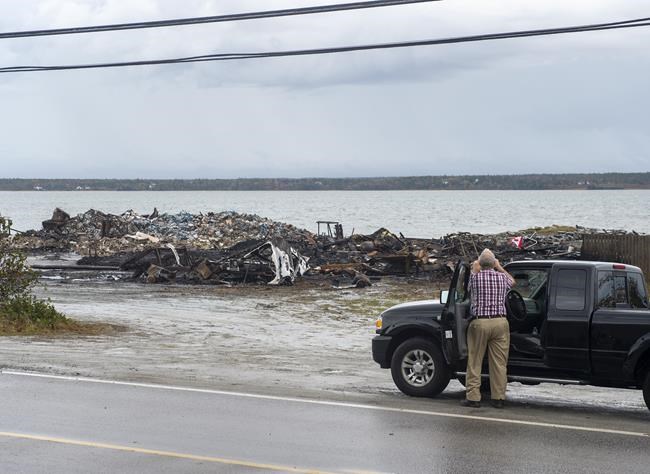
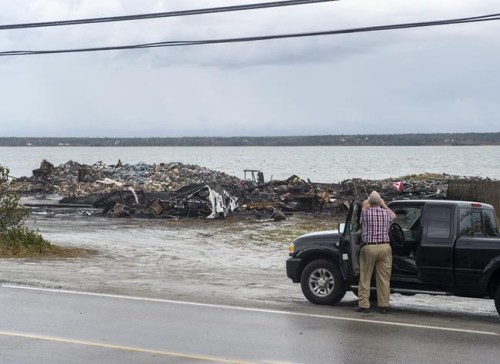
Debris from a burnt out fish plant is scattered along the shore in Middle West Pubnico, N.S. on Saturday, Oct. 17, 2020. A large fire destroyed a commercial building that was the scene of a confrontation earlier in the week between Indigenous and non-Indigenous fishermen.Tensions remain high over an Indigenous-led lobster fishery that has been the source of conflict. THE CANADIAN PRESS /Andrew Vaughan

In a letter to the Speaker, Jordan announced the Liberals would seek leave for an emergency debate over the “disturbing acts of violence” and the Mi’kmaq treaty right to fish for a moderate livelihood.

The escalating violence also prompted a show of solidarity in Halifax on Sunday, where hundreds of people gathered at Grand Parade Square to show support for Mi’kmaq fishers.

In front of a large sign that read “Respect the treaties, protect the sacred,” multiple speakers addressed the crowd and spoke out about the violence directed at Indigenous fishers. Protesters held placards carrying slogans such as “We are all treaty people.”

Eleanor Michael of Sipekne’katik First Nation said she is frightened by the attacks against her community.

“I’m full of fear,” she said in an interview after addressing the large crowd in front of Halifax City Hall. “I’m terrified.”

Michael added: “I think the moderate livelihood fishermen should be able to do what our treaty said.”

Nova Scotia Premier Stephen McNeil took to social media to urge Ottawa to define what constitutes legal harvesting in a “moderate livelihood” fishery.

McNeil tweeted that the federal Department of Fisheries and Oceans needs to answer the question of what a moderate livelihood looks like before the province can examine its own rules for fish buyers.

He said Nova Scotia’s regulations rely on the federal department’s “authority and responsibility to manage the fishery and identify what are legal, licensed fisheries.”

McNeil added that the province is working with Ottawa to find a facilitator to “bring the sides together.”

“The way to resolve the issue is through respectful dialogue,” he said. “I‘m deeply concerned about the acts of intimidation and violence.”

The Mounties have made two arrests in relation to the incidents, with one man charged with assault against a local Indigenous chief and another man charged with arson for allegedly burning a vehicle.

A man considered a person of interest in the lobster pound fire remains in hospital with life-threatening injuries.

Prime Minister Justin Trudeau said he is “appalled by the acts of violence, intimidation, and destruction taking place in Nova Scotia.”

“The perpetrators will be held accountable,” he said Saturday on Twitter, noting that Ottawa has approved the request to provide more policing support. “We’re focused on keeping people safe.”

In response to the recent violence, Public Safety Minister Bill Blair approved a request by Nova Scotia’s Attorney General to step up the RCMP presence in the region.

Chief Mike Sack of the Sipekne’katik First Nation said he is grateful for the added policing and law enforcement resources.

But he said some of the “damage, destruction, racist behaviour, harassment and intimidation” could have been avoided had repeated requests for a greater police presence been addressed more promptly.

Still, Sack said he appreciates the efforts of local RCMP and is pleased they’ll get the back up needed during an “extremely overwhelming time for all of us.”

The Supreme Court of Canada issued a landmark decision in 1999 that said the Mi’qmaq and Maliseet people of Atlantic Canada and the Gaspe region of Quebec have a treaty right to earn a “moderate livelihood” from fishing.

Many non-Indigenous critics, however, cite a clarification issued by the court, stating the treaty rights would be subject to federal regulations.

Commercial fishermen have also expressed concern with the conservation of fish and lobster stocks.

Yet others have argued that commercial fishing seasons are based on the economy and trade, and the scale of the small Indigenous fishery doesn’t impact conservation.

The dispute has become so heated that the head of a Maritime Fishermen’s Union local resigned, citing harassment and intimidation against him and his family.

This report by The Canadian Press was first published Oct. 18, 2020.

Note to readers: This is a corrected story. A previous version said the Supreme Court’s Marshall decision upheld the Peace and Friendship Treaty of 1752. The ruling was based on other treaties from the 1700s.

Report Error Submit a Tip

More Stories

Puzzles Palace

1 minute read Monday, Jul. 27, 2026

To solve our puzzles, please subscribe with this special offer: |

‘Unique’ crackdown leads to dozens of arrests, hundreds of referrals to outreach groups

Free Press staff 3 minute read Preview

‘Unique’ crackdown leads to dozens of arrests, hundreds of referrals to outreach groups

Free Press staff 3 minute read Updated: 12:44 PM CDT

More than 200 people were referred to support organizations and police made 55 arrests during a two-month crackdown on drug use and disorder on city streets.

The Winnipeg Police Service and community group leaders released the latest details Tuesday of a sweep focused on open drug use and trafficking that began in August. An earlier blitz, in June, drew rebuke from some community groups that led police to take an outreach-first approach when it was relaunched.

“I feel it’s something that’s very unique, we’ve looked across the country and from what I’m hearing, what we’re hearing, I think we’re definitely going in the right direction, if not leading the way in some of our initiatives,” said police Chief Gene Bowers of the service’s partnered approach to cracking down on open air drug use.

Between Aug. 7 and Oct. 6, community organizations participated in 14 joint outreach and enforcement efforts, police said on Tuesday. Ten people were helped into Main Street Project detox programs, 48 people were given access to support services and 553 naloxone opioid antidote kits were handed out. Outreach organizations engaged with a total of 3,758 people.

Read
Updated: 12:44 PM CDT

Hurricane Simon pounds resorts and vulnerable towns along Mexico’s Pacific coast

Fernando Llano And Martin Silva, The Associated Press 5 minute read Preview

Hurricane Simon pounds resorts and vulnerable towns along Mexico’s Pacific coast

Fernando Llano And Martin Silva, The Associated Press 5 minute read Updated: Yesterday at 2:38 AM CDT

PUERTO VALLARTA, Mexico (AP) — Hurricane Simon pounded Mexico’s Pacific coast as a Category 3 storm on Sunday, its eye remaining just offshore as its most powerful winds and rain slammed people living between the Sierra Madre and the ocean.

The hurricane's center swirled parallel to the coast, closing in on the Puerto Vallarta area, where its most damaging winds and rain were expected to hit around midnight and continue through Monday morning. Its maximum sustained winds weakened late Sunday to 115 mph (185 kph), according to the U.S. National Hurricane Center in Miami, but it was still expected to remain a dangerous hurricane.

That’s not good news for people in and around Puerto Vallarta, a popular tourist destination in the state of Jalisco. Just inland and uphill from the resort areas, many Mexicans live in communities where housing might not stand up to the storm.

By late Sunday, Simon's eye was moving northwest about 45 miles (75 kilometers) south of Cabo Corrientes at about 5 mph (7 kph). A senior hurricane center specialist, Philippe Papin, said this westernmost tip of mainland Mexico is the area most likely to get a direct hit from the system. Cabo Corrientes is at the southern tip of Bahia de Banderas, the wide bay where Puerto Vallarta looks out to the Pacific.

Read
Updated: Yesterday at 2:38 AM CDT

N.S. calls on Ottawa to define a 'moderate livelihood,' as fishing dispute boils over

Brett Bundale, The Canadian Press 5 minute read Preview

N.S. calls on Ottawa to define a 'moderate livelihood,' as fishing dispute boils over

Brett Bundale, The Canadian Press 5 minute read Tuesday, Oct. 20, 2020

HALIFAX - Calls for Ottawa to define a "moderate livelihood" fishery mounted on Sunday, as hundreds gathered in support of Indigenous lobster fishers after a heated dispute over treaty rights boiled over.

Following fierce clashes outside fish plants in southwestern Nova Scotia last week, a lobster pound that stored the catch of Mi’kmaq fishers was burned to the ground early Saturday.

The attacks prompted widespread condemnation, with the NDP's fisheries critic calling for an emergency debate in the House of Commons on Monday -- a call Fisheries Minister Bernadette Jordan answered on Sunday night.

In a letter to the Speaker, Jordan announced the Liberals would seek leave for an emergency debate over the "disturbing acts of violence" and the Mi'kmaq treaty right to fish for a moderate livelihood.

Read
Tuesday, Oct. 20, 2020

‘People count on this place’: Pembina Hwy. Giant Tiger latest location slated to close

By Matthew Frank 3 minute read Preview

‘People count on this place’: Pembina Hwy. Giant Tiger latest location slated to close

By Matthew Frank 3 minute read Yesterday at 4:34 PM CDT

Another Giant Tiger store in Winnipeg will shutter next year, leaving some area residents concerned about a lack of affordable groceries in the neighbourhood.

Red papers taped to the front doors of the Canadian retail chain’s location at Pembina Highway and Southpark Drive indicate it will close Feb. 27.

Doreen Yanchuk, a self-described bargain hunter, shook her head when she saw the signs Monday. The 67-year-old said she’s a regular customer at the location because it’s a five-minute drive from her home.

“They have very good sales here, which draws people to the shop because everything is expensive,” Yanchuk said.

Read
Yesterday at 4:34 PM CDT

Separatist movements are an indication of dissatisfaction, not imminent collapse

Tom Brodbeck 5 minute read Preview

Separatist movements are an indication of dissatisfaction, not imminent collapse

Tom Brodbeck 5 minute read 12:18 PM CDT

For a country supposedly on the verge of breaking apart, Canada has remarkably few people who actually support it.

You’d never know that from the headlines, with Quebec’s separatist party back in power and Alberta preparing to vote on its future in Confederation. The political noise is loud, but the public appetite for separation is extremely weak.

Roughly 70 per cent of Quebecers have no interest in separating from Canada, and the numbers in Alberta are probably about the same. That will be evident after Albertans vote Monday on whether they want to stay in Canada.

So where’s the crisis? Well, the truth is, there isn’t one.

Read
12:18 PM CDT