

Raising awareness, one question at a time
October is dwarfism awareness month
Advertisement
Read this article for free:
or
Already have an account? Log in here »
To continue reading, please subscribe:
Monthly Digital Subscription
$1 per week for 24 weeks*
- Enjoy unlimited reading on winnipegfreepress.com
- Read the E-Edition, our digital replica newspaper
- Access News Break, our award-winning app
- Play interactive puzzles
*Billed as $4.00 plus GST every four weeks. After 24 weeks, price increases to the regular rate of $19.95 plus GST every four weeks. Offer available to new and qualified returning subscribers only. Cancel any time.
Monthly Digital Subscription
$4.99/week*
- Enjoy unlimited reading on winnipegfreepress.com
- Read the E-Edition, our digital replica newspaper
- Access News Break, our award-winning app
- Play interactive puzzles
*Billed as $19.95 plus GST every four weeks. Cancel any time.
To continue reading, please subscribe:
Add Free Press access to your Brandon Sun subscription for only an additional
$1 for the first 4 weeks*
*Your next subscription payment will increase by $1.00 and you will be charged $16.99 plus GST for four weeks. After four weeks, your payment will increase to $23.99 plus GST every four weeks.
Read unlimited articles for free today:
or
Already have an account? Log in here »
Hey there, time traveller!
This article was published 22/10/2020 (1995 days ago), so information in it may no longer be current.
Jennifer Wilder is a little person who wants people to ask her big questions.
In the leadup to Dwarfism Awareness Day in Manitoba (Oct. 25), the 36-year-old Winnipeg woman says others don’t usually talk about dwarfism unless a little person brings up the conversation themselves, because they are scared of coming across as offensive.
Wilder, however, says most little people embrace such situations in an effort to raise awareness and educate.
“We know they’re not trying to be rude or offensive. They’re just genuinely curious and they’re kind of scared to ask about it,” she said. “We want to take away that stigma and say, we’re an open book, we’re just like you. Yes, we do things differently because we have no choice, but everybody has their issue in their life, and this is just ours.”
October is recognized as dwarfism awareness month, a movement born out of U.S. actor Billy Barty (1924-2000) founding the Little People of America advocacy organization. Barty’s birthday is Oct. 25.
Wilder, who used to be 4-2 but after two limb-lengthening surgeries is now 4-9, works as an educational assistant in the Pembina Trails School Division. She said she wishes people would be as comfortable asking questions as some of her students are.
“I work with kids and I get kind of bombarded, but I love it when kids ask the questions because they have no fear, they’re so honest,” said Wilder.
“A little boy came up to me and was like, ‘Why does your face look like you’re 30, but your body is eight?’ That stuck with me. I was like, OK, they see it, but they’re trying to understand it. He knows I’m an adult, but he doesn’t understand why I’m not growing like everybody else. When I explained it to him, he kind of looked at me and said, OK. That was the end, he got it.”
Wilder admitted not everyone has been accepting of her appearance; she’s been called a number of hurtful names.
Midget is the most offensive word you can call a little person, because it’s a word that was used to exploit those with dwarfism in freakshows in the mid-1800s, said Wilder.
Wilder explained being a little person has made her stubborn, as some tasks that are easy to others are difficult for her.
“Grocery shopping is sometimes my worst nightmare,” said Wilder. “I don’t always like asking for help… Sometimes, I’ll climb the shelves or I’ll get a little something to put under my feet. Sometimes, I’ll knock things over. Sometimes, I embarrass myself, but I am so stubborn and want to try and do it.”
Wilder and her two daughters are diagnosed with a rare form of dwarfism, hypochondroplasia — a milder form than the most common type, achondroplasia, which affects about one in every 40,000 children and 80 per cent of all little people, according to Open Access Journals.
A person with hypochondroplasia is a better candidate for limb-lengthening surgery because the bones are stronger and can handle it, said Wilder.
“It’s sort of like a forced growth spurt, is what I like to tell people,” she said. “They break your bone — I know it sounds really horrid but it’s not that bad — and they insert pins and, over the course of a year, they gradually separate those two bones and a new bone grows in the middle, naturally.”
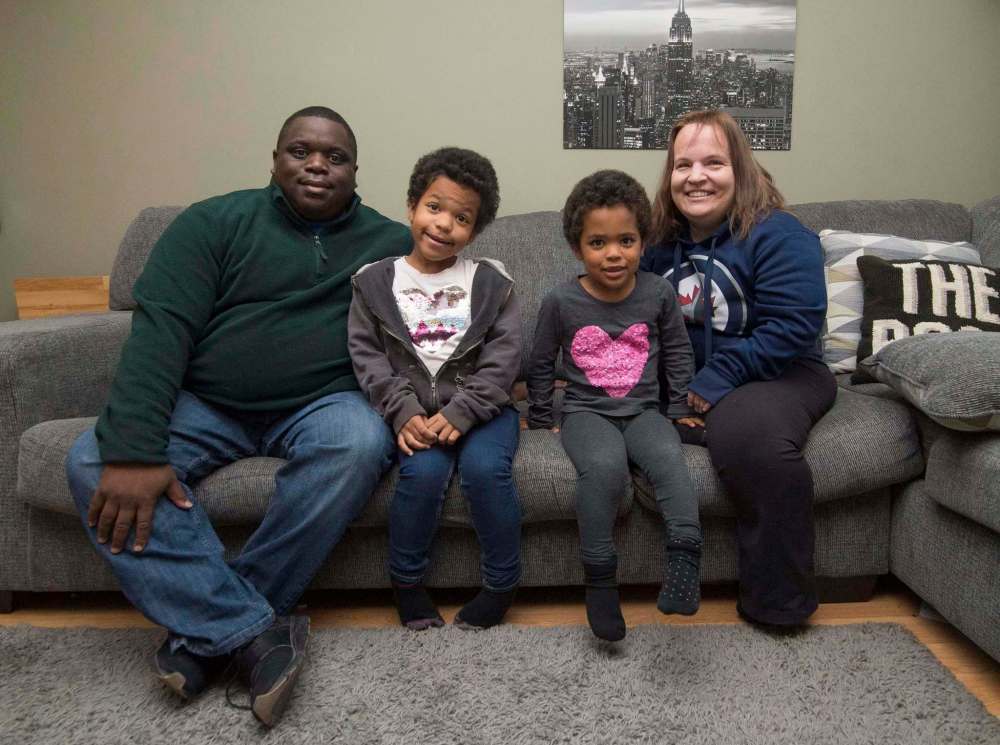
Raising awareness for dwarfism wasn’t personal for Wilder until her two daughters, Alissa, 10, and Mackenna, 6, were born with hypochondroplasia.
Wilder’s husband, Lamont, is not a little person, and neither is her immediate family. More than 80 per cent of children born with dwarfism have average-height parents and siblings, according to Little People of America. The average height of an adult with dwarfism is four feet, but typically ranges from 2-8 to 4-8.

“I guess when my kids were born with it, I knew what world they were going to grow up in,” she said. “I know what I faced, so I know what they’re going to face. And I know it’s a lot harder in some ways now because of social media, because people can be so anonymous and hurtful without getting in trouble.”
Dwarfism has taught her children valuable life lessons, such as empathy, calling it one of the “gifts” of the condition, Wilder said.
Wilder runs a monthly blog to update people about her daughters and to raise awareness for people with dwarfism.
“We’re more than fine with people approaching and asking questions. We just want to be treated with respect like every other human being,” she said. “We want to educate… The more I do that, the easier it’s going to be for my girls in their life.”
kellen.taniguchi@freepress.mb.ca