

Ottawa increases winter oil-train speed limits
Advertisement
Read this article for free:
or
Already have an account? Log in here »
To continue reading, please subscribe:
Digital Subscription
One year of digital access for only $1.44 a week*
- Enjoy unlimited reading on winnipegfreepress.com
- Read the E-Edition, our digital replica newspaper
- Access News Break, our award-winning app
- Play interactive puzzles
*Billed as $5.77 plus GST every four weeks. After 52 weeks, price increases to the regular rate of $19.95 plus GST every four weeks. Offer available to new and qualified returning subscribers only. Cancel any time.
To continue reading, please subscribe:
Add Free Press access to your Brandon Sun subscription for only an additional
$1 for the first 4 weeks*
- Enjoy unlimited reading on winnipegfreepress.com
- Read the E-Edition, our digital replica newspaper
- Access News Break, our award-winning app
- Play interactive puzzles
*Your next Brandon Sun subscription payment will increase by $1.00 and you will be charged $17.95 plus GST for four weeks. After four weeks, your payment will increase to $24.95 plus GST every four weeks.
Read unlimited articles for free today:
or
Already have an account? Log in here »
Hey there, time traveller!
This article was published 09/11/2020 (2041 days ago), so information in it may no longer be current.
OTTAWA — The federal government has done an about-face on the winter speed limit for oil trains.
After two explosive derailments in Saskatchewan in the winter of 2019-20, the government reduced the speed limit last April and February.
On Friday, Transport Canada said it would allow railways to move trains up to twice as fast as had been allowed for this winter if they submit a plan to prevent derailments.
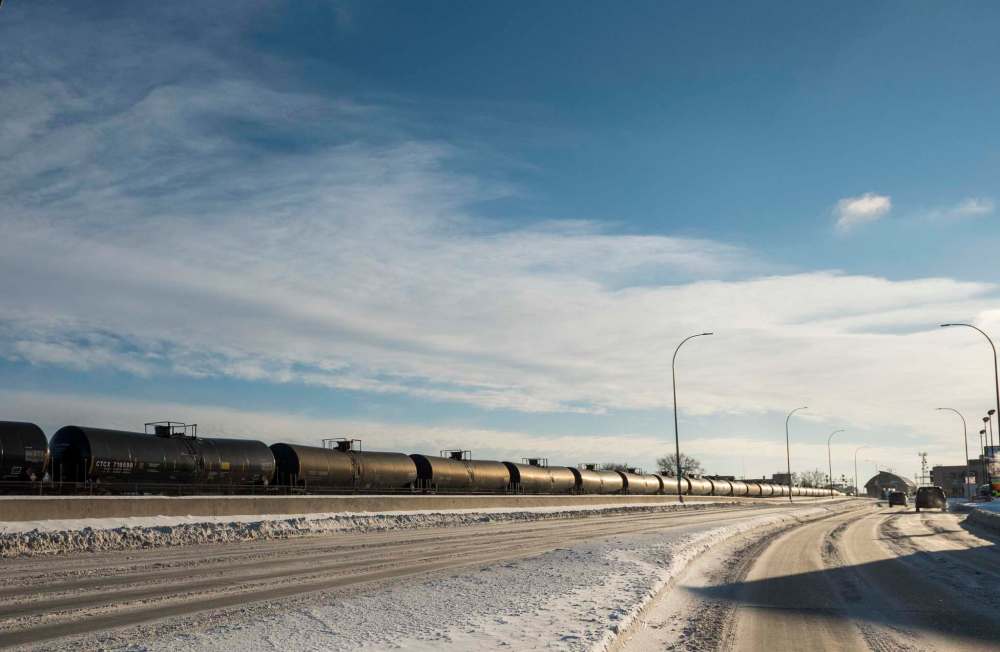
The order, which was released by Transport Minister Marc Garneau, sets speed limits based on temperatures that align with “a science-based approach to mitigating the risks of cold-weather rail operations,” a news release said.
Trains that carry dangerous goods through Winnipeg and other major cities will be able to reach a speed of 48 kilometres per hour, up from 40 km/h, but only when it’s warmer than -25 C.
Outside major cities, trains that had been limited to 40 km/h will be able to travel as fast as 80 km/h in non-signalled zones, which tend to be sparsely populated. The speed limit drops when it’s colder than -15 C.

The new rules take effect immediately for railways that prove they have technology to detect broken rails and calibrate operations for rapidly fluctuating temperatures.
The government had reduced speed limits after two oil-train derailments in Guernsey, Sask., in December 2019 and in February. Those episodes alarmed the federal environmental commissioner, who reported on Oct. 27 that Transport Canada’s assessments of oil trains were problematic.
His audit found the regulator doesn’t accurately record the data it uses to plan inspections on trains that carry dangerous goods, and often doesn’t follow up on inspections to see if railways have rectified problems.
The Transportation Safety Board recently urged Ottawa to do more to stop the increasing frequency of runaway trains, and speed up years-long efforts to prevent conductors from dozing off while on the job.
dylan.robertson@freepress.mb.ca