Simmering threat
Climate change will magnify risks to national security
Advertisement
Read this article for free:
or
Already have an account? Log in here »
To continue reading, please subscribe:
Digital Subscription
One year of digital access for only $1.44 a week*
- Enjoy unlimited reading on winnipegfreepress.com
- Read the E-Edition, our digital replica newspaper
- Access News Break, our award-winning app
- Play interactive puzzles
*Billed as $5.77 plus GST every four weeks. After 52 weeks, price increases to the regular rate of $19.95 plus GST every four weeks. Offer available to new and qualified returning subscribers only. Cancel any time.
To continue reading, please subscribe:
Add Free Press access to your Brandon Sun subscription for only an additional
$1 for the first 4 weeks*
- Enjoy unlimited reading on winnipegfreepress.com
- Read the E-Edition, our digital replica newspaper
- Access News Break, our award-winning app
- Play interactive puzzles
*Your next Brandon Sun subscription payment will increase by $1.00 and you will be charged $17.95 plus GST for four weeks. After four weeks, your payment will increase to $24.95 plus GST every four weeks.
Read unlimited articles for free today:
or
Already have an account? Log in here »
Hey there, time traveller!
This article was published 28/11/2020 (2155 days ago), so information in it may no longer be current.
Climate change is often relegated to simply being an environmental issue, instead of a problem that impacts every aspect of our lives, from economies to energy systems, to what food we eat — even national security.
This week, former U.S. Secretary of State John Kerry was tapped by President-elect Joe Biden to serve in his administration in a newly-minted position: climate envoy, which will be a part of the administration’s national security team.
“America will soon have a government that treats the climate crisis as the urgent national security threat it is,” Kerry said in a Twitter statement Monday.

There are countless moral reasons to care about the effects of climate change and the especially devastating consequences coming first for vulnerable populations and developing nations. But if that isn’t enough of a motivator to prioritize action on climate change, there is also the argument that climate change will destabilize the world as we know it and become a national security threat to the people of North America.
This isn’t a doomsday scenario from the fringes; it is the information being put forward by the U.S. and Canadian Armed Forces — and has been for two decades.
In 2018, Col. Denis Boucher, then the director of capability integration for the Canadian Armed Forces, spoke at a symposium hosted by the Centre for National Security Studies. In his presentation, Boucher outlined how climate change will completely alter the security landscape going forward; everything from a more accessible Arctic as sea ice continues to melt, to projections that 40 per cent of the world will be facing water shortages by 2045.
“Some oil-producing nations may become economically impoverished and could become instability hotspots,” the presentation reads.
The Canadian Armed Forces declined this week to provide anyone to be interviewed on this topic.
Boucher’s presentation emphasized the term most used by security officials when discussing climate change: threat multiplier.
The phrase is used to demonstrate that many of the factors used to determine security threats are themselves affected by climate change — food security, poverty, not to mention extreme weather events. The idea being that magnifying these factors can have destabilizing effects.
The Syrian civil war, which began in 2011, was principally sparked by political and economic factors, but it is also one of the most cited recent instances where environmental factors exacerbated an already precarious situation.
A drought that had begun in 2006 left the people of the country more vulnerable and more desperate as political tensions rose. In an article published by the NATO Association of Canada, the drought is identified as an often-overlooked factor in the conflict.
“The drought exacerbated the already-present water crisis and food insecurity happening in the country, leaving Syria even more vulnerable. Due to the lack of proper governance and infrastructure, Syria’s government was not prepared — or perhaps not willing — to deal with the climate-related crisis and people were forced to flee,” the article states.
The Syrian civil war was consequently one of the biggest factors leading to Europe’s migrant crisis in 2015 that sparked intense political standoffs across the continent and a reckoning for European leaders in how to deal with the influx of people.

The World Bank has projected that within the South Asian, Latin American and sub-Saharan African regions alone, there will be 143 million people displaced by the impacts of climate change by 2050.
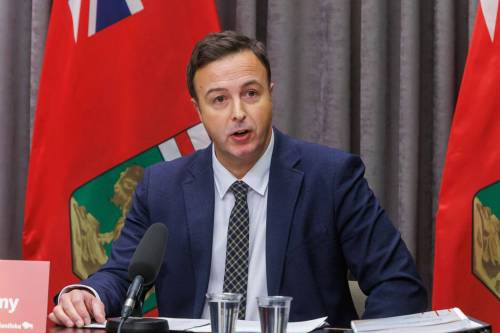
“In terms of the ‘threat multiplier’ language, what’s implicit in that is that the thing being threatened is the United States or Canada. And what drops out of that kind of a frame — especially when the threat is something like migration — is you don’t have as much room then to humanize and empathize and understand the insecurities that those migrants are experiencing. What’s driving them to be moving in the first place,” said Will Greaves, assistant professor of international relations at the University of Victoria.
Greaves researches the intersection of security studies and climate change and he isn’t terribly optimistic about a stable future as the world warms further.
“So if this was just a smaller taste, and we responded by building walls and barricading people outside of our countries, and criminalizing them, and so on. I don’t see a lot of reason why we would expect a national security response to worsening climate change, and worse climate impacts, to not resemble, in general terms, what we’ve already seen,” Greaves said.
North America, of course, has a different set of circumstance from Europe, with more isolation from the problems of other countries. However, Canada (and the U.S. to a lesser extent) do face another climate-sparked security concern: the threat of open waters in the Arctic.
Northern parts of Canada have long been protected by an ice wall, so to speak. Sea ice is melting at unprecedented rates and completely ice-free summers could be a possibility as soon as 2035.
Conventionally, if ever talked about, the possible threat on Canada’s northern border is that another country, often Russia, could encroach on sovereign waters and land.
But a much more probable issue is one of being unable to address worst-case scenario situations that arise simply by nature of there being more shipping traffic in the Northwest Passage, Greaves said.
“I would suggest that because of the very limited abilities that the Canadian state has to respond to a major marine disaster, or a nautical accident or something like that, that even good ships doing normal business things should be viewed as very problematic as we would not be able to effectively respond,” he said.
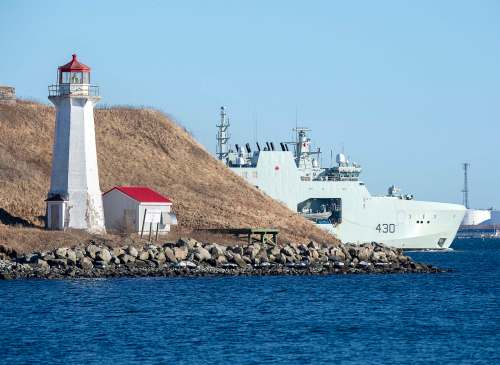
This summer, the Royal Canadian Navy received the first of six expected ships that will be used explicitly to patrol the Canadian Arctic. The HMCS Harry DeWolf is the first step towards expanding surveillance and defence activities across the country’s northern coastline.
At a conference in Ottawa in March, Chief of the Defence Staff General Jonathan Vance focused more on the conventional security threats that exist as the Arctic opens.

“What I am increasingly concerned about is the Arctic as an avenue of approach. The Canadian Armed Forces are mandated to deter and defeat threats to North America that would travel through the Arctic waters and airspace in the years to come,” Vance said. “This requires strengthening interagency and multinational partnerships, increasing surveillance and military capabilities, and improving our ability to base, project, and sustain forces in the North. It requires new approaches to sovereignty assurance that accounts for the very real pan-domain nature of conflict.”
However, Canada’s troops are often tied up, having experienced a 1,000 per cent increase in the number of deployments to help in the case of natural disasters in just four years, according to CAF’s data.

“Our force structure right now, I would say, is probably too small to be able to deal with all of the tasks,” Vance told CBC in 2019.
Greaves said it is fine if Canada wants to use its military for purposes like disaster response, but that is a decision to be made, and it will mean that other priorities are left by the wayside as Canada’s military is not big enough to do all things.
“I find that to be a really interesting tension,” Greaves said. “It raises these really fundamental questions about what is the purpose of the Canadian Armed Forces? What are the tasks that they’ll be assigned? And will they be able to do all of those tasks?”
One thing is for certain, climate change will help shape national security discussions around the world for decades to come.
sarah.lawrynuik@freepress.mb.caTwitter: @SarahLawrynuik