Authors wrestle with the real-world impacts of writing about other identities
Advertisement
Read this article for free:
or
Already have an account? Log in here »
To continue reading, please subscribe:

Digital Subscription
One year of digital access for only $205*
- Enjoy unlimited reading on winnipegfreepress.com
- Read the E-Edition, our digital replica newspaper
- Access News Break, our award-winning app
- Play interactive puzzles
*First annual payment billed as $205.00 + GST for one year. This annual subscription will automatically renew at $233.00 + GST every 52 weeks (10% off the regular annual price of $259.35). Offer available to new and qualified returning subscribers only. Cancel any time.
To continue reading, please subscribe:
Add Free Press access to your Brandon Sun subscription for only an additional
$1 for the first 4 weeks*
- Enjoy unlimited reading on winnipegfreepress.com
- Read the E-Edition, our digital replica newspaper
- Access News Break, our award-winning app
- Play interactive puzzles
*Your next Brandon Sun subscription payment will increase by $1.00 and you will be charged $17.95 plus GST for four weeks. After four weeks, your payment will increase to $24.95 plus GST every four weeks.
Read unlimited articles for free today:
or
Already have an account? Log in here »
Hey there, time traveller!
This article was published 30/11/2020 (2142 days ago), so information in it may no longer be current.
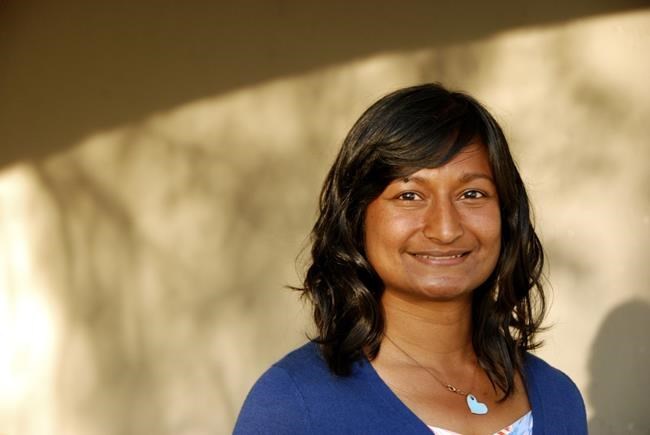
Sharon Bala knows the power of recognizing yourself in a story, and the pain of seeing your identity smeared across the page.
The Sri Lankan-Canadian author says misrepresentations in fiction can feel like a form of literary violence, warping the way some readers see the real-life harms against people who aren’t like them.
“When we see ourselves misrepresented on the page, it just feels like the writer has taken their pen and shoved it into our eyes,” said Bala, who won awards acclaimfor her 2018 debut novel “The Boat People.”
“We can’t pretend that we live in some rarefied bubble as writers where we are separate from the world.”
From using sexual violence against women as a plot point in a male hero’s arc, to killing off an Indigenous character for dramatic tension, Bala said storytelling tropes often serve as a mirror of the systemic indifference toward the suffering of marginalized groups.
But as society reckons with these injustices, the St. John’s, N.L.-based novelist said a long-simmering conversation among authors about how to responsibly write about identities other than their own, whether that be a character of a different race, gender, sexuality, ability or class.
In the past, she said, the public discourse about literary representation has been dominated by a privileged few stoking fears over perceived threats to authors’ purported “right” to pluck inspiration from other communities as they please, said Bala.
Examples include the 2017 CanLit controversy over an online campaign to fund a writing prize for cultural appropriation, or the tastemakers who rose to American author Jeanine Cummins’ defence after the January release of her much-hyped book, “American Dirt,” drew criticism from Latino writers and activists for trading in stereotypes about Mexicans.
But Bala, who hosted an online workshop on literary representation earlier this month, says the strong turnout shows that writers know they can no longer afford to weaponize “the other” as a cudgel in someone else’s narrative.
Rather, she said, creators are grappling with questions that in some ways cut to the core of the mission of fiction: How do you write about who you don’t know, and should you?
“None of us are perfect. We’re all going to make mistakes,” said Bala. “But I think that if we … have tried and still made the mistake, there’s actually a lot of empathy for that within the writing community.”
Bala said she only writes about communities she has ties to, and people she’ll have to answer to for any distortions.
She’s also a proponent of bringing in “sensitivity readers” — cultural experts who review manuscripts for inaccuracies — early in the writing process to catch misconceptions before they become embedded in the narrative.
Emma Donoghue, the London, Ont.-based author behind “Room,” said she’s also enlisted the help of cultural consultants as part of her process. But ultimately, Donoghue said she and other white writers have a responsibility to assess their own abilities and motives before depicting different demographics.
“I think it’s a richer cultural landscape,” she said. “If that means that the writers who used to sort of costlessly write about anything have to be a bit more careful, then that just comes with the territory.”
Acclaimed author Thomas King, who is of Greek and Cherokee descent, said he tries not to stray too far from his realm of experience in writing his protagonists.
Characters of diverse backgrounds often populate his narratives, but King said he wouldn’t write from another community’s point of view because he wouldn’t feel comfortable “taking on that skin.”
King said some of the most persistent pop culture narratives play into cliches and stereotypes to reinforce the audience’s pre-existing biases.
“While they’re not authentic, to the public mind, they appear to be,” he said. “Certainly, for Native people that happened with non-Native writers writing about Native characters.”
Novelist Andre Alexis holds that being too beholden to the burden of accurate representation can restrict the imaginative possibilities of literature.
The Trinidad-born, Ottawa-raised writer said problems can arise when playing pretend with someone else’s reality, and writers should have to answer for their misrepresentations.
However, Alexis maintains that imagining “the other” serves a vital function not only in the arts, but for society at large.
“It’s important for the Americans to imagine what it’s like to be a member of one of the countries they’ve attacked and ruined,” said Alexis, who won the 2015 Scotiabank Giller Prize for “Fifteen Dogs.”
“That imagining of the others who you have made to suffer is a tremendously significant moral step.”
Sanchari Sur, a genderqueer writer who uses the pronouns “she” and “they” interchangeably,said growing up they never saw queer characters, particularly South Asian ones, represented in fiction.
“When you don’t see yourself represented, or when you see yourself represented as a stereotype or negatively, that does impact you,” said Sur, who is earning a PhD in English at Wilfrid Laurier University.
Still, Sur said there needs to be space for writers to make mistakes and engage with critical feedback.
Sur confronted this issue during a writers’ retreat when they received a negative response to a piece they wrote that centred on a transgender woman’s experience of familial emotional trauma.
Sur, who was wrestling with their own gender identity at the time, said some trans participants at the retreat took issue with a non-trans author writing about the trans body in relation to trauma.
Sur said the critiques caught them off guard, and it took months to work up the wherewithal to return to fiction.
In the time since, Sur has come to see that there were technical problems with the story that contributed to the blowback, and feels they’re a better writer because of the incident.
“If you’re being called out for something that is inherently wrong or dehumanizing in some way, then you have to acknowledge that and you have to learn from it.”
Kim Davids Mandar, an emerging writer in Guelph, Ont., said the complexities of literary representation have personal resonance for her as the daughter of immigrants who fled post-apartheid South Africa to provide a better life for their mixed-race family in Canada.
When a publisher approached her about conducting a series of interviews for a collection, Davids Mandar said she jumped at the chance to ask some of Canada’s finest literary minds about how they work through questions of difference, identity and appropriation.
The editor of “(In)Appropriate,” which was released earlier this month, said she didn’t reach any tidy conclusions during her conversations with the book’s contributors, including Sur, Eden Robinson, Michael Crummey and Ian Williams.
One theme that emerged was the role that publishers and booksellers play in amplifying certain voices at the expense of others, she said.
A 2018 survey by the Association of Canadian Publishers on diversity found 82 per cent of the 279 respondents who worked in the industry identified as white.
“I think we can’t pretend that we don’t live within this context, and that it doesn’t actually impact the books industry,” said Davids Mandar.
Overall, Davids Mandar said she walked away from the book with a renewed sense of urgency for Canada’s literary community to engage in these shifting, sometimes messy conversations.
“It really reflects where we’re at, each of us as individuals, but also as a community, in truthfully embracing the fact that we need unity, but we also need diversity and we have to have them together.”
This report by The Canadian Press was first published Nov. 30, 2020.