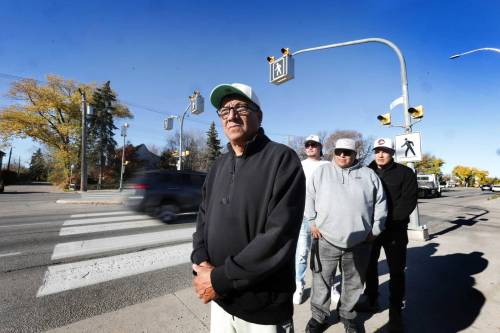
Safety elephant had Winnipeg roots

Manitoba was in vanguard protecting kids in traffic

Advertisement

Advertise with us

The cartoon character of Elmer the Safety Elephant was invented in Toronto, in 1947, to help reduce the incidence of accidents between cars and children. Safety officials in Toronto worried that, as traffic levels increased following the Second World War, the number of children who would be injured would increase. Lectures from teachers and police officers did not seem to have the desired effect. Instead, they introduced Elmer and, in the very first year, the number of accidents decreased by 44 per cent.

Read this article for free:

or

Already have an account? Log in here »

To continue reading, please subscribe:

Subscribe and receive a limited-edition Free Press branded hat or tote.

Digital Subscription

One year of digital access for only $205*

  • Enjoy unlimited reading on winnipegfreepress.com
  • Read the E-Edition, our digital replica newspaper
  • Access News Break, our award-winning app
  • Play interactive puzzles

*First annual payment billed as $205.00 + GST for one year. This annual subscription will automatically renew at $233.00 + GST every 52 weeks (10% off the regular annual price of $259.35). Offer available to new and qualified returning subscribers only. Cancel any time.

To continue reading, please subscribe:

Add Free Press access to your Brandon Sun subscription for only an additional

$1 for the first 4 weeks*

  • Enjoy unlimited reading on winnipegfreepress.com
  • Read the E-Edition, our digital replica newspaper
  • Access News Break, our award-winning app
  • Play interactive puzzles
Start now

*Your next Brandon Sun subscription payment will increase by $1.00 and you will be charged $17.95 plus GST for four weeks. After four weeks, your payment will increase to $24.95 plus GST every four weeks.

Hey there, time traveller!
This article was published 05/12/2020 (2063 days ago), so information in it may no longer be current.

The cartoon character of Elmer the Safety Elephant was invented in Toronto, in 1947, to help reduce the incidence of accidents between cars and children. Safety officials in Toronto worried that, as traffic levels increased following the Second World War, the number of children who would be injured would increase. Lectures from teachers and police officers did not seem to have the desired effect. Instead, they introduced Elmer and, in the very first year, the number of accidents decreased by 44 per cent.

The idea was that Elmer would emphasize a few basic traffic safety tips that children would memorize and never forget, based on a widely-held belief that “elephants never forget.” When Elmer was introduced in 1947, there were five basic safety rules:

• Look both ways before crossing the street.
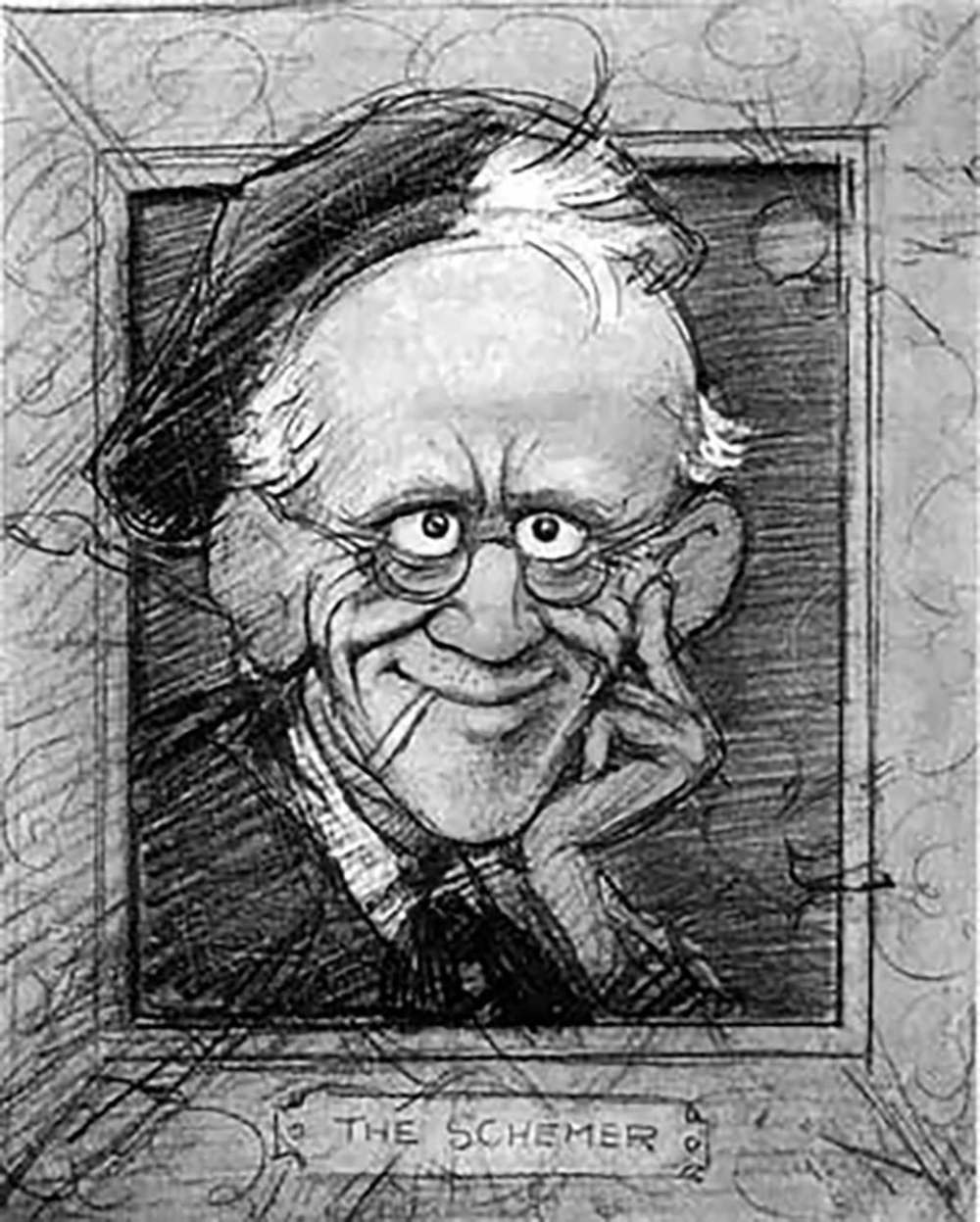
Supplied
A cartoon self-portrait of Charles Thorson.
Supplied A cartoon self-portrait of Charles Thorson.

• Keep away from the space between parked cars.

• Ride your bike safely and obey all signs and signals.

• Play your games in a safe place away from the street.

• Walk, don’t run, when you cross the street.

Elmer’s sixth rule, that you should always walk on the left-hand side of the road, facing oncoming traffic, was introduced in the 1960s. A seventh rule, to always wear a seat-belt in the car, was added in the 1980s as seat belts became more common.

Kinsmen Clubs across Canada took up the idea and promoted it throughout the country. Here in Manitoba, the first place to introduce Elmer was the City of Brandon, in 1952. There, the chief of police went to local elementary schools and introduced the basic premise. Each school would be given a triangular green pennant featuring a picture of Elmer. The pennant would be raised on the school’s flagpole and stay there as long as no child was involved in a traffic accident. If an accident did occur, the pennant would be lowered to half-mast (or, in later times, taken down altogether) for periods ranging from 15 days, to 30 days, to an entire year. All children in the school would attend a pennant-lowering ceremony so it would impress on them the importance of following Elmer’s rules.

Elmer came to Winnipeg in 1955 but he did not expand province-wide until the early 1960s with support from the provincial government. Anyone who was attended elementary school in Manitoba in the 1960s probably remembers being introduced to Elmer’s rules. But there are two additional aspects of the traffic safety story that are unique to Manitoba.

Elmer the Safety Elephant was drawn in 1952 by a cartoonist named Charles Thorson. Born in Winnipeg of Icelandic immigrant parents, Thorson worked as an artist, drawing illustrations for Eaton’s catalogues until the mid-1930s when he moved to Hollywood and worked as a character designer for Walt Disney. He is credited with creating the prototype character of Snow White (suposedly based on a Winnipeg waitress he met in the 1920s), and six of the seven dwarves. (The seventh dwarf, Dopey, came later.) Thorson later worked for Warner Brothers Studios, where he created prototypes for the characters of Bugs Bunny and Elmer Fudd, and he is thought to have played a role in the creation of Popeye and Mighty Mouse. He returned to Winnipeg in the 1940s, and to doing artwork for Eaton’s and others. His collection of artwork, including hundreds of watercolour, pencil and ink sketches from his time in Hollywood, is held by the University of Manitoba Archives.

Supplied
Elmer the Elephant was created by Charles Thorson.
Supplied Elmer the Elephant was created by Charles Thorson.

In 1936, a young woman named Louise Staples was teaching at Greenway School on St. Matthews Avenue. She worried about the safety of her pupils as they crossed the busy street. She enlisted some older students to help guide the younger students across the street and the idea proved so successful that it led to a national program, the Canadian School Safety Patrols program. School patrols still exist today and are a testament to this forward-thinking Manitoba teacher. From 1936, until 1963 when Elmer the Safety Elephant went province-wide, no child in Winnipeg was killed going to or from school, and fewer than five were injured in traffic accidents, thanks in large part to school patrols and to Louise Staples.

“Elmer the Elephant will keep school children remindful of safety rules at all times.”  


To become a member of the Manitoba Historical Society, call 204-947-0559 or email info@mhs.mb.ca. The MHS is on Facebook, Twitter and Instagram as manitoba-history

 

Report Error Submit a Tip

More Stories

Preserving past, pondering future of 142-year-old downtown church

Chris Kitching 6 minute read Preview

Preserving past, pondering future of 142-year-old downtown church

Chris Kitching 6 minute read Yesterday at 6:55 PM CDT

A 142-year-old church in downtown Winnipeg needs about $7.7 million for upgrades and related costs, while an ongoing heritage renewal project aims to create a blueprint for its future.

Potential options include selling Holy Trinity Anglican Church and leasing it back for a decades-long term, or building an apartment or office tower on an existing surface parking lot to generate revenue, officials said Wednesday.

“I think that is part of the negotiation and ensuring we have the right partners, but it is hard to put down on paper precisely every aspect of the future of a place of worship,” project manager Stephen Borys said of the potential duration of a sale and leaseback agreement to ensure the church still exists generations from now.

Similar agreements with 50- or 100-year leases exist elsewhere in Canada, he said, noting the option has been on the table for Holy Trinity for a year.

Read
Yesterday at 6:55 PM CDT

Good Samaritan stabbed attempting to help with suspected overdose

1 minute read Updated: Yesterday at 2:07 PM CDT

A Good Samaritan who was trying to help a woman who appeared to be suffering from a drug overdose on Tuesday night was instead stabbed by her companion, police say.

The victim, a 51-year-old man, came across the woman near Jubilee Avenue and Osborne Street at about 9:15 p.m. on Tuesday and tried to assist her, before a suspect came up and stabbed him in the upper body. Police say the suspect knows the woman.

The 51-year-old was rushed to hospital in unstable condition, where he was given medical treatment. The woman, too, was taken to hospital for medical attention. Winnipeg Fire Paramedic Service personnel alerted police to the incident.

Patrol officers, along with a police dog unit, found the suspect on the 400 block of Brandon Avenue just before 11 p.m. He tried to run, but officers made the arrest and seized two knives, police said.

Woman, 23, charged with fatal stabbing outside Portage Place

Tyler Searle 3 minute read Preview

Woman, 23, charged with fatal stabbing outside Portage Place

Tyler Searle 3 minute read 2:03 PM CDT

A 58-year-old woman is dead after being stabbed outside the entrance of Portage Place Tuesday afternoon when an argument escalated into violence.

Winnipeg Police Service Const. Claude Chancy said officers responded to the area near the mall’s front entrance on the 300 block of Portage Avenue around 2:45 p.m. where they found Helen Annie Spence suffering from severe and life-threatening injuries.

“There was a verbal dispute that led to a physical altercation, at which point the suspect armed herself with an edged weapon and then proceeded to stab the victim,” Chancy said, adding the alleged killer and victim knew each other.

Spence, a member of Grand Rapids First Nation who had been living in Winnipeg, was taken to the hospital in critical condition and later died.

Read
2:03 PM CDT

Wild weather uproots trees across city, leaves thousands in province without power

Chris Kitching 6 minute read Preview

Wild weather uproots trees across city, leaves thousands in province without power

Chris Kitching 6 minute read Updated: 2:06 PM CDT

This summer’s latest barrage of severe thunderstorms caused widespread property damage and power outages for more than 30,000 Manitoba Hydro customers, mostly in Winnipeg, as winds of up to 133 km/h wreaked havoc.

Charleswood resident Ian Glover’s house had minor damage compared with a neighbour’s home, where a large, uprooted poplar tree crashed through the roof while the storm pummeled Winnipeg late Wednesday night and early Thursday.

“I opened the window after I woke up (around 6 a.m.) and the tree — oh my God,” Glover said. “I got my wife up and she couldn’t believe it. I was totally blown away. (Our neighbour) said the tree went right through the house into their living room.”

Glover was thankful his neighbours were not injured. Some of the tree’s outer branches clipped the corner of his home. He had not yet assessed the damage or decided if it was worth an insurance claim as of Thursday morning.

Read
Updated: 2:06 PM CDT

Sottobraccio brings Harth’s Italian flavours to new location in Osborne Village

Eva Wasney 4 minute read Preview

Sottobraccio brings Harth’s Italian flavours to new location in Osborne Village

Eva Wasney 4 minute read Tuesday, Jul. 28, 2026

Sottobraccio is the answer to a common refrain at Harth Mozza & Wine Bar.

“The No. 1 thing we always hear from guests at Harth is, ‘We love coming here, but it’s such a drive,’” chef Brent Genyk says of his popular fine-dining restaurant in South St. Vital.

Harth’s new sister restaurant opened in the heart of Osborne Village in June, joining a raft of other eateries that have moved into the central Winnipeg neighbourhood in recent years.

Sottobraccio is located at 160 Osborne St. in the main floor of the Zü, a new retail and residential complex built on the former site of the Osborne Village Motor Inn and its well-known music venue, the Zoo.

Read
Tuesday, Jul. 28, 2026

It isn’t ‘just the weather’

Erna Buffie 5 minute read 2:00 AM CDT

I was reading The Guardian the other day, which is one of the best, if not the best, newspaper for climate change coverage. I say this, despite the fact that it still silos the subject into a special section called “Climate Crisis and Environment.”

And it continues to publish front page headlines like “May and June heatwave kills about 2,700 in England and Wales, data suggests,” with no reference to climate change, until you hit the body of the story.

Which, quite frankly, is better than most newspapers do.

Indeed, in a recent issue of The Guardian, there’s an article about just that — the fact that an analysis of British newspapers revealed that 72 per cent of articles covering the U.K.’s June heatwave failed to even mention the climate crisis.