

‘No one is coming’: Shamattawa chief decries lack of federal aid

Advertisement
Read this article for free:
or
Already have an account? Log in here »
To continue reading, please subscribe:

Digital Subscription
One year of digital access for only $205*
- Enjoy unlimited reading on winnipegfreepress.com
- Read the E-Edition, our digital replica newspaper
- Access News Break, our award-winning app
- Play interactive puzzles
*First annual payment billed as $205.00 + GST for one year. This annual subscription will automatically renew at $233.00 + GST every 52 weeks (10% off the regular annual price of $259.35). Offer available to new and qualified returning subscribers only. Cancel any time.
To continue reading, please subscribe:
Add Free Press access to your Brandon Sun subscription for only an additional
$1 for the first 4 weeks*
- Enjoy unlimited reading on winnipegfreepress.com
- Read the E-Edition, our digital replica newspaper
- Access News Break, our award-winning app
- Play interactive puzzles
*Your next Brandon Sun subscription payment will increase by $1.00 and you will be charged $17.95 plus GST for four weeks. After four weeks, your payment will increase to $24.95 plus GST every four weeks.
Read unlimited articles for free today:
or
Already have an account? Log in here »
Hey there, time traveller!
This article was published 08/12/2020 (2076 days ago), so information in it may no longer be current.
The chief of a remote northern First Nation battered by COVID-19 outbreaks says despite promises from the federal government, there is no help on the way.
“I reported a while ago that we were granted military approval and they would be sending six Rangers to the community. I have since learned that they’re not actually sending any Rangers, they’ve activated the six local Rangers who were already part of our pandemic team,” Shamattawa First Nation Chief Eric Redhead said in an interview Tuesday.
“I feel as though we were promised aid, and we got empty boxes.”
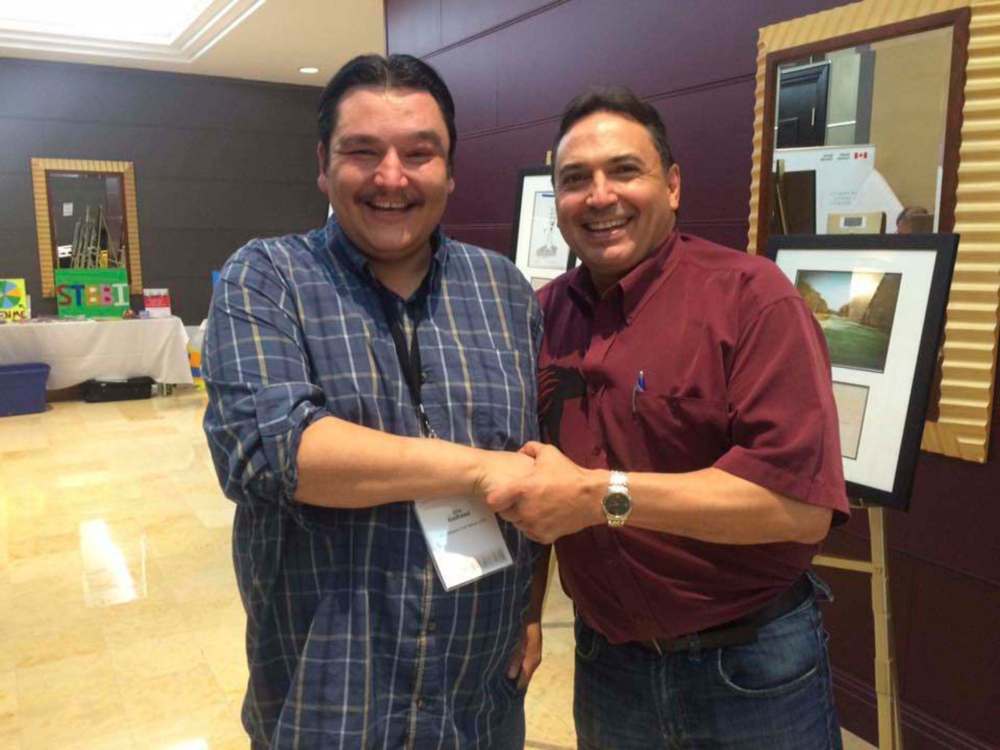
Redhead explained the six Rangers were locals who had already been working with the community to drive busses and deliver food hampers — just not in a military capacity. “They come with no additional resources, nothing.”
Meantime, the situation in Shamattawa has only intensified.
As of Monday night, the community of more than 1,000 had identified 264 cases of the novel coronavirus. Of those cases, 221 are currently residing in the community, while others have been airlifted to medical facilities.
“Our entire local pandemic team is down for the count: they’re either isolated or have tested positive for COVID-19,” Redhead said.
In a letter to Prime Minister Justin Trudeau released Tuesday, Redhead and Manitoba Keewatinowi Okimakanak Grand Chief Garrison Settee called for an urgent evacuation of the community’s elders and vulnerable residents, noting the situation is “a matter of life and death.”
“We are asking for immediate assistance from your office to help us evacuate the elders of Shamattawa, to ensure they are able to safely isolate in closer proximity to health services, should they develop complications from COVID-19,” the letter states.
“Unfortunately, the remoteness of Shamattawa means that we depend on medevacs to get people out of the community if they are experiencing medical distress. Now that it is December, the weather is unpredictable, and medevacs are not always able to land safely. This is a disaster waiting to happen.”
Redhead said the evacuation list already exists — it’s the one the community would use in case of forest fires, comprising both elders and those with respiratory issues — and numbers around 150 people.
“I’ve been calling on the feds since our first case to evacuate our elders, right off the bat,” Redhead said.
Settee stressed to the Free Press that Shamattawa’s position as a remote, fly-in community (more than 700 kilometres northeast of Winnipeg), where many residents live in overcrowded homes, means the virus travels fast.
“The situation is critical and it warrants the attention of the Prime Minister of Canada. It is essential that they would have external resources deployed, because the people on the ground are exhausted,” Settee said. “There’s nobody really there to support the community.”
Perry Bellegarde, national chief of the Assembly of First Nations, and Niki Ashton, MP for Churchill—Keewatinook Aski, echoed the community’s calls in respective letters to federal leaders.
Lt. Com. John Nethercott, a spokesperson for the Canadian Armed Forces, confirmed local Rangers were activated Dec. 3, and no additional supports are on the way.
Decisions on what CAF resources are activated at any given time are a result of discussions between the community, Indigenous Services Canada and Public Safety Canada, Nethercott said in an interview Tuesday.
“The determination was made that CAF would be best positioned to do that support to the community… food production, gathering firewood, processing firewood and that sort of thing,” he said.
Rangers are not trained to provide medical aid, Nethercott confirmed, but could potentially aid with evacuation, should the military be called to assist such efforts.

Shamattawa recently received help from the Canadian Red Cross, which sent a team of five members to take over for the local pandemic response team as they isolate or recover from the virus. Nine members of the Bear Clan volunteer patrol also arrived Tuesday to help “fill in the gaps,” Redhead said.
Without additional federal aid, however, the community remains afraid as case numbers continue to rise, Redhead said.
“We were hopeful. When I got the message from the Minister (of Defence) I felt a sense of relief, a sense of accomplishment, and I’ve just come to realize today… no one is coming.”
julia-simone.rutgers@freepress.mb.ca
Twitter: @jsrutgers
Julia-Simone Rutgers is the Manitoba environment reporter for the Free Press and The Narwhal. She joined the Free Press in 2020, after completing a journalism degree at the University of King’s College in Halifax, and took on the environment beat in 2022. Read more about Julia-Simone.
Julia-Simone’s role is part of a partnership with The Narwhal, funded by the Winnipeg Foundation. Every piece of reporting Julia-Simone produces is reviewed by an editing team before it is posted online or published in print — part of the Free Press‘s tradition, since 1872, of producing reliable independent journalism. Read more about Free Press’s history and mandate, and learn how our newsroom operates.
Our newsroom depends on a growing audience of readers to power our journalism. If you are not a paid reader, please consider becoming a subscriber.
Our newsroom depends on its audience of readers to power our journalism. Thank you for your support.
Julia-Simone Rutgers is the Manitoba environment reporter for the Free Press and The Narwhal. She joined the Free Press in 2020, after completing a journalism degree at the University of King’s College in Halifax, and took on the environment beat in 2022. Read more about Julia-Simone.
Julia-Simone’s role is part of a partnership with The Narwhal, funded by the Winnipeg Foundation. Every piece of reporting Julia-Simone produces is reviewed by an editing team before it is posted online or published in print — part of the Free Press‘s tradition, since 1872, of producing reliable independent journalism. Read more about Free Press’s history and mandate, and learn how our newsroom operates.
Our newsroom depends on a growing audience of readers to power our journalism. If you are not a paid reader, please consider becoming a subscriber.
Our newsroom depends on its audience of readers to power our journalism. Thank you for your support.
Advertisement Advertise With Us
Advertisement Advertise With Us