What do we know about the new COVID strain and what does it mean for current vaccine?
Advertisement
Read this article for free:
or
Already have an account? Log in here »
To continue reading, please subscribe:

Digital Subscription
One year of digital access for only $205*
- Enjoy unlimited reading on winnipegfreepress.com
- Read the E-Edition, our digital replica newspaper
- Access News Break, our award-winning app
- Play interactive puzzles
*First annual payment billed as $205.00 + GST for one year. This annual subscription will automatically renew at $233.00 + GST every 52 weeks (10% off the regular annual price of $259.35). Offer available to new and qualified returning subscribers only. Cancel any time.
To continue reading, please subscribe:
Add Free Press access to your Brandon Sun subscription for only an additional
$1 for the first 4 weeks*
- Enjoy unlimited reading on winnipegfreepress.com
- Read the E-Edition, our digital replica newspaper
- Access News Break, our award-winning app
- Play interactive puzzles
*Your next Brandon Sun subscription payment will increase by $1.00 and you will be charged $17.95 plus GST for four weeks. After four weeks, your payment will increase to $24.95 plus GST every four weeks.
Read unlimited articles for free today:
or
Already have an account? Log in here »
Hey there, time traveller!
This article was published 21/12/2020 (2094 days ago), so information in it may no longer be current.
New lineages of the virus responsible for COVID-19 have led to travel bans and concerns over increased transmissibility, but experts say it’s unclear whether the latest strains are more potent than previous versions.
One strain has appeared to dominate infections in the U.K. over the last month while another new lineage has been spreading in South Africa. Both countries are experiencing high rates of transmission recently, and an epidemiologist in the U.K. suggested mutations on the new strand could be making the virus 70 per cent more infectious.
Health Canada said on Sunday there’s nothing suggesting at this point that the new mutations have any effect on symptom severity, antibody response or vaccine efficacy.

Dr. Gerald Evans, an infectious disease expert with Queen’s University in Kingston, Ont., agrees, saying we need more evidence before determining potential impacts.
“If it pans out that yes, it is more transmissible, then that’s relevant and gosh, we’re going to have to address this,” Evans said.
“What we’re getting is a lot of people scared because they’re hearing about mutant viruses… I’m just frustrated because I need to see (evidence).”
Evans said it would make sense to see a new strain appearing more frequently in areas where rates of community transmission are already “exploding.”
But that could be more due to peoples’ behaviour than a change in the virus itself, he said.
Jason Kindrachuk, a virologist with the University of Manitoba, says the rate at which we’re seeing the new strain in the U.K. seems to suggest there’s more going on than just relaxed restrictions and behavioural patterns, though.
And while he agrees more research is needed before we can glean the significance of the mutations, that’s going to take time.
“We’re in this difficult period where something interesting has shown up, but now we have to try and biologically validate what that means,” he said. “And that’s not necessarily easy to do in real time as a virus is spreading.
“But we need to actually do these experiments and see: can we demonstrate there’s an advantage in those new strains compared to other variants we’ve seen for SARS-CoV-2? And there will be massive mental focus on this in laboratories across the world over the next few weeks.”
Genomic sequencing of the virus has shown the U.K. strand has already spread to other countries, but Health Canada said Sunday there have been no recorded cases of the new strain here.
The Canadian government began restricting travel from the U.K. for 72 hours beginning Monday in an effort to keep the new strain of the virus out of the country. Several European countries recently announced they too were closing their borders to the U.K.
Dr. David Williams, Ontario’s chief medical officer, said it’s important to make sure the new strain doesn’t start to spread in this country, for instance by a traveller not respecting quarantine.
He also said the province’s genomic sequencing of the virus is happening at “light speed.”
“We’re keeping an eye on it, we’re watching for it, and we’re watching to make sure what’s happening to the strains that are circulating here,” he said. “So it’s that ongoing vigilance and laboratory surveillance that’s critical as well, and it certainly would inform the citizens of Ontario if there was a risk.”
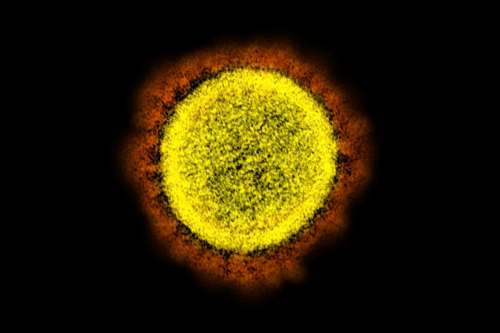
A report on the preliminary genomic characterization of the U.K. strain says a “distinct cluster” of the virus has “an unusually large number of genetic changes, particularly in the spike protein.”
That protein is what the newly developed vaccines are targeting, but Art Poon, a virus evolution researcher at Western University, doesn’t expect the mutations to impact vaccine effectiveness.
“Many of these (mutations) are pretty familiar to us and we would have anticipated that in the development of the vaccine,” he said. “But we also shouldn’t be giving the virus so many chances to change.”
There have been several mutations to SARS-CoV-2 since it first began circulating late last year, and Poon says part of the reason for that was our inability to stifle the virus in the first place.
“When you have more of the virus circulating, there’s more chance for the virus to mutate,” he said.
“But in terms of what we can do about it: all the standard recommendations to reduce transmission — reduce your number of contacts, stay at home if you can, wear a mask —those things will help prevent these lineages from arising.”
This report by The Canadian Press was first published Dec. 21, 2020.
Questions and answers about new virus variants
Where did the new strain come from? Does it make people sicker or more likely to die? What impact will it have on treatments and vaccination?
Here are some questions and answers on what’s known about the virus so far.
Here are some questions and answers on what’s known about the virus so far.
Q: WHERE DID THIS NEW STRAIN COME FROM?
A: New variants have been seen almost since the virus was first detected in China nearly a year ago. Viruses often mutate, or develop small changes, as they reproduce and move through a population — something “that’s natural and expected,” WHO said in a statement Monday.
“Most of the mutations are trivial. It’s the change of one or two letters in the genetic alphabet that doesn’t make much difference in the ability to cause disease,” said Dr. Philip Landrigan, a former Centers for Disease Control and Prevention scientist who directs a global health program at Boston College.
A more concerning situation is when a virus mutates by changing the proteins on its surface to help it escape from drugs or the immune system, or if it acquires a lot of changes that make it very different from previous versions.
Q: HOW DOES ONE STRAIN BECOME DOMINANT?
A: That can happen if one strain is a “founder” strain — the first one to take hold and start spreading in an area, or because “super spreader” events helped it become established.
It also can happen if a mutation gives a new variant an advantage, such as helping it spread more easily than other strains that are circulating, as may be the case in Britain.
“It’s more contagious than the original strain,” Landrigan said. “The reason it’s becoming the dominant strain in England is because it out-competes the other strains and moves faster and infects more people, so it wins the race.”
Moncef Slaoui, the chief science adviser for the U.S. government’s COVID-19 vaccine campaign, said scientists are still working to confirm whether the strain in England spreads more easily. He said it’s also possible that “seeding” of hidden cases “happened in the shadows” before scientists started looking for it.
The strain was first detected in September, WHO officials said.
Q: WHAT’S WORRISOME ABOUT IT?
A: It has many mutations — nearly two dozen — and eight are on the spike protein that the virus uses to attach to and infect cells. The spike is what vaccines and antibody drugs target.
Dr. Ravi Gupta, a virus expert at the University of Cambridge in England, said modeling studies suggest it may be up to two times more infectious than the strain that’s been most common in England so far. He and other researchers posted a report of it on a website scientists use to quickly share developments but it has not been formally reviewed or published in a journal.
Q: DOES IT MAKE PEOPLE SICKER OR MORE LIKELY TO DIE?
A: “There’s no indication that either of those is true, but clearly those are two issues we’ve got to watch,” Landrigan said. As more patients get infected with the new strain, “they’ll know fairly soon if the new strain makes people sicker.”
A WHO outbreak expert, Maria Van Kerkhove, said Monday that “the information that we have so far is that there isn’t a change” in the kind of illness or its severity from the new strain.
Q: WHAT DO THE MUTATIONS MEAN FOR TREATMENTS?
A: A couple of cases in England raise concern that the mutations in some of the emerging new strains could hurt the potency of drugs that supply antibodies to block the virus from infecting cells.
“The studies on antibody response are currently under way. We expect results in coming days and weeks,” Van Kerkhove said.
One drugmaker, Eli Lilly, said that tests in its lab using strains that contain the most concerning mutation suggest that its drug remains fully active.
Q: WHAT ABOUT VACCINES?
A: Slaoui said the presumption is that current vaccines would still be effective against the variant, but that scientists are working to confirm that.
“My expectation is, this will not be a problem,” he said.
United Kingdom officials have said “they don’t believe there is impact on the vaccines,” Van Kerkhove said.
Vaccines induce broad immune system responses besides just prompting the immune system to make antibodies to the virus, so they are expected to still work, several scientists said.
Q: CAN TRAVEL RESTRICTIONS DO ANY GOOD?
A: Landrigan thinks they can.
“If the new strain is indeed more contagious than the original strain, then it’s very, very sensible to restrict travel,” he said. “It will slow things down. Any time you can break the chain of transmission you can slow the virus down.”
CNN quoted Fauci as saying that he was not criticizing other countries for suspending travel to England but that he would not advise the United States to take such a step.
The presence or extent of the new strain in the United States is unknown at this time.
Q: WHAT CAN I DO TO REDUCE MY RISK?
A: Follow the advice to wear a mask, wash your hands often, maintain social distance and avoid crowds, public health experts say.
“The bottom line is we need to suppress transmission” of all virus strains that can cause COVID-19, said the WHO’s director-general, Dr. Tedros Adhanom Ghebreyesus.
“The more we allow it to spread, the more mutations will happen.”
-Marilynn Marchione, The Associated Press, with files Christina Larson in Washington and Candice Choi in New York.
Related Articles
UK restriction only one small step




Advertisement Advertise With Us
Advertisement Advertise With Us