

Airport wants rapid tests to cut isolation time
WAA seeks screening program for international arrivals to reduce required quarantine period
Advertisement
Read this article for free:
or
Already have an account? Log in here »
To continue reading, please subscribe:
Digital Subscription
One year of digital access for only $1.44 a week*
- Enjoy unlimited reading on winnipegfreepress.com
- Read the E-Edition, our digital replica newspaper
- Access News Break, our award-winning app
- Play interactive puzzles
*Billed as $5.77 plus GST every four weeks. After 52 weeks, price increases to the regular rate of $19.95 plus GST every four weeks. Offer available to new and qualified returning subscribers only. Cancel any time.
To continue reading, please subscribe:
Add Free Press access to your Brandon Sun subscription for only an additional
$1 for the first 4 weeks*
- Enjoy unlimited reading on winnipegfreepress.com
- Read the E-Edition, our digital replica newspaper
- Access News Break, our award-winning app
- Play interactive puzzles
*Your next Brandon Sun subscription payment will increase by $1.00 and you will be charged $17.95 plus GST for four weeks. After four weeks, your payment will increase to $24.95 plus GST every four weeks.
Read unlimited articles for free today:
or
Already have an account? Log in here »
Hey there, time traveller!
This article was published 26/12/2020 (2126 days ago), so information in it may no longer be current.
OTTAWA — The Winnipeg Airports Authority is hoping to replicate a COVID-19 screening test used in Calgary to ease quarantine rules for international travellers, the Free Press has learned.
“We obviously want to see people travelling again — but we want to see them travel safely,” said WAA vice-president of communications and government relations Tyler MacAfee.
“People are starting to understand that the act of travel is safe.”
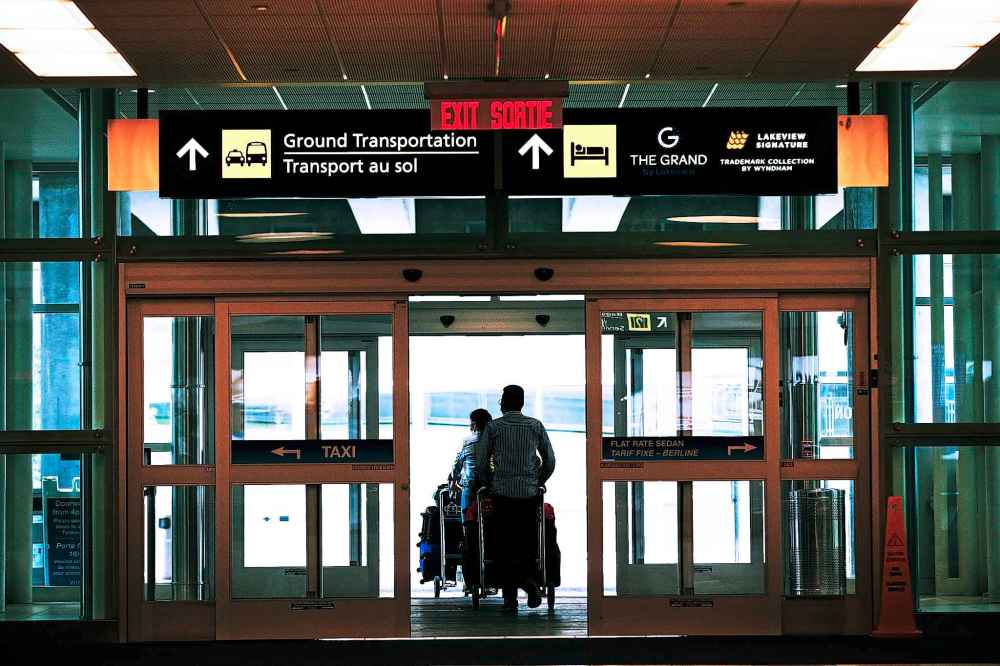
Any such program would require federal and provincial approval.
The idea would be to use rapid tests, which spot the most infectious carriers of the coronavirus, but aren’t as precise as the gold-standard nasal-swab PCR testing in labs.
In a pilot project approved by the federal government, rapid tests are being used on international arrivals at the Calgary airport to cut the two-week quarantine requirement in half.
Instead of a full 14-day quarantine, those passengers get a test after getting off the plane, and isolate for a week. They then take a second test, and are permitted to venture into public spaces if they receive a second negative result and submit a daily symptoms survey.
MacAfee said in 2019, roughly 17 per cent of Winnipeg airport trips involved locations outside Canada, largely sun-seeker destinations and places in the United States. Just as many trips involved connections to another Canadian airport for a trip abroad.
Currently, all flights returning to Canada from outside North America can land only at Toronto-Pearson, Vancouver, Montreal and Calgary, the country’s four largest airports.
Winnipeg flights can connect with U.S. and Caribbean countries, but MacAfee says just a handful of Delta flights to American cities are still operating, largely for business travel and family visits.
The Ontario and Quebec governments are supporting a demand for similar programs in Toronto and Montreal.
Manitoba has, so far, reserved its rapid-test machines for various needs, initially serving remote areas where it can take days to get a result from the main lab in Winnipeg.
The devices have since been used to monitor and control an outbreak at St. Boniface Hospital, to screen personal-care home staff and will soon be utilized in a pilot project involving school staff.
“We are continuously assessing opportunities for new testing initiatives to expand our capacity and keep Manitobans safe,” wrote a provincial spokeswoman.
MacAfee says the WAA has been in touch with local academics and with private firms to see if an airport screening program could also help research how best to use rapid tests in different contexts.

He predicts a gradual uptick in travel as vaccines are more widely distributed, and he hopes to get plans in place to be ready for that reality. The U.S. and Germany have already reduced the length of their isolation periods for international visitors to 10 days.
“We believe Canada can be following the evidence and where the rest of the world is going,” MacAfee said.
A relatively low percentage of COVID-19 cases in Canada have been linked to travel, but some epidemiologists suggest that could be due to the difficulty in proving such exposures.
Currently, the Canadian Air Transport Security Authority checks passengers’ temperatures before boarding. Unlike countries in Asia, most Canadian airports do not automatically screen arriving passengers with thermal imaging.
dylan.robertson@freepress.mb.ca