Hoard mentality
From black-market marshmallows to sold-out skates, the pandemic has created some unexpected shortages on store shelves
Advertisement
Read this article for free:
or
Already have an account? Log in here »
To continue reading, please subscribe:

Digital Subscription
One year of digital access for only $205*
- Enjoy unlimited reading on winnipegfreepress.com
- Read the E-Edition, our digital replica newspaper
- Access News Break, our award-winning app
- Play interactive puzzles
*First annual payment billed as $205.00 + GST for one year. This annual subscription will automatically renew at $233.00 + GST every 52 weeks (10% off the regular annual price of $259.35). Offer available to new and qualified returning subscribers only. Cancel any time.
To continue reading, please subscribe:
Add Free Press access to your Brandon Sun subscription for only an additional
$1 for the first 4 weeks*
- Enjoy unlimited reading on winnipegfreepress.com
- Read the E-Edition, our digital replica newspaper
- Access News Break, our award-winning app
- Play interactive puzzles
*Your next Brandon Sun subscription payment will increase by $1.00 and you will be charged $17.95 plus GST for four weeks. After four weeks, your payment will increase to $24.95 plus GST every four weeks.
Read unlimited articles for free today:
or
Already have an account? Log in here »
Hey there, time traveller!
This article was published 10/01/2021 (2075 days ago), so information in it may no longer be current.
Oh, mini marshmallows… whither thou goest?
After a year filled with stress, suffering and often shortages, it was these puffy packets of sugary softness that represented, perhaps, the most unexpected empty spaces on store shelves.
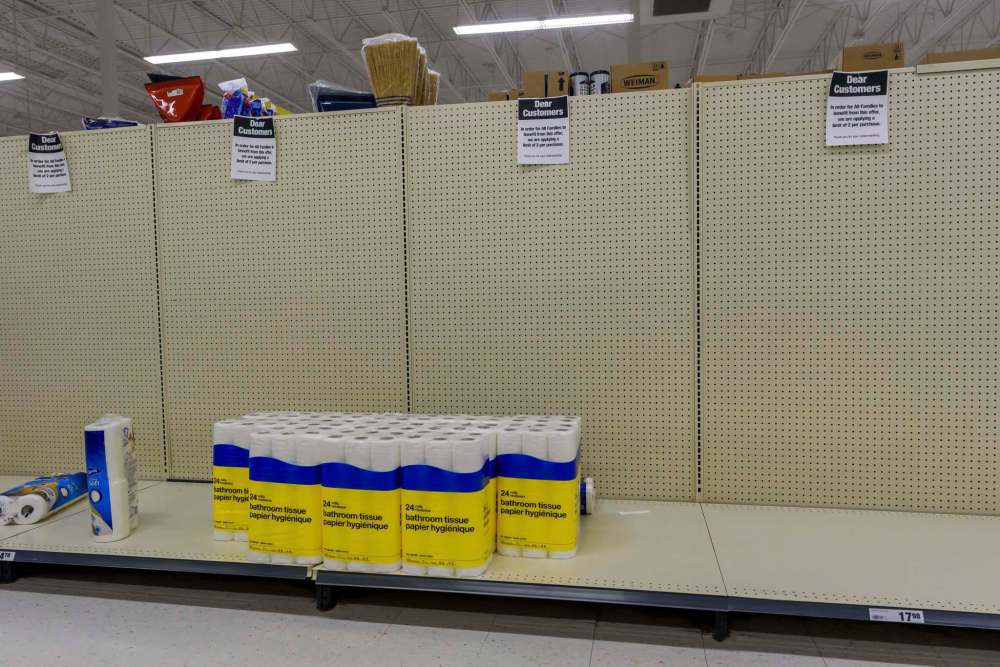
The perfect storm of the innately Instagrammable “hot chocolate bombs” going viral online, the holiday season arriving, and more people being at home with time to kill making edible gifts meant bags of these sweet cylinders were snapped up as soon as they appeared.
A marshmallow black market emerged on Kijiji, with profiteers hoping to exploit those who wanted to whip up a batch of peanut butter-butterscotch squares. Stores such as Food Fare took marshmallow reservations, as though they were made of gold bullion and not sugar and water.
Marshmallows weren’t the first item to be the subject of a pandemic-induced buying spree, though. All sorts of products have been in high demand since COVID-19 came to North America late last winter and turned everyday life upside down.
Some shortages made good sense right away, such as hand sanitizer, disinfectant wipes and personal protective equipment. Other shortages seemed to defy logic at first.
Now that 2021 has arrived, let’s take a look back at what went short in 2020, why, and how each shortage — to some extent — represented people’s shifting habits and their adaptation to a new reality.
Toilet paper
The first, most infamous and most “memed” shortage was for something most people use every day. However, worldwide stockpiling of toilet paper also showed panic-buying isn’t exactly rational.
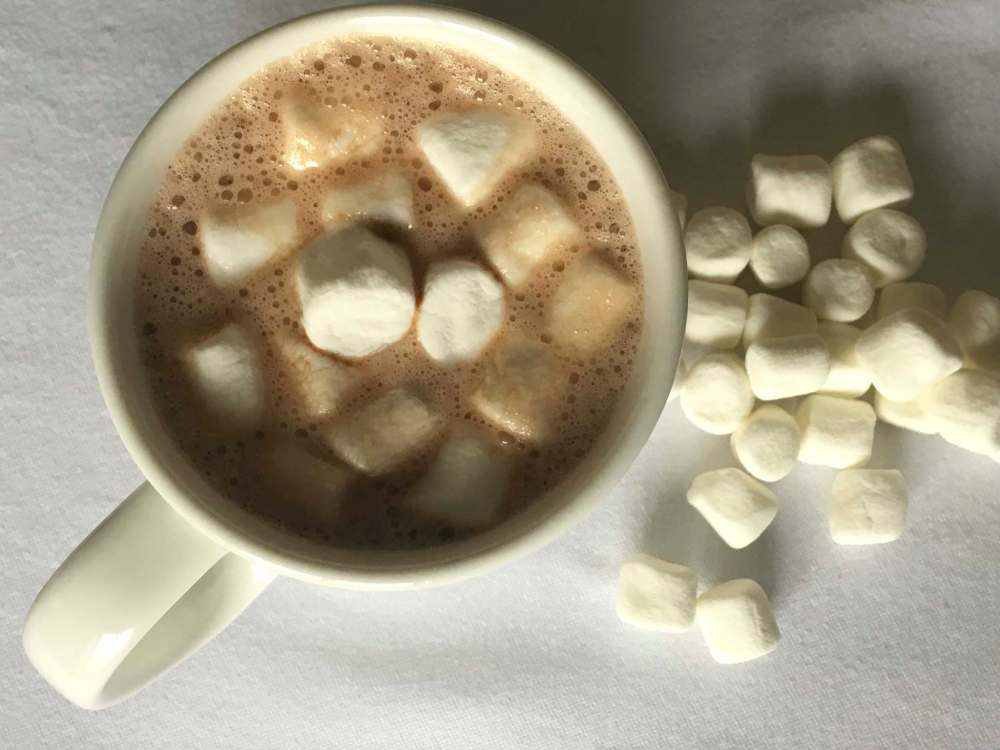
Instead of rushing to amass canned goods and rice, people around the world rushed to amass as many bog rolls as possible, enough in some cases to erect giant TP turrets and Cottonelle castles. CNN reported that in March, some companies saw a 700 per cent increase in toilet paper sales. Stumbling upon a well-stocked aisle became like stumbling into Narnia.
Stockpiling is contagious. Even those who saw the folly in hoarding toilet paper because of a respiratory viral pandemic were forced to stockpile because other people were. Folks got into fist-fights over the stuff. Stores had to impose one-case-to-a-customer limits.
Forbes contributor Brett Whysel called this the “bandwagon effect” in an April article: “empty shelves are clear evidence of what others are doing and motivate us to buy more.”
Jay L. Zagorsky, a research scientist at Ohio State University, offered some suggestions as to why toilet-paper hoarding took place.
“Stocking up on toilet paper is a relatively cheap action, and people like to think that they are ‘doing something’ when they feel at risk,” Zagorsky wrote in an article for Social Science Spade.
“This is an example of ‘zero risk bias,’ in which people prefer to try to eliminate one type of possibly superficial risk entirely rather than do something that would reduce their total risk by a greater amount,” he continued.
Zagorsky also noted that hoarding makes people feel secure during times of high anxiety. “This is especially relevant when the world is faced with a novel disease over which all of us have little or no control,” he explained. “However, we can control things like having enough toilet paper in case we are quarantined.”
In the second wave, toilet paper hoarding hasn’t been nearly as prevalent. Many are undoubtedly still working through their initial stockpiles from March.
Yeast
In uncertain times, people turn to simple comforts. For many, that comfort was baking.
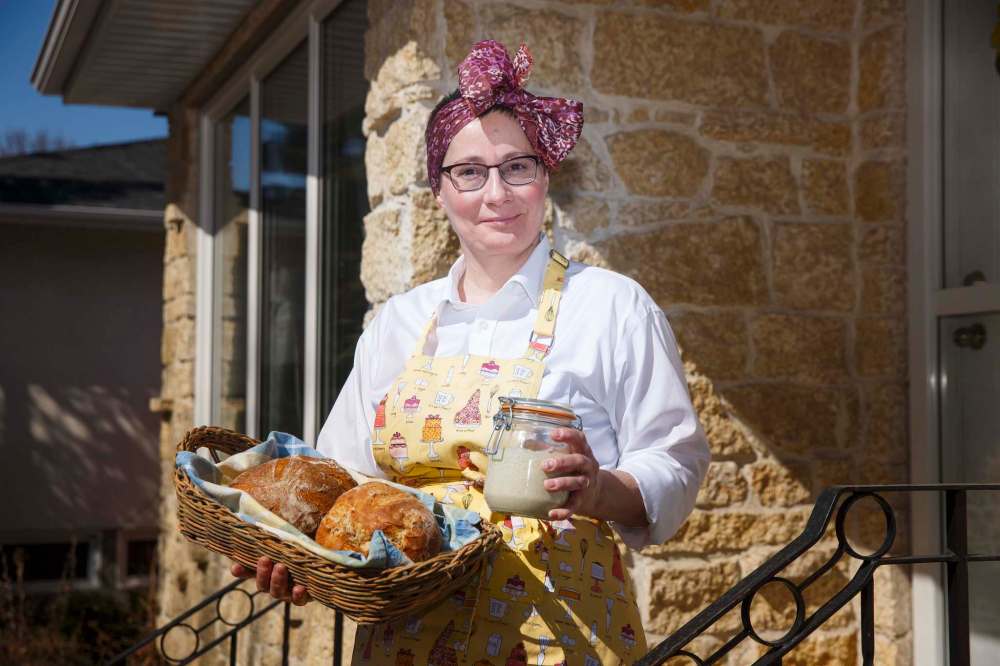
As Winnipeg sourdough bread baker Lisa Sylvestre told the Free Press back in April: “A loaf of fresh bread sets the world right.”
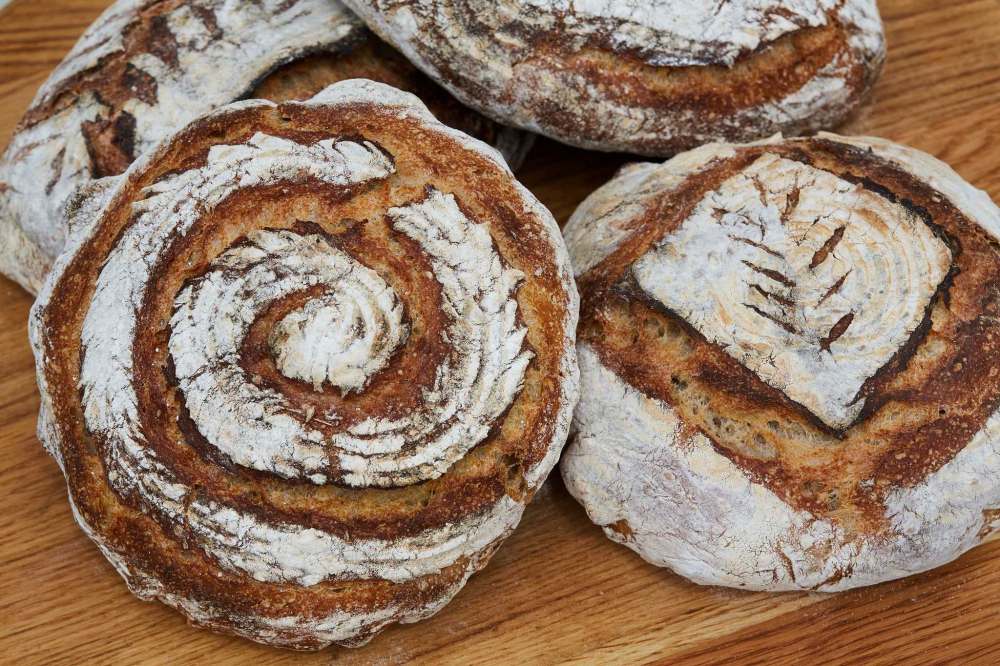
Lockdown and sudden free time inspired many to get up to all sorts of floury fun: they made everything from simple cookies to complex sourdough. The latter is an intensive undertaking that takes three days and requires close attention and proper technique throughout — not something one’s likely to do after a nine-to-five day and an hour commute.
Sales in the baking aisle for yeast, flour and baking chips surged, growing 26 per cent in the year-to-date period that ended April 4. That translates to $88 million more than the same time period in 2019, a Nielsen report from May indicated.
That’s why shelves usually well-stocked with items that would have been somewhat speciality pre-pandemic were often bare.
The search for leaveners became a true community quest: some bought live yeast directly from restaurants. Others took to social media neighbourhood groups, imploring their neighbours to share a packet or two.
Others shared their sourdough “starters” — fermented melanges of water, flour and micro-organisms — that helps sourdough rise sans yeast.
Sylvestre, the sourdough specialist, was happy to dole out portions of Cornelius — her 150-year-old starter from the Basque region of Spain — to new hobbyists.
Like the mini marshmallow shortage, the shortage of yeast had many factors. Usually, the first quarter sees the lowest demand for baking products, but “the pandemic flipped that schedule on its head,” with demand surpassing what producers would generally expect even during the busy Christmas baking season, an April article for Slate magazine noted.
There were also major problems with getting the yeast packaged fast enough to keep up with demand. Also, since the production of yeast is a living, biological process, it can literally only happen so fast.
Canned soft drinks
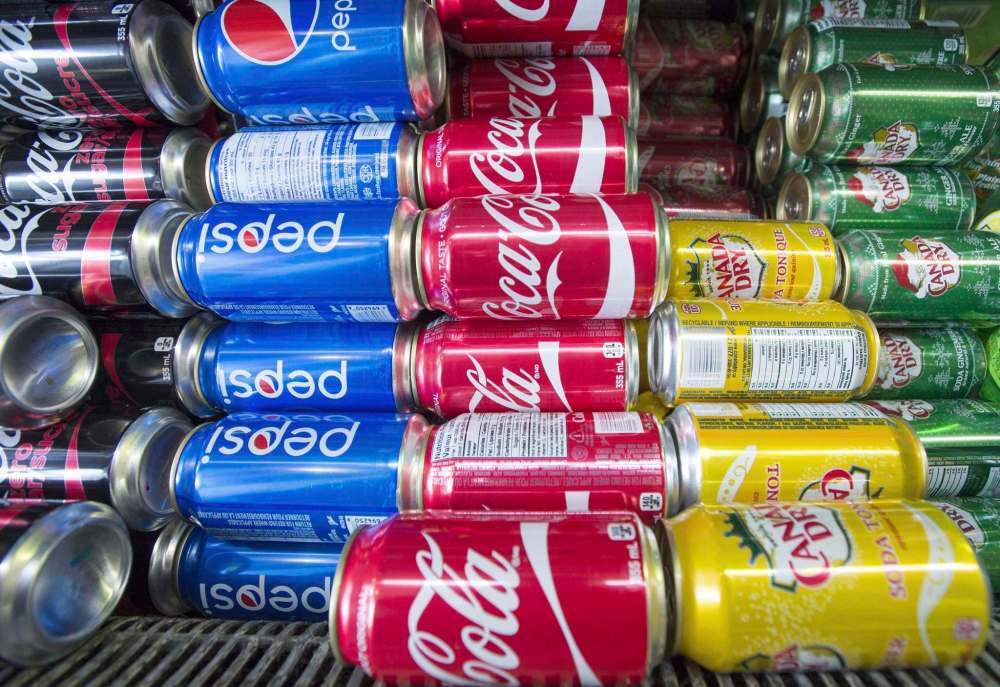
Sure, Coke and Pepsi are still on the shelves, but good luck finding most varieties of diet drinks, or any flavours outside of manufacturers’ main brands.
As restaurants and taprooms closed, people began drinking more soda (and beer) at home in cans rather than out of a fountain or on tap. In fact, U.S. retail sales of aluminum drink cans rose 24 per cent in March, according to market researcher firm IRI.
Manufacturers have ramped up canning so much that aluminum-can producers don’t have the capacity to keep up with demand. Canning was already surging in popularity pre-pandemic, owing to aluminum cans being lighter and more robust than glass bottles, and having higher recycling rates than glass and plastic, the Wall Street Journal says.
Even U.S. canning companies with the capability to produce billions per year have had to import billions more from overseas.
“From now until the end of the year, and in almost every market where we produce, cans will be in short supply,” Timothy Donahue, the CEO of Crown Holdings Inc. — which claims to manufacture one out of every five drink cans worldwide — said in a late August interview with the WSJ. “We do not have the ability to make up months of demand in a shorter time period.”
That means the favourites many have been missing since spring (for this writer, it’s Diet Coke XTRA Toasted Vanilla) might not return for a while yet.
Outdoor improvements
If you’re homebound, your home might as well be a paradise.
That seemed to be the thought process of many Winnipeggers, who invested the money they otherwise would have spent on travelling or going to events on home improvements instead.
After winter finally breathed its last breath, many assessed their yards and realized that if they wanted to enjoy the outdoors, their properties needed sprucing up — new sod, new decks, new fences for added privacy.
In early July, landscapers the Free Press spoke to cited a big increase in business, with one reporting receiving double the phone calls and another reporting having no slots open for three months and a 30 to 35 per cent increase in business.
With public pools closed and vacations cancelled, many also looked to add backyard swimming pools for socially distant splashing. Inexpensive above-ground pools became a hot commodity, with one Steinbach couple the Free Press spoke with coming up empty at Canadian Tire, Walmart, Costco and Home Depot.
“People are deciding to spend the money in the backyard on something they can use and enjoy for the next 10 years, as opposed to what they might have spent over the next couple of years on a vacation,” Don Carson of Krevco Lifestyles told the Free Press. “Instead, they can create their own backyard escape.”
Perhaps in summer 2021, people will actually be able to host others in the backyard oases they’ve created.
Sporting goods of all sorts
As gyms were shuttered, swole citizens were forced to find new ways to get active, not wanting to lose their hard-fought-for gains or gain the quarantine-15.
An influx of gym-goers setting up home gyms meant a run on dumbbells, kettlebells, stationary bikes and other exercise equipment that many were used to having access to without owning.
As the days got longer and the weather got warmer, Winnipeggers realized the opportunity for outdoor exercise. They sought out bikes of all types, either to enjoy active transportation trails or to have an active commute. Lineups outside bike shops and sellouts inside them became commonplace.
“Unlike some retailers who are worrying about how to convince people to come back to the stores, bike shops are facing another problem — running out of stock,” the Free Press’s Martin Cash wrote in mid-May.
In addition to selling bikes like never before, cycling shops also saw plenty of old ones — long forgotten prior to the pandemic but pulled out from sheds and garages — come in for tune-ups to make them road-worthy again.
“We’re getting bikes (to repair) that don’t look like they have been on the road for 20 years,” said Tim Woodcock of Woodcock Cycle Works.
Winnipeggers also proved cycling isn’t just for a fanatical few. Dutch bikes — practical, comfortable, upright models one can ride without any special gear — have surged in popularity, with more than 700 now rolling around Winnipeg streets.
Dutch bikes have become especially popular with Winnipeg women. In September, the Free Press’s Eva Wasney featured two young professionals who have become urban active transportation advocates — one hosts a cycling podcast and the other gives bike-riding lessons to women of all ages.
“When the roads were empty, people were falling in love with cycling,” Anders Swanson, head of the Winnipeg Trails Association and co-founder of the Bicycle Garden pop-up shop on Sherbrook Street — which sold Dutch bikes this summer — told the Free Press in August.
Of course, Winnipeg summers are fleeting and winter has settled in. Even though gyms were mandated to close again when code red restrictions were implemented in November, many people have refused to hibernate. Cold-weather recreational gear such as skis and snowmobiles are now hot buys.
The Bicycle Garden space is now serving people sans the stuff for frosty frolicking. It’s now the “Icicle Garden” and offers pay-what-you can ski and snowshoe rentals.
Christmas trees
Oh Christmas tree, oh Christmas tree, how hard you are to purchase!
No amount of scratch or singing could snag a holiday fir for Winnipeggers who didn’t act last month.
More people home for the holidays — and the desire to feel a little bit normal during our recent COVID Christmas and decorate a tree like always — led to a big boost in business for Christmas tree lots. If you’re going to be stuck in the house, you might as well have a togged-up tree to look at, right?
Garden-centre owners the Free Press spoke with last month likened it to “the holiday version of panicked shoppers binge-buying toilet paper” back in March.
Ray DuBois, owner of Ron Paul Garden Centre, was out of trees by Dec. 7 and completely sold out for the first time in 11 years of owning the centre.
“We’ve had tons of people who had never come here before,” said DuBois, whose centre sold 1,200 trees. “It was like the toilet-paper rush. People were afraid they weren’t going to get their trees. People just panicked.
“Everybody just wants to try and right this horrible madness. They want a little bit of joy in a joyless time. They’re trying to get a little bit of normal… It’s Psychology 101 — people just want to feel normal,” he continued.
It was the same all over town, with trees selling out before most people even buy them during normal years.
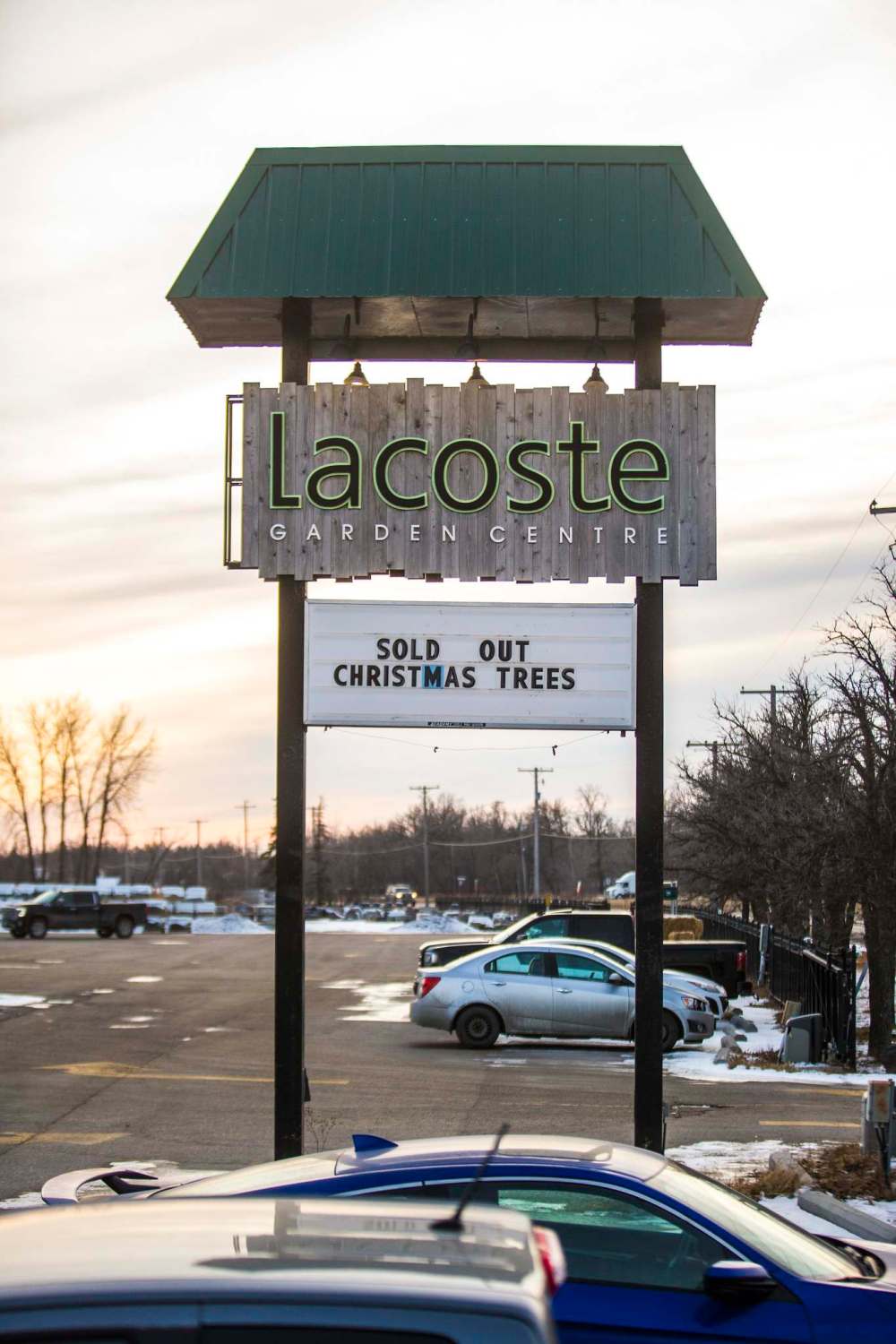
“It’s 100 per cent because of COVID-19,” agreed Jordan Hiebert of Lacoste Garden Centre. “I think the mindset of people this year was that there was an urgency and they didn’t want to get stuck without a tree.”
Sadly, it’s now time to get rid of the tree you possibly drove all around town to find. If you haven’t yet ditched yours, you can drop it off at a number of city-run tree-recycling locations until the end of January. Or you can get it picked up for a fee by Sscope — a non-profit that provides jobs to those living with a mental-health illnesses — by calling 204-987-6300.