

Soccer somehow survives
And its fans can't imagine going through pandemic last year without it
Advertisement
Read this article for free:
or
Already have an account? Log in here »
To continue reading, please subscribe:

Digital Subscription
One year of digital access for only $205*
- Enjoy unlimited reading on winnipegfreepress.com
- Read the E-Edition, our digital replica newspaper
- Access News Break, our award-winning app
- Play interactive puzzles
*First annual payment billed as $205.00 + GST for one year. This annual subscription will automatically renew at $233.00 + GST every 52 weeks (10% off the regular annual price of $259.35). Offer available to new and qualified returning subscribers only. Cancel any time.
To continue reading, please subscribe:
Add Free Press access to your Brandon Sun subscription for only an additional
$1 for the first 4 weeks*
- Enjoy unlimited reading on winnipegfreepress.com
- Read the E-Edition, our digital replica newspaper
- Access News Break, our award-winning app
- Play interactive puzzles
*Your next Brandon Sun subscription payment will increase by $1.00 and you will be charged $17.95 plus GST for four weeks. After four weeks, your payment will increase to $24.95 plus GST every four weeks.
Read unlimited articles for free today:
or
Already have an account? Log in here »
Hey there, time traveller!
This article was published 12/03/2021 (2014 days ago), so information in it may no longer be current.
“The COVID-19 pandemic is certainly not the first of its kind, but it is nevertheless unfamiliar to our lived experience, and for our purposes here, however trivial, it presents a scenario of the unknown in world football.”
I wrote that sentence on March 13, 2020, for a Free Press column published later in the evening and in print the next morning. A year ago, in other words. What a year. I, like most other people, scientists included, had no idea what the following few weeks would hold, never mind 12 months.
But here we are, a year into the biggest global health emergency in a century, somehow living our lives, somehow surviving.
Those of us who did survive, of course. Many didn’t, and many more continue to experience the pandemic as evermore tortuous hell, a battle for existence that has so unfairly placed so many of the most vulnerable along the front line.
I am writing a newspaper column. I am fortunate, privileged and thankful, though not thankful enough. Can I ever be? Today I’ll be watching Leeds-Chelsea, Real Madrid-Elche and Borussia Dortmund-Hertha Berlin. I might put on a baseball game in the afternoon. Tonight, like most of you, I’ll tune in to Jets-Leafs. The Brier will also be on my radar. Sunday’s schedule will be similar.
That is to say that 368 days since the World Health Organization labelled COVID-19 a global pandemic, my life retains a lot of its favourite things.
Naturally, there have been stumbles along the way.
As I re-read my column of a year ago I remember that the Bundesliga stubbornly thought it could play into the following week, with fans, before it followed its European counterparts into suspension. The leagues of France and Belgium simply ended their seasons.
Bayern Munich chairman Karl-Heinz Rummenigge’s remarks at the time, insisting that the show must go on to satisfy television partners, seem even more ridiculous in retrospect. But Manchester City manager Pep Guardiola’s pronouncement that “there is no reason to play without the people” was similarly, if rather more innocently, naïve.
In all honestly, I identified with Guardiola’s sentiments last March. And part of me still does, albeit only the part of me that thinks theoretically. Fans, I believe, and media theory would tend to support, are not merely spectators watching a game, but rather integral contributors to the spectacle, active participants in the show.
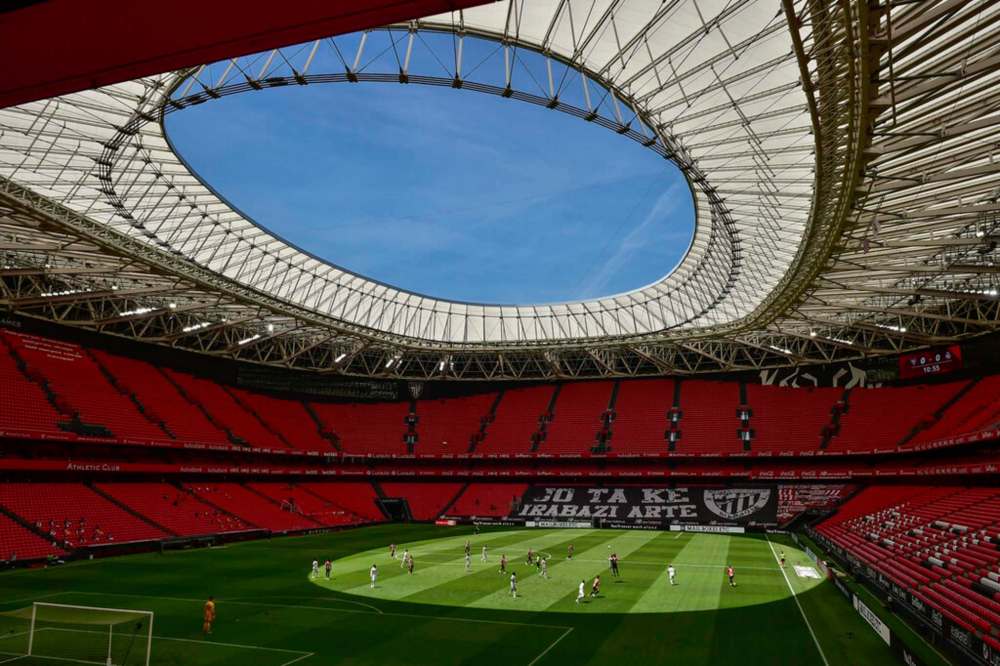
What has surprised me is football’s — and all sports’ (save the CFL, literally) — flexibility. That, and our own ability to adapt.
“What I learned, and what life continues to teach me, is that people are always more adaptable than we think.” I wrote that for my March 21, 2020 column. “We fill voids in our lives relatively quickly; we find new things, new ways to occupy our time and thoughts; we move on.”
Well, sort of.
I didn’t move on from loving football. Granted, I don’t anticipate matches with February 2020-levels of excitement, but that’s true with most things in my life.
Things are slower now, more repetitive, predictable. And yes, for a time we were all making sourdough and doing virtual happy hours, but it turns out a lot of us exhausted those pleasures more quickly than we grew tired of watching a quieter, emptier version of our favourite sport.
We moved on, but it was a willing, cooperative move to what we still hope is a temporary normal. As it happens, I used the phrase “new normal” for the first time in that March 21 piece. It was already in the lexicon. Were we really so desperate for something so different? Are we still?
In many ways, yes.
We’ve been reinstructed regarding the labour that really matters; the association of socioeconomics and mental wellness has been reinforced. We’re reckoning with poverty and racialization — the context of COVID only underlining the individual and collective desolation wrought by both. New ways of policing are being imagined, as are more holistic approaches to a more fair and just society.
No doubt there is not only the opportunity but also the imperative for a grand reset here, but in sports? Probably not. We’d like it to go back to how it was.

In fact, we’d like all our former leisure activities to be part of our post-pandemic lives: restaurants, concerts, football games, all of it — whatever we still associate with enjoyment.
“Football without in-stadium fans just isn’t worth putting on.”
So I wrote in that March 13, 2020 column. I was wrong. It’s not the same, of course, but it’s certainly worth having around.
Come to think of it, I can’t imagine the last year without it.
jerradpeters@gmail.com
Our newsroom depends on a growing audience of readers to power our journalism. If you are not a paid reader, please consider becoming a subscriber.
Our newsroom depends on its audience of readers to power our journalism. Thank you for your support.
Our newsroom depends on a growing audience of readers to power our journalism. If you are not a paid reader, please consider becoming a subscriber.
Our newsroom depends on its audience of readers to power our journalism. Thank you for your support.
Related Articles
Real Madrid, Man City target last 8 of Champions League







Advertisement Advertise With Us
Advertisement Advertise With Us