

Manitoba law society rules questioned

Advertisement
Read this article for free:
or
Already have an account? Log in here »
To continue reading, please subscribe:
Monthly Digital Subscription
$1 per week for 24 weeks*
- Enjoy unlimited reading on winnipegfreepress.com
- Read the E-Edition, our digital replica newspaper
- Access News Break, our award-winning app
- Play interactive puzzles
*Billed as $4.00 plus GST every four weeks. After 24 weeks, price increases to the regular rate of $19.95 plus GST every four weeks. Offer available to new and qualified returning subscribers only. Cancel any time.
Monthly Digital Subscription
$4.99/week*
- Enjoy unlimited reading on winnipegfreepress.com
- Read the E-Edition, our digital replica newspaper
- Access News Break, our award-winning app
- Play interactive puzzles
*Billed as $19.95 plus GST every four weeks. Cancel any time.
To continue reading, please subscribe:
Add Free Press access to your Brandon Sun subscription for only an additional
$1 for the first 4 weeks*
*Your next subscription payment will increase by $1.00 and you will be charged $16.99 plus GST for four weeks. After four weeks, your payment will increase to $23.99 plus GST every four weeks.
Read unlimited articles for free today:
or
Already have an account? Log in here »
Hey there, time traveller!
This article was published 18/03/2021 (1852 days ago), so information in it may no longer be current.
RULES that require prospective lawyers in Manitoba to disclose certain information — such as whether they have had any contact with police — before they can be called to the bar, unfairly target Indigenous, Black and other marginalized groups, says the Canadian Civil Liberties Association.
The Law Society of Manitoba’s “good character” process is “discriminatory and intrusive, it violates personal privacy and it undermines the law society’s goal for truth and reconciliation, diversity and inclusion,” said the association’s equality director, Noa Mendelsohn Aviv.
In a brief this week, the association called on the law society to overhaul the disclosure process, which it says effectively discourages Indigenous, Black and other marginalized people from becoming lawyers.
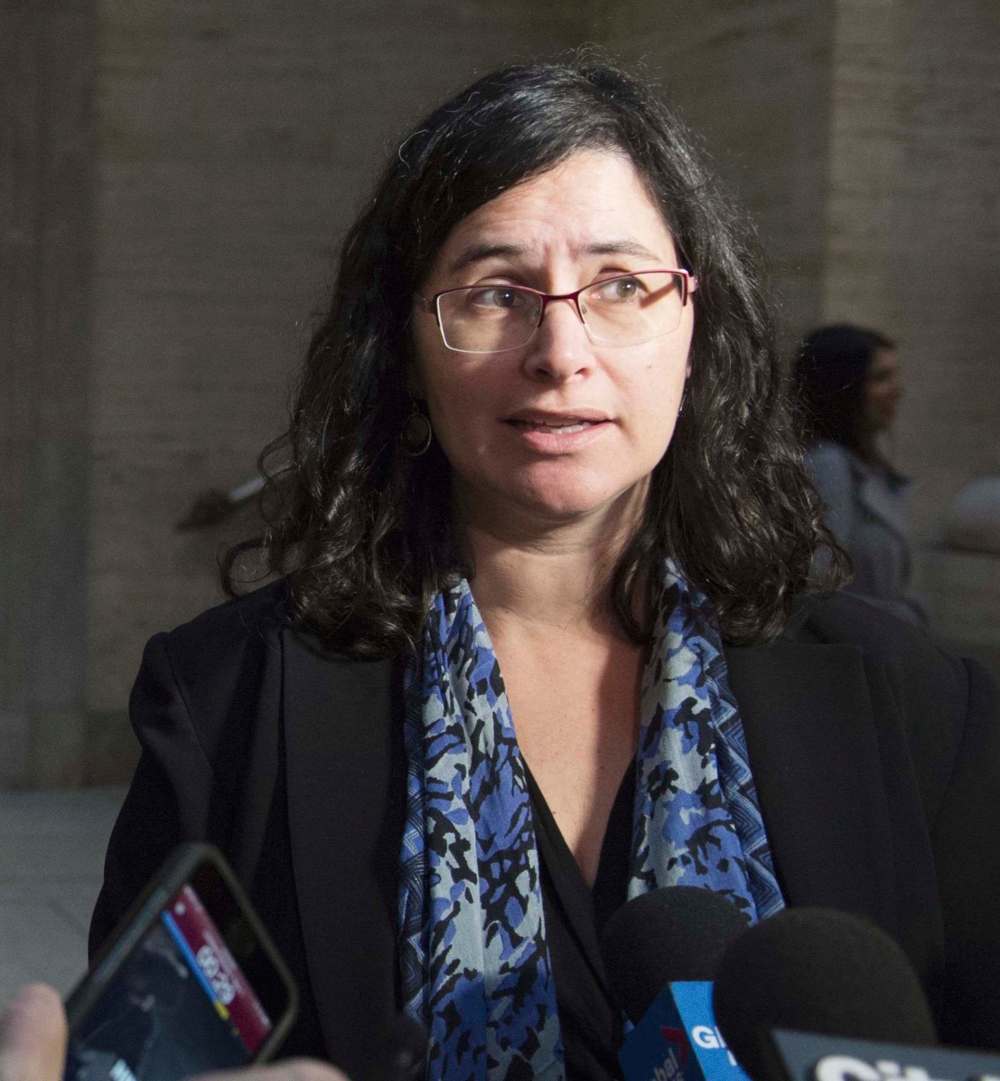
“In our view, it is not in the spirit of Canada’s aspiration to achieve truth and reconciliation with its Indigenous peoples of this country,” said Verna George, association special adviser on Indigenous issues.
Mendelsohn Aviv said the law society’s “good character” process requires applicants to disclose “deeply personal, irrelevant and remote information about themselves,” including whether they have been suspended from a post-secondary school for misconduct, whether they resigned from a job because of allegations made against them, and most significantly, whether they have had any involvement with the police or justice system.
“The process requires that people disclose all manner of contact with police and the criminal justice system, including items that did not lead to a finding of guilt, and despite the fact that Indigenous individuals, Black people and other racialized or marginalized individuals are overpoliced, racially profiled, and face unfair, overly harsh treatment within the system as a result of colonialism, racism and systemic discrimination,” she said.
While only a few applicants who answer the questions do not pass the bar, the real issue is how many are deterred from even trying, Mendelsohn Aviv said.
“We know of specific individuals who won’t even enter law school because the time commitment and the money involved is extreme,” she said. “Then at the end of the process, you have to disclose all this information and potentially go through an investigation, and only then find out after this huge investment whether they can become a lawyer. All these people are turned away before they even get to the gate.”

A lack of diversity in the lawyer pool affects society, Mendelsohn Aviv said.
“This has an impact not only on diversity among lawyers, but also among prosecutors, legal academics and judges who are setting policy and law,” she said.
In an email statement, the law society said it is “committed to the principles of equity and diversity” and “share(s) the view that there is a need for greater diversity within the legal profession.”
It will give “careful consideration” to the association’s request.
dean.pritchard@freepress.mb.ca
Dean Pritchard is courts reporter for the Free Press. He has covered the justice system since 1999, working for the Brandon Sun and Winnipeg Sun before joining the Free Press in 2019. Read more about Dean.
Every piece of reporting Dean produces is reviewed by an editing team before it is posted online or published in print — part of the Free Press‘s tradition, since 1872, of producing reliable independent journalism. Read more about Free Press’s history and mandate, and learn how our newsroom operates.
Our newsroom depends on a growing audience of readers to power our journalism. If you are not a paid reader, please consider becoming a subscriber.
Our newsroom depends on its audience of readers to power our journalism. Thank you for your support.
Dean Pritchard is courts reporter for the Free Press. He has covered the justice system since 1999, working for the Brandon Sun and Winnipeg Sun before joining the Free Press in 2019. Read more about Dean.
Every piece of reporting Dean produces is reviewed by an editing team before it is posted online or published in print — part of the Free Press‘s tradition, since 1872, of producing reliable independent journalism. Read more about Free Press’s history and mandate, and learn how our newsroom operates.
Our newsroom depends on a growing audience of readers to power our journalism. If you are not a paid reader, please consider becoming a subscriber.
Our newsroom depends on its audience of readers to power our journalism. Thank you for your support.
Advertisement Advertise With Us
Advertisement Advertise With Us
History
Updated on Thursday, March 18, 2021 8:59 AM CDT: Updates photo caption to correct job title.