

The pebbled ice is a place for everyone
Curling Canada intent on bringing greater diversity to the Roarin' Game
Advertisement
Read this article for free:
or
Already have an account? Log in here »
To continue reading, please subscribe:
Digital Subscription
One year of digital access for only $1.44 a week*
- Enjoy unlimited reading on winnipegfreepress.com
- Read the E-Edition, our digital replica newspaper
- Access News Break, our award-winning app
- Play interactive puzzles
*Billed as $5.77 plus GST every four weeks. After 52 weeks, price increases to the regular rate of $19.95 plus GST every four weeks. Offer available to new and qualified returning subscribers only. Cancel any time.
To continue reading, please subscribe:
Add Free Press access to your Brandon Sun subscription for only an additional
$1 for the first 4 weeks*
- Enjoy unlimited reading on winnipegfreepress.com
- Read the E-Edition, our digital replica newspaper
- Access News Break, our award-winning app
- Play interactive puzzles
*Your next Brandon Sun subscription payment will increase by $1.00 and you will be charged $17.95 plus GST for four weeks. After four weeks, your payment will increase to $24.95 plus GST every four weeks.
Read unlimited articles for free today:
or
Already have an account? Log in here »
Hey there, time traveller!
This article was published 19/03/2021 (2044 days ago), so information in it may no longer be current.
The sport of curling in Canada is intent on providing an open house.
That means making everyone feel welcome and supported in clubs across the country, ensuring that progress continues to be made in the areas of diversity and inclusion.
Curling Canada has released a digital resource kit: Curling is a place for everyone. It will be sent to nearly 1,000 curling facilities, helping them create meaningful change toward greater diversity and inclusivity at the grassroots level.
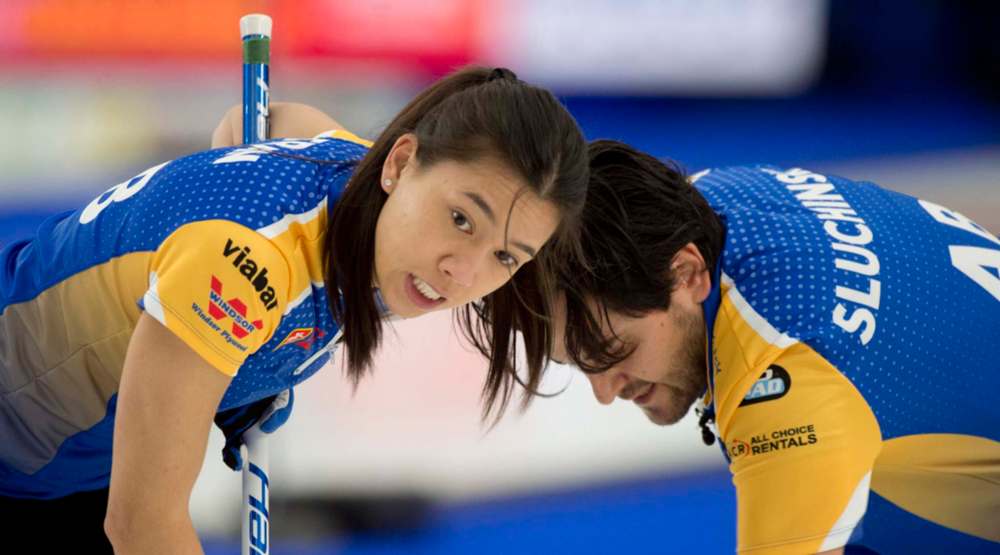
The smiling face of Brittany Tran is on the cover of the kit.
Tran has curled for more than 20 years. The Albertan, who is half-Asian, said she never once felt like she didn’t belong at the local club in Red Deer or at national and international competitions, such as the world junior championship and Scotties Tournament of Hearts.
But she would never assume others’ experiences were as positive as her own.
“I felt pretty good, pretty included. I never felt unwelcome. But I know other people have felt that way,” Tran said, during a conversation with the Free Press on Friday. “I’m not sure if that’s just due to different ethnicities and what people face. Everyone has their own experience.
“For me, this is more about the importance of awareness. Curling, in general, is a pretty welcoming community but there’s always more we can do. It’s about making sure all Canadians feel comfortable if they want to curl.”
Interested in helping broaden the sport’s diversity and inclusiveness, Tran, 28, actually reached out to Curling Canada last year and was pleased to learn the federation was in the midst of developing some wide-ranging initiatives.
“It’s always been something I’ve noticed and talked about with my family and other curlers. With the Black Lives Matter movement and other thing like that happening, I was thinking it would be a good time to use that momentum to get something going in curling. It was something I was passionate about,” said Tran, whose father, Tri, is Vietnamese. Her mother, Wendi, is Caucasian.
Tran is currently competing with teammate Aaron Sluchinski in the Canadian mixed doubles championship in Calgary. It’s her second stint in the fan-free, protective bubble — owing to the COVID-19 pandemic — after playing for Beth Peterson’s Winnipeg team at the Scotties.
“When I was younger, it’s not something you think about or even notice. You’re having fun with your friends, not thinking about what people look like. But you get older and begin to see a lack of representation in Canada. There’s a lot of room for improvement,” added Tran.
Tran immediately agreed to join a consultation panel that includes curlers from a cross-section of backgrounds, and meetings were held virtually last fall and into the new year.
A significant outcome was the kit, said Curling Canada CEO Katherine Henderson.
“This is a step. It’s certainly not the end of the journey,” Henderson said, by phone from Toronto. “We’re very pleased with the quality of the kit and the input we got from people, the engagement with people. We had incredible conversations, people from all walks of life and from coast to coast.”
She said the kit gives local communities the chance to extend the love of the game to newcomers through participation, volunteering and becoming fans. It encourages clubs to examine any potential barriers to diversity, equity and inclusion that might be in place — consciously or unconsciously — and offers suggestions on how to remove those barriers.
“Curling has a long-standing reputation of being a welcoming sport but it’s easy to sit on your laurels and say, ‘Anyone that walks into a club instantly feels welcomed with open arms,’” Henderson said.
“What we were hearing is people who didn’t grow up with parents that curled or came from places without a lot of ice and snow, there is an unfamiliarity to it. And while there’s a lot of wonderful tradition in curling, it can also be quite alienating.”
Henderson told the story of a Muslim woman who doesn’t drink but felt terribly uncomfortable about having to buy beverages for teammates and opponents when the game was done
“It was eye-opening. And there were lots of different stories like this,” she said.

The consultation panel also included John Epping, an openly gay curler from Toronto, Sonja Gaudet, a three-time paralympic gold medallist in wheelchair curling and member of the 2020 Canada Sports Hall of Fame, and Renee Sonnenberg, a former competitive curler and now a coach with Curling Canada’s high-performance staff.
On the horizon is an academic symposium, tentatively scheduled for September, that will be called Changing the Face of Curling. Curling Canada will partner with Dr. Heather Mair at the University of Waterloo to put on the symposium.
Curling Canada’s school program, Rocks & Rings, continues in school gymnasiums across the country, and has introduced the game to nearly two million kids from all backgrounds and cultures.
jason.bell@freepress.mb.ca
Twitter: @WFPJasonBell
Related Articles
Kennedy joins Bottcher team for world championship





Advertisement Advertise With Us
Advertisement Advertise With Us