

Wildfire crews up against severe drought conditions
Advertisement
Read this article for free:
or
Already have an account? Log in here »
To continue reading, please subscribe:
Digital Subscription
One year of digital access for only $1.44 a week*
- Enjoy unlimited reading on winnipegfreepress.com
- Read the E-Edition, our digital replica newspaper
- Access News Break, our award-winning app
- Play interactive puzzles
*Billed as $5.77 plus GST every four weeks. After 52 weeks, price increases to the regular rate of $19.95 plus GST every four weeks. Offer available to new and qualified returning subscribers only. Cancel any time.
To continue reading, please subscribe:
Add Free Press access to your Brandon Sun subscription for only an additional
$1 for the first 4 weeks*
- Enjoy unlimited reading on winnipegfreepress.com
- Read the E-Edition, our digital replica newspaper
- Access News Break, our award-winning app
- Play interactive puzzles
*Your next Brandon Sun subscription payment will increase by $1.00 and you will be charged $17.95 plus GST for four weeks. After four weeks, your payment will increase to $24.95 plus GST every four weeks.
Read unlimited articles for free today:
or
Already have an account? Log in here »
Hey there, time traveller!
This article was published 07/04/2021 (1900 days ago), so information in it may no longer be current.
Manitoba wildland firefighters are gearing up for one of the earliest starts to the annual fire season.
To date, provincial crews have put out eight fires, and municipal firefighters have responded to others, including one in Charleswood Monday.
Dave Schafer, director of the Manitoba Wildfire Service, said normally that number would be one or two at most.
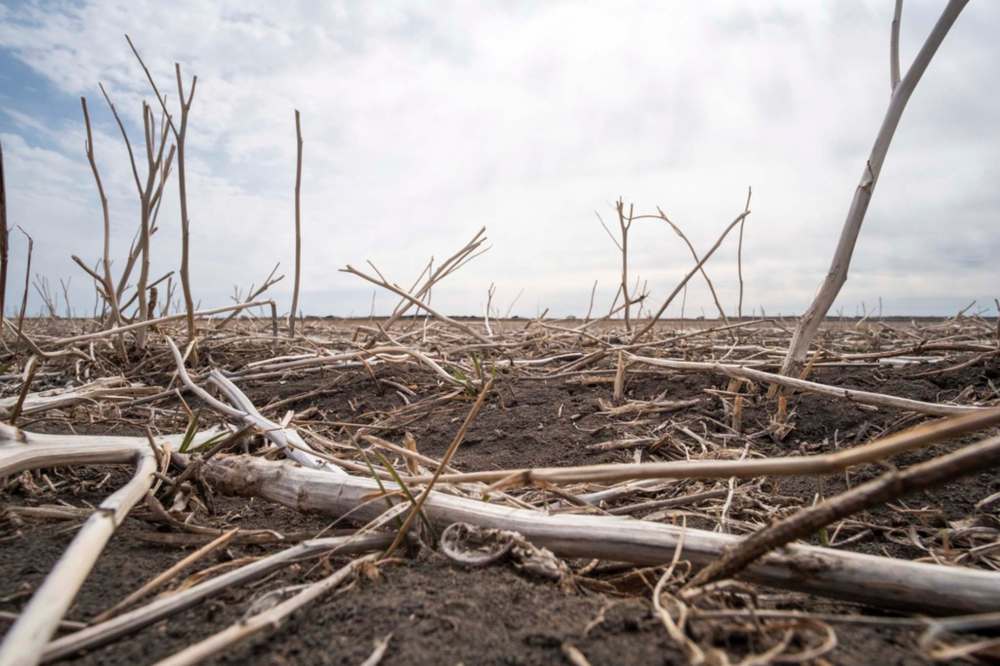
“It’s starting at least a couple of weeks earlier than normal. And we are starting the season in a severe drought condition in southern Manitoba — primarily in the southwest, but across to the southeast as well,” said Schafer.
On Saturday, restrictions meant to curb fires were put in place in parts of southern Manitoba, including a ban on motorized backcountry travel, including ATVs and other off-road vehicles. Camping is restricted to developed campgrounds, campfires are allowed only between the hours of 8 p.m. and 8 a.m. Boats can only land and launch on developed shorelines.
“Definitely it has been done in the spring, but to be able to do it virtually at the beginning of April? No, I don’t believe it’s been done that early,” he told the Free Press.
Mike Flannigan, director of the Western Partnership for Wildland Fire Science at the University of Alberta, called it a critical step to minimize the damage of the current circumstances.
Fires need a fuel source, the drier the better for burning, Flannigan said, and dry, windy conditions, which Manitoba has in spades right now. The last aspect is an ignition source which is either human-caused, or lightning. But lightning isn’t really a factor in spring fires, so if humans can keep from interfering, that would be a huge help, Flannigan said.
“Once the snow goes, there’s three to four weeks before things green up before the ground vegetation and trees flush out. And in that period, if you get ignition, the weather is conducive, then you can have a real problem,” Flannigan said.
“The situation is ripe, the table is set — wherever phrasing you want to use — there’s a lot of potential for a bad fire season.”
The long-term forecasts the provincial fire teams use show below-average rainfall in the next two months, but forecasts are certainly not guarantees, Schafer said.
Since the fire season is earlier than normal, air teams are not able to get water to fight fires since lakes are still frozen.
“As those clear off, then they’ll have water sources closer to the fire,” he said.
Climate change is moving fire seasons earlier into the year, Flannigan said. It is also increasing the number of bad fire years.

“Let’s say for Manitoba, in an average decade, you’d expect two bad fire years. I think 2013 was the last really bad fire year. In the future, maybe there will be three or four bad fire years in a decade. But you’ll still have some normal years and below-normal years, it’s just the extremes will become a little more frequent,” Flannigan said.
“Already, our area burned in Canada has doubled since the late ’60s, early ’70s. And many attribute — and I include myself here — that this is due to human-caused climate change.”
Schafer said central and northern Manitoba are currently not a concern.
Both Schafer and Flannigan encourage people who use the outdoors to be cautious as wildfires can burn out of control in minutes. To report a wildfire, call 911 or the toll-free tip line at 1-800-782-0076.
sarah.lawrynuik@freepress.mb.ca