
California pop boom of 1960s chronicled

Advertisement

Advertise with us

Twentieth-century California, and especially Los Angeles, takes part of its allure from its disregard of the ninth and tenth commandments: Thou shalt not covet thy neighbour’s wife, nor thy neighbour’s goods. L.A. is all about the pleasures of the flesh and rampant capitalism.

Read this article for free:


or

Already have an account? Log in here »

To continue reading, please subscribe:

Subscribe and receive a limited-edition Free Press branded hat or tote.

Digital Subscription

One year of digital access for only $205*

  • Enjoy unlimited reading on winnipegfreepress.com
  • Read the E-Edition, our digital replica newspaper
  • Access News Break, our award-winning app
  • Play interactive puzzles

*First annual payment billed as $205.00 + GST for one year. This annual subscription will automatically renew at $233.00 + GST every 52 weeks (10% off the regular annual price of $259.35). Offer available to new and qualified returning subscribers only. Cancel any time.

To continue reading, please subscribe:

Add Free Press access to your Brandon Sun subscription for only an additional

$1 for the first 4 weeks*

  • Enjoy unlimited reading on winnipegfreepress.com
  • Read the E-Edition, our digital replica newspaper
  • Access News Break, our award-winning app
  • Play interactive puzzles
Start now

*Your next Brandon Sun subscription payment will increase by $1.00 and you will be charged $17.95 plus GST for four weeks. After four weeks, your payment will increase to $24.95 plus GST every four weeks.

Hey there, time traveller!
This article was published 10/04/2021 (2012 days ago), so information in it may no longer be current.

Twentieth-century California, and especially Los Angeles, takes part of its allure from its disregard of the ninth and tenth commandments: Thou shalt not covet thy neighbour’s wife, nor thy neighbour’s goods. L.A. is all about the pleasures of the flesh and rampant capitalism.

In the 1960s these temptations were introduced to the teenagers of the world by the fresh-faced songs of Jan and Dean and the Beach Boys: seemingly innocent pop songs about perpetual sunshine, white-sand beaches and surfing (not on the internet), bronzed blonds in bikinis (“two girls for every boy”), fast cars and fun, fun, fun.

What teenager wouldn’t covet that? The Mamas and the Papas song California Dreamin’ captured it perfectly.
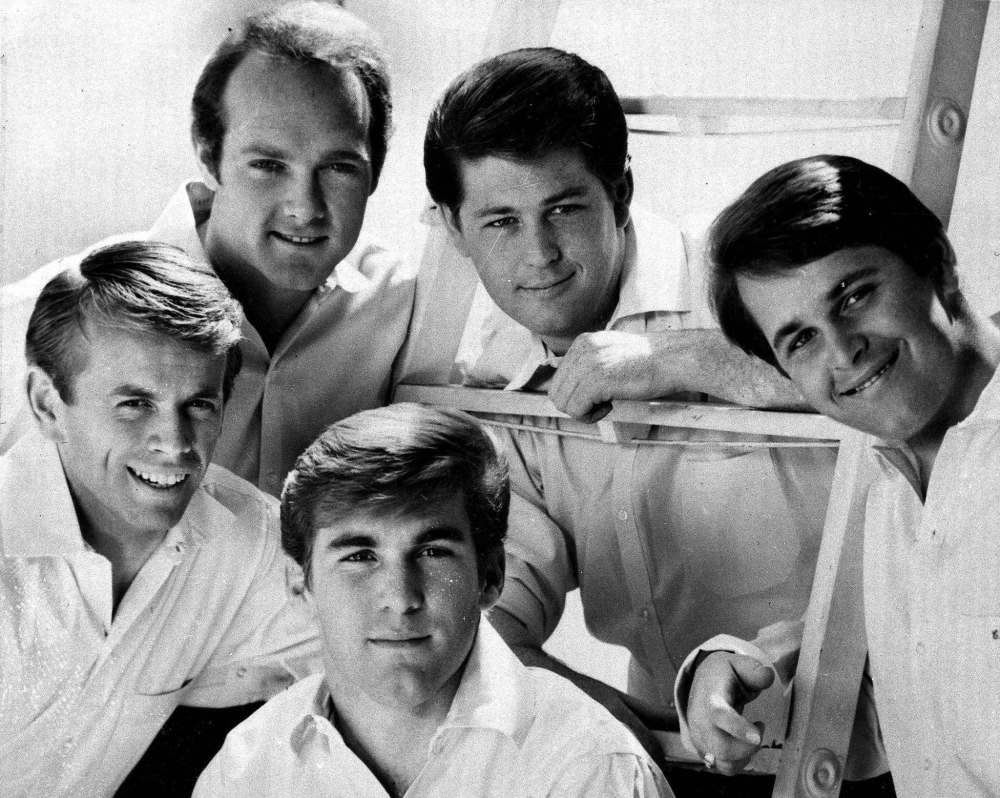
The Associated Press files
The Beach Boys, seen here in 1966 (from left: Al Jardine, Mike Love, Dennis Wilson, Brian Wilson and Carl Wilson), were linked to California surf culture, despite the fact they didn’t surf.
The Associated Press files The Beach Boys, seen here in 1966 (from left: Al Jardine, Mike Love, Dennis Wilson, Brian Wilson and Carl Wilson), were linked to California surf culture, despite the fact they didn’t surf.

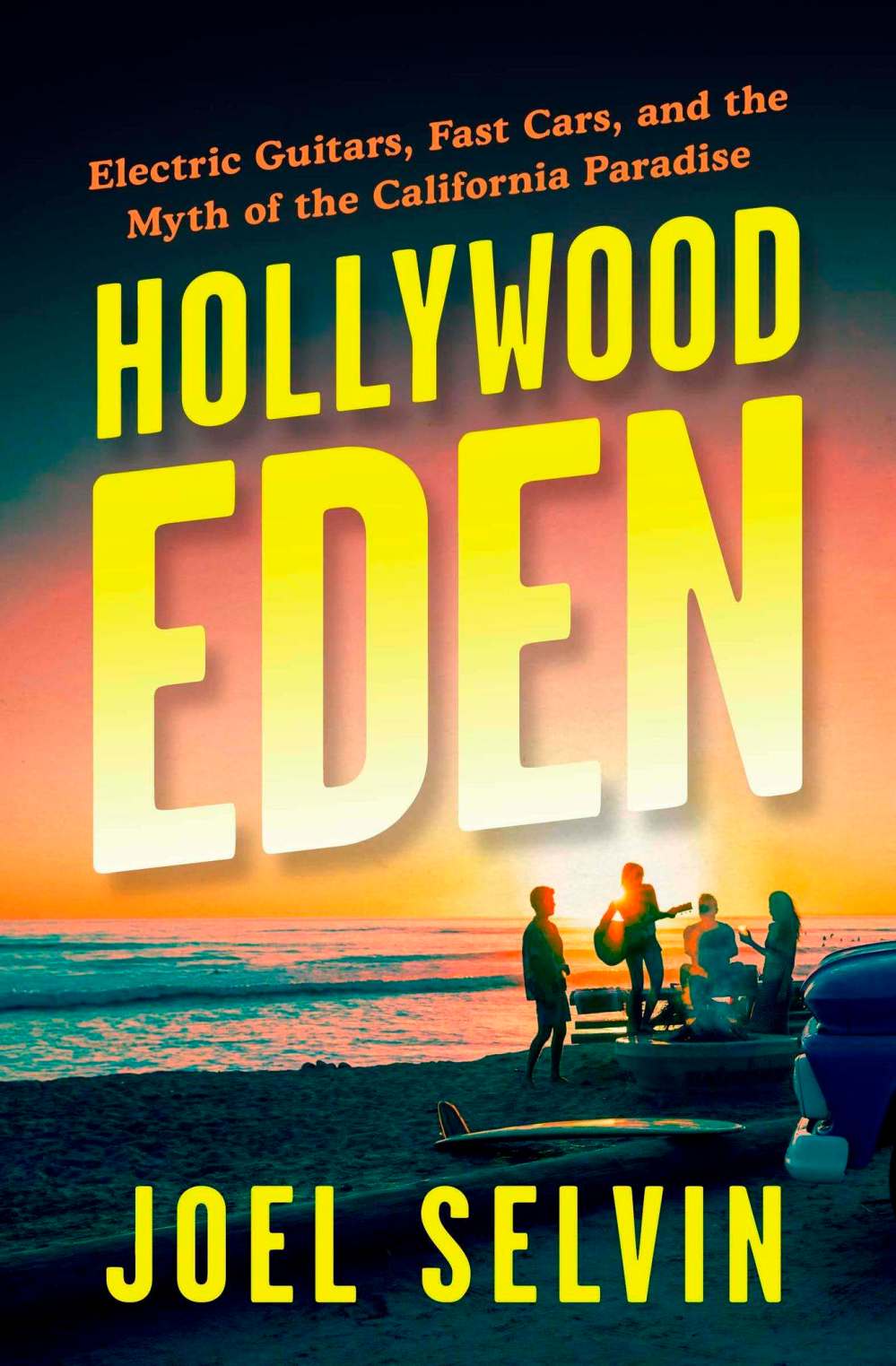
Joel Selvin tells the story of the origins of this music-made L.A. myth in his new book Hollywood Eden. According to Selvin, it all goes back to the class of 1958 at University High School just north of famed Santa Monica Boulevard in L.A.

A music critic for 35 years with several other pop-music histories to his credit (Here Comes the Night, Altamont), Selvin tells this inside story as if he were right there. It’s brisk, it’s anecdotal, it’s gossipy.

Selvin begins his account in the Uni shower room, where an exuberant Jan Berry leads a bunch of naked football players in a rousing version of Get a Job.

Jan and his buddies soon form a band and have a minor local hit recorded in his garage. The band breaks up, Jan joins with another Uni grad, Dean Torrence, and the rest, as they say, is music history. Jan and Dean, hit-makers of The Little Old Lady from Pasadena, Dead Man’s Curve and many others are, almost overnight, a top-pop sensation.

The other central figures in this story are the Beach Boys. Led by troubled genius Brian Wilson, his brothers and friends, including another Uni grad, Bruce Johnston, the Beach Boys’ ascendancy is even more meteoric than Jan and Dean’s. Although none of them actually surfed, they established surfing as a metaphor and had a string of memorable hits, among them: Surfin’ USA, I Get Around, California Girls, Good Vibrations and Help Me, Rhonda.

These musicians were aided by some fast-talking, equally young promoters and producers — Lou Adler, Phil Spector, Terry Melcher — all of them learning on the fly with the aid of phone-booth offices, phony credentials, trumped-up connections and teenage bravado. Together they created a new, unique “California sound,” featuring falsetto-topped harmonies, deep reverb and youthful enthusiasms.

Hollywood Eden is hardly a rags-to-riches story. The senior prom of the Uni class of 1958 was highlighted by performances by Frank Sinatra and Sammy Davis, Jr., because graduate Nancy Sinatra invited her father. Nancy and other California musicians do get mentioned, briefly: Herb Alpert, Sandy Nelson (Drum Beat), Ike and Tina Turner, the Byrds. But even the Mamas and the Papas, not being from Uni, get short shrift.
And there’s nothing at all about other L.A. bands of that era: the Doors, the Monkees, Buffalo Springfield, Frank Zappa and the Turtles, to name only a few. And the wider pop music scene is completely neglected. Motown, a powerhouse in the 1960s, gets no mention at all. The Beatles, Rolling Stones and other British-invasion bands only appear as background visitors.

And that’s both the strength and the weakness of Hollywood Eden. It has a captivating but limited focus and scope, covering only the years 1958 to 1966 and ending with Jan Berry’s near-fatal car accident and the release of the genre-busting Pet Sounds album by the Beach Boys.

Hollywood Eden is a lively and well-researched book with a special appeal for nostalgic baby boomers and beginning garage bands who might benefit from reading about how it all happened.

Gene Walz has heard that many 1960s singers with falsetto voices now have a false set o’ teeth.

Report Error Submit a Tip

More Stories

Hurricane Simon pounds resorts and vulnerable towns along Mexico’s Pacific coast

Fernando Llano And Martin Silva, The Associated Press 5 minute read Preview

Hurricane Simon pounds resorts and vulnerable towns along Mexico’s Pacific coast

Fernando Llano And Martin Silva, The Associated Press 5 minute read Updated: Yesterday at 2:38 AM CDT

PUERTO VALLARTA, Mexico (AP) — Hurricane Simon pounded Mexico’s Pacific coast as a Category 3 storm on Sunday, its eye remaining just offshore as its most powerful winds and rain slammed people living between the Sierra Madre and the ocean.

The hurricane's center swirled parallel to the coast, closing in on the Puerto Vallarta area, where its most damaging winds and rain were expected to hit around midnight and continue through Monday morning. Its maximum sustained winds weakened late Sunday to 115 mph (185 kph), according to the U.S. National Hurricane Center in Miami, but it was still expected to remain a dangerous hurricane.

That’s not good news for people in and around Puerto Vallarta, a popular tourist destination in the state of Jalisco. Just inland and uphill from the resort areas, many Mexicans live in communities where housing might not stand up to the storm.

By late Sunday, Simon's eye was moving northwest about 45 miles (75 kilometers) south of Cabo Corrientes at about 5 mph (7 kph). A senior hurricane center specialist, Philippe Papin, said this westernmost tip of mainland Mexico is the area most likely to get a direct hit from the system. Cabo Corrientes is at the southern tip of Bahia de Banderas, the wide bay where Puerto Vallarta looks out to the Pacific.

Read
Updated: Yesterday at 2:38 AM CDT

Backstreet Boys extend Toronto residency to 11 nights

The Canadian Press 2 minute read Preview

Backstreet Boys extend Toronto residency to 11 nights

The Canadian Press 2 minute read Sunday, Oct. 11, 2026

TORONTO - Hit '90s boyband The Backstreet Boys are adding more tour dates to their Toronto residency.

What was first announced as a four-night run at Rogers Centre has swelled to 11 shows, with the band's recent announcement they're adding concerts on March 5 and 6.

The band says on its website the new dates were added "due to overwhelming demand."

Dubbed “Into the Millennium – Homecoming: Live in Canada,” the residency will kick off on Feb. 12.

Read
Sunday, Oct. 11, 2026

Woman accused of pulling handgun on taxi driver

1 minute read Yesterday at 10:39 AM CDT

A 45-year-old woman accused of pulling a handgun on a Winnipeg taxi driver is facing multiple firearms-related charges.

It happened Sunday afternoon, at about 2:30 p.m., near the intersection of Concordia Avenue and Louelda Street. Officers learned a woman got into a cab in the Munroe East neighbourhood and pulled out a handgun, asking the driver to take her to a specific location, the Winnipeg Police Service stated in a news release.

The taxi driver activated the taxi's emergency beacon, exited the vehicle, and contacted police.

The woman got into the driver's seat of the taxi, but the keys had been removed, and she fled on foot. A suspect was arrested shortly afterward in the 1000 block of Concordia Avenue. Police seized a .22-calibre handgun during the arrest.

‘People count on this place’: Pembina Hwy. Giant Tiger latest location slated to close

By Matthew Frank 3 minute read Preview

‘People count on this place’: Pembina Hwy. Giant Tiger latest location slated to close

By Matthew Frank 3 minute read Yesterday at 4:34 PM CDT

Another Giant Tiger store in Winnipeg will shutter next year, leaving some area residents concerned about a lack of affordable groceries in the neighbourhood.

Red papers taped to the front doors of the Canadian retail chain’s location at Pembina Highway and Southpark Drive indicate it will close Feb. 27.

Doreen Yanchuk, a self-described bargain hunter, shook her head when she saw the signs Monday. The 67-year-old said she’s a regular customer at the location because it’s a five-minute drive from her home.

“They have very good sales here, which draws people to the shop because everything is expensive,” Yanchuk said.

Read
Yesterday at 4:34 PM CDT

A question of public utility

Tom Pearson 5 minute read 2:00 AM CDT

The editorial page of the Free Press often provides perspectives that are thought-provoking and sometimes contradictory. Keeping the lights on, (Oct. 5) by Hal Turner and Wasteful operations should be held accountable, (Oct. 6) by Barry Prentice are both thought-provoking. They are not contradictory because they cover two quite different topics. Where they differ is in their delivery and the quality of the underlying facts.

Mr. Turner provides what is, in my view, the most cogent rationale for gas-fuelled generation that I have read. He highlights the essential aspect of power supply to Manitobans. He supports the argument for natural gas generation with succinct, relatable facts and anecdotes relating to what other comparable utilities have done. He states that, “Manitoba Hydro’s experts are neither anti-wind nor pro-fossil fuel.” They are simply seeking the best possible solution for Manitobans — a fact many special-interest groups either ignore or sadly, impugn.

Although some would argue the contrary, I believe that Mr. Turner’s position and longevity in the Manitoba Hydro organization lend gravitas to his column. Mr. Turner understands that “keeping the lights on” is a non-negotiable requirement and a public trust.

Before I turn to Mr. Prentice’s column, I should disclose that before I retired (it’s been a while), I was responsible at different times for Winnipeg’s regional water system and subsequently water supply from source to tap. In that context I was also responsible for the operation of the Greater Winnipeg Water District (GWWD) railway. Like Mr. Turner’s perspective on the supply of electricity to Manitobans, I regard the supply of safe drinking water to Winnipeggers as a public trust.

Letters, Oct. 13

7 minute read Preview

Letters, Oct. 13

7 minute read Updated: 8:14 AM CDT

The major assumption Manitoba Hydro undertakes is the weather. Hydro projected a $214 million profit for the 2025-26 fiscal year. On Sept. 29, it reported a $446 million loss. It took on additional debt due to $751 million in operating losses. In addition, Hydro stated the fiscal results for 2025-26 were “significantly influenced by circumstances largely beyond Hydro’s control.”

Read
Updated: 8:14 AM CDT


