

‘Buy now, pay later’ programs are making inroads in Canada — but there are some risks
Advertisement
Read this article for free:
or
Already have an account? Log in here »
To continue reading, please subscribe:

Digital Subscription
One year of digital access for only $205*
- Enjoy unlimited reading on winnipegfreepress.com
- Read the E-Edition, our digital replica newspaper
- Access News Break, our award-winning app
- Play interactive puzzles
*First annual payment billed as $205.00 + GST for one year. This annual subscription will automatically renew at $233.00 + GST every 52 weeks (10% off the regular annual price of $259.35). Offer available to new and qualified returning subscribers only. Cancel any time.
To continue reading, please subscribe:
Add Free Press access to your Brandon Sun subscription for only an additional
$1 for the first 4 weeks*
- Enjoy unlimited reading on winnipegfreepress.com
- Read the E-Edition, our digital replica newspaper
- Access News Break, our award-winning app
- Play interactive puzzles
*Your next Brandon Sun subscription payment will increase by $1.00 and you will be charged $17.95 plus GST for four weeks. After four weeks, your payment will increase to $24.95 plus GST every four weeks.
Read unlimited articles for free today:
or
Already have an account? Log in here »
Hey there, time traveller!
This article was published 19/04/2021 (1977 days ago), so information in it may no longer be current.
Move over, credit cards. There are some (relatively) new kids on the block: buy now, pay later (BNPL) programs such as Afterpay, PayBright and Sezzle.
The premise of such programs is simple: a consumer pays for a purchase in a small number of equal instalments without being charged interest. Unlike the layaway programs of old, however, the consumer takes possession of the item(s) purchased as soon as the first payment is made, rather than waiting until the bill is fully paid.
“These programs were born out of the financial crisis of 2008,” said Melissa Davis, head of Afterpay North America. “Ninety per cent of our audience uses debit cards. They didn’t want debt or credit card fees; they wanted to use their own money. Customers cared about their budgets and financial well-being.”
Afterpay is a newcomer to the Canadian market, entering the field in 2020. It was founded in Australia in 2015 and has also increased its reach to include New Zealand, the United Kingdom and the United States. It works with about 74,000 retailers globally and has about eight million customers across North America.
Its timing couldn’t be better. As the pandemic unfolded, online shopping became more prevalent in Canada, and BNPL programs are riding the wave. Statistics Canada reported that e-commerce sales in May 2020 increased 110.8 per cent compared to May 2019.
To explore BNPL programs, let’s take a closer look at Afterpay as an example. Enrolling online is simple. Customers are asked to register their email address, their cellphone number, their birthday and their billing address; they are also asked whether they’d like to pay for purchases using debit or credit. Usually, approval is instantaneous. However, unlike some of its competitors, Afterpay doesn’t run credit checks on consumers; instead, it starts newcomers off with a small purchase ceiling that is increased as they prove their reliability.
“We make sure customers stay within their limits, based on our risk algorithm,” said Davis. “Generally, the ceiling for purchases over time is $2,000 to $4,000, but $100 or $150 purchases are the most popular.”
Afterpay’s customers pay for their purchases in four equal instalments spaced two weeks apart. The first payment is debited from the customer’s account when they place the order; the others are debited on schedule and customers receive email or text reminders that a payment is upcoming. If they can’t pay on time, the company closes off their access to the service and works with them to arrange payment; no late fees are charged in Canada, Davis said.
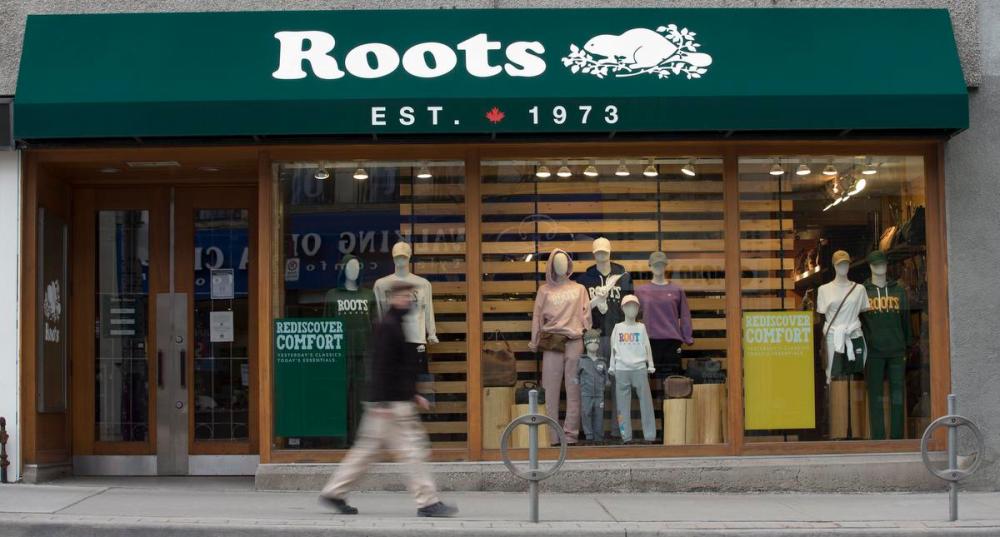
Many of the vendors who offer Afterpay as a payment option are fashion, accessory or beauty-related companies, including Canadian brands Aritzia, Herschel Supply Co. and Roots. Its customer base skews female, Davis says. The program is most popular with millennials and generation Z; participants have an average age of 33.
Not all BNPL programs are identical, however. Some do credit checks before enrolling consumers; some offer big-ticket purchase such as furniture, while others focus largely on personal possessions; some offer long-term payment plans as well as the common short-term equal payment plan. Some do charge interest or fees for late payments.
“Consumers must read the fine print before using a buy now, pay later plan,” said Avni Shah, an assistant professor of marketing at the University of Toronto Scarborough (UTSC) and an expert in consumer behaviour. “Make sure you know what the terms are, especially if it looks too good to be true.
“The idea of paying later is very enticing.”
Liisa Tatem, a certified financial planner with Money Coaches Canada, worries that BNPL programs feed into the temptation to buy things that people may not be able to afford.
“We’ve created a culture of immediacy where people have no tolerance and no patience. People feel that they need things now, even if they don’t have the funds,” she said.
“In and of themselves, BNPL programs are harmless if they are managed well and part of budgeting. Now, if you say, ‘What’s budgeting?’ it’s a sign you shouldn’t use a program like this.”
Since their model isn’t based on interest charges, BNPL programs earn their revenue from the participating merchants who pay them a percentage of each transaction. It’s well worth the money, says Justin Bones, senior vice-president of direct-to-consumer operations for Herschel Supply Co., the Vancouver-based manufacturer of backpacks, duffels and totes.
“They take on any risks and charge-backs,” said Bones, who has an agreement with Afterpay, “and they have a network of consumers who like to use their app. Every month, about 25,000 consumers come to our website from Afterpay and it drives a lot of sales.
“For me, it’s a positive story and relationship so far. We want to be as flexible as possible with people’s financials.”
Shah believes BNPL programs have the potential to change the payment landscape.
“They will rival credit card usage for small items and cut into credit card profits,” she said.
Davis certainly hopes so.
“We’re turning the credit card model on its head and trying to be on the side of the consumer by giving them as much flexibility as possible. We strive to make it a win-win relationship for consumers and merchants.”

Buy now, pay later program tips
Do:
- Use it if you have planned/budgeted for the purchased items.
- Use it to save on credit card fees.
- Find out if the BNPL you’ve chosen does credit checks or has an impact on your credit rating.
Don’t:
- Use it without reading the contractual information, including the fine print and information about late fees, interest charges, etc.

- Use it for impulse purchases or retail therapy.
- Neglect to have money available for your instalments.
Elaine Smith is a Toronto-based writer and a freelance contributor for the Star. Reach her via email: ersmithwriter@gmail.com

Advertisement Advertise With Us
Advertisement Advertise With Us