WEATHER ALERT

Shared smoking breaks, broken rules: What led to Nunavut’s first COVID-19 cases?

Advertisement

Advertise with us

IQALUIT - Broken isolation rules, shared cigarettes and fear of extended isolation periods are some of the findings in a report that sheds light on how Nunavut's first cases of COVID-19 suddenly appeared last November.

Read this article for free:

or

Already have an account? Log in here »

To continue reading, please subscribe:

Subscribe and receive a limited-edition Free Press branded hat or tote.

Digital Subscription

One year of digital access for only $205*

  • Enjoy unlimited reading on winnipegfreepress.com
  • Read the E-Edition, our digital replica newspaper
  • Access News Break, our award-winning app
  • Play interactive puzzles

*First annual payment billed as $205.00 + GST for one year. This annual subscription will automatically renew at $233.00 + GST every 52 weeks (10% off the regular annual price of $259.35). Offer available to new and qualified returning subscribers only. Cancel any time.

To continue reading, please subscribe:

Add Free Press access to your Brandon Sun subscription for only an additional

$1 for the first 4 weeks*

  • Enjoy unlimited reading on winnipegfreepress.com
  • Read the E-Edition, our digital replica newspaper
  • Access News Break, our award-winning app
  • Play interactive puzzles
Start now

*Your next Brandon Sun subscription payment will increase by $1.00 and you will be charged $17.95 plus GST for four weeks. After four weeks, your payment will increase to $24.95 plus GST every four weeks.

Hey there, time traveller!
This article was published 03/05/2021 (1910 days ago), so information in it may no longer be current.

IQALUIT – Broken isolation rules, shared cigarettes and fear of extended isolation periods are some of the findings in a report that sheds light on how Nunavut’s first cases of COVID-19 suddenly appeared last November.

For eight months, while outbreaks erupted across the country, Nunavut remained free of infection, with the exception of some cases among mine workers from outside the territory.

That was partly because Nunavut has some of the tightest public health measures in the country. In March 2020, the territory restricted travel to residents only and required anyone who left to complete a 14-day isolation period in a hotel outside Nunavut before returning.
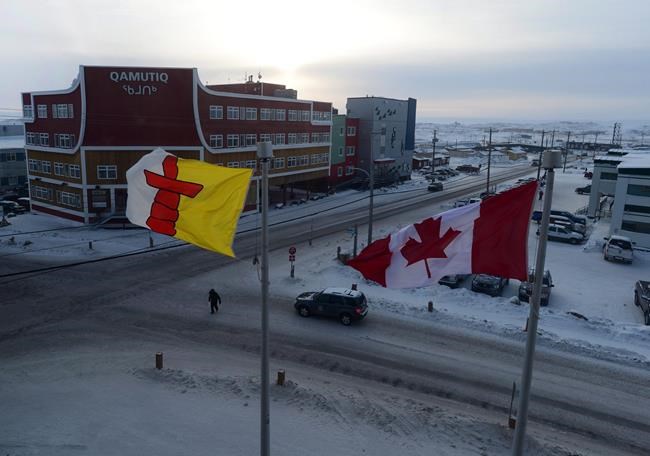
A Canada flag and the Nunavut flag fly in Iqaluit, Nunavut, on Thursday, Feb. 9, 2017. Broken isolation rules, shared cigarettes and fear of having isolation periods extended are some of the findings in a report that sheds light on how Nunavut's first cases of COVID-19 suddenly appeared in the territory last November. THE CANADIAN PRESS/Sean Kilpatrick

But health officials repeatedly warned that it was not a matter of if, but when COVID-19 would show up.

On Nov. 6, 2020, Nunavut reported its first case of the novel coronavirus in Sanikiluaq, a Hudson Bay community of about 850 people. It soon appeared in other communities, including Arviat, where an outbreak swelled to 339 cases in the community of about 2,800.

Health officials confirmed the first cases came from Nunavummiut who had completed 14 days of isolation down south, but there were no further details.

The isolation hubs are in Yellowknife, Edmonton, Winnipeg and Ottawa. They are funded by the territorial and federal governments. Day-to-day operations are run by Qikiqtaaluk Corp., a Nunavut-based company offering sanitary services and contracted by the territory.

Nunavut’s Health Department determined the infected people had completed isolation at Winnipeg hotels in October and November. The government ordered a third party to review what had happened.

That report, obtained through a Canadian Press access-to-information request, looks at five guests and one security guard who tested positive.

It says some guests at one Winnipeg hotel didn’t report their symptoms, while some were asymptomatic. One guest had symptoms the day after checking in, but was not tested until eight days later.

The review also found that some guests shared things like cigarettes and lighters while on smoking breaks outside. To resolve that, the Health Department recommended a smoking break schedule be developed.

Guests must stay in their rooms for most of the isolation period, but are allowed to go outside for smoke breaks and to get fresh air and exercise.

“The process for communicating expectations to guests regarding their stay was ineffective … which decreased the likelihood of compliance with isolation hub expectations,” the report says.

The review also found some guests were “fearful of having their isolation stays extended” beyond the 14 days. That “led to guests not reporting their symptoms, which increased the likelihood of guests unknowingly having COVID-19.”

As a result, voluntary COVID-19 testing was put in place at all of Nunavut’s southern isolation hubs.

Another concern outlined in the report is that the protocol for managing positive cases was “unclear.” That led to guests being admitted “without the appropriate safety protocol.”

At one point, guests were sent back to the isolation hub after their flight to Nunavut was cancelled, which led to potential exposure between guests, the report says.

Isolation guests are called by a public health nurse once a day and a temperature check is done before guests are cleared to fly.

Some guests also faced cultural and language barriers that could have increased the chance of COVID-19 going undetected.

“Many staff did not have a comprehensive understanding of the cultural aspects of care, which led to misinterpretation of guest body language (and) increased the likelihood that symptoms would be inaccurately captured.”

The report also says interpretation services were not readily available.

Dr. Anna Banerji, an infectious disease specialist at the University of Toronto, said standard operating procedures, consistent messaging and proper cultural safety training is essential in Nunavut’s isolation hubs.

“If someone has an exposure or has symptoms, and they can’t communicate that or they don’t understand the isolation, there are some significant problems,” Banerji said.

“They need people working there who speak the language … and people who are able to enforce the isolation.”

Banerji also said the isolation period loses its purpose if guests don’t distance themselves from others while outside.

“If there are people there who have COVID and they are mingling with each other, then this isolation hub loses its effectiveness.”

Testing at isolation hubs is critical, especially when people are asymptomatic, Banerji added.

“COVID is a very hard disease to manage because it can be transmitted with no symptoms … If you’re trying to prevent outbreaks in the community there should be mandatory testing.”

The Canadian Press reached out to Nunavut’s Health department for an interview but did not receive a response.

This report by The Canadian Press was first published May 3, 2021.

___

This story was produced with the financial assistance of the Facebook and Canadian Press News Fellowship.

Report Error Submit a Tip

More Stories

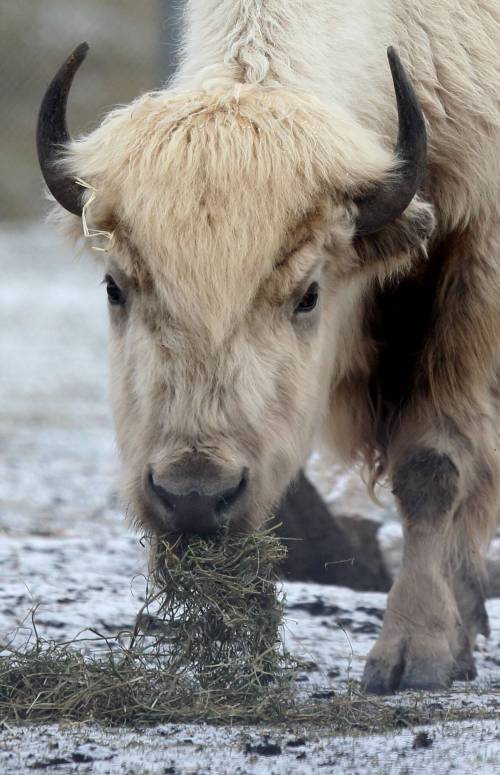
Longtime Assiniboine Park Zoo resident Blizzard the bison dies

Zoe Pierce 2 minute read Preview

Longtime Assiniboine Park Zoo resident Blizzard the bison dies

Zoe Pierce 2 minute read Friday, Jul. 24, 2026

Blizzard, the white bison that became one of Assiniboine Park Zoo’s most recognizable residents during nearly 20 years at the facility, has died, the zoo announced Friday.

The zoo said Blizzard’s health declined in recent weeks, so a diagnostic exam was recommended to better understand his condition. He died during the procedure.

Blizzard arrived at Assiniboine Park Zoo in 2006 and went on to become a favourite among visitors, inspiring “millions of visitors with his remarkable presence,” the zoo said in a social media post.

“While all animals in our care are deeply valued, Blizzard held a special place in the hearts of many people and carried profound cultural and spiritual significance for many Indigenous peoples,” the post reads.

Read
Friday, Jul. 24, 2026

Ref ‘dominates’ game in Sea Bears loss to Honey Badgers, says coach

Joshua Frey-Sam 7 minute read Preview

Ref ‘dominates’ game in Sea Bears loss to Honey Badgers, says coach

Joshua Frey-Sam 7 minute read Yesterday at 7:40 PM CDT

Following a festive Christmas-in-July-themed Saturday afternoon inside Canada Life Centre, Winnipeg Sea Bears head coach Mike Raimbault didn’t mince words about who he thought was the Grinch in a hard-fought 88-86 loss to the visiting Brampton Honey Badgers that ended in controversy.

As the Sea Bears owned a one-point lead in Target Score Time, Brampton guard Sean East II was awarded three free throws — all of which he converted — after a questionable foul called on Teddy Allen by official Perry Stothart.

Raimbault, who has been known to bite his tongue on such topics, left nothing to the imagination about where he stood on the game-deciding judgment made in a game that had major post-season implications.

“I just felt like it was a fitting ending to the game where Perry Stothart had dominated the flow of the game from the start,” he said. “For him to call a bit of a guess foul and end the game on the foul, I felt like it’s disappointing that he can come in and dictate how the game’s going to be played and flow, and (that) continues to be a bit of an M.O. for him. So I think we’re disappointed with the fact that the league continues to let that happen.”

Read
Yesterday at 7:40 PM CDT

Mayor tight-lipped about firefighter charged with disobeying protection order while on job

Malak Abas 4 minute read Preview

Mayor tight-lipped about firefighter charged with disobeying protection order while on job

Malak Abas 4 minute read Friday, Jul. 24, 2026

Mayor Scott Gillingham said he can’t talk about the case of a firefighter accused of breaching a protection order while on the job this month — a man who has been jailed twice in the past 10 years for harassing two women.

Christopher Goethals was arrested July 21 after breaching a protection order requiring that he not come within 200 metres of a protected person.

Police said Goethals, 59, was in full uniform, driving a Winnipeg Fire Paramedic Service fleet vehicle, and was performing “modified duties” on the job when he breached the order.

When asked about Goethals being able to serve as a firefighter under those circumstances, Gillingham called it a human resources issue. He said he wouldn’t get into specifics, but would “look into this matter further.”

Read
Friday, Jul. 24, 2026

Winnipeg Fringe Festival: 2026 show reviews

Winnipeg Free Press 1 minute read Preview

Winnipeg Fringe Festival: 2026 show reviews

Winnipeg Free Press 1 minute read Tuesday, Jul. 14, 2026

Not sure what to see at this year's Winnipeg Fringe Theatre Festival? All of the Free Press’s reviews will be published here.  Find a show and click to read its review.

Read
Tuesday, Jul. 14, 2026

Up to the challenge

Zoe Pierce 3 minute read Preview

Up to the challenge

Zoe Pierce 3 minute read Yesterday at 6:13 PM CDT

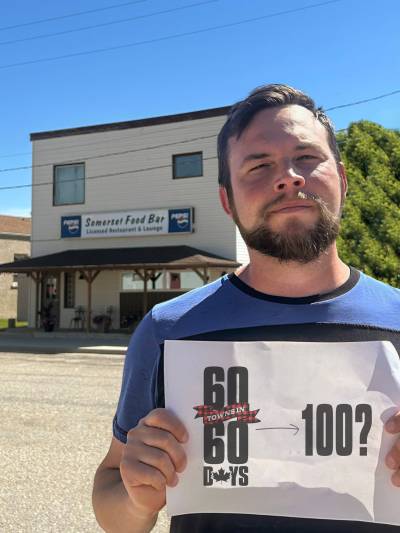
There may not be another restaurant in Manitoba that can say it has welcomed visitors from as many communities across the province and beyond as the Somerset Food Bar & Lounge has this summer.

In just over a two week span, visitors from more than 100 towns have come out to the family-owned restaurant tucked away in Somerset, a community of roughly 450 people in the Pembina Valley 130 kilometres southwest of Winnipeg.

It started as a challenge, “60 Towns in 60 Days,” where the restaurant wanted to document how many different places they could reach, as it often sees people travelling across Canada stop at the restaurant. The goal was also to encourage people to make a drive they normally wouldn’t.

“The more we started sharing, the more people really started getting behind it, and it turned into this really big thing fairly quickly,” said Jay Friesen, restaurant manager.

Read
Yesterday at 6:13 PM CDT

For unique Menno-centric take on Free Press, satirist mines her jibes between the lines

David Sanderson 8 minute read Preview

For unique Menno-centric take on Free Press, satirist mines her jibes between the lines

David Sanderson 8 minute read Yesterday at 10:40 AM CDT

Free Press readers of a certain vintage may remember when tuning into a local radio station to hear a pair of disc jockeys perusing a section of the Saturday edition was appointment listening.

On Sunday mornings from 1962 until the mid-1980s, CKRC 630 personalities Bob Washington and Tom Ashmore — better known as Wash and Ash — entertained Winnipeggers of all ages by impersonating the likes of Dennis the Menace, Beetle Bailey and Archie Andrews, as they lent their voices to that weekend’s multi-page, colour comic insert.

In a 1984 interview, Washington, who died in 2016 at the age of 82, attributed the weekly program’s longevity to audiences enjoying the antics of “two middle-aged guys in 24 dialects, giving their version of what Dagwood is saying to Blondie, or what Hägar the Horrible is bragging about.”

More than 40 years later, another Winnipegger is turning to the Free Press for her material. Only instead of reading the paper’s funnies, Lori Klassen, a mother of three and grandmother of two, is funnily reading the paper.

Read
Yesterday at 10:40 AM CDT