New Ronald McDonald House has big shoes to fill Construction on the non-profit's new $20-M Winnipeg home on Juno Street underway
Read this article for free:
or
Already have an account? Log in here »
To continue reading, please subscribe:

Digital Subscription
One year of digital access for only $205*
- Enjoy unlimited reading on winnipegfreepress.com
- Read the E-Edition, our digital replica newspaper
- Access News Break, our award-winning app
- Play interactive puzzles
*First annual payment billed as $205.00 + GST for one year. This annual subscription will automatically renew at $233.00 + GST every 52 weeks (10% off the regular annual price of $259.35). Offer available to new and qualified returning subscribers only. Cancel any time.
To continue reading, please subscribe:
Add Free Press access to your Brandon Sun subscription for only an additional
$1 for the first 4 weeks*
- Enjoy unlimited reading on winnipegfreepress.com
- Read the E-Edition, our digital replica newspaper
- Access News Break, our award-winning app
- Play interactive puzzles
*Your next Brandon Sun subscription payment will increase by $1.00 and you will be charged $17.95 plus GST for four weeks. After four weeks, your payment will increase to $24.95 plus GST every four weeks.
Read unlimited articles for free today:
or
Already have an account? Log in here »
Hey there, time traveller!
This article was published 25/05/2021 (1909 days ago), so information in it may no longer be current.
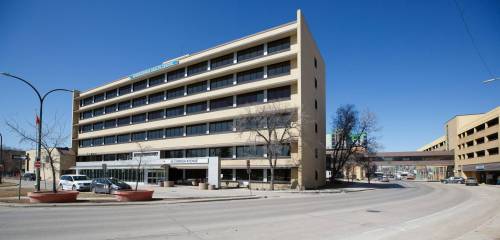
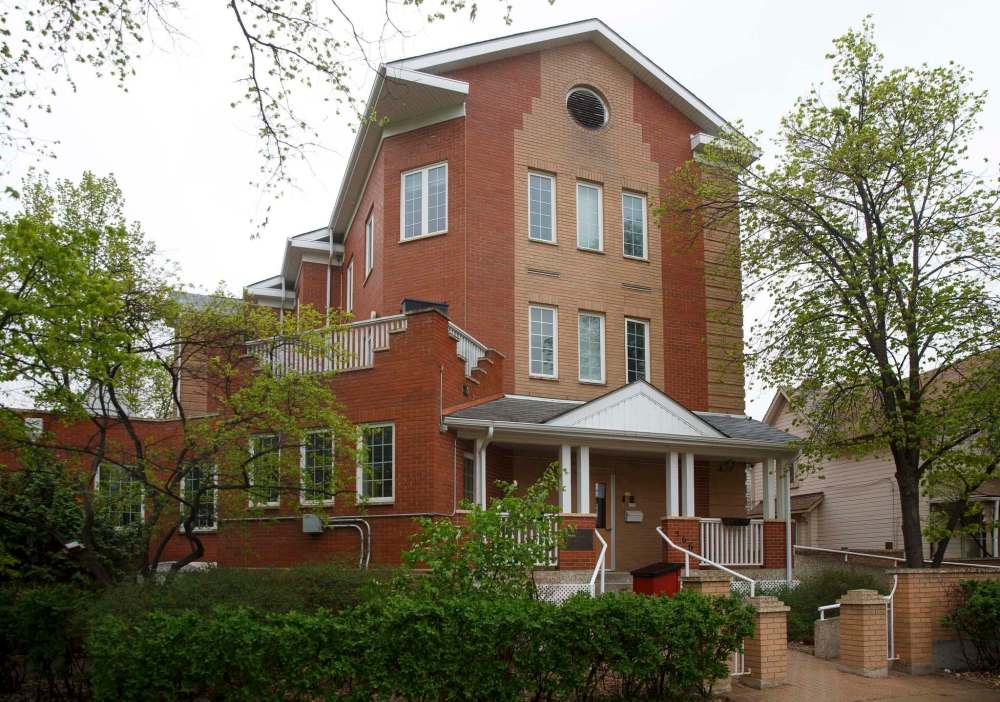
Moving out of your house after 37 years is an emotional experience, with a mix of excitement for what’s to come and nostalgia for what once was. Just ask staff at Ronald McDonald House on Bannatyne Avenue.
Since 1984, the house has stood as a safe place for children as they felt the heavy toll of childhood illnesses and of recovery. Tens of thousands of kids from rural Manitoba and northwestern Ontario have come through the door, stayed in one of the 14 bedrooms, and received the chance to be with their families and other children during what can be a very scary time filled with surgeries, diagnostic testing and fear.
But over time, a homeowner needs change. Sometimes that means it’s time to downsize to something more manageable. Other times, the residents’ needs exceed the limits of what the old house could offer, and then it’s time to say goodbye to a house that’s done its job. That’s what’s happened at 566 Bannatyne Ave.
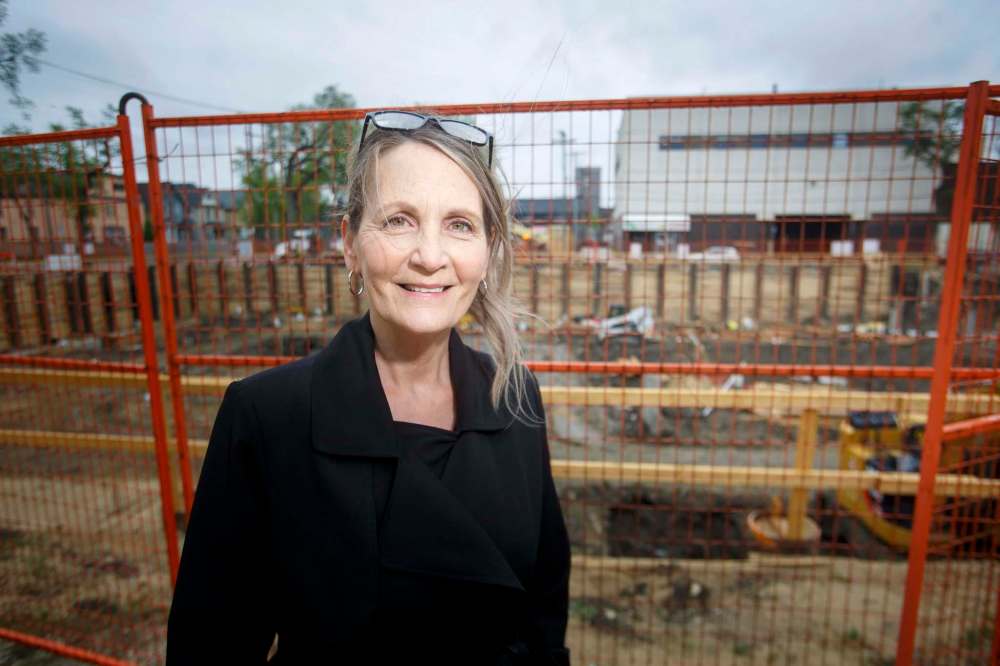
“We have outgrown our house, and the needs of the families surpass what we can offer here,” says Wendy Galagan, the CEO of the Manitoba branch of the Ronald McDonald House organization, which opened its first building in Philadelphia in 1974 and 376 more since then.
That’s something the organization has known for about a decade. The old house simply didn’t have the capacity to meet the non-profit’s goals: a few hundred children had to be turned away each year to stay in a partner hotel because there simply weren’t enough beds, and the house, as all houses do, started to show its age. Built in the 1980s, it has a number of outdated features — shared bathrooms and smaller rooms among them — that wouldn’t fly by modern standards for privacy or spatial needs in health care.
There’s also the good news that since the house opened, advances in many areas of pediatric health care means the children staying at the house are healing more often from ailments like cancer and organ failure. But that also means their stays in the house are frequently longer and more complex than ever before, making 14 bedrooms — thought to be enough in 1984 — too few to meet current needs.
Plus, the house was built mostly with pediatric oncology in mind, but it caters now to everything from injury and chronic illness to premature newborns.
“It’s time we built a new house,” Galagan said.
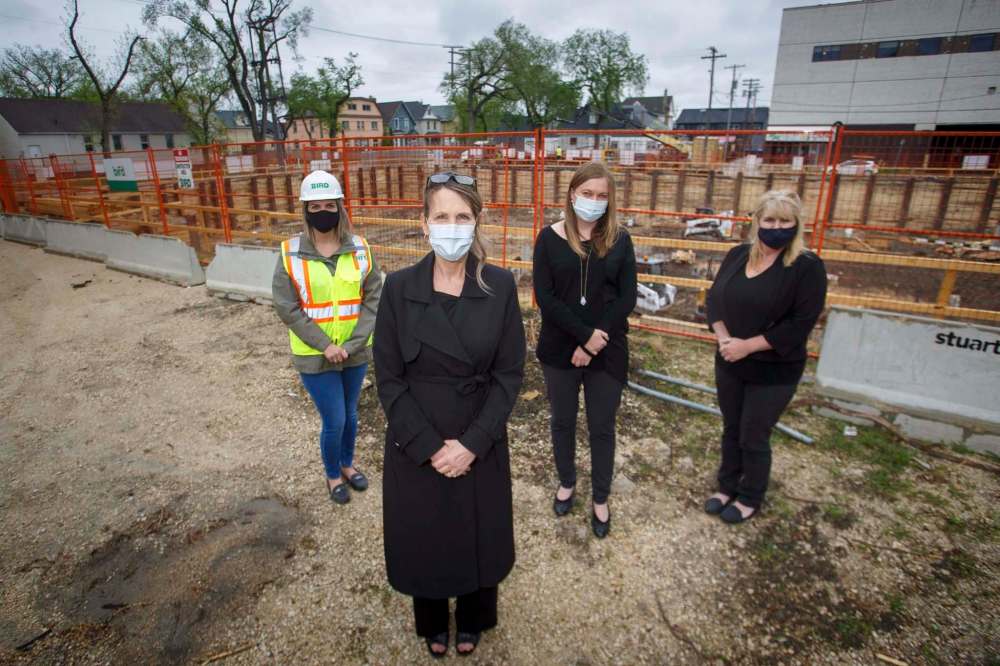
In March, crews broke ground at a lot on Juno Street, just a few blocks away from the current Ronald McDonald House and the Children’s Hospital, purchased between 2018 and 2019 for $1.425 million. Initially, the organization purchased the block from 62 through 68 Juno St., the former site of a pair of automotive centres. But the land wasn’t big enough for the plans, and luckily, neighbours at 56 and 58 Juno St., showed interest in selling their properties too.
Construction started soon thereafter and is on schedule to be complete by June 2022.
“We can hear the construction as we sit in the current house,” says Galagan. “And it’s a beautiful sound.”
As the noise grows, so will the building, which expands the Ronald McDonald House’s program delivery capacity by 186 per cent and grows its footprint from 14 bedrooms to 40, with special, self-contained apartment-style units for patients who are immunocompromised and require isolation and separate ventilation and elevators.
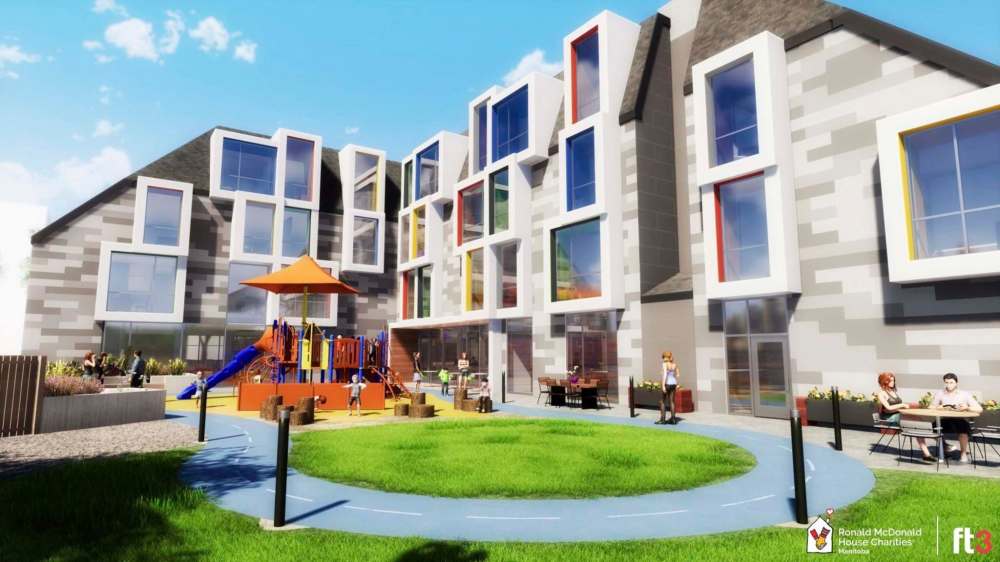
The new building, designed by Winnipeg’s ft3 Architecture, will resemble a stack of building blocks when complete, making for a facility with the look of a place meant for children to feel at home.
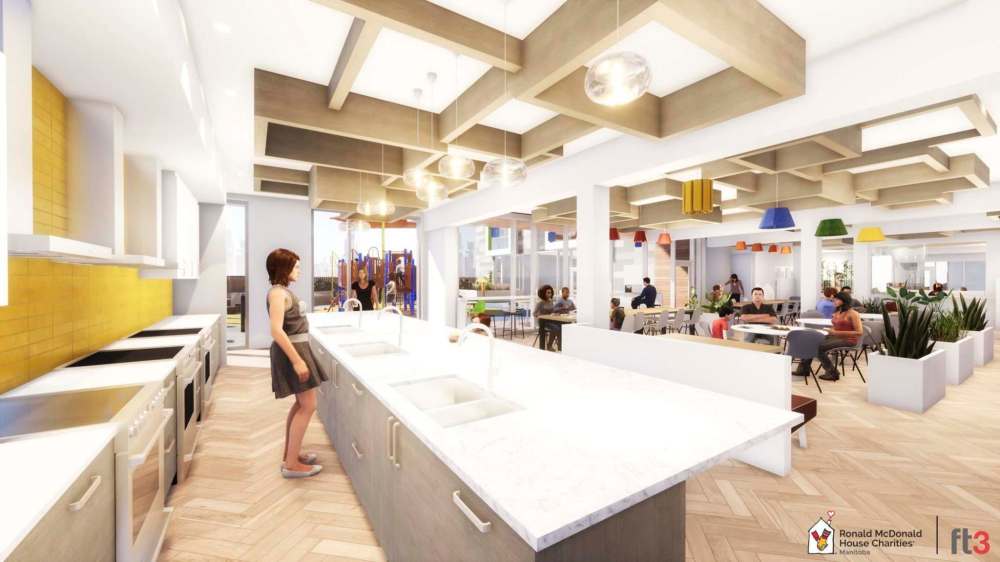
It will have a significantly expanded outdoor play area, a garden and meditation space, outdoor seating and barbeque areas, and 56 stalls of underground parking — a massive leap over the six outdoor stalls at the rear of the current house.
At over four times the size of the current building, the new Ronald McDonald House — built at a cost of roughly $20 million — will resemble more of a Ronald McDonald Village.
On Juno Street, there will be two expansive kitchens, which are really more like four, Galagan says, plus several common areas and indoor play areas. Multi-purpose rooms will be used for family programming like massage therapy, pet therapy, yoga, and hair and nail services. A theatre room and an arts and crafts room will give offer kid-friendly activities, and a “magic” room will be used to mark special occasions.
Galagan said that these sorts of services are ones that will help children and their families cope with the stressful situation of a trip to Winnipeg and the children’s hospital. In 2020, the average length of stay at the house was 16 days, and the longest was 194 days. About two-thirds of Canadians live in places without children’s hospitals.
While transforming the treatment experience for patients and their families, the new building will also represent a large infrastructure investment to the core neighbourhood surrounding the hospital, which could have a spillover effect on nearby properties. Meanwhile, the former building will be sold off, representing a potential opportunity for a new owner, possibly a non-profit in the housing sector, to repurpose it. There have been some interested parties so far, Galagan said.
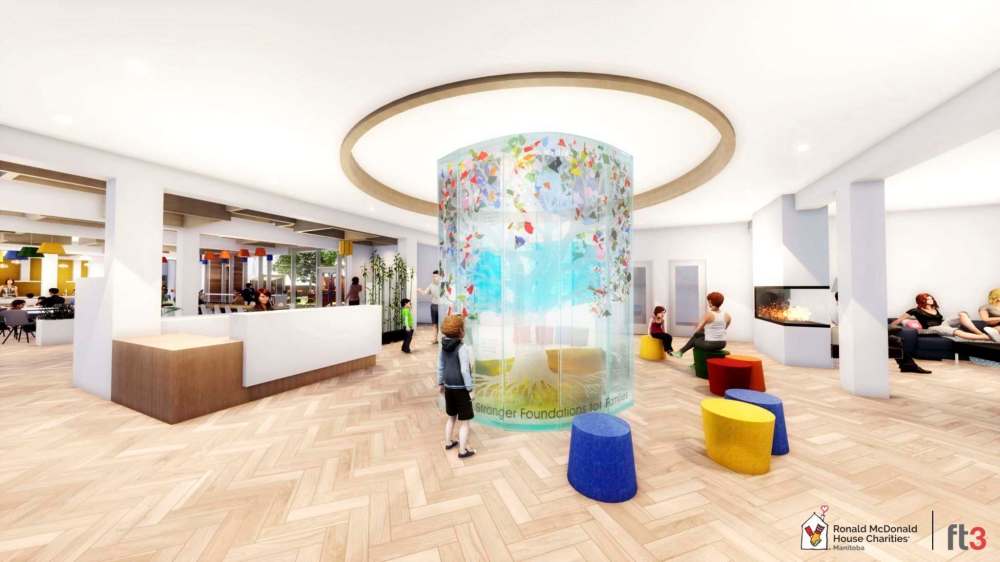
When it came to finding a new location, proximity to the hospital, where a 24-7 shuttle service runs for Ronald McDonald House guests, was the most important thing. The next was ensuring the organization met its capital campaign goal of $20 million, a threshold it should reach soon; the provincial government recently contributed $5 million to the campaign. Donor names will be featured in a stained glass installation inside the building once it’s complete. Meanwhile, the operating costs of the larger building will grow by $1 million to $2.3 million annually, with the McDonald’s company providing 25 to 30 per cent of those funds each year.
Though the move is just a few blocks away, Galagan said it’s taken years and considerable effort from the organization’s various committees and volunteer boards to make it happen.
But now, the end goal — a larger house that fits the needs of an ever-growing family — is within sight, with the old house having done its job for nearly 40 years.
“One year from now, we’ll be packing our bags,” Galagan said.
ben.waldman@freepress.mb.ca


Ben Waldman is a National Newspaper Award-nominated reporter on the Arts & Life desk at the Free Press. Born and raised in Winnipeg, Ben completed three internships with the Free Press while earning his degree at Ryerson University’s (now Toronto Metropolitan University’s) School of Journalism before joining the newsroom full-time in 2019. Read more about Ben.
Every piece of reporting Ben produces is reviewed by an editing team before it is posted online or published in print — part of the Free Press‘s tradition, since 1872, of producing reliable independent journalism. Read more about Free Press’s history and mandate, and learn how our newsroom operates.
Our newsroom depends on a growing audience of readers to power our journalism. If you are not a paid reader, please consider becoming a subscriber.
Our newsroom depends on its audience of readers to power our journalism. Thank you for your support.