WEATHER ALERT

Pfizer, AstraZeneca preventing hospitalizations from Delta variant in Britain

Advertisement

Advertise with us

OTTAWA - A new study in England suggests even just one dose of the Pfizer-BioNTech and Oxford-AstraZeneca vaccines are extremely good at keeping people from ending up in the hospital if they contract COVID-19 from the Delta variant of the virus that causes it.

Read this article for free:

or

Already have an account? Log in here »

To continue reading, please subscribe:

Subscribe and receive a limited-edition Free Press branded hat or tote.

Digital Subscription

One year of digital access for only $205*

  • Enjoy unlimited reading on winnipegfreepress.com
  • Read the E-Edition, our digital replica newspaper
  • Access News Break, our award-winning app
  • Play interactive puzzles

*First annual payment billed as $205.00 + GST for one year. This annual subscription will automatically renew at $233.00 + GST every 52 weeks (10% off the regular annual price of $259.35). Offer available to new and qualified returning subscribers only. Cancel any time.

To continue reading, please subscribe:

Add Free Press access to your Brandon Sun subscription for only an additional

$1 for the first 4 weeks*

  • Enjoy unlimited reading on winnipegfreepress.com
  • Read the E-Edition, our digital replica newspaper
  • Access News Break, our award-winning app
  • Play interactive puzzles
Start now

*Your next Brandon Sun subscription payment will increase by $1.00 and you will be charged $17.95 plus GST for four weeks. After four weeks, your payment will increase to $24.95 plus GST every four weeks.

Hey there, time traveller!
This article was published 14/06/2021 (1868 days ago), so information in it may no longer be current.

OTTAWA – A new study in England suggests even just one dose of the Pfizer-BioNTech and Oxford-AstraZeneca vaccines are extremely good at keeping people from ending up in the hospital if they contract COVID-19 from the Delta variant of the virus that causes it.

The news is particularly welcome in Canada, where a focus on first doses means more than two-thirds of Canadians are now partially protected from COVID-19, but only about one in eight are fully vaccinated.

Delta, one of the variants first identified in India, is proving to be the most infectious of the variants known so far, and Monday prompted British Prime Minister Boris Johnson to push back plans to lift all public health restrictions next week.
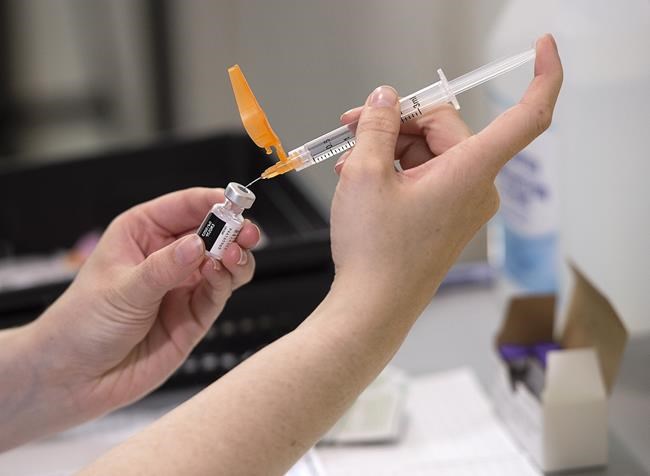
The Pfizer-BioNtech COVID-19 vaccine is prepared at a vaccination clinic in Dartmouth, N.S. on Thursday, June 3, 2021. A new study in England suggests the Pfizer-BioNTech and Oxford-AstraZeneca vaccines are extremely good at keeping people from ending up in the hospital with COVID-19, even after just one dose. THE CANADIAN PRESS/Andrew Vaughan

A surge of cases linked to Delta has tripled the COVID-19 infection rate in the United Kingdom in the last three weeks. The U.K. had seen the number of new cases fall to below 30 for every one million people in mid-May, from more than 1,000 in January. It’s now back up to more than 100.

Last month, Public Health England said a single dose of Pfizer or AstraZeneca was only about 33 per cent effective at preventing symptomatic cases of COVID-19 after one dose, but after two doses, that rose to 88 per cent for Pfizer and 60 per cent for AstraZeneca.

On Monday, Public Health England said it had new data that showed the vaccines were doing really well at keeping people from getting extremely sick.

The study, based on 14,000 people with confirmed cases of COVID-19 due to the Delta variant between April 12 and June 4, found two doses of either vaccine were more than 90 per cent effective at keeping people out of the hospital. There were a total of 166 hospitalizations in the group.

After one dose, Pfizer was 94 per cent effective against hospitalization, and AstraZeneca’s vaccine was 71 per cent effective.

Ontario infectious disease specialist Dr. Isaac Bogoch says the study is a ray of hope at a time when “good news is in short supply.”

Dr. Gerald Evans, chair of infectious diseases at Queen’s University medical school, said many people still don’t understand that vaccines are still considered effective even if they don’t entirely prevent an illness.

“If people’s aim is ‘I don’t even ever want to get COVID,’ then the vaccine doesn’t look that good,” he said. “But if, if they’re looking at ‘well, I still might get COVID but I’m not going to get really sick,’ then that’s an incredibly encouraging thing.”

Evans said the Delta variant is spreading fastest in the U.K. among people who have no vaccinations at all.

Canada is pivoting to second doses rapidly now, with 1.2 million people joining the fully vaccinated group just in the last four days, and two million in the last 10 days. About 70 per cent of shots are now going to second doses, up from only about 38 per cent a week ago.

Canada is also vaccinating faster than ever, averaging more than 10 doses a day for every 10,000 Canadians in the last week. With more than 13 million doses expected in the next eight days, the supply is also coming in faster than ever.

While individual provinces have set their own vaccine targets and reopening plans, chief public health officer Dr. Theresa Tam set a tentative national goal to get 75 per cent of eligible Canadians vaccinated with one dose, and 20 per cent with both doses, before most outdoor restrictions can be lifted.

At current rates Canada is set to hit the 75 per cent with one dose goal before the end of this week, and 20 per cent with two in eight to 10 days.

Tam has warned however that with Delta’s added infectiousness, Canadians need to continue to be careful and follow public health orders, particularly between their first and second doses.

This report by The Canadian Press was first published June 14, 2021.

Report Error Submit a Tip

More Stories

Mayor tight-lipped about firefighter charged with disobeying protection order while on job

Malak Abas 4 minute read Preview

Mayor tight-lipped about firefighter charged with disobeying protection order while on job

Malak Abas 4 minute read Friday, Jul. 24, 2026

Mayor Scott Gillingham said he can’t talk about the case of a firefighter accused of breaching a protection order while on the job this month — a man who has been jailed twice in the past 10 years for harassing two women.

Christopher Goethals was arrested July 21 after breaching a protection order requiring that he not come within 200 metres of a protected person.

Police said Goethals, 59, was in full uniform, driving a Winnipeg Fire Paramedic Service fleet vehicle, and was performing “modified duties” on the job when he breached the order.

When asked about Goethals being able to serve as a firefighter under those circumstances, Gillingham called it a human resources issue. He said he wouldn’t get into specifics, but would “look into this matter further.”

Read
Friday, Jul. 24, 2026

Long may you scamper, sweet little Jimothy

Jen Zoratti 5 minute read Preview

Long may you scamper, sweet little Jimothy

Jen Zoratti 5 minute read Yesterday at 2:01 AM CDT

We desperately needed a folk hero this summer, with its wildfires and storms and diarrhea lettuce. Someone to unite us, to inspire us, to get us through.

Enter Jimothy.

Jimothy is an off-kilter raccoon with an appropriately off-kilter name from Seattle who has gone viral for his short, round body — likely the result of a congenital condition called short spine syndrome.

I have seen various creative descriptions of Jimothy online: “a child’s rendering come to life,” or “a raccoon drawn from memory,” or not a raccoon but a “rcn,” owing to his truncated spine.

Read
Yesterday at 2:01 AM CDT

Sked dread a summer bummer for mom

Maureen Scurfield 5 minute read Yesterday at 2:01 AM CDT

DEAR MISS LONELYHEARTS: I’m a working mom in my 50s and I love Winnipeg in the summer — all the cultural festivals, concerts and crazy events it has to offer.

So I told my 20-something kids I would come out to our lake cabin for only a couple of June and July weekends, but then join them out there with their dad as well for an unbroken two-week stretch in late-August.

However, I worry I’ll just be cooking and organizing while I’m out there! My bossy eldest daughter made up a cooking schedule, so everybody has a special dinner where they have cook, organize people to bring things, run the barbecue and entertain with a group game afterwards. It’s going well for July, but nobody has signed up for duties in August when we’ll all be out there to enjoy the last of the summer.

I spent summer after summer covering that entire duty calendar for my kids, so it’d be nice to actually relax when I’m out there later this year. So, now what?

Vaccines preventing hospitalizations from Delta

Mia Rabson, The Canadian Press 4 minute read Preview

Vaccines preventing hospitalizations from Delta

Mia Rabson, The Canadian Press 4 minute read Monday, Jun. 14, 2021

OTTAWA - A new study in England suggests even just one dose of the Pfizer-BioNTech and Oxford-AstraZeneca vaccines are extremely good at keeping people from ending up in the hospital if they contract COVID-19 from the Delta variant of the virus that causes it.

The news is particularly welcome in Canada, where a focus on first doses means more than two-thirds of Canadians are now partially protected from COVID-19, but only about one in eight are fully vaccinated.

Delta, one of the variants first identified in India, is proving to be the most infectious of the variants known so far, and Monday prompted British Prime Minister Boris Johnson to push back plans to lift all public health restrictions next week.

A surge of cases linked to Delta has tripled the COVID-19 infection rate in the United Kingdom in the last three weeks. The U.K. had seen the number of new cases fall to below 30 for every one million people in mid-May, from more than 1,000 in January. It's now back up to more than 100.

Read
Monday, Jun. 14, 2021

Winnipeg Fringe Festival: 2026 show reviews

Winnipeg Free Press 1 minute read Preview

Winnipeg Fringe Festival: 2026 show reviews

Winnipeg Free Press 1 minute read Tuesday, Jul. 14, 2026

Not sure what to see at this year's Winnipeg Fringe Theatre Festival? All of the Free Press’s reviews will be published here.  Find a show and click to read its review.

Read
Tuesday, Jul. 14, 2026

Ref ‘dominates’ game in Sea Bears loss to Honey Badgers, says coach

Joshua Frey-Sam 7 minute read Preview

Ref ‘dominates’ game in Sea Bears loss to Honey Badgers, says coach

Joshua Frey-Sam 7 minute read Yesterday at 7:40 PM CDT

Following a festive Christmas-in-July-themed Saturday afternoon inside Canada Life Centre, Winnipeg Sea Bears head coach Mike Raimbault didn’t mince words about who he thought was the Grinch in a hard-fought 88-86 loss to the visiting Brampton Honey Badgers that ended in controversy.

As the Sea Bears owned a one-point lead in Target Score Time, Brampton guard Sean East II was awarded three free throws — all of which he converted — after a questionable foul called on Teddy Allen by official Perry Stothart.

Raimbault, who has been known to bite his tongue on such topics, left nothing to the imagination about where he stood on the game-deciding judgment made in a game that had major post-season implications.

“I just felt like it was a fitting ending to the game where Perry Stothart had dominated the flow of the game from the start,” he said. “For him to call a bit of a guess foul and end the game on the foul, I felt like it’s disappointing that he can come in and dictate how the game’s going to be played and flow, and (that) continues to be a bit of an M.O. for him. So I think we’re disappointed with the fact that the league continues to let that happen.”

Read
Yesterday at 7:40 PM CDT