

A return to Torrey and prime time for US Open on West Coast
Advertisement
Read this article for free:
or
Already have an account? Log in here »
To continue reading, please subscribe:

Digital Subscription
One year of digital access for only $205*
- Enjoy unlimited reading on winnipegfreepress.com
- Read the E-Edition, our digital replica newspaper
- Access News Break, our award-winning app
- Play interactive puzzles
*First annual payment billed as $205.00 + GST for one year. This annual subscription will automatically renew at $233.00 + GST every 52 weeks (10% off the regular annual price of $259.35). Offer available to new and qualified returning subscribers only. Cancel any time.
To continue reading, please subscribe:
Add Free Press access to your Brandon Sun subscription for only an additional
$1 for the first 4 weeks*
- Enjoy unlimited reading on winnipegfreepress.com
- Read the E-Edition, our digital replica newspaper
- Access News Break, our award-winning app
- Play interactive puzzles
*Your next Brandon Sun subscription payment will increase by $1.00 and you will be charged $17.95 plus GST for four weeks. After four weeks, your payment will increase to $24.95 plus GST every four weeks.
Read unlimited articles for free today:
or
Already have an account? Log in here »
Hey there, time traveller!
This article was published 16/06/2021 (1889 days ago), so information in it may no longer be current.
SAN DIEGO (AP) — The USGA is starting to escape that reputation of an East Coast bias for the U.S. Open.
The return to Torrey Pines for the 121st U.S. Open means another prime-time show along the Eastern seaboard, and that’s happening with greater frequency for the U.S. Open.
It wasn’t until the 48th edition of this national championship that it ventured farther west than Colorado, with Ben Hogan winning at Riviera in Los Angeles in 1948. That was the start of eight U.S. Opens in California over a span of 50 years.
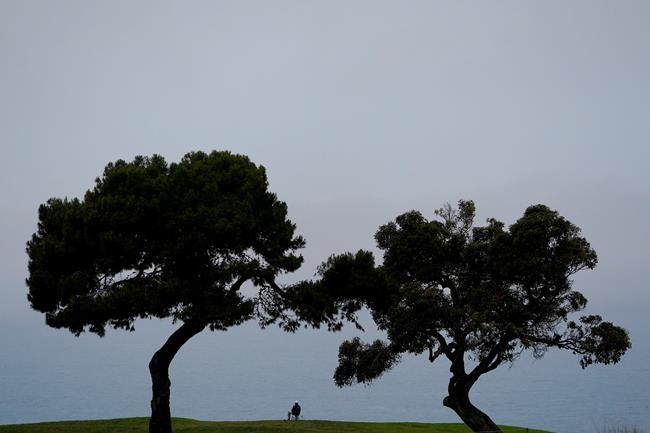
The next 25 years include just as many U.S. Opens on the West Coast, which includes Los Angeles Country Club in 2023.
One appeal is being able to go prime time, with the weekend finish anticipated for 9 p.m. EDT on Saturday and 8 p.m. EDT on Sunday.
“It’s always good to have a West Coast site leading into the next TV negotiations or coming out of it,” former USGA executive director David Fay said.
The start of a 12-year agreement with Fox (since returned to NBC) was 2015 at Chambers Bay south of Seattle. The next TV contract would start in 2027 at Pebble Beach.
And then there’s the weather.
“I’ve been looking at the forecast,” Jordan Spieth said before he even arrived at Torrey Pines. “Cooler nights, 75 degrees in the day and no rain. They can do whatever they want.”
As comfortable as it sounds, that’s not necessarily comfortable for the players. All indications from three days of practice is the USGA has the South course right where it wants it, with little chance of something unexpected causing the wrong kind of havoc.
Missing the fairways is enough of a problem. Of greater concern might be missing the green. Wilco Nienaber, the big basher from South Africa, found that out behind the fifth green Wednesday. All he could do was chop at it to get it up in the air and move it forward, and then watch it roll some 25 feet by the hole.
Sure, it’s tough. That’s what players have come to expect from the U.S. Open. And that works anywhere in the country, East and West, or somewhere in between.
“It’s fairways and greens,” Rory McIlroy said. “It’s a proper U.S. Open test.”
McIlroy arrived later than usual for the U.S. Open, mainly because he played the Farmers Insurance Open at Torrey Pines in January. It’s not the same — not even close — though he has a familiarity of where the ball should be going, where not to miss.
His hope is not to be too slow out of the gates. McIlroy has gone seven years since he last won a major in the 2014 PGA Championship, a stretch too long for that amount of talent.
In his last three majors, two of them the Masters, he has started 75-76-75.
“Probably just putting a little too much pressure on myself, playing too carefully, being a little tentative,” McIlroy said. “I think that sort of sums it up.”
McIlroy at least has won recently, at Quail Hollow. Dustin Johnson hasn’t won in four months. He felt the pieces start coming together last week in South Carolina, right up until a triple bogey on the 16th hole Sunday that dropped him out of the top 10.

“If I can drive it well, I feel like I’m going to have a really good week,” Johnson said
The course, as always, figures to take the stage even from the silly feud between Bryson DeChambeau and Brooks Koepka.
Mike Davis, the retiring CEO of the USGA, walked the course over the weekend and was reminded of how tough it played in 2008. Tiger Woods and Rocco Mediate finished at 1-under 283, with Woods beating him in 19 holes of a playoff.
“It played like a U.S. Open should,” Davis said. “You had to hit all the shots. We tested shot-making skills. We tested your course management. We tested your ability to handle your nerves when it most counts.”
That’s what we saw this year and Davis said, “Can’t wait for it.”
When does it return after this year? That question is a little more complicated. During that early 50-year stretch of eight Opens in California, Riviera had it 1948 and the other seven were divided between Olympic Club and Pebble Beach.
Torrey Pines was part of a push to go public. Fay lobbied for Bethpage Black in 2002 and that turned out to a big hit, especially with Woods holding off Phil Mickelson along the back nine. The second version was a rain-soaked mess that was lucky to finish on Monday — Lucas Glover was the winner — and it’s no longer in the picture.

Would the U.S. Open have returned if Woods had not won?
“Having the champion you want does help,” said David Fay, the former USGA executive director when Bethpage and Torrey were awarded the Opens.
The USGA is planning a rotation of U.S. Open courses that include Pebble Beach, Oakmont, Shinnecock Hills and Pinehurst, leaving less room for others.
“We love Torrey Pines, and let’s see what unfolds this week,” said John Bodenhamer, the USGA’s senior managing director of championships. “Again, I’m not going to speculate on the future, but we love everything about this place. … It will get every bit of consideration it deserves.”
Whether there’s room for Torrey Pines, redemption for Chambers Bay, a star in the making at Los Angeles Country Club, the West Coast tends to put on a prime-time show.
Related Articles
Saso goes for another LPGA major with limited expectations





Advertisement Advertise With Us
Advertisement Advertise With Us