

Remaking middle management
Revised approaches, updated skills needed to motivate remote workers and manage stress
Advertisement
Read this article for free:
or
Already have an account? Log in here »
To continue reading, please subscribe:
Monthly Digital Subscription
$1 per week for 24 weeks*
- Enjoy unlimited reading on winnipegfreepress.com
- Read the E-Edition, our digital replica newspaper
- Access News Break, our award-winning app
- Play interactive puzzles
*Billed as $4.00 plus GST every four weeks. After 24 weeks, price increases to the regular rate of $19.95 plus GST every four weeks. Offer available to new and qualified returning subscribers only. Cancel any time.
Monthly Digital Subscription
$4.99/week*
- Enjoy unlimited reading on winnipegfreepress.com
- Read the E-Edition, our digital replica newspaper
- Access News Break, our award-winning app
- Play interactive puzzles
*Billed as $19.95 plus GST every four weeks. Cancel any time.
To continue reading, please subscribe:
Add Free Press access to your Brandon Sun subscription for only an additional
$1 for the first 4 weeks*
*Your next subscription payment will increase by $1.00 and you will be charged $16.99 plus GST for four weeks. After four weeks, your payment will increase to $23.99 plus GST every four weeks.
Read unlimited articles for free today:
or
Already have an account? Log in here »
Hey there, time traveller!
This article was published 19/06/2021 (1744 days ago), so information in it may no longer be current.
If you’ve driven along Main Street or Portage Avenue on your way to work in the past month, you’ll notice traffic has picked up but not nearly to its normal level. That’s because a large majority of organizations still have employees working from home.
While some provinces appear to be opening up more quickly than Manitoba, one of the questions is whether or not traffic will ever get back to “normal” when society fully opens up, sometime in October 2021. The other question on people’s mind of course is whether or not the physical workspace will ever return to “normal.”
The fact is that more and more employees are saying they want to continue working at home perhaps two to three days per week. Still others are suggesting they would be open to attending a satellite location if it was 15-30 minutes from their home but still only working on site in a hybrid scheduling model. In other words, it seems that post COVID-19, our work world will never be the same. The pandemic has created a work revolution.
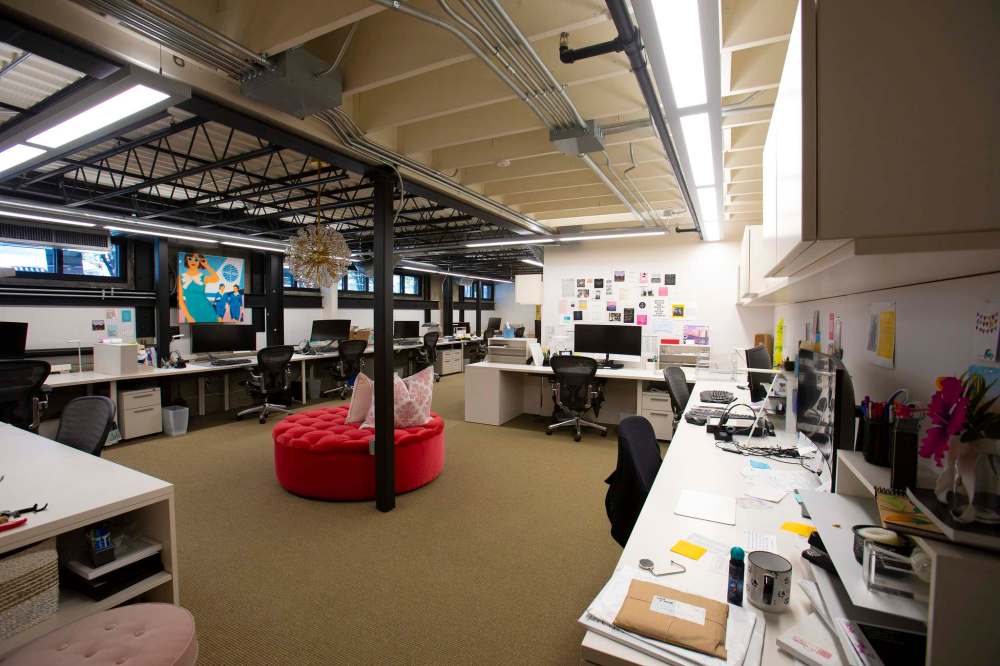
While workspace and employee scheduling have been a frequent topic of discussion during the past 15 months of the pandemic, another issue that has come out of this experience is the role of middle managers. As with any change situation, middle managers have felt squeezed and pressured, pulled in different directions and often don’t have a clear understanding of a new vision yet are compelled to move forward. The pandemic also caught many middle managers off guard, leaving them frustrated by the urgency of the changes and the bombardment of accommodation requirements for employees struggling to work out of their home.
Middle managers and their unique challenges have led to an abundance of research that is now showing higher levels of stress and less job satisfaction. Unfortunately, the data also suggest the factors causing the stress are likely here to stay. As mentioned above, a hybrid type of work environment is expected to continue and this will create ongoing challenges with respect to employee supervision and productivity monitoring. Unfortunately, middle managers will no longer be able to rely solely on “managing by walking around.”
Middle managers will also need to figure out new ways of supporting employee communication and collaboration while at the same time, avoiding the potential of employee isolation. As well, we’ll see that more and more communication, information sharing and direction will come through technology, thus reducing the need for face to face, in-person communication.
Team engagement issues will continue to be encountered by middle managers because it is much more difficult to build strong social ties through now-common virtual meetings. Such meetings are typically very task oriented and don’t provide much time for building real relationships and social ties. As a result, the whole culture of organizations is changing because it is harder for remote employees to be connected to the vision, values and mission of the organization without constant meaningful interaction and communication with management. Frankly, it’s no wonder middle managers are feeling less job satisfaction and are being criticized for a lack of empathy during this pandemic journey.
So, what does this new environment require with respect to the role of middle managers and the skill requirements for the future?
A much stronger requirement for well-developed communication and relationship-building skills focused on ensuring employees are an integral part of the organizations’ cultural context is necessary. This means being creative and innovative in terms of how the engagement of employees occurs. No matter that technology and automation can help to increase task-related employee productivity, middle managers can’t afford to neglect the people aspect of an organization. After all, the long-term goal for both employees and the employer is a long-term work relationship.
However, the challenge for middle managers is not just registering for advanced training in the area of communication and teambuilding, they need training in applying creative strategies on how to build relationships in a virtual world. Currently and unfortunately, much of this type of training is still in its infant stages. So, this leaves middle managers forging for themselves with personal self-learning.
One way for middle managers to stay as current is that they can read everything that is available. For instance, there are numerous studies available and easily accessed on topics such as the impact of the pandemic on employee mental health. There is plenty of information available on the emotional needs of employees and the impact of remote work and isolation. Most of these articles provide some solutions and suggestions for moving forward. There are also many courses available on personal coaching and mentoring that could help in this new way of working.
The other side of the coin for middle managers is how to manage themselves so that job satisfaction is improved. We now know that the work environment will never return to exactly what it was and so it is also time to look at what these middle managers want out of their current job? Where do they see their career going? If their only tool is managing by walking around and there is little interest in learning new strategies, then it’s time to re-evaluate what to do with the rest of their life.
The changing workplace, the anticipated wide variety of workplace models and the new skills required by middle managers will also impact the recruitment and selection practices. New candidates will need to have a strong skill set on the technical side but they will need to excel at personal interpersonal, teambuilding and change management skills. Creativity and innovation will be the name of the new middle management game.

At the same time, the pandemic has pushed some organizations toward re-examining that long, ongoing issue of whether or not middle managers are required at all. The question has arisen as a result of the success experienced by many organizations that quickly created small action teams and rapidly implemented effective pandemic plans. As a result, some organizations are already restructuring their leadership models, sometimes creating various “tracks” that allow different career paths that don’t necessarily lead to a middle management role. Other organizations are continuing to create smaller “team lead” roles that focus on developing interpersonal relationships with the goal of enhancing organizational culture and employee productivity.
No matter what, organizational leaders shouldn’t rush to judgment in terms of eliminating and/or changing the role of their middle managers. I agree, many decisions were made quickly during the pandemic and have worked out well but organizational decisions on structure must be well thought out and made for the long term, not just the short term. In my view, middle manager roles continue to be important. These are the leaders that employees look up to for guidance and assistance, they are the glue that keeps things together. In my view, changing and enhancing middle management skill sets is a better way to go.
Life in our work world will eventually get back together but accept the fact that we many never return to the old normal. Instead, focus on the new skills required to develop your middle managers, continue a focus on employee attraction and retention and provide opportunities for a variety of career tracks within the organization.
Source: It’s time to free the middle manager, Brian Elliott, May 21, 2021, Harvard Business Review; Leadership empathy needed with new modes of work: Jim Wilson, June 11, 2021, Canadian HR Newswire.
Barbara J. Bowes, FCPHR, CCP, M.Ed. is the author of eight books, a radio personality, a speaker, an executive coach and workshop leader. She is also chairwoman of the Manitoba Status of Women. She can be reached at barb@legacybowes.com
History
Updated on Saturday, June 19, 2021 9:00 AM CDT: Corrects typo.