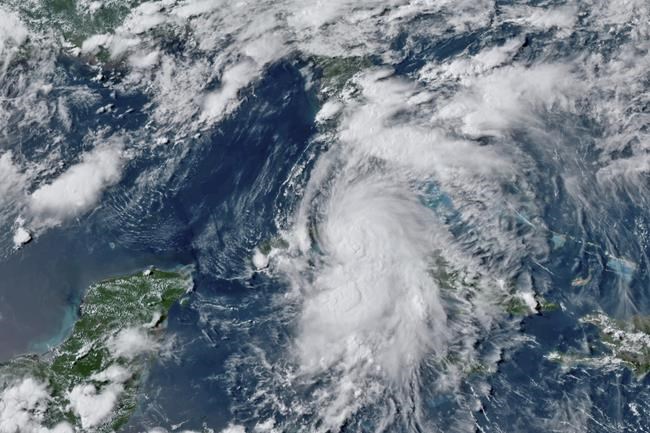
Tropical Storm Elsa crosses west Cuba and heads for Florida
Advertisement
Read this article for free:
or
Already have an account? Log in here »
To continue reading, please subscribe:

Digital Subscription
One year of digital access for only $205*
- Enjoy unlimited reading on winnipegfreepress.com
- Read the E-Edition, our digital replica newspaper
- Access News Break, our award-winning app
- Play interactive puzzles
*First annual payment billed as $205.00 + GST for one year. This annual subscription will automatically renew at $233.00 + GST every 52 weeks (10% off the regular annual price of $259.35). Offer available to new and qualified returning subscribers only. Cancel any time.
To continue reading, please subscribe:
Add Free Press access to your Brandon Sun subscription for only an additional
$1 for the first 4 weeks*
- Enjoy unlimited reading on winnipegfreepress.com
- Read the E-Edition, our digital replica newspaper
- Access News Break, our award-winning app
- Play interactive puzzles
*Your next Brandon Sun subscription payment will increase by $1.00 and you will be charged $17.95 plus GST for four weeks. After four weeks, your payment will increase to $24.95 plus GST every four weeks.
Read unlimited articles for free today:
or
Already have an account? Log in here »
Hey there, time traveller!
This article was published 04/07/2021 (1868 days ago), so information in it may no longer be current.
HAVANA (AP) — Tropical Storm Elsa swept across a mostly rural section of western Cuba with strong rain and winds Monday, then moved into the Florida Straits for a possible close brush with the lower Florida Keys and the Dry Tortugas on Tuesday.
The storm made landfall in Cuba on Monday afternoon near Cienega de Zapata, a natural park with few inhabitants. It headed northwestward across the island, passing Havana just to the east.
Back over water, Elsa’s maximum sustained winds strengthened to 60 mph (95 kph) late Monday. Its core was about 20 miles (35 kilometers) north-northeast of Havana and 80 miles (130 kilometers) south-southwest of Key West, Florida. It was moving to the north-northwest at 12 mph (19 kph).
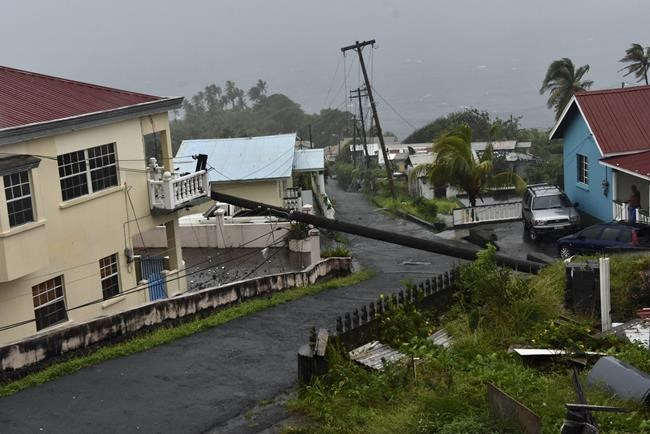
There were no early reports of serious damage as Elsa passed over Cuba.
“The wind is blowing hard and there is a lot of rain. Some water is getting under the door of my house. In the yard the level is high, but it did not get into the house,” Lázaro Ramón Sosa, a craftsman and photographer who lives in the town of Cienega de Zapata, told The Associated Press by telephone.
Sosa said he saw some avocado trees fall nearby.
Though Havana missed the brunt of the storm, many people in the capital stayed in place.
“For now, I staying at home. We have to wait for the night and see exactly what happens,” Aida Herrera, who lives next to the Malecon boulevard facing the sea, told AP.
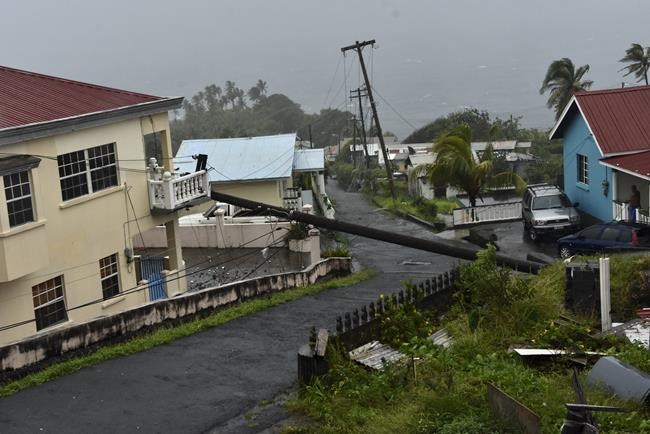

Elsa had spent Sunday and much of Monday sweeping parallel to Cuba’s southern coast before heading on to land, sparing most of the island from significant effects. As a precaution, Cuban officials had evacuated 180,000 people against the possibility of heavy flooding from a storm that already battered several Caribbean islands, killing at least three people.
The U.S. National Hurricane Center said the storm was expected to be near the Florida Keys early Tuesday and would then . pass near or over portions of Florida’s west coast by late Tuesday and into Wednesday.
Tropical storm warnings were posted for the Florida Keys from Craig Key westward to the Dry Tortugas and for the west coast of Florida from Flamingo northward to the Ochlockonee River.
Elsa was the first hurricane of the Atlantic season until Saturday morning and caused widespread damage on several eastern Caribbean islands Friday. As a tropical storm, it resulted in the deaths of one person on St. Lucia and of a 15-year-old boy and a 75-year-old woman in separate events in the Dominican Republic.
Elsa is the earliest fifth-named storm on record, said Brian McNoldy, a hurricane researcher at the University of Miami.