

How Ontario’s golf community got its swing back during COVID-19
Advertisement
Read this article for free:
or
Already have an account? Log in here »
To continue reading, please subscribe:

Digital Subscription
One year of digital access for only $205*
- Enjoy unlimited reading on winnipegfreepress.com
- Read the E-Edition, our digital replica newspaper
- Access News Break, our award-winning app
- Play interactive puzzles
*First annual payment billed as $205.00 + GST for one year. This annual subscription will automatically renew at $233.00 + GST every 52 weeks (10% off the regular annual price of $259.35). Offer available to new and qualified returning subscribers only. Cancel any time.
To continue reading, please subscribe:
Add Free Press access to your Brandon Sun subscription for only an additional
$1 for the first 4 weeks*
- Enjoy unlimited reading on winnipegfreepress.com
- Read the E-Edition, our digital replica newspaper
- Access News Break, our award-winning app
- Play interactive puzzles
*Your next Brandon Sun subscription payment will increase by $1.00 and you will be charged $17.95 plus GST for four weeks. After four weeks, your payment will increase to $24.95 plus GST every four weeks.
Read unlimited articles for free today:
or
Already have an account? Log in here »
Hey there, time traveller!
This article was published 17/07/2021 (1848 days ago), so information in it may no longer be current.
Golf Ontario executive director Mike Kelly sat in the front seat of his car for more than 90 minutes on May 12, fielding calls from the parking lot of a grocery store in a small town near his home north of Toronto.
Earlier in the day an email had been distributed to hundreds of golf course operators in southwestern Ontario inviting them to a Zoom call to talk about what options may exist if the shutdown of the province’s golf courses continued. Ontario, at the time, was the only jurisdiction in North America with golf courses closed, and one of a small handful of places on the planet where that was the case.
At no point did, Kelly says, did he and his organization — which is part of the provincial level of We Are Golf, a consortium of golf stakeholders including the Canadian Golf Superintendents, the PGA of Canada, the Canadian Society of Club Managers, and the National Golf Course Owners Association — condone breaking the law.
“Never, unequivocally, did we talk about going down that path,” says Kelly of the rumblings about a mass opening.
In an email obtained by the Star, the May 14 Zoom call was held to discuss a plan to open on May 20, regardless of whether the ban on golf was lifted or not. “Despite the continued lobbying efforts of We Are Golf,” the email said, in part, “the message that golf is safe is not being heard by our politicians.”
However, one golf course director of operations who was on the call said it was more of an exploratory discussion than anything of substance.
Kelly says he knew if his organization trusted the process, golf would be allowed to open sooner rather than later.
“Our approach was, ‘we need to be after this, every day,’” says Kelly.
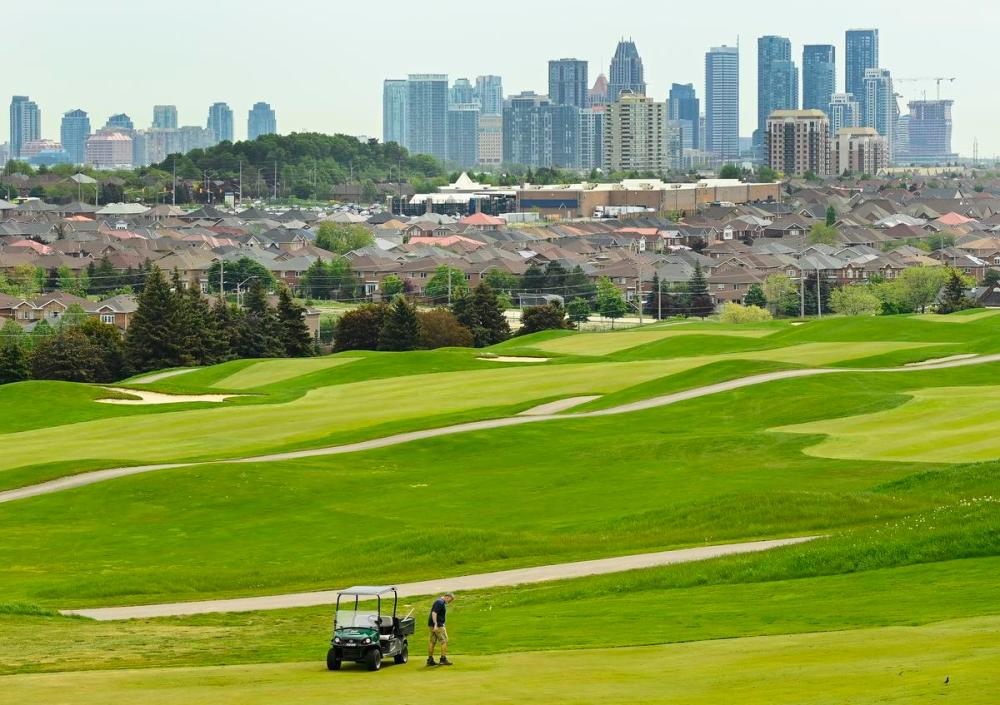
After being shuttered on April 17, golf courses did reopen in Ontario on May 22. That was two days later than what We Are Golf had hoped for, but only eight days later than when courses were opened in 2020 — which was a record year for the sport in Canada.
Overall, Kelly says, it was a win. When, on a call, Kelly announced courses would be opening, one of his members cried. Kelly got choked up at one point, too.
“We were open for the (May) long weekend, which was great,” says Kelly. “A lot of people didn’t expect that.”
One public golf course general manager tells the Star his course was sold out for four days straight after the reopening was announced on May 22. A general manager of a private course says he had more than 400 people in a tee-time lottery for the first week after opening.
The big-time numbers for golf participation have continued as the season has chugged along. Golf Canada reported more than 1.7 million rounds were posted in its system in June, up 15 per cent from 2020.
The efforts by We Are Golf that ultimately led to the reopening can be traced back to last December as it prepared to amplify the message of how safe the game was through 2020.
A letter was sent to various government entities at Christmastime, another in February as case numbers began to rise, and another in March as the weather started to turn for the better.
Golf was originally allowed in all restriction colour codes, including grey (lockdown). The sport dodged the stay-at-home order in early April, but 10 days later the doors were locked.
In Ford’s cabinet, there were lively discussions about the closure of golf courses.
“We spent more time talking about closing golf courses than we did about expanding police powers,” a Progressive Conservative insider, speaking confidentially in order to discuss internal deliberations, said the week after Ontario was locked down in April.
That’s because every minister has a golf course in their riding and Tory MPPs said they took a lot of heat from golfers over the stay-at-home order.
“We get more calls about this (from constituents) than anything else. Golfers are upset and I don’t blame them,” one MPP confided at the time.
One furious party donor told the Star he was responding to Tory email fundraising appeals with a one-word rejection: “Golf.”
The Tories were mindful that 10 per cent of Ontarians play golf and just five per cent are avid golfers, so keeping courses shut did not affect as many people as, say, keeping schools closed.
About 26 per cent of Ontario households have kids in school.
“I’m sorry, but we are not opening golf courses before we open schools,” a senior Tory said at the time, noting in-person classes in Ontario schools ceased on April 19, forcing teachers and students to do online learning.
The We Are Golf consortium began its campaign to reopen almost immediately after courses were shuttered.
It met with the Ministry of the Solicitor General and the Ministry of Health, it had multiple meetings with the premier’s office, and as well as with the Ministry of Heritage, Sport, Tourism and Culture — including three meetings with the minister, Lisa MacLeod.
“I can tell you (the night of May 19) Mike Kelly almost came through the Zoom to give me a hug,” MacLeod says. “We recognize that 14 months into the pandemic, tensions are high.
“We want some semblance of normalcy and golf was very important, as was basketball, tennis, Pickleball … not just for physical well-being but mental well-being.”
One golf course, the Bridges at Tillsonburg (about two hours southwest of Toronto) did end up defying the stay-at-home order. It opened on April 24 but closed about a week later.
On May 1, the Ontario Provincial Police charged the golf club under the reopening act. That matter was heard in court in Woodstock on June 3, but was adjourned to Aug. 19 to resolve or set a date for trial.
As the May long weekend inched closer, some golf course owners thought it was time to see what else they could do, as We Are Golf’s marketing campaign, wrapped in the message of “Let Us Play,” had yet to make inroads, at least publicly.
Behind the scenes there were multiple conversations ongoing between We Are Golf, its lobbying groups, and the province — the kind that happen on all government files, but that was new territory for something relatively milquetoast like golf.
Social media was also heating up, as courses began to take tee-times. That fanned the fire thinking golf would reopen any day. But, despite some eager tweeters, the only reason it was done was to avoid a system crash when golf was allowed to open (it didn’t help. Many systems crashed anyway.)
“We were trying to stay focused on the mission,” says Kelly. “But what else can we do? That came up a lot. The campaign. The letter. We were trying to do everything we could without trying to lead a wild-west scenario.”
Still, there were some tough times, and tough conversations.
Perhaps the most frustrated the golf community became with the government was, however, when Ontario Premier Doug Ford made his comments on May 13.
“There’s nothing wrong with golfing, the problem is the mobility. Then after golf they go back, they have a few pops … that’s the problem. That’s the issue,” Ford said.
Ford’s comment came one day after the Ontario Medical Association — a group of about 40,000 medical professionals in the province — penned a letter that, in part, prescribed “reopening more outdoor recreational facilities such as golf.”
Multiple sources in the golf industry pointed to Ford’s comment as the time they felt the most disappointment throughout the shutdown.
Despite the fact 26 million rounds were played in Ontario in 2020 and no known cases were traced back to a golf facility, it was an anecdote about the premier’s friends having beers that made all the headlines.
And two golf-playing cabinet ministers privately conceded that keeping people from playing their favourite sport could haunt the Tories in the June 2, 2022 election.
Ford’s office at the time emphasized that “a stay-home order means you should stay home,” and noted ski resorts were closed during the winter lockdown for that same reason.
But with case counts coming down, the government allowed courses to be part of “pre-Step-1” in the reopening strategy for Ontario.
The premier himself reached out to Golf Canada’s CEO, Laurence Applebaum, on the morning of May 20. In a call, Ford thanked him for his engagement on the file and for sharing the golf community’s concerns with his team, prior to telling Applebaum that courses would be open for the long weekend.
Applebaum tells the Star it was nice to hear the premier’s personal connection to the game.

“Growing up in the GTA, he had great stories about many golf courses, from Scarlett Woods to St. George’s Golf and Country Club and clearly, he is a fan of the game,” says Applebaum. “We talked about the RBC Canadian Open coming back to St. George’s in 2022 and all of the exciting things going on in golf, both in Ontario and across the country.”
Kelly says although this was a difficult situation to navigate, the provincial government has been a good supporter of golf and was a key supporter of many golf programs in the province — most of which are still around today.
“At the end of this, the relationship is still very good. I kept the people in the Ministry of Sport in the loop all the time. I told them things they didn’t want to hear but I told them it anyways,” says Kelly. “I told them in hopes they would work with us to fix the situation.”
And through the shutdown Kelly says he saw passion from Ontario golfers unlike any other time in his near 25-year history in the game.
“There were times when it was tough because … you know you were doing everything you can. But people don’t see that. They just see that golf courses aren’t open,” says Kelly of the meetings and the announcements and the letters and the calls from the parking lots. “But we showed a lot of people how important golf is to people in this province.”
Related Articles
Canadian Adam Hadwin, Ryan Armour shoot 65s to share 3M Open lead

Advertisement Advertise With Us
Advertisement Advertise With Us