

Professor’s clinical trials put Manitoba on map

Advertisement
Read this article for free:
or
Already have an account? Log in here »
To continue reading, please subscribe:
Monthly Digital Subscription
$1 per week for 24 weeks*
- Enjoy unlimited reading on winnipegfreepress.com
- Read the E-Edition, our digital replica newspaper
- Access News Break, our award-winning app
- Play interactive puzzles
*Billed as $4.00 plus GST every four weeks. After 24 weeks, price increases to the regular rate of $19.95 plus GST every four weeks. Offer available to new and qualified returning subscribers only. Cancel any time.
Monthly Digital Subscription
$4.99/week*
- Enjoy unlimited reading on winnipegfreepress.com
- Read the E-Edition, our digital replica newspaper
- Access News Break, our award-winning app
- Play interactive puzzles
*Billed as $19.95 plus GST every four weeks. Cancel any time.
To continue reading, please subscribe:
Add Free Press access to your Brandon Sun subscription for only an additional
$1 for the first 4 weeks*
*Your next subscription payment will increase by $1.00 and you will be charged $16.99 plus GST for four weeks. After four weeks, your payment will increase to $23.99 plus GST every four weeks.
Read unlimited articles for free today:
or
Already have an account? Log in here »
Hey there, time traveller!
This article was published 06/08/2021 (1723 days ago), so information in it may no longer be current.
Manitoba’s role in an international study that is helping to change the way COVID-19 patients are treated in hospital could mean quicker and more frequent clinical trials post-pandemic.
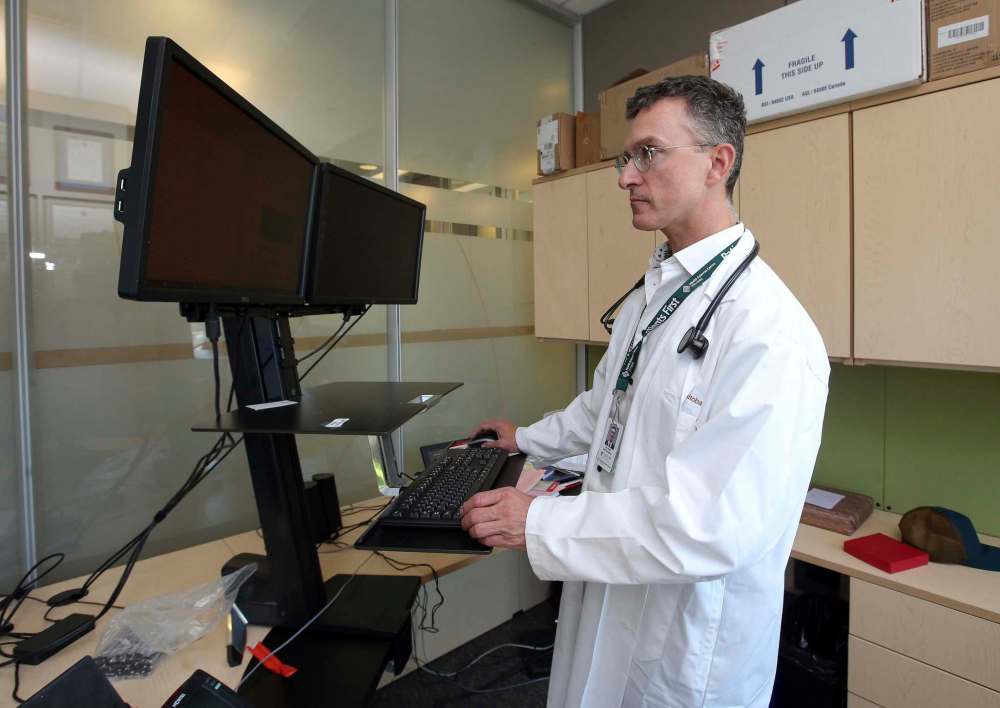
The University of Manitoba’s Dr. Ryan Zarychanski led two of three large trial groups that pooled their data and found out the blood-thinner heparin can safely treat moderately ill COVID-19 patients. By the time the study’s final results were published Wednesday, they had already been put into practice at the U.K.’s National Health Service and were being adopted by doctors in Manitoba and elsewhere.
Manitoba has a “rich history” of science and lab research, and now local researchers are starting to be recognized for their clinical trial expertise, Zarychanski said.

“We do have mounting expertise, and I think these trials have helped to showcase what we have in our province. With that, I expect we’ll attract more physicians to come and train in clinical trial methods.”
The work was completed in a year with a first-of-its-kind level of collaboration: the research had more than 100 authors and involved patients from more than 300 hospitals in nine countries. A large randomized clinical trial such as this one would typically take at least five years, Zarychanski said, and many similar trials are never completed or don’t produce clear results.
“The trials that we’ve conducted, the trials that I’ve led and the methods that we’ve created have really put Manitoba on the map of clinical trials around the world for our ability to lead them and to finish them and to inform practice in general,” Zarychanski said.
He wants to see clinical trials conducted daily as part of regular medical care. He said for too long there’s been a separation between research and everyday health care. The chasm started to close during this pandemic, when health-care workers needed to learn about a new virus as they treated patients, and he hopes the work he’s done will help bridge the gap.
“We’re starting to nibble at the edges of developing a learning health system where research is part of everyday clinical care, but we have a long way to go,” he said.

He and his team have conducted several clinical trials during the pandemic to look into how effective different medications would be in COVID-19 treatment, and their work is ongoing: they’re studying the use of the same blood-thinner, heparin, in non-COVID-19 patients and conducting other research into non-COVID-related pneumonia and on how to reduce bleeding during major surgeries.
Zarychanski said his sense of responsibility to patients and their families kept him motivated, even as he juggled research and working in COVID wards over the past year.
“I feel a sense of responsibility that we can do better, and we have to do better, and we do better by conducting clinical trials. I know we can do better by embedding those clinical trials into clinical care and erasing that chasm that exists between those two entities.”
katie.may@freepress.mb.ca
Twitter: @thatkatiemay
Katie May is a multimedia producer for the Free Press.
Our newsroom depends on a growing audience of readers to power our journalism. If you are not a paid reader, please consider becoming a subscriber.
Our newsroom depends on its audience of readers to power our journalism. Thank you for your support.
Study led by Winnipeg doctor shows blood-thinner can keep COVID-19 patients out of ICU
Posted:
A game-changing global study led by a Winnipeg physician has found that treating some hospitalized COVID-19 patients with blood thinners increases their chance of survival and reduces their need for intensive care.
Katie May is a multimedia producer for the Free Press.
Our newsroom depends on a growing audience of readers to power our journalism. If you are not a paid reader, please consider becoming a subscriber.
Our newsroom depends on its audience of readers to power our journalism. Thank you for your support.
Advertisement Advertise With Us
Advertisement Advertise With Us