New Asian American bakeries find bicultural sweet spot
Advertisement
Read this article for free:
or
Already have an account? Log in here »
To continue reading, please subscribe:

Digital Subscription
One year of digital access for only $205*
- Enjoy unlimited reading on winnipegfreepress.com
- Read the E-Edition, our digital replica newspaper
- Access News Break, our award-winning app
- Play interactive puzzles
*First annual payment billed as $205.00 + GST for one year. This annual subscription will automatically renew at $233.00 + GST every 52 weeks (10% off the regular annual price of $259.35). Offer available to new and qualified returning subscribers only. Cancel any time.
To continue reading, please subscribe:
Add Free Press access to your Brandon Sun subscription for only an additional
$1 for the first 4 weeks*
- Enjoy unlimited reading on winnipegfreepress.com
- Read the E-Edition, our digital replica newspaper
- Access News Break, our award-winning app
- Play interactive puzzles
*Your next Brandon Sun subscription payment will increase by $1.00 and you will be charged $17.95 plus GST for four weeks. After four weeks, your payment will increase to $24.95 plus GST every four weeks.
Read unlimited articles for free today:
or
Already have an account? Log in here »
Hey there, time traveller!
This article was published 25/08/2021 (1848 days ago), so information in it may no longer be current.
OAKLAND, Calif. (AP) — For some Asian Americans, the dim sum cookie at Sunday Bakeshop here will taste like childhood.
It looks like a typical sugar cookie except with sesame seeds on top. But bite into the creamy, red bean center and it’s reminiscent of the fried, filled sesame balls served at a Chinese dim sum restaurant.
The concoction is pastry chef Elaine Lau’s nod to her grandmother, who would often make them. The baked goods that Lau’s team churns out — like hojicha chocolate croissants and Chinese White Rabbit candy cookies — aren’t going to be found in any bakery in Asia. There’s an intrinsic American sensibility at the nearly 3-month-old shop.
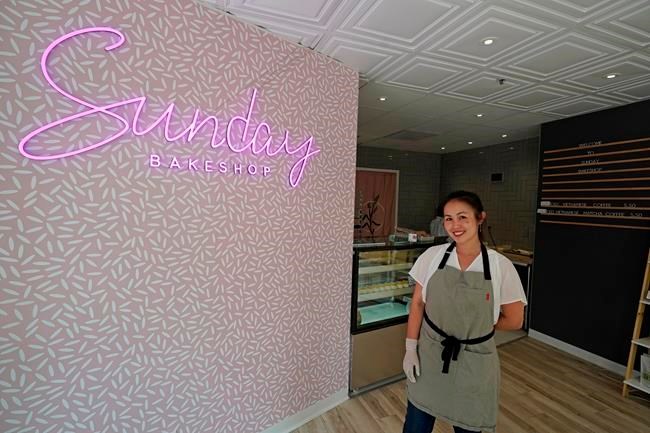
“Talking to some of the Asian Americans and other people that have tried some of our pastries, we get a lot of comments where they’re just like… ‘Oh this took me back several years,’ when they were growing up,” said Lau, 35, who was born in Oakland.
“For us, it’s kind of nice we can evoke some positive memories and feelings with our pastries.”
From ube cakes to mochi muffins, bakeries that sweetly encapsulate growing up Asian and American have been popping up more in recent years. Their confections are a delectable vehicle for young and intrepid Asian Americans to celebrate their dual identity.
Ingredients they found embarrassing as children are being blended with European or “traditional” American pastries into something new. Some of the bakers welcome the chance to dispel culinary and societal misconceptions, especially given months of anti-Asian hate.
The experience of being an immigrant kid in between two very different cultures is what inspired the name and concept behind Third Culture Bakery, a few miles away from Sunday Bakeshop, in Berkeley. Open since 2018, it’s the brainchild of husbands Wenter Shyu, 31, and Sam Butarbutar, 32. Nine months into their courtship, they decided to open a bakery together and expand Butarbutar’s mochi muffin business beyond wholesale and pop-ups. The mochi muffin, still a signature item, is influenced by Butarbutar’s Indonesian roots and made with California-grown mochiko rice flour.
The operation has blossomed, with two locations in Colorado and a second San Francisco Bay Area store planned. Their menu includes mochi brownies and butter mochi doughnuts with glazes like matcha, ube and black sesame.
Shyu said many non-Asian patrons have never been exposed to some of the ingredients.
“It’s a lot of educating. Even when you educate and share where it comes from, people are judging it. It’s a very mixed bag. It’s also very rewarding because then you get to see their reaction trying this new thing they’ve never had in their life,” he said.
Shyu recalls some awkward situations, such as one in May when Third Culture was featured on a Denver TV station as part of Asian American Pacific Islander Heritage Month. The finished segment included “Oriental music” that Shyu, who was born in Taiwan, described as “cringe-y and uncomfortable.”
“I told the news station, if you guys did a piece on Black History Month and added tribal African music, there would be an outrage,” Shyu said. “Somehow for Asian Americans, that’s OK. That’s the exact thing we’re trying to fight against.”
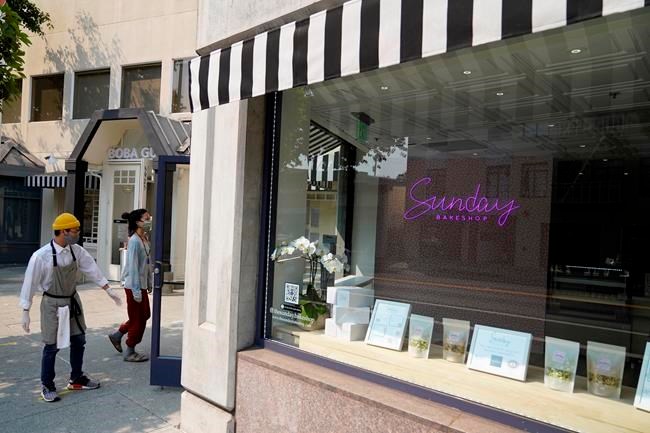
For these bakeries, integrating Asian flavor profiles isn’t a gimmick. It’s what feels natural and authentic, said Deuki Hong, 31, whose Sunday Family Hospitality Group launched Sunday Bakeshop, and who loves Lau’s outside-the-pastry-box thinking.
“When I was running a Korean barbecue, we were known also for corn cheese, a little melty side dish… She took that and was like, ‘I’m gonna make a pastry out of it,’” said Hong, co-author of “Koreatown: A Cookbook.” “Wow, this came from our conversation that was very personal to me and it also tastes really delicious.”
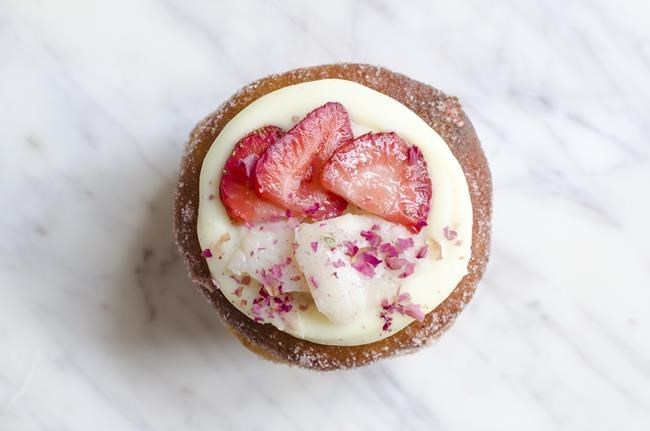
Rose Nguyen, a 34-year-old former nurse, switched careers and opened Rose Ave Bakery inside The Block Foodhall in Washington, D.C., in March 2020, just before a pandemic shutdown. Nguyen was peddling Instagrammable morsels like strawberry lychee rose donuts, ube cake and matcha chocolate cookies. She won over enough foodies to keep going with online orders until fully reopening this June.
Born in Rhode Island to Vietnamese immigrants, Nguyen said it sometimes hurt when, growing up, her white friends thought her food from home was weird or gross. So, it’s gratifying now to showcase Asian flavors unapologetically.
“It was never about trends or satisfying other people,” Nguyen said. “It’s just me, basically. The business goes hand in hand with who I am.”
As fixtures in their neighborhoods, these bakery owners all felt compelled to do something when racist attacks against Asians tied to the COVID-19 pandemic started. Third Culture Bakery raised donations at its locations to pay for and distribute 21,000 safety kits for Asian seniors. Sunday Bakeshop and Rose Ave Bakery have donated pastries and profits to anti-Asian hate organizations.
The bakers felt a disconnect between that hatred and the joyful connection that their food can make across cultures.
“It’s so unfortunate that it’s happening, and still happening, because people say they love Asian food and Asian American food,” Nguyen said. “Yet, they don’t even realize you love the food and don’t love the people.”
Older, traditional Asian bakeries started out as a means of replicating something immigrants missed back in their home country. The new bakeries’ bolder assertion of identity is a natural evolution, said Robert Ji-Song Ku, an Asian American studies professor at Binghamton University and author of “Dubious Gastronomy: The Cultural Politics of Eating Asian in the USA.”
Chefs like Roy Choi and David Chang came to fame in the early 2000s embracing their Korean heritage. But the baking world is still “a real frontier,” Ku said.

“It goes against stereotypes of Asians as math geeks. It’s sort of the artistic side of Asian American identity that’s often ignored,” Ku said. ”They’re instead really trying to fuse things together — create this mixture.”
These first- and second-generation Asian American bakery owners seem passionate about bringing visibility to the Asian American community, which often feels invisible, Ku added.
They’re showing that an ube snickerdoodle or a black sesame muffin is as American as any apple pie.
“There’s nothing wrong with apple pie,” Hong said. “But there’s a lot more interesting things being done… there’s a lot of Asian creators and entrepreneurs, and gradually they’ll be more vocal.”
___ Terry Tang is a member of The Associated Press’ Race and Ethnicity team. Follow her on Twitter at https://twitter.com/ttangAP