

Hydro timeline on First Nations wildfire repairs challenged
Advertisement
Read this article for free:
or
Already have an account? Log in here »
To continue reading, please subscribe:
Monthly Digital Subscription
$1 per week for 24 weeks*
- Enjoy unlimited reading on winnipegfreepress.com
- Read the E-Edition, our digital replica newspaper
- Access News Break, our award-winning app
- Play interactive puzzles
*Billed as $4.00 plus GST every four weeks. After 24 weeks, price increases to the regular rate of $19.95 plus GST every four weeks. Offer available to new and qualified returning subscribers only. Cancel any time.
Monthly Digital Subscription
$4.99/week*
- Enjoy unlimited reading on winnipegfreepress.com
- Read the E-Edition, our digital replica newspaper
- Access News Break, our award-winning app
- Play interactive puzzles
*Billed as $19.95 plus GST every four weeks. Cancel any time.
To continue reading, please subscribe:
Add Free Press access to your Brandon Sun subscription for only an additional
$1 for the first 4 weeks*
*Your next subscription payment will increase by $1.00 and you will be charged $16.99 plus GST for four weeks. After four weeks, your payment will increase to $23.99 plus GST every four weeks.
Read unlimited articles for free today:
or
Already have an account? Log in here »
Hey there, time traveller!
This article was published 03/09/2021 (1672 days ago), so information in it may no longer be current.
Critics charge the province’s meddling in Manitoba Hydro has kept more than 1,500 First Nations evacuees separated from home and sequestered in city hotels for weeks longer than necessary.
On Friday, the Manitoba NDP and the International Brotherhood of Electrical Workers accused the Tory government of failing to make getting community members home a priority.
Little Grand Rapids and Pauingassi First Nations were evacuated by July 20, due to wildfire smoke.
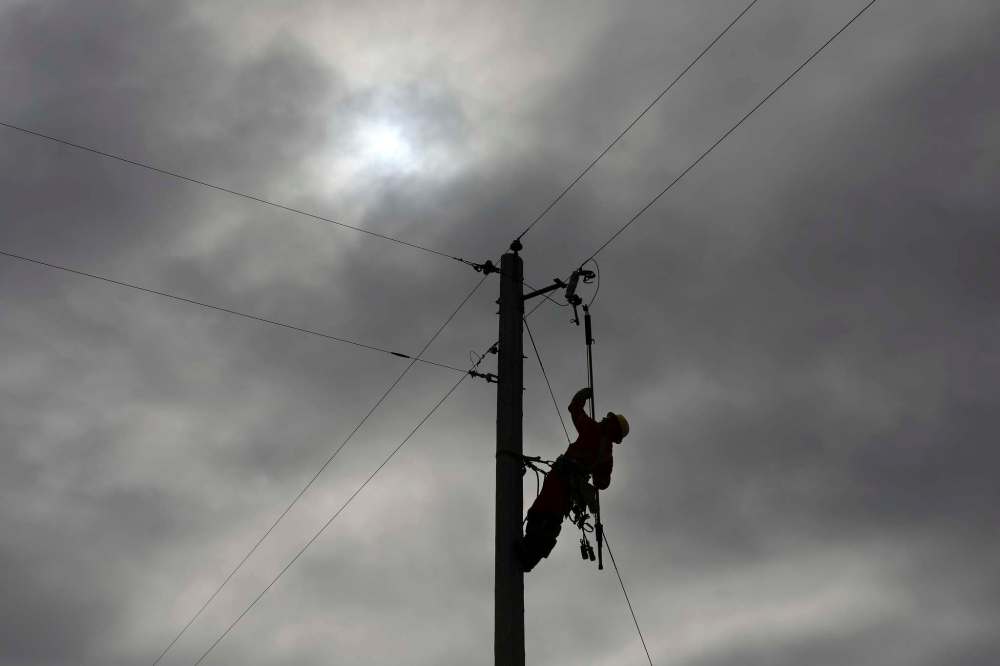
On July 21, fires damaged the first of an eventual 105 hydro poles, which cut off electricity to the fly-in communities. Power has still not been restored.
On Aug. 23, Hydro said restoration work would begin that day and last a further six to eight weeks.
However, NDP MLA Ian Bushie (Keewatinook), NDP Hydro critic Adrien Sala (St. James) and IBEW Local 2034 business manager Mike Espenell said the Crown corporation has the ability to complete the work in two weeks.
They accused the province of contracting the work to Valard Construction, a U.S.-owned company, to reduce costs at the expense of speed and efficiency.
“I think it comes down to, ultimately, Hydro trying to do things on the cheap and not being able to allocate the resources to an area that’s critical,” said Bushie, whose riding contains the two impacted First Nations.
The trio pointed to the October 2019 ice storm, which left thousands in southern Manitoba without power, as an example. Hydro reported 4,000 damaged poles and restored service within 15 days.
The dissonance between that event and the six to eight weeks quoted to the First Nations communities has evacuees fuming, Bushie said.
“They’re frustrated — frustrated and angry — that this work takes too long,” he said. “They have the mentality that if this was happening in the southeast or southwest corner of Manitoba, we wouldn’t be having this discussion. They would have service set up immediately… and it would be all hands on deck.”
The energy utility understands the frustration, but it’s working as fast as it can, said Manitoba Hydro spokesman Bruce Owen.
“Given the lack of road access, much of the work replacing fire-damaged poles must be done by helicopter, and there will be times when the helicopter cannot fly safely because of weather conditions, such as lightning or low clouds,” he said in an email.
“We are also working in challenging Canadian Shield terrain, where many of the replacement poles must be set in rock. This type of work requires specialized drilling equipment.”
Crown Services Minister Jeff Wharton said his PC government has been communicating with Assembly of Manitoba Chiefs Grand Chief Arlen Dumas and Manitoba Keewatinowi Okimakanak Grand Chief Garrison Settee about the progress.
He echoed the difficulties of working in more northern terrains and dismissed the comments from Bushie and Sala.
“For the NDP to equate this situation to the 2019 ice storm is disingenuous, and they know that,” Wharton said in an email.
The claims rang false for Espenell, who said his work has put him in contact with Manitoba Hydro for 26 years. IBEW 2034 represents 2,300 Hydro workers.

“I can say wholeheartedly that responding to something like this is very, very much in our wheelhouse,” he said. “We could delay other projects and get this done… There’s no doubt in my mind. And two weeks, I think, is a pretty conservative estimate to restore that amount of infrastructure.”
Espenell said he believes the situation will damage relationships between Hydro and First Nations.
Canadian Red Cross spokesman Jason Small said the relief organization is currently supporting 1,040 evacuees from Little Grand Rapids and 500 from Pauingassi.
Manitoba Hydro said, as of Thursday evening, 28 of impacted 105 poles had been replaced.
cody.sellar@freepress.mb.ca