Extremism, stagnation hastening our potential downfall

Advertisement

Advertise with us

For the past two years, the so-called “Doomsday Clock” created in 1947 by the Bulletin of the Atomic Scientists has been set at 100 seconds to midnight, its symbolic hands portending a fiery nuclear catastrophe and the end of the world.

Read this article for free:


By clicking the button above, an account will be created and you will begin to receive some of our recommended newsletters. You may opt out of any newsletter by visiting your Email and Communication Preferences page or by clicking "unsubscribe" at the bottom of any email.

or

Already have an account? Log in here »

To continue reading, please subscribe:

Digital Subscription

One year of digital access for only $1.44 a week*

  • Enjoy unlimited reading on winnipegfreepress.com
  • Read the E-Edition, our digital replica newspaper
  • Access News Break, our award-winning app
  • Play interactive puzzles

*Billed as $5.77 plus GST every four weeks. After 52 weeks, price increases to the regular rate of $19.95 plus GST every four weeks. Offer available to new and qualified returning subscribers only. Cancel any time.

To continue reading, please subscribe:

Add Free Press access to your Brandon Sun subscription for only an additional

$1 for the first 4 weeks*

  • Enjoy unlimited reading on winnipegfreepress.com
  • Read the E-Edition, our digital replica newspaper
  • Access News Break, our award-winning app
  • Play interactive puzzles
Start now

*Your next Brandon Sun subscription payment will increase by $1.00 and you will be charged $17.95 plus GST for four weeks. After four weeks, your payment will increase to $24.95 plus GST every four weeks.

Hey there, time traveller!
This article was published 18/09/2021 (1862 days ago), so information in it may no longer be current.

For the past two years, the so-called “Doomsday Clock” created in 1947 by the Bulletin of the Atomic Scientists has been set at 100 seconds to midnight, its symbolic hands portending a fiery nuclear catastrophe and the end of the world.

In his provocative and cogently-argued new book On Decline, Canadian political philosopher and former journalist Andrew Potter sees a very different version of the apocalypse: a long, drawn out and dismal scenario in which governments and other institutions simply cease to function effectively in the face of increasingly grave crises. For Potter, our long-held collective assumptions about social and economic progress, democracy, reason, science and technology are all being overturned, to be replaced by stagnation, irrationality and extremism.

On Decline is just the latest in a series of slim and timely titles in the “Field Notes” series from Windsor-based publisher Biblioasis. Much like the freely distributed pamphlets of previous centuries, intended to stimulate public debate and promote political change, the series has tackled topics in the public interest including social and political risk, property and its relationship with policing and the origins of the COVID-19 pandemic.

Accordingly, Potter’s book concentrates on presenting a concise political argument. He first establishes that much of our technological progress since the Industrial Revolution depended on resources that were readily available but are now depleting rapidly, and now our politics are floundering as climate change presents a mortal threat to our civilization. Far from realizing the widely anticipated future of jetpacks and flying cars, our era has seen the pace of technological progress stall not so much because we are bumping into the limits of our knowledge but, Potter argues, as the result of strangulating politics combined with a lack of co-operation and the will to achieve broad social goals.

Potter holds both the far right and far left responsible at least in part for these conditions, noting with surprise how the political spectrum has reversed polarity: the “woke” left has become so obsessed with enforcing conformity by policing language and behaviour (he refers to them as the “ctrl-left”) that the countercultural mantle of rebellion has been assumed by the nihilistic alt-right.

Our obsession with the politics of identity, Potter argues, is a luxury born of not needing to devote so much of our psychological and social energy towards actual survival, allowing us to instead seek status through our beliefs and associations. The social dimensions of consumerist status-seeking is a theme Potter has touched on in his previous books, The Rebel Sell (with Joseph Heath, 2004) and The Authenticity Hoax (2010), but here he makes plain that the consequences of the resulting social fragmentation could be terminal.

Potter explains that our instinctive, emotional reactions which served us well when we were foragers and hunters living in dangerous environments — to which we needed to respond quickly in order to stay alive — are now being exploited by social media companies to short-circuit and supersede our higher-level and longer-term reasoning skills, and at a time when they are needed most. All of these forces Potter sees converging over the past two years in the global catastrophe of the COVID-19 pandemic, and the serial institutional failures experienced in so many advanced democracies to adequately respond to the emergency.

In his closing pages, Potter offers some measures of hope that we can throw off our illusions, abandon our tribalism and re-embrace democratic ideals in time to adopt clean energy technologies and reduce the impacts of climate change. The alternative, he warns, is irreversible and global decline.

Like its historic ancestors, On Decline deserves a wide general audience and should be required reading for the incoming federal government.

Michael Dudley is a librarian at the University of Winnipeg.
Report Error Submit a Tip

More Stories

Reynolds exerts ‘maximum effort’ to boost Winnipeg after quick meet with mayor

Gabrielle Piché 3 minute read Preview

Reynolds exerts ‘maximum effort’ to boost Winnipeg after quick meet with mayor

Gabrielle Piché 3 minute read Updated: Yesterday at 8:13 PM CDT

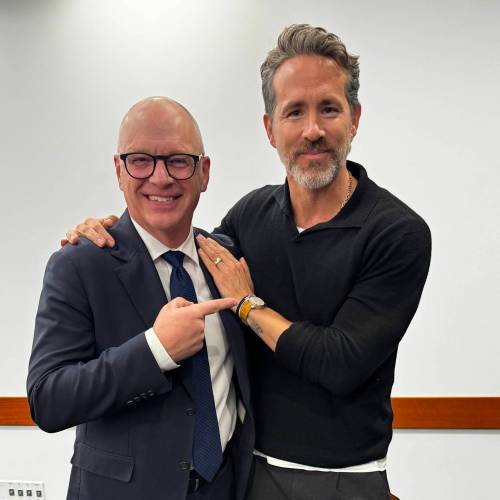
Ryan Reynolds wasn’t wearing his Deadpool suit, but that didn’t stop Mayor Scott Gillingham from wanting to talk about films with the Vancouver-born Hollywood movie star.

Reynolds, who appeared at IG Wealth Management's 100th anniversary celebration Wednesday at the RBC Convention Centre, took to social media afterward, sharing a photo of himself with Gillingham and trumpeting the province’s tax incentives.

“An incredible place to shoot,” the Instagram post read.

On Thursday, Gillingham said the actor, best known for portraying an irreverent, erratic anti-hero on the big screen, is a “really nice gentleman.”

Read
Updated: Yesterday at 8:13 PM CDT

Colman radiant in well-woven romance

Alison Gillmor 4 minute read Preview

Colman radiant in well-woven romance

Alison Gillmor 4 minute read 5:34 PM CDT

There have been wicker-related films before. The Wicker Man from 1973 is a classic of folk horror. This bawdy, rowdy outing is more of a folk sex-comedy.

Adapted from a story by Ursula Wills by filmmakers Eleanor Wilson and Alex Huston Fischer, Wicker is sometimes overly obvious in its satirical messaging. But like the wicker creation at its centre, Wilson and Fischer’s unexpected world is nicely crafted, the wonderful Olivia Colman weaving it all together with radiant, raunchy directness and real vulnerability.

In this feminist fable, set in some vague, peasanty time and place, Colman plays the ostracized, isolated Fisherwoman. Fisherwoman is either ignored or bullied by her fellow villagers, and in a community where the women are known as “Innkeeper’s Wife” or “Doctor’s Daughter,” perhaps the worst insult hurled at her is “Spinster.”

After a magical omen is dropped by her feet at a village wedding, Fisherwoman goes to the Basketmaker (Peter Dinklage), who has his own reasons for living alone at the edge of town, and orders up a husband.

Read
5:34 PM CDT

Chief medical officer quits, cites work environment ‘challenges’

Chris Kitching 6 minute read Preview

Chief medical officer quits, cites work environment ‘challenges’

Chris Kitching 6 minute read Yesterday at 5:47 PM CDT

Manitoba’s provincial chief medical officer is resigning from his position at Shared Health, citing the role’s demands and work environment challenges in an email viewed by the Free Press.

Dr. José François, who’s held the executive position since April 2024, sent an email to provincial medical specialty leads that said his final day will be Jan. 17, 2027, after he submitted his resignation Wednesday. Several other senior leaders have departed the provincial health authority in recent months.

“Serving in this role has been a privilege,” François, a longtime family physician from Ste. Anne, wrote in the email.

He said his “greatest pleasure” was working alongside and supporting an “exceptional group” of provincial medical specialty leads and chief medical officers.

Read
Yesterday at 5:47 PM CDT

Is Osborne a street or a road? ‘Stroad’ status fails everyone

Mel Marginet 6 minute read Preview

Is Osborne a street or a road? ‘Stroad’ status fails everyone

Mel Marginet 6 minute read Yesterday at 2:00 AM CDT

Last month, the City of Winnipeg said it would soon begin to study ways to improve pedestrian and cyclist safety along Osborne Street, which runs between two of the city’s densest neighbourhoods, where residents walk and bike for many of their daily activities.

Read
Yesterday at 2:00 AM CDT

Mayor Gillingham poised for repeat

Chris Kitching 7 minute read Preview

Mayor Gillingham poised for repeat

Chris Kitching 7 minute read Updated: 8:29 PM CDT

Incumbent mayoral candidate Scott Gillingham remains in the lead among decided voters in a new poll that suggests a majority of Winnipeggers want change ahead of Wednesday’s election.

Gillingham was backed by 36 per cent of decided voters in an Abacus Data survey released Friday, followed by candidates Kevin Klein (19 per cent) and Mike Vogiatzakis and a surging Noah Redden, who were tied for third (both at 14 per cent).

While a majority of respondents expressed a desire for a new mayor, Curtis Brown, a vice-president with Abacus, said “none of the other candidates has convincingly made the case that they represent the best change.”

“In the absence of that, Scott Gillingham definitely has the advantage. He looks likely to be able to win,” Brown said.

Read
Updated: 8:29 PM CDT

Northern reflections: Churchill expansion debated at U of M forum

Eva Wasney 6 minute read Preview

Northern reflections: Churchill expansion debated at U of M forum

Eva Wasney 6 minute read 6:40 PM CDT

A group of about 50 students, residents and environmental advocates gathered in Winnipeg on Friday to discuss Indigenous sovereignty and the future of northern Manitoba.

The event at the University of Manitoba was the final stop on the Arctic Crossroads Tour, an Indigenous-led public engagement campaign highlighting the potential impacts of proposed major infrastructure projects on northern First Nation communities. The tour also stopped in Churchill, Nisichawayasihk Cree Nation and Brandon this week.

Event host Clayton Thomas-Müller — a climate activist, author and member of Pukatawagan Cree Nation — said concerns raised by attendees run counter to Premier Wab Kinew’s assertion earlier this year that there is no Indigenous opposition to a proposed liquefied natural gas (LNG) pipeline to Churchill.

“There is a ton of Indigenous concern, as well as fear to speak out,” Thomas-Müller, the Arctic and Hudson Bay campaigner for Climate Reality Project Canada, said in an interview.

Read
6:40 PM CDT