

Looking for Nessie; finding our roots
A hike along Loch Ness is worthwhile even without any monsters
Advertisement
Read this article for free:
or
Already have an account? Log in here »
To continue reading, please subscribe:
Monthly Digital Subscription
$1 per week for 24 weeks*
- Enjoy unlimited reading on winnipegfreepress.com
- Read the E-Edition, our digital replica newspaper
- Access News Break, our award-winning app
- Play interactive puzzles
*Billed as $4.00 plus GST every four weeks. After 24 weeks, price increases to the regular rate of $19.95 plus GST every four weeks. Offer available to new and qualified returning subscribers only. Cancel any time.
Monthly Digital Subscription
$4.99/week*
- Enjoy unlimited reading on winnipegfreepress.com
- Read the E-Edition, our digital replica newspaper
- Access News Break, our award-winning app
- Play interactive puzzles
*Billed as $19.95 plus GST every four weeks. Cancel any time.
To continue reading, please subscribe:
Add Free Press access to your Brandon Sun subscription for only an additional
$1 for the first 4 weeks*
*Your next subscription payment will increase by $1.00 and you will be charged $16.99 plus GST for four weeks. After four weeks, your payment will increase to $23.99 plus GST every four weeks.
Read unlimited articles for free today:
or
Already have an account? Log in here »
Hey there, time traveller!
This article was published 05/09/2009 (6053 days ago), so information in it may no longer be current.
Before my wife and I left to hike the Scottish Highlands’ Great Glen Way, which includes the entire 37 kilometres of Loch Ness, my mother had one piece of advice: “Bring your camera — you never know, yours could be the photo that makes a million dollars.”
Forget that, I said. If I get proof of Nessie, I’m holding out for tens of millions. With that one piece of advice (well, two if you count "stay dry"), we left for Scotland.
We walked Ness. We kept our eyes and digital lenses peeled. We loved every second we spent in the Highlands, but no prehistoric beasts. I wasn’t really surprised.
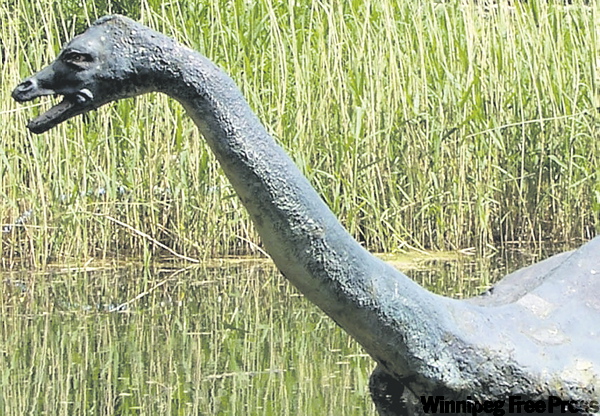
Not a week goes by after our return, and the headline of the Inverness Courier reads: Nessie Pops Up To Say ‘Allo.’
Dammit.
The cast of a stage play was taking in a cruise on the northeast section of Loch Ness when it happened: five large Nessie-shaped sonar images were spotted. The ship’s captain says he hasn’t seen anything like it in 15 years, and a local Loch Ness expert says he can’t explain it.
Double dammit. There go my tens of millions.
I had long yearned to visit Scotland. Being of Highland stock, I specifically wanted to see the Highlands. Those with my last name (Kay) are a sept, or member group, of a larger clan, Davidson.
Both the Davidsons and my wife’s clan (McIntosh) come from the same part of the Highlands; in fact, the Davidsons were more or less subservient to the McIntoshes in the Clan Chattan confederation, a fact she reminds me of with undue glee. (For the record, I come from a small sept of a junior clan in a larger alliance. Genealogy can be humbling.)
At the risk of oversimplifying 1,500 years of Highland history, both the Davidson and McIntosh clans come from lands near Inverness.
Inverness, today the "capital of the Highlands" is a gorgeous city of some 30,000. The name hints at its history, coming from the Gaelic Inbhir Nis, or "mouth of the river Ness," which flows from the more famous loch out to the North Sea. So, Loch Ness is something of a family thing. You’ll have to indulge my Fox Mulder-esque interest in it.
For the record, I wasn’t expecting to see Nessie. (I say this in the same tone as "yes, I know wrestling is staged.") I don’t believe "Nessie" exists at all — that is, there’s no plesiosaur. For that matter, neither do most of the experts who live and work around the lake.
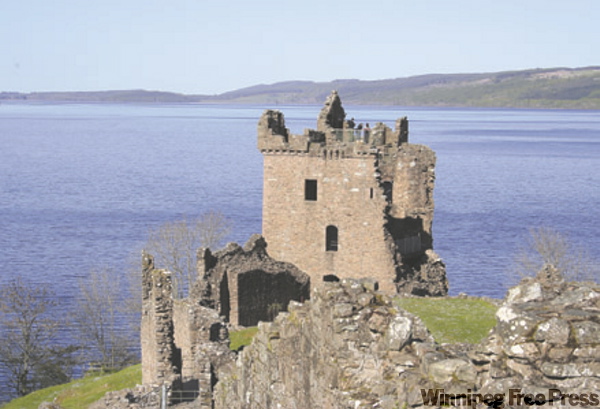
But even the most sober and serious of those experts readily concede something is there, almost indisputably. There’s more than enough eyewitness accounts of something to convince a jury, going all the way back to St. Columba driving away a "river monster" from the River Ness in 565 AD.
When we took a boat cruise from Drumnadrochit (site of legendary Urquhart Castle) to Foyers on the opposite side, we had a chance to speak with John Minshull, skipper and engineer with The Loch Ness Project.
He works closely with Adrian Shine, who founded the Project in 1973, and has been studying Ness ever since.
According to Minshull, there’s something big in the lake — big, but familiar.
"Fish," says Minshull, "grew to enormous lengths in the loch — up to two metres."
"That’s big enough even today, but imagine yourself in a local fishing boat, a thousand years ago, or much more recently… the boats were only 1.5 metres long."
Further, Atlantic sturgeon, now almost extinct, used to be seen in the area. They can grow over three metres long — and look decidedly monstrous.
"Anything bigger than your boat is a monster."
Minshull said there are reasons Loch Ness attracts so much attention — it’s a genuinely unique place, completely worthy of continued study. For example, boat wakes don’t dissipate. Many an "unexplained ripple" is left from slow-moving boats that passed even an hour ago.
Also, the sheer volume of water in the loch (more fresh water than every other source in England and Wales combined) means its temperature changes very slowly, creating distortions of perception and mirages. Further, inanimate objects have been demonstrated to "swim" against the wind, propelled by underwater seiches — miniature tsunamis created by sudden, 40-metre drops in the thermocline.
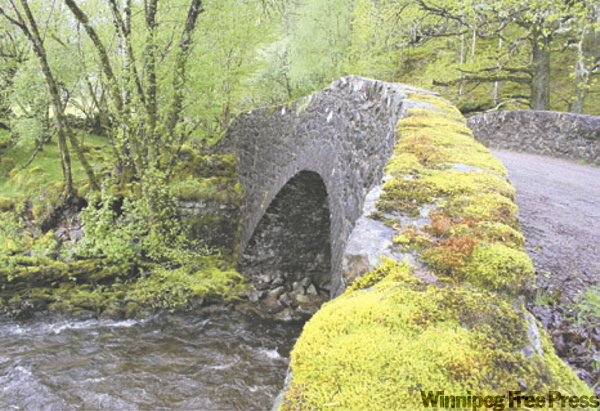
Dinosaur or no, the loch is a unique and fascinating place.
The monster hunter
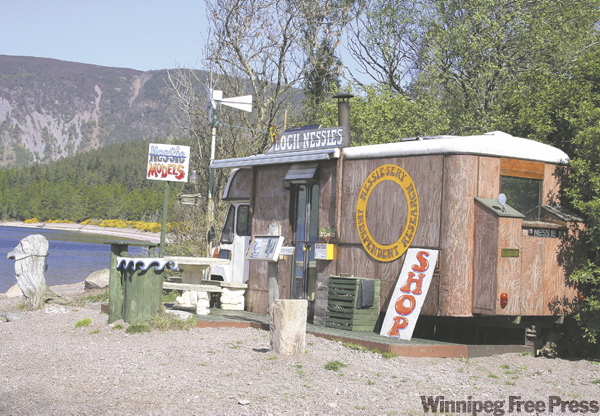
Steve Feltham is something of an icon in the U.K. He quit his job 20 years ago to live in a camper and devote all his energies to watching for Nessie. He subsists entirely on donations and selling hand-painted Nessie models, all of which look like cartoon plesiosaurs.
You might expect the iconoclast to preach conspiracy and insist there’s a genuine dinosaur in the loch — but you’d be wrong.
"I think it’s catfish," he says calmly, smirking at my obvious disappointment, "it’s most definitely not a plesiosaur."
He’s been asked this question a thousand times, and doesn’t take the assumption that he’s a loon personally.
Feltham points out that St. Columba aside, sightings only started sporadically in the 1850s, but the craze didn’t really start until 1934.
That’s a huge gap, and Feltham thinks he knows why.
"We have proof the Victorians stocked the lochs with them for sport — we don’t know if Ness was included, but there’s no reason to assume it wasn’t."
Catfish, or Wels, can grow up to a decidedly monstrous three metres. It would also explain the numerous sightings of several "monsters" at once.
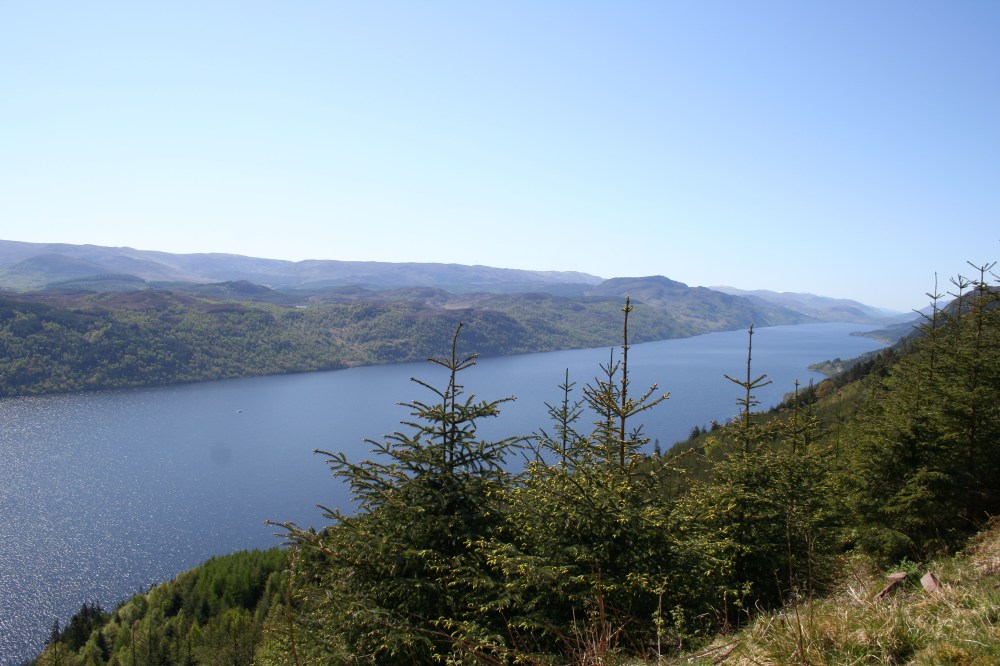
For the record, Feltham has only seen one unexplainable thing in his 20 years — a "torpedo-like" thing darting through the water not far from the shore at Dores, on the north end of the loch.
"People tell me, ‘you’ve seen (Nessie), but stay quiet because it doesn’t look like your models,’" he laughs.
"The truth is no less interesting, if less fantastic."
Whether it turns out to be plesiosaur, catfish, sturgeon, or mass hysteria — Loch Ness is both fascinating and gorgeous. It took three full days to walk the length of it, from Fort Augustus to Dores, and while we didn’t see Nessie, Ness itself is more than enough to look at.
And who knows, if Nessie does turn out to be catfish, it really will be a family affair for my wife and I — the motto of the Clan Chattan confederation is "touch not the cat without a glove."
Gloves are a good idea. Those catfish are monstrous.
— Canwest News Service
IF YOU GO
– Canadian Affair ( canadianaffair.com) and Fly Globe Span have direct flights between Calgary and Glasgow. From Glasgow, Fort William is 3.5 hours away by ScotRail. – There are a number of tour companies that arrange accommodation at spots along the Great Glen Way, including Bespoke Highland Tours ( http://www.highland-tours.co.uk/).Bespoke also arranges baggage transfer services, so you don’t need to lug everything on your back–but you’ll definitely want a day pack. – As there are next-to-no facilities between stops, most B&Bs offer a pack lunch service. At the smaller villages (Invergarry and Dores in particular) there are precious few choices aside from the local inns –but contrary to stereotypes, Scottish cuisine is renowned for game and fresh produce.
– Our Great Glen Way Itinerary: Fort William to Spean Bridge, 17 km; Spean Bridge to Invergarry, 19 km; Invergarry to Fort Augustus, 17 km; Fort Augustus to Invermoriston, 13 km; Invermoriston to Drumnadrochit, 22 km; Foyers to Dores, 19 km (cruise across Loch ness from Drum.); Dores to Inverness, 16 km.