Saltier language in church? Some swear by it

Advertisement
Read this article for free:
or
Already have an account? Log in here »
To continue reading, please subscribe:

Digital Subscription
One year of digital access for only $205*
- Enjoy unlimited reading on winnipegfreepress.com
- Read the E-Edition, our digital replica newspaper
- Access News Break, our award-winning app
- Play interactive puzzles
*First annual payment billed as $205.00 + GST for one year. This annual subscription will automatically renew at $233.00 + GST every 52 weeks (10% off the regular annual price of $259.35). Offer available to new and qualified returning subscribers only. Cancel any time.
To continue reading, please subscribe:
Add Free Press access to your Brandon Sun subscription for only an additional
$1 for the first 4 weeks*
- Enjoy unlimited reading on winnipegfreepress.com
- Read the E-Edition, our digital replica newspaper
- Access News Break, our award-winning app
- Play interactive puzzles
*Your next Brandon Sun subscription payment will increase by $1.00 and you will be charged $17.95 plus GST for four weeks. After four weeks, your payment will increase to $24.95 plus GST every four weeks.
Read unlimited articles for free today:
or
Already have an account? Log in here »
Hey there, time traveller!
This article was published 02/10/2021 (1809 days ago), so information in it may no longer be current.
When asked to summarize the Christian gospel in one sentence, Will Campbell, a self-proclaimed prickly, “bootleg preacher” from Mississippi, put it this way: “We are all bastards, but God loves us anyway.”
American Methodist preacher and theologian Stanley Hauerwas is known for his earthy way of communicating about the faith. “Without cross and resurrection, life is just s—” he said, along with “Jesus is Lord and everything else is bulls—.”
In a prayer that went viral last year during the pandemic, when everything seemed like it was going off the rails, American Lutheran minister Nadia Bolz-Weber started off by saying: “It’s a s—show down here, Lord.”
And last month Knox United Church in Calgary put up a sign outside the building inviting people inside for fellowship and coffee. “Yes! There is coffee inside the church. No, it’s not sh—y church coffee,” the sign said.
Reading those things, come readers may be offended. Such inappropriate language for Christians!
But not Allan Rudy-Froese. He not only thinks its OK, he thinks Christians need to talk more about swearing — and maybe even feel free to swear when and where it’s appropriate.
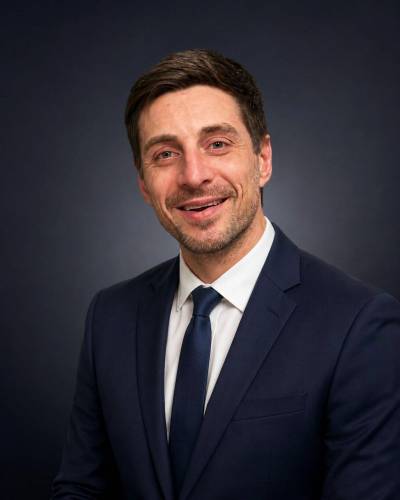
Rudy-Froese, 57, teaches preaching at Anabaptist Mennonite Biblical Seminary in Elkhart, Indiana. Growing up in a Mennonite home in Saskatchewan where swearing was not permitted, he still remembers the first time he swore in the house — a new word he had learned, although he didn’t know what it meant.
“I got a spanking,” he recalls, noting the reaction indicated certain words were powerful and mysterious.
Later, in a Christian high school class a teacher asked the students to say all the swear words they knew.
After the initial shock and titillation of saying the words out loud, the experience “demystified those words, took away their power,” he says.
Now, as a professor at a seminary and former pastor, Rudy-Froese wonders if its time for pastors to offer guidance to their congregations when it comes to swearing.
“There’s been an explosion of swearing in movies, books, music, plays, everywhere,” he says. “It’s all around us.”
Swearing falls into different categories, he says. One is sacred, using the name of God or Jesus or some other religious term. In Canada, this is especially true in Quebec where the strongest swear words are religious in nature such as “tabarnak” (the tabernacle), “câlice” (chalice), and “ciboire” (the ciborium, a container for the consecrated bread).
Another category for swearing involves body parts and is usually sexual in nature. Often these words are connected to sexism and misogyny, or view bodies in a negative light, he says.
“There are so many negative words about bodies,” Rudy-Froese says, wondering if this is because people over the centuries have been taught to view the earthly body as inferior to the spiritual body after death.
While not advocating a liberal adoption of swearing, he wonders if Christians today might benefit from having a more positive approach to that kind of language.
Swearing, he says, can show honesty, frankness and authenticity, although if used too much it “can become cheap.”
Plus, he notes, science says swearing can be good for us.
“It can be cathartic,” he says. “Sometimes it just feels good to swear. It can help us let go of tension in the body.”
For example, studies have shown that profanity improves pain tolerance and improves stamina. In one study people on bikes who swore while pedalling against resistance had more power and strength than people who used “neutral” words. Another study suggested if you hit your finger with a hammer, you may well feel less pain if you say “s—” instead of “shoot.”
So should pastors give congregants a break when it comes to swearing? Maybe. After all, as Rudy-Froese points out, many people already do it, especially younger people, for whom swearing is not as taboo as it was for older generations.
And should clergy swear themselves? “If a pastor can say s—, maybe that helps people see him or her as human, not on a pedestal,” he says, remember his own experiences as a pastor when someone swore in his presence.
“They would immediately apologize,” he says. “I’d tell them not to worry, to set them at ease.”
Rudy-Froese cautions he’s not advocating swearing in the pulpit for swearing’s sake; that can come across like the preacher is trying to be “too cool.” But it could be appropriate in the right context and if the preacher knows the congregation.
“You wouldn’t want to do it just to offend,” he says.
In the end, he just wants to get a discussion going about swearing, and stop pretending Christians don’t swear.
In fact, he’s working on a book on that subject now. Working title: A Guide to Swearing for the Badass Faithful.
“It’s not a good title at all, but I have to start somewhere,” he says.
faith@freepress.mb.ca
The Free Press is committed to covering faith in Manitoba through our Religion in the News project. This reporting continues because readers like you step forward to fund it.
Donate now to support our reporting on religion.
Your donation is eligible for a charitable tax receipt.
BECOME A FAITH JOURNALISM SUPPORTER
Our newsroom depends on a growing audience of readers to power our journalism. If you are not a paid reader, please consider becoming a subscriber.
Our newsroom depends on its audience of readers to power our journalism. Thank you for your support.
The Free Press is committed to covering faith in Manitoba through our Religion in the News project. This reporting continues because readers like you step forward to fund it.
Donate now to support our reporting on religion.
Your donation is eligible for a charitable tax receipt.
BECOME A FAITH JOURNALISM SUPPORTER
Our newsroom depends on a growing audience of readers to power our journalism. If you are not a paid reader, please consider becoming a subscriber.
Our newsroom depends on its audience of readers to power our journalism. Thank you for your support.
Advertisement Advertise With Us
Advertisement Advertise With Us
History
Updated on Saturday, October 2, 2021 5:14 PM CDT: Changes name of Associated Mennonite Biblical Seminary to Anabaptist Mennonite Biblical Seminary
The Free Press acknowledges the financial support it receives from members of the city’s faith community, which makes our coverage of religion possible.