Why a top notch air exchanger is way more effective than Plexiglas when it comes to good ventilation
Advertisement
Read this article for free:
or
Already have an account? Log in here »
To continue reading, please subscribe:
Digital Subscription
One year of digital access for only $1.44 a week*
- Enjoy unlimited reading on winnipegfreepress.com
- Read the E-Edition, our digital replica newspaper
- Access News Break, our award-winning app
- Play interactive puzzles
*Billed as $5.77 plus GST every four weeks. After 52 weeks, price increases to the regular rate of $19.95 plus GST every four weeks. Offer available to new and qualified returning subscribers only. Cancel any time.
To continue reading, please subscribe:
Add Free Press access to your Brandon Sun subscription for only an additional
$1 for the first 4 weeks*
- Enjoy unlimited reading on winnipegfreepress.com
- Read the E-Edition, our digital replica newspaper
- Access News Break, our award-winning app
- Play interactive puzzles
*Your next Brandon Sun subscription payment will increase by $1.00 and you will be charged $17.95 plus GST for four weeks. After four weeks, your payment will increase to $24.95 plus GST every four weeks.
Read unlimited articles for free today:
or
Already have an account? Log in here »
Hey there, time traveller!
This article was published 11/10/2021 (1832 days ago), so information in it may no longer be current.
At this stage of reopening, many Torontonians are obviously thrilled they finally have the chance to get back to the gym, yoga studio, local bar, and other bricks and mortar spaces.
And then there are the rest. After over a year of avoiding the indoors except for necessities, it still just feels a little weird to some to lower your mask inside, whether it’s on the treadmill or at the bar.
It might be easier if each business had a little poster in its window with some sort of ventilation rating. Since that doesn’t exist, though, it’s on us to ask business owners (in the nicest way possible, of course) if their HVAC (heating, ventilation and air conditioning) is up to code. And up to COVID-19.
What questions should we be asking, though? And what’s a good answer?
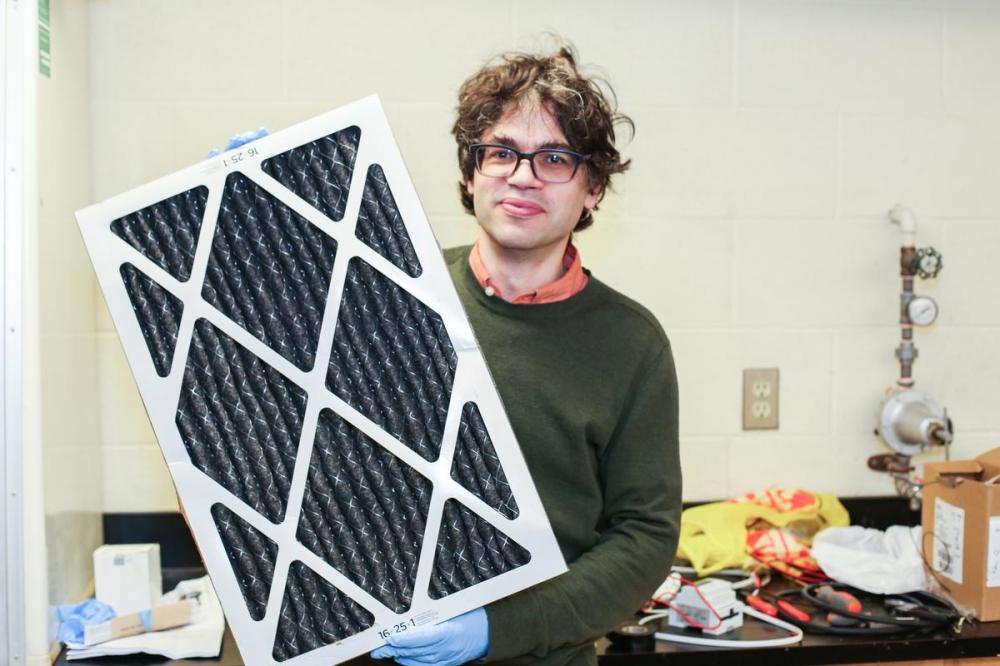
“It can be complicated, since it’s often a very building-specific or space-specific solution,” said Jeffrey Siegel, professor of civil engineering at the University of Toronto. “But anytime you ask ‘What’s up with the ventilation?’ you tend to quickly find out how engaged the person making that decision is about the whole thing.
“I’ve talked with, at this point, hundreds of organizations of all kinds, from companies to people running homeless shelters to restaurants, and I would say the single biggest factor that determines how successful an organization is in preventing COVID transmission at their facility is how open and transparent it is about communicating what’s going on,” he added.
I went to social media to ask my friends, many of whom are in the restaurant industry, if they wanted to talk about their ventilation odyssey. The owner of my local, Civil Liberties, actually called me at home to tell me about his HVAC, which was upgraded before the pandemic so he could apply for a greater capacity limit.
“We had to buy this massive $14,000 air exchanger,” recalled Nick Kennedy, “And when it got there — before it was installed, which involves putting a big hole in the wall — it was sitting in the kitchen, and we all looked at it and thought it was way more than we needed. It exchanged all the air in the bar every 11 minutes or something like that. And then COVID happened and we were totally good to go. We didn’t have to do anything to our ventilation system at all.”
High quality air exchangers, as the name indicates, exchange all the air in a building a certain number of times per hour, measured as ACH (air changed per hour). A new (preprint, not peer-reviewed) study from the University of Oregon tested out different systems on subjects infected with COVID-19 and found that HEPA (high efficiency particulate air) filters reduced the aerosol viral load significantly and that increasing the ACH from three to nine would substantially reduce aerosol load.
So Kennedy passed the test with flying colours. He’s definitely happy to communicate, open and totally engaged. He also passed another of Siegel’s tests, since he never installed any Plexiglas dividers. Wait, what? Isn’t Plexiglas a good thing?
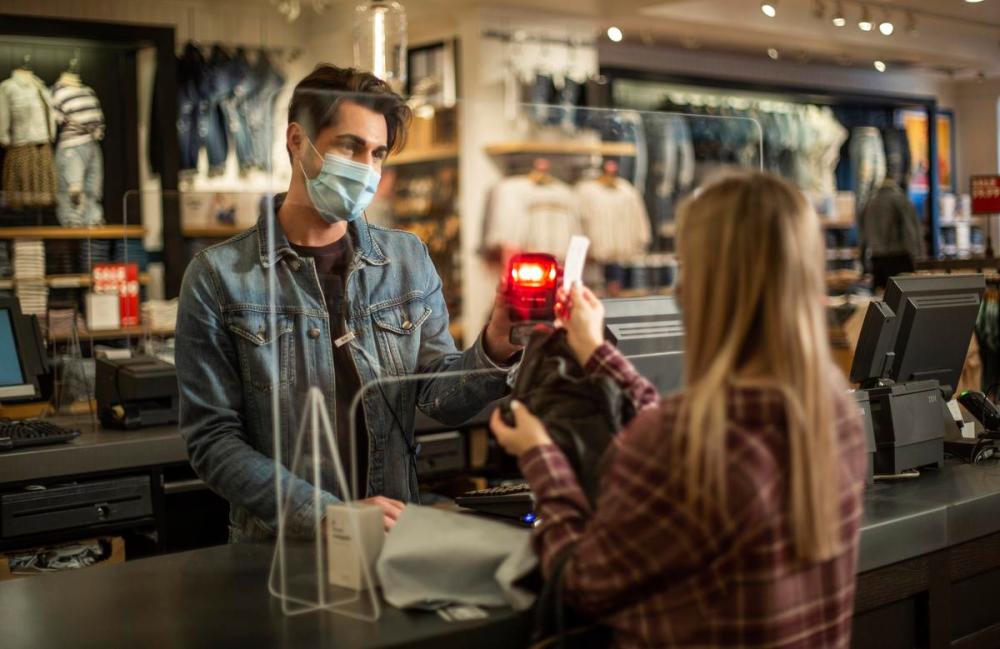
“I do feel a little bit funny pointing this out, since people often do things with great intentions, but Plexiglas barriers do not work and, in some cases, barriers can increase transmission of the disease because they can block air flow,” explained Siegel. “If someone asks me if they should put in barriers I say flat out no and then show them the evidence as to why you shouldn’t.”
Siegel adds that the evidence may change (that’s just science) and Plexiglas barriers may, one day, prove to be a useful public health measure since they help with distancing — a physical reminder to patrons that they shouldn’t get too friendly.
For now, though, Plexiglas is an indication to Siegel that the decision-maker isn’t following the evidence. Another bad ventilation “tell” is investing in a fancy-sounding, but unproven, air filter.
“There are a lot of what I’m going to group together as ‘unproven air cleaning technologies,’ like bipolar ionization, plasma air cleaners, hydroxyl radical purifiers or catalytic oxidation,” said Siegel. “They go by a lot of different names but, no matter what the manufacturers might claim, they haven’t been proven to be effective when it comes to reducing disease transmission and, in some cases, they actually cause harm.”
The money spent on these “magic cures” could instead be invested in proven systems, like the one Kennedy bought — a neat little object lesson that demonstrates how investing in ventilation (even when it seems over the top) pays off in the long run.
He wasn’t the only one with a similar tale, either. Christina Veira, part owner of Bar Mordecai, says her west-end bar is a new build, so its ventilation is fully up to speed, which she was grateful for when planning to reopen this summer. Even so, she and her partners installed windows in the dining room to improve air flow. She noted that she’s worked in plenty of places with grandfathered licences and almost no ventilation.
“We should remember that we have systematically neglected things like filtration and ventilation in our buildings for many decades,” said Siegel.

An ambitious renovation of our HVAC systems could be one of the biggest public health wins since people started washing their hands. On Twitter, University of Toronto epidemiologist David Fisman has been comparing ventilation upgrades to the early 20th-century sewage treatment project that chlorinated water to quell typhoid outbreaks. “Air is the new poop,” said Fisman.
And, according to Siegel, reducing airborne illness is only the most obvious benefit.
“Let’s take COVID out of the picture,” Siegel said. “Let’s even take seasonal respiratory viruses off the table. We know that if you improve indoor air quality you generally get improved productivity. It improves cognitive function, lowers absenteeism in schools, is associated with higher performance on standardized tests and higher salaries when students graduate.
“So, there’s no question that the benefits are really great compared to the cost.”
Christine Sismondo is a Toronto-based writer and contributor to the Star. Follow her on Twitter: @sismondo