Couture, coffee and customers

Surplus Market brings coffee, vintage gear and new shoppers into Hudson's Bay Polo Park

Advertisement

Advertise with us

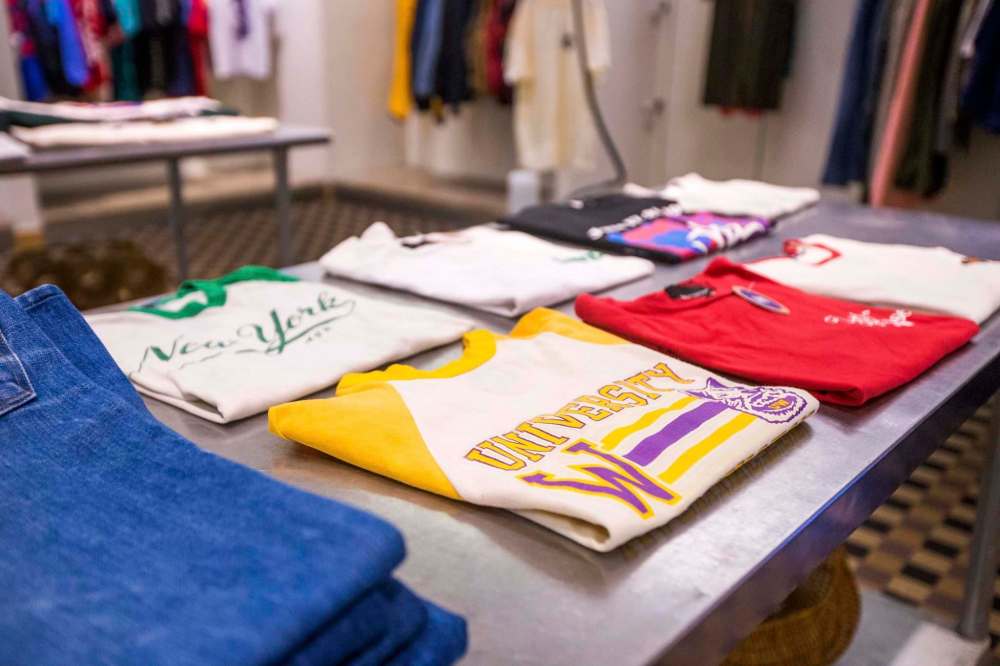
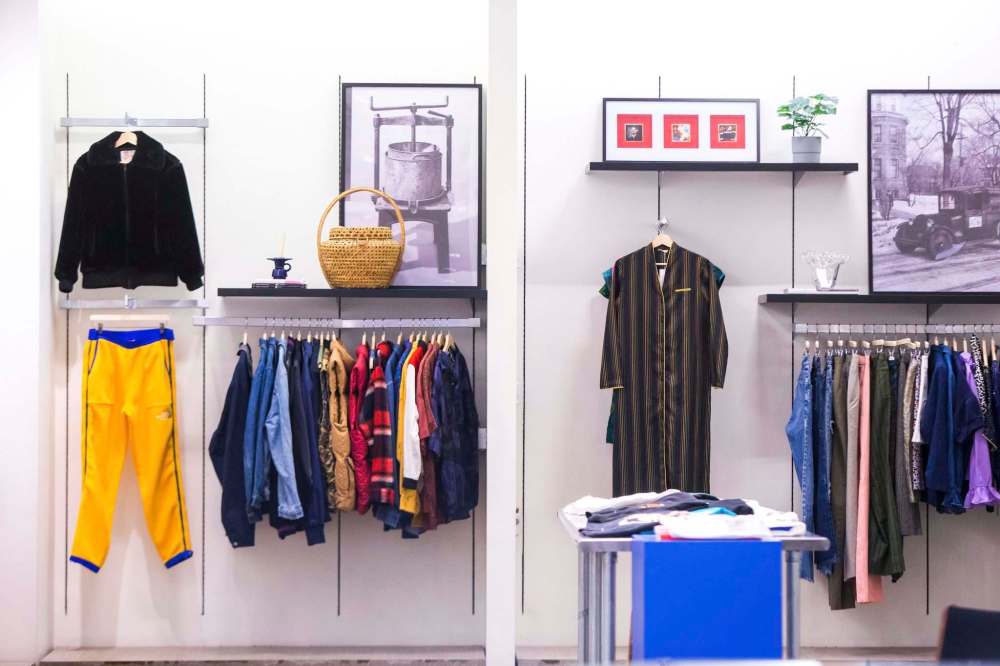
Crisp vintage jeans, deadstock Winnipeg Jets and Manitoba Moose crewnecks, a pristine, aged Winnipeg Jazz Festival T-shirt, Nike Air Max shoes, and a drip coffee bar: it’s not what a customer would typically expect to encounter beside the jewelry section on the main floor of the Polo Park Hudson’s Bay store.

Read this article for free:

or

Already have an account? Log in here »

To continue reading, please subscribe:

Subscribe and receive a limited-edition Free Press branded hat or tote.

Digital Subscription

One year of digital access for only $205*

  • Enjoy unlimited reading on winnipegfreepress.com
  • Read the E-Edition, our digital replica newspaper
  • Access News Break, our award-winning app
  • Play interactive puzzles

*First annual payment billed as $205.00 + GST for one year. This annual subscription will automatically renew at $233.00 + GST every 52 weeks (10% off the regular annual price of $259.35). Offer available to new and qualified returning subscribers only. Cancel any time.

To continue reading, please subscribe:

Add Free Press access to your Brandon Sun subscription for only an additional

$1 for the first 4 weeks*

  • Enjoy unlimited reading on winnipegfreepress.com
  • Read the E-Edition, our digital replica newspaper
  • Access News Break, our award-winning app
  • Play interactive puzzles
Start now

*Your next Brandon Sun subscription payment will increase by $1.00 and you will be charged $17.95 plus GST for four weeks. After four weeks, your payment will increase to $24.95 plus GST every four weeks.

Hey there, time traveller!
This article was published 18/10/2021 (1730 days ago), so information in it may no longer be current.

Crisp vintage jeans, deadstock Winnipeg Jets and Manitoba Moose crewnecks, a pristine, aged Winnipeg Jazz Festival T-shirt, Nike Air Max shoes, and a drip coffee bar: it’s not what a customer would typically expect to encounter beside the jewelry section on the main floor of the Polo Park Hudson’s Bay store.

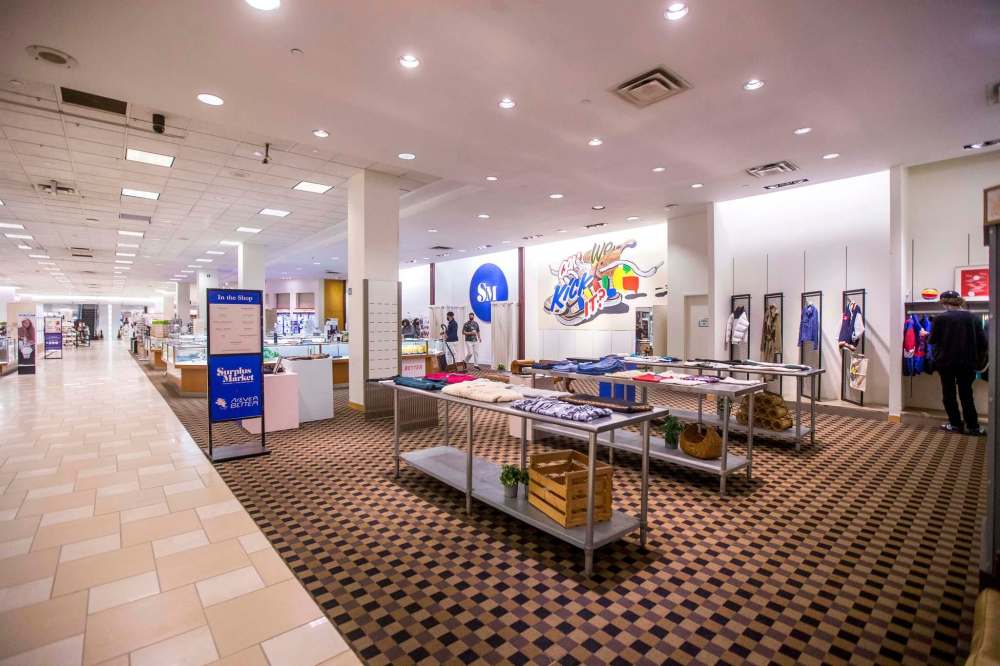
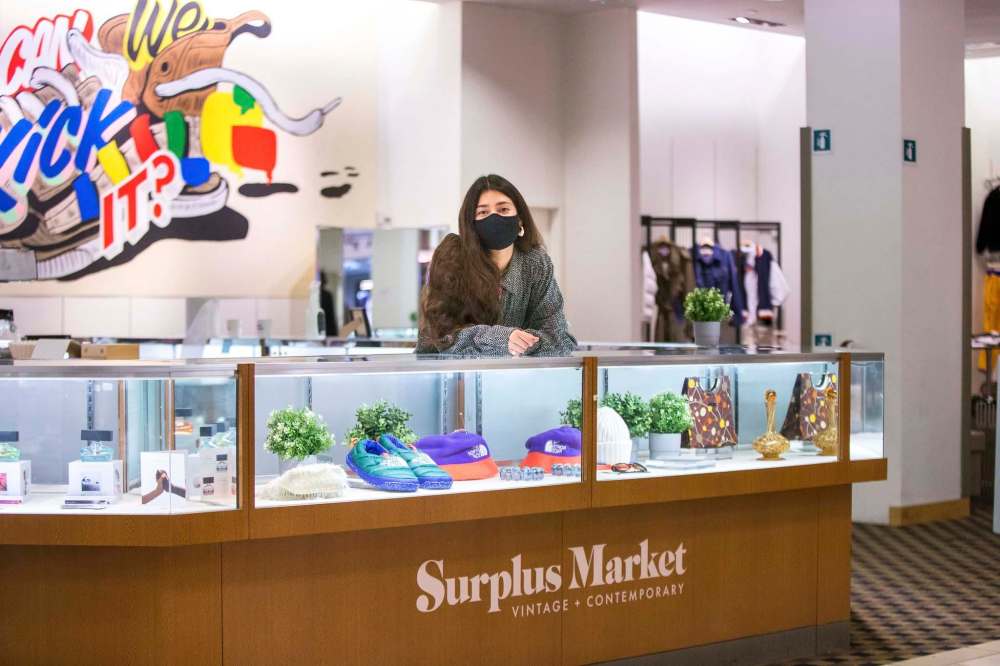
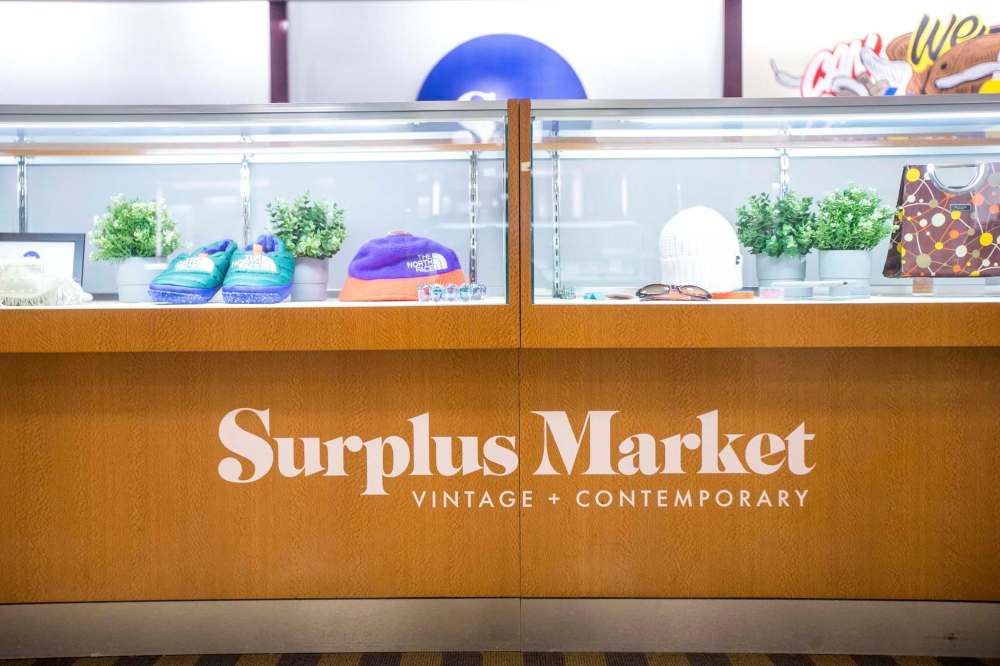
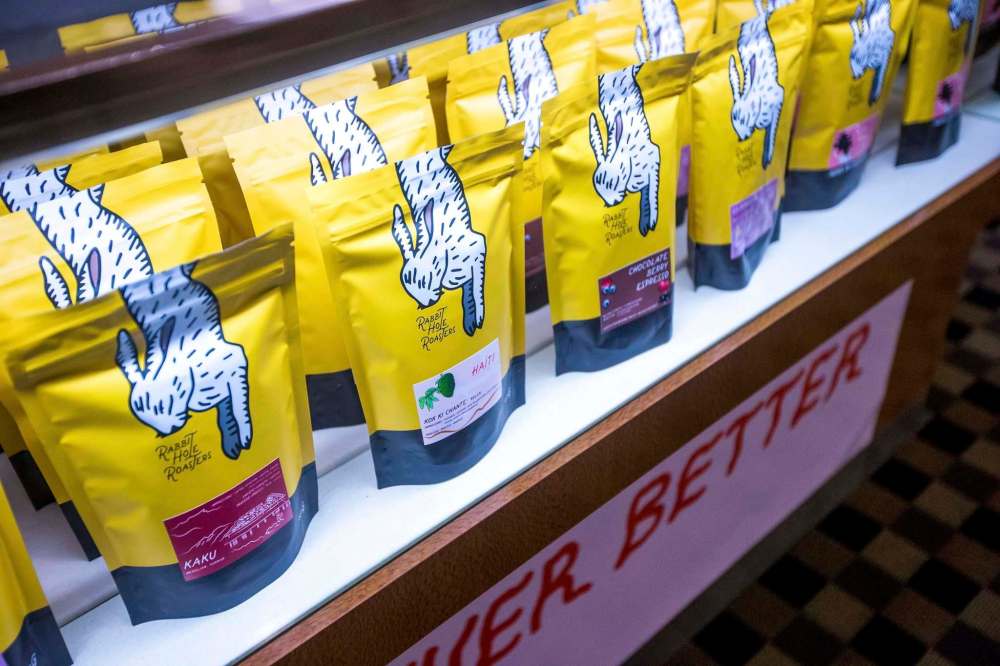
But it’s there, as part of Surplus Market’s latest collaboration with the country’s oldest brand, a store-within-a-store concept that opened Wednesday in a spot where until recently Tokyo Olympics gear was sold. In its place, goods from 11 vendors are up for sale, surrounding a display case that’s been repurposed as a café by local brand Never Better Coffee.

Not only is it the only vintage shop in the CF Polo Park shopping centre, but the only independent coffee station.
MIKAELA MACKENZIE / WINNIPEG FREE PRESS
‘We think it’s a new way forward for retailers,’ says Surplus Market manager Joanna Velasquez.
MIKAELA MACKENZIE / WINNIPEG FREE PRESS ‘We think it’s a new way forward for retailers,’ says Surplus Market manager Joanna Velasquez.

Prior to the pandemic, the Surplus Market, a project of local firm Grape Labs, ran successful pop-up markets at the downtown Bay, with lines snaking around the building and dozens of vendors setting up shop for the day in the iconic store. It was the kind of event where hundreds of people would pour in and stand shoulder to shoulder, connecting with fellow vintage and sneaker enthusiasts while jousting for position near rare or unique pieces.

A lot has changed since then: the downtown Bay has closed down, and the pandemic has accelerated a shift to digital shopping while making some customers wary of returning to shop in person. That’s left pop-up entrepreneurs having to reassess their approach and retailers searching for new ways to bring back the usual crowd, and then some.

“I wouldn’t normally be at the Bay at 10 a.m. on a Wednesday,” said 21-year-old Daniel Schoofs, who was perusing the rack of vintage sports shirts in an old Elton John tee and a Boston Red Sox cap. “No way.”

Nearby, the team behind the market — Grape Labs founders Anthony and Andrew Sannie, Kyle Goldstine and special projects manager Joanna Velasquez, and Never Better’s Jordan Cayer — were still getting set up as more shoppers walked in. Each visitor heard about the market on social media, and like Schoofs, wouldn’t exactly fit the Bay’s expected Wednesday morning clientele.

Velasquez, who graduated from Toronto’s George Brown College’s fashion management program and has years of retail experience, said endeavours like the Surplus Market at the Bay represent a shift for retailers and a way to tap into a growing portion of customers who are conscious of the environmental impacts of fast fashion.
MIKAELA MACKENZIE / WINNIPEG FREE PRESS
Opening-day visitors said they'd heard about the new shop on social media, which doesn't surprise Surplus Market's team.
MIKAELA MACKENZIE / WINNIPEG FREE PRESS Opening-day visitors said they'd heard about the new shop on social media, which doesn't surprise Surplus Market's team.

“We think it’s a new way forward for retailers,” says Velasquez.

Companies like Hudson’s Bay, which historically have had permanent fixtures for national or international brands, are also looking to take advantage of a growing desire on consumers’ part to shop from local and independent vendors.

At the Surplus Market, only local and Canadian vendors have their products available. Those vendors include those selling vintage and consigned clothing (Keepers Winnipeg, Shapes and Feelings, Lost N Found, Nuage Vintage, Vintage Garment Shop, Mother of Pearl Bazaar, and Vintage Goods MB), sneakers and streetwear (Bragging Rights, SLF) and jewelry (Au Naturale and Simpleries).

Also up for sale are fragrances from the newly launched local brand Piper & Perro, and soon the market will stock products made from palo — an incense-like wood — sourced by a Montreal company from Ecuador, and hand-poured candles made in Vancouver.

In 2019, according to Deloitte Canada, the country’s top malls experienced a 22 per cent decrease in foot traffic, a precipitous drop made worse by the pandemic. The firm’s 2020 report into the future of shopping malls found that nearly four in five consumers expected online shopping to increase in popularity, and that nearly two-thirds expected enclosed-mall shopping to wane in appeal.

MIKAELA MACKENZIE / WINNIPEG FREE PRESS
Vintage jeans and deadstock Winnipeg Jets crewnecks are not what many would expect to see in the Bay Polo Park. Which is exactly Surplus Market's point.
MIKAELA MACKENZIE / WINNIPEG FREE PRESS Vintage jeans and deadstock Winnipeg Jets crewnecks are not what many would expect to see in the Bay Polo Park. Which is exactly Surplus Market's point.

With that future in mind, large legacy retailers and small-scale ones needed to be nimble and ready to try new things, rather than holding out hope that pre-pandemic consumers would return in full swing.

In its report, Deloitte also presented five focuses for retailers, including four that the Surplus Market checks off: rethinking the store’s role, making way for food or drinks, embracing technology and becoming a destination through pop-ups, exhibitions, or more interactive experiences.

Overall, the shop-within-a-shop represents a stark departure from the typical mall-going experience, says Goldstine, one of the market’s co-founders, giving customers a boutique experience marked by thoughtful curation. What you see is what you get, and what you see are frequently one-of-one items: there aren’t other versions in the back.

That “rarity” helped drive the success of the market’s past pop-ups, he adds. “Everyone wants to be able to buy things that nobody else has,” he says. The bet is that with the permanent fixtures, both the Bay and the vendors will benefit from a similar level of enthusiasm from consumers.

About 25 minutes after the mall’s doors open, the first item is sold: a souvenir T-shirt from the last Winnipeg Jets game in 1996 before the original franchise became the expansion Phoenix Coyotes.
MIKAELA MACKENZIE / WINNIPEG FREE PRESS
Surplus Market's store-within-a-store concept, featuring goods from 11 vendors, opened Oct. 13 in the Bay Polo Park, in a spot where until recently Tokyo Olympics gear was sold.
MIKAELA MACKENZIE / WINNIPEG FREE PRESS Surplus Market's store-within-a-store concept, featuring goods from 11 vendors, opened Oct. 13 in the Bay Polo Park, in a spot where until recently Tokyo Olympics gear was sold.

A 25-year-old man bought the garment — which read “End of an Era” — for $40, a bargain in his eyes on the eve of the 2021 NHL season. Anthony Sannie rang up the sale, folded the shirt and handed it back in a Surplus Market branded bag.

“I’m rarely ever here, unless it’s Christmas,” the buyer said, gesturing around the store and the mall. “But they got me here today.”

ben.waldman@freepress.mb.ca
MIKAELA MACKENZIE / WINNIPEG FREE PRESS
In addition to fashion, the Surplus Market shop inside the Bay Polo Park includes a cafe featuring Never Better Coffee.
MIKAELA MACKENZIE / WINNIPEG FREE PRESS In addition to fashion, the Surplus Market shop inside the Bay Polo Park includes a cafe featuring Never Better Coffee.
MIKAELA MACKENZIE / WINNIPEG FREE PRESS
Surplus Market aims to give customers a boutique experience marked by thoughtful curation, frequently one-of-one items: there aren’t other versions in the back.
MIKAELA MACKENZIE / WINNIPEG FREE PRESS Surplus Market aims to give customers a boutique experience marked by thoughtful curation, frequently one-of-one items: there aren’t other versions in the back.
MIKAELA MACKENZIE / WINNIPEG FREE PRESS
Opening-day visitors said they'd heard about the new shop on social media, which doesn't surprise Surplus Market's team.
MIKAELA MACKENZIE / WINNIPEG FREE PRESS Opening-day visitors said they'd heard about the new shop on social media, which doesn't surprise Surplus Market's team.
Ben Waldman

Ben Waldman
Reporter

Ben Waldman is a National Newspaper Award-nominated reporter on the Arts & Life desk at the Free Press. Born and raised in Winnipeg, Ben completed three internships with the Free Press while earning his degree at Ryerson University’s (now Toronto Metropolitan University’s) School of Journalism before joining the newsroom full-time in 2019. Read more about Ben.

Every piece of reporting Ben produces is reviewed by an editing team before it is posted online or published in print — part of the Free Press‘s tradition, since 1872, of producing reliable independent journalism. Read more about Free Press’s history and mandate, and learn how our newsroom operates.

Our newsroom depends on a growing audience of readers to power our journalism. If you are not a paid reader, please consider becoming a subscriber.

Our newsroom depends on its audience of readers to power our journalism. Thank you for your support.

Report Error Submit a Tip

More Stories

Name-change sex abuser pleads guilty

Dean Pritchard 4 minute read Preview

Name-change sex abuser pleads guilty

Dean Pritchard 4 minute read 2:01 AM CDT

A convicted child sex predator who changed his name before going on to abuse another victim is now facing a likely 15-year prison sentence.

Ryan Knight, 44, pleaded guilty Monday morning to sexual interference and making child sexual abuse and exploitation material.

Knight remains in custody and is expected to be sentenced in the fall, when Crown and defence lawyers will jointly recommend the repeat offender serve 15 years in prison.

Knight, who was born Ryan Gabourie, has been in custody since last July when he was charged with sex crimes involving a 13-year-old boy.

Read
2:01 AM CDT

Community Review shuttered in local ad flyer delivery shift

Gabrielle Piché 5 minute read Yesterday at 8:48 PM CDT

The Free Press’s parent company is shuttering its weekly community paper and flyer distribution in what some expect to be a wave of closures to hit the Canadian newspaper industry.

As of July 24, the Free Press will no longer deliver flyer inserts to 200,000 Manitoba households and mark the last edition of the Free Press Community Review.

Layoffs are happening this week and next. FP Newspapers chief executive officer Mike Power didn’t provide a final number Monday, but said the layoffs will impact various departments.

The company’s other newspapers — Free Press, Brandon Sun and Carillon — will continue production as normal. Layoffs won’t impact those newsrooms.

Provincial independence means loss of portable health benefits

Charles S. Shaver 5 minute read Preview

Provincial independence means loss of portable health benefits

Charles S. Shaver 5 minute read 2:00 AM CDT

During the many decades that I practised internal medicine, at times I would warn patients about the potential adverse effects of medications or procedures. No one accused me of scare-mongering. Most thanked me for spending the time so that they could make an informed decision. Similarly, Albertans and Quebecers need a full discussion of all the risks of amputating themselves from Canada.

On Oct. 19, Albertans will vote on whether to have a referendum on independence. Also, if the Parti Québécois wins the early October election, Paul St-Pierre Plamondon has promised to hold a third referendum on Quebec independence, likely toward the end of his mandate. An Ipsos poll found that 15 to 18 per cent of Albertans were committed to separation. Meanwhile, CTV and Global polls found that 26 to 29 per cent of Quebecers favoured separation, a historic low. About 62 to 71 per cent rejected having a third referendum.

Alberta Premier Danielle Smith estimated that start-up costs would be about $400 billion. The Calgary Chamber of Commerce warned that Alberta would forego $10 to 15 billion in investment in the first year.

Few have mentioned the effects on access to health care within an independent province or elsewhere in Canada. A vote for independence would cause many physicians, nurses, and health professionals to flee, for they are quite mobile. CBC reported on June 27 that from October 2025 to June 2026, the College of Physicians and Surgeons in New Brunswick granted 47 licences and received 156 applications from Quebec physicians. Also, between late October and mid-November 2025, nearly 300 Quebec physicians applied to work in Ontario; over half were family physicians.

Read
2:00 AM CDT

If it works in Ontario, why not in Manitoba?

James Wilt 5 minute read Preview

If it works in Ontario, why not in Manitoba?

James Wilt 5 minute read Yesterday at 2:00 AM CDT

Grid-scale battery storage has fundamentally changed the global energy landscape — and Manitoba needs to get on board.

Battery systems store large amounts of excess electricity for when it’s most needed. While they can be charged from any generation source, they are especially beneficial for integrating wind and solar power, which vary with weather and time of day. Batteries allow electrical grids to meet the need for firm, dispatchable and affordable capacity using renewable energy, rather than relying on coal, nuclear and fossil gas. They also provide numerous other benefits, including reducing overloading of transmission infrastructure and helping to regulate the grid’s frequency and voltage.

Average costs for grid-scale batteries plummeted by more than half between 2023 and 2025 and installations have skyrocketed in China, the U.S., Australia and Europe. Texas now has 16,500 megawatts (MW) of battery storage, while California has 15,200 MW. Closer to home, Ontario recently awarded 640 MW of contracts to three battery storage projects in a competitive auction, with batteries beating out fossil gas-fired power plants on cost every time. One of these projects will be built near Dryden, only four hours east of Winnipeg.

Each battery system will provide eight hours of capacity but will cost considerably less than Ontario’s previous battery procurements, which provide only four hours of capacity. With this latest auction, Ontario has now secured 3,600 MW of battery storage capacity, including the operational Oneida (250 MW), Hagersville (300 MW) and Napanee (250 MW) projects. Almost all have significant Indigenous participation, with the latest procurements boasting 50 per cent First Nations ownership.

Read
Yesterday at 2:00 AM CDT

Structural flaws affect health-care performance

Alan H. Menkis 6 minute read Preview

Structural flaws affect health-care performance

Alan H. Menkis 6 minute read 2:00 AM CDT

The record is not background. It is the forecast.

Past performance is the best available indicator of future performance. That principle belongs to every field in which the conditions producing a result are more durable than the result itself.

It belongs equally to health system governance. When the structural conditions that produced failure remain intact, the failure is not a risk. It is a probability.

Manitoba’s cardiac care program has been examined repeatedly and formally reviewed twice by the profession’s own experts, separated by more than a decade.

Read
2:00 AM CDT

First-aid volunteers treat folk fest attendees suffering from heat

Eva Wasney and Jill Wilson 4 minute read Preview

First-aid volunteers treat folk fest attendees suffering from heat

Eva Wasney and Jill Wilson 4 minute read Sunday, Jul. 12, 2026

Shade was at a premium at Birds Hill Provincial Park over the weekend as Winnipeg Folk Festival goers tried to keep cool during an extreme heat wave.

Heat warnings were issued across southern Manitoba and temperatures peaked at 35 C Sunday afternoon.

First-aid volunteers were seen administering cold compresses to several overheated attendees. STARS air ambulance responded to a medical call at the park on Saturday night, but did not transport the patient to hospital. By Sunday at noon, EMS had been called to the festival nine times.

“This is not an unusual number of calls for us or other events of our size,” festival executive director Valerie Shantz said.

Read
Sunday, Jul. 12, 2026