The big picture
Past societies’ adaptations to changing climate offer valuable lessons today
Advertisement
Read this article for free:
or
Already have an account? Log in here »
To continue reading, please subscribe:

Digital Subscription
One year of digital access for only $205*
- Enjoy unlimited reading on winnipegfreepress.com
- Read the E-Edition, our digital replica newspaper
- Access News Break, our award-winning app
- Play interactive puzzles
*First annual payment billed as $205.00 + GST for one year. This annual subscription will automatically renew at $233.00 + GST every 52 weeks (10% off the regular annual price of $259.35). Offer available to new and qualified returning subscribers only. Cancel any time.
To continue reading, please subscribe:
Add Free Press access to your Brandon Sun subscription for only an additional
$1 for the first 4 weeks*
- Enjoy unlimited reading on winnipegfreepress.com
- Read the E-Edition, our digital replica newspaper
- Access News Break, our award-winning app
- Play interactive puzzles
*Your next Brandon Sun subscription payment will increase by $1.00 and you will be charged $17.95 plus GST for four weeks. After four weeks, your payment will increase to $24.95 plus GST every four weeks.
Read unlimited articles for free today:
or
Already have an account? Log in here »
Hey there, time traveller!
This article was published 13/11/2021 (1765 days ago), so information in it may no longer be current.
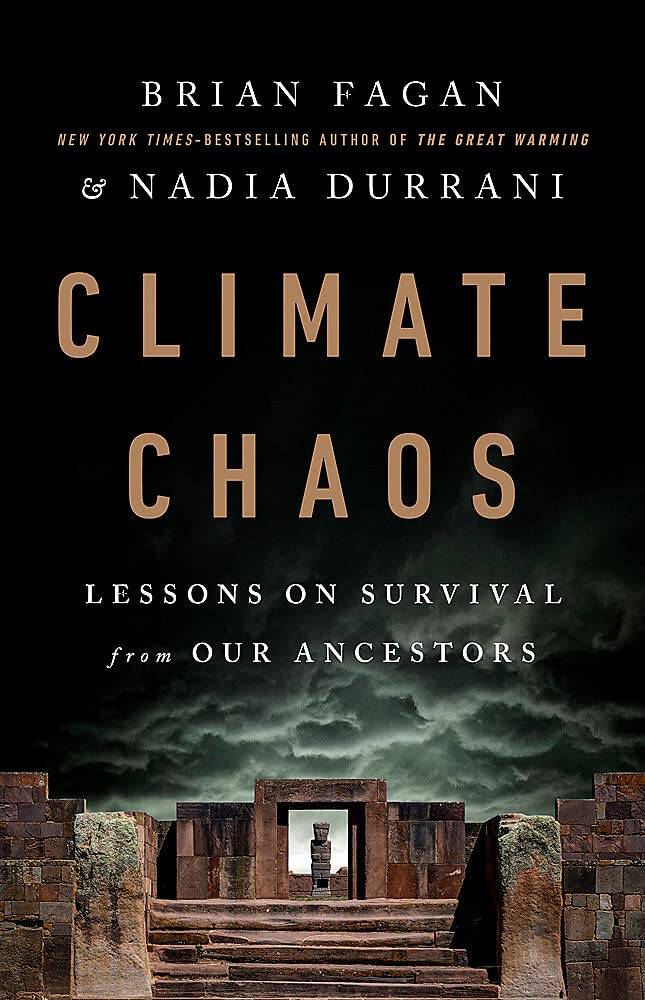
Brian Fagan and Nadia Durrani’s new book Climate Chaos sets out to do something incredibly interesting given the current state of our world — however, the task is also sensitive.
Fagan and Durrani, both archaeologists and professors who have written many books together, set out to examine the last 30,000 years of the Earth’s climatic history and consider what can be learned from the civilizations, empires and communities that came before us as the climate warms.
The obvious danger for the authors here is that their hard work and research could be co-opted by climate change deniers who refuse to recognize that though the Earth has undergone historical climatic shifts that occurred naturally, the current climatic shifts are scientifically proven to be a direct result of humans burning fossil fuels, and is occurring at a faster pace than nearly all climate shifts of the past.
Whereas most changes in the last 30,000 years took place over hundreds or thousands of years, today’s human-caused climate change is playing out over decades, which is having, and will continue to have, a substantial human cost.
Co-authors Fagan and Durrani recognize this danger right out of the gate. But they move forward in good faith as they set about weaving together the narratives of historical changes in the Earth’s climate with the corresponding shifts in governance structures, how humans organized amongst each other and how new ways of feeding people evolved over the millenia.
Natural shifts in climate shaped how societies past lived, worked and played — and these changes offer many instructional opportunities for how to adapt to the wholly unnatural climate changes and challenges we face now as a species.
The book really digs into the significance of different food systems, and how the benefits each offered to different segments of society. It also considers how socio-economic inequality was magnified in times of crisis.
“Long- or short-term climatic shifts never ‘caused’ an ancient civilization to collapse,” the authors say in the introduction. “Rather, they were a major player in fostering dangerous levels of ecological, economic, political, and social vulnerability in societies with authoritarian leadership blinkered by rigid ideologies.”
Fagan and Durrani succeed in highlighting the importance of including archeological research in the conversation as the world comes to terms with the current climate crisis, as some solutions and lessons have been learned by humans many times before. The work is also accessible and easily understood, however the information is still dense; Climate Chaos is far from a page turner.
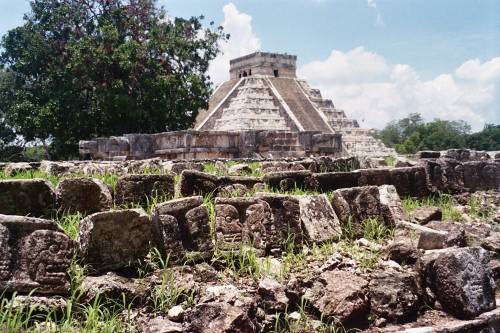
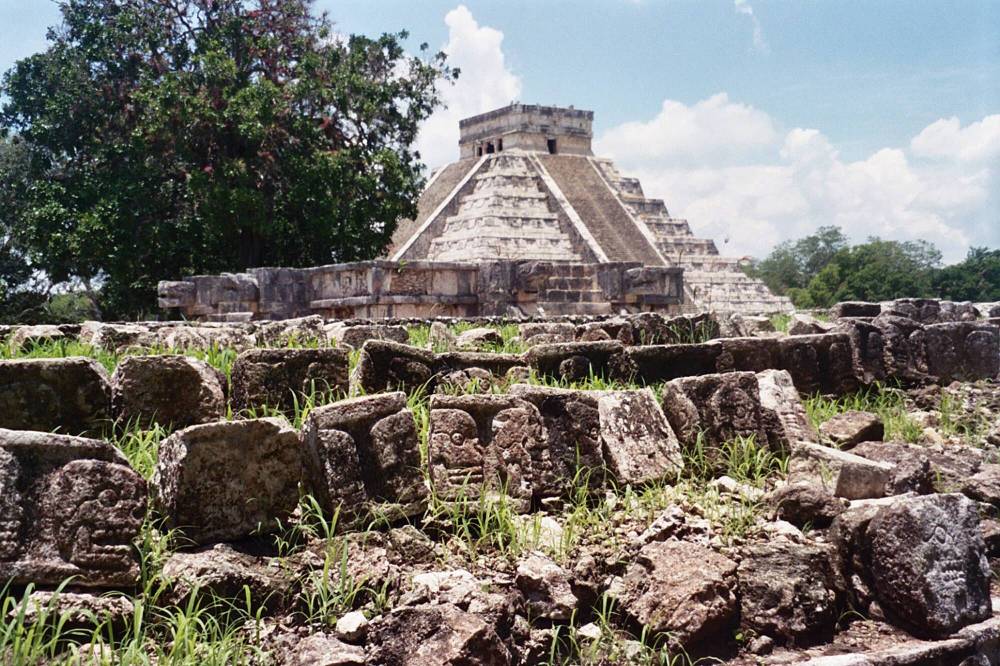
Readers can learn from from the successes and failures of pharaohs and Roman emperors to rise to the challenge of community adaptation, from the rise and fall of the Maya civilization, to how severe flooding and drought devastated Cambodia’s Angkor in the 14th century.
Fagan and Durrani explain how the Earth’s main climate systems and patterns have been altered over time and where today’s climate fits into the historical picture. The research demonstrates how humans have been forced to migrate all around the world to less harsh environments, and how adaptation has nearly always been driven by grassroots, local responses both to monitor and adapt to changes.
“We argue that there are important lessons to learn from traditional societies, ancient and still thriving,” the authors write.
Climate Chaos contributes a great deal of information to the climate change discourse that has been neglected from the mainstream, and is a welcome addition to bookshelves of those who are interested in the intricacies of how society can move forward against a monumental threat.
Sarah Lawrynuik is a freelance climate change reporter based in Winnipeg.