COP26 to accelerate climate action already underway in Canada, experts say

Advertisement

Advertise with us

The delegates are trickling home and Glasgow's streets are clearing of protesters.

Read this article for free:


By clicking the button above, an account will be created and you will begin to receive some of our recommended newsletters. You may opt out of any newsletter by visiting your Email and Communication Preferences page or by clicking "unsubscribe" at the bottom of any email.

or

Already have an account? Log in here »

To continue reading, please subscribe:

Digital Subscription

One year of digital access for only $1.44 a week*

  • Enjoy unlimited reading on winnipegfreepress.com
  • Read the E-Edition, our digital replica newspaper
  • Access News Break, our award-winning app
  • Play interactive puzzles

*Billed as $5.77 plus GST every four weeks. After 52 weeks, price increases to the regular rate of $19.95 plus GST every four weeks. Offer available to new and qualified returning subscribers only. Cancel any time.

To continue reading, please subscribe:

Add Free Press access to your Brandon Sun subscription for only an additional

$1 for the first 4 weeks*

  • Enjoy unlimited reading on winnipegfreepress.com
  • Read the E-Edition, our digital replica newspaper
  • Access News Break, our award-winning app
  • Play interactive puzzles
Start now

*Your next Brandon Sun subscription payment will increase by $1.00 and you will be charged $17.95 plus GST for four weeks. After four weeks, your payment will increase to $24.95 plus GST every four weeks.

Hey there, time traveller!
This article was published 13/11/2021 (1805 days ago), so information in it may no longer be current.

The delegates are trickling home and Glasgow’s streets are clearing of protesters.

Now, experts say, the real work begins of putting meat and bone to the pledges and commitments made by world leaders to keep global warming below catastrophic levels.

“The next couple years are going to be the most important, fastest-moving period of carbon reduction in Canadian history,” said Rick Smith, president of the Canadian Institute for Climate Choices.

People start to gather near the Action Zone inside the venue of the COP26 U.N. Climate Summit in Glasgow, Scotland, Friday, Nov. 12, 2021. THE CANADIAN PRESS/AP, Alastair Grant

With the UN-sponsored COP26 climate conference coming to an end, the federal government has to put some specifics behind promises. Business leaders are looking for details on everything from when the commitment to cap fossil fuel emissions will kick in to regulations on methane releases to tax credits for carbon storage.

“At the end of the day, it comes back to how you translate those targets into policy in Canada,” said John Dillon of the Business Council of Canada.

Dillon said he expects the climate discussion to broaden after Glasgow to include sectors such as construction, agriculture — even the military.

“The military produces a lot of GHG emissions.”

How quickly those promises are implemented and how deeply they’ll bite will be heated debating points.

“It takes time to adopt new technologies,” said Jack Mintz, President’s Fellow of the School of Public Policy at the University of Calgary.

“The big question for Canada is how fast do you drive down fossil fuel investment in order to encourage more investment in renewables, without creating a lot of harm and cost. I don’t think we have a very satisfactory answer.”

Different countries will have to agree on which approaches they’ll take, Mintz said. Germany, for example, isn’t keen on hydrogen fuels made from natural gas while Canadian producers are.

But make no mistake, action is coming, said Mark Jaccard, an energy economist at Simon Fraser University. He said the recent federal election, in which a solid majority of Canadians voted for parties with strong climate policies, has given the federal Liberals a strong mandate to move.

“It’s a perfect time to go fast,” he said.

“I know there is going to be huge discussions inside government of how you actually do that. (But) you should see stuff pretty quickly here.”

Shane Moffatt of Greenpeace agreed the federal Liberals have a green light to go green — but he warned climate activists will have to keep working to ensure actual policy emerges.

“One of the biggest outcomes from this COP is the sense of expectation and the momentum for more action now,” he said. “There is lots of public support but connecting that public support with real policy changes is sometimes elusive.”

He notes Canadians broadly support conservation, but creating new protected areas remains slow work.

As well, large international questions remain. For example, some sort of global trading system for carbon offsets to allow a country to get credits for helping another country reduce emissions hasn’t gone much further than Prime Minister Justin Trudeau’s suggestion that it would be a good idea.

Dillon said many companies aren’t waiting for governments and are moving ahead on their own. But they can only do so much on their own.

“Some of the big, big investments will require more clarity from government,” he said.

Stand by, Smith suggested.

“Glasgow lands right in the middle of this period of intense activity in Canada to finally put the pedal to the metal. It’s going to accelerate what was going on already.”

This report by The Canadian Press was first published Nov. 13, 2021.

— Follow Bob Weber on Twitter at @row 1960.

Report Error Submit a Tip

More Stories

Alberta sees its way through the fog

Editorial 4 minute read Preview

Alberta sees its way through the fog

Editorial 4 minute read 2:01 AM CDT

The Alberta separatists were not what they seemed. To be more exact, the doom prophesiers were not what they seemed. They pretended that Alberta separation was a real threat, and they rode that pony to personal aggrandizement and internet fame — and perhaps to some sort of personal gain as well.

Read
2:01 AM CDT

WAG-Qaumajuq names first Indigenous director, CEO

Jen Zoratti 4 minute read Preview

WAG-Qaumajuq names first Indigenous director, CEO

Jen Zoratti 4 minute read Yesterday at 5:16 PM CDT

John Mahli Lawa’ Hampton has been selected to take the helm of Canada’s oldest civic art gallery, WAG-Qaumajuq announced Thursday.

Read
Yesterday at 5:16 PM CDT

Don’t let good health reforms fade or fossilize

Alan Menkis 5 minute read 2:00 AM CDT

When Canada’s health ministers left Winnipeg on Oct. 16, they took with them a promise to keep talking. The federal health minister did not commit to long-term funding. She offered one-year extensions for programs that were about to run out, and asked officials to begin work on “the next 10 years.”

The provinces, in the words of Manitoba Health Minister Uzoma Asagwara, wanted to avoid “fiscal cliffs” and needed “predictable, stable, sustainable funding.”

Both sides have a point. And both are talking almost entirely about money — how much, for how long, under what formula.

Missing from the conversation is the question that decides whether any of it works — once the money flows, who must answer for what it does, or does not, achieve? We have been here before. In 2002, a Senate committee chaired by Michael Kirby warned that new federal money “must be used to buy change, not merely to support the system as it is presently structured.” It proposed an independent national health care commissioner, reporting every year to the public on how the system and the health of Canadians were faring.

Family history, solo sojourns paved path for celebrated author’s latest novel

Ben Sigurdson 7 minute read Preview

Family history, solo sojourns paved path for celebrated author’s latest novel

Ben Sigurdson 7 minute read 2:01 AM CDT

It’s 1967 and Lee Clarke has just been kicked out of UCLA when he receives his draft letter in the mail. Rather than report for basic training, he hops in a car and sets off across America on an amphetamine-fuelled road trip to bid farewell to his fractured, dysfunctional family before crossing the border into Canada.

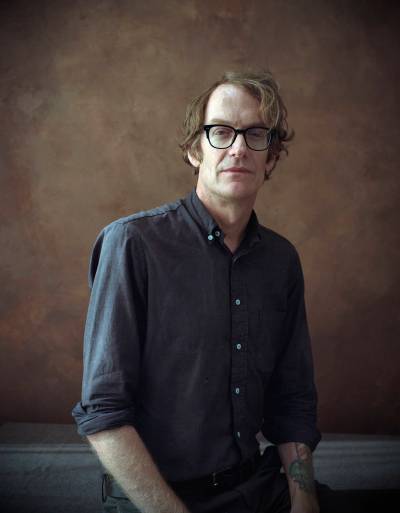
Such is the premise for B.C.-born, Portland-based Patrick deWitt’s sixth novel Dodge City, published in September by House of Anansi. He’s in Winnipeg tonight at McNally Robinson Booksellers’ Grant Park location to launch the book.

The 51-year-old deWitt came to prominence with his sophomore novel, 2011’s The Sisters Brothers. The book was a critical and commercial success, winning the author the Governor General’s Literary Award for Fiction, the Rogers Writers’ Trust Fiction Prize and the Stephen Leacock Medal for Humour, and was adapted for the big screen in a film starring John C. Reilly and Joaquin Phoenix.

His 2018 novel French Exit was also adapted for cinema, and his 2023 novel The Librarianist won deWitt the Leacock Medal for the second time. Dodge City is deWitt’s fourth novel to make the Giller Prize long list.

Read
2:01 AM CDT

Reynolds exerts ‘maximum effort’ to boost Winnipeg after quick meet with mayor

Gabrielle Piché 3 minute read Preview

Reynolds exerts ‘maximum effort’ to boost Winnipeg after quick meet with mayor

Gabrielle Piché 3 minute read Updated: Yesterday at 8:13 PM CDT

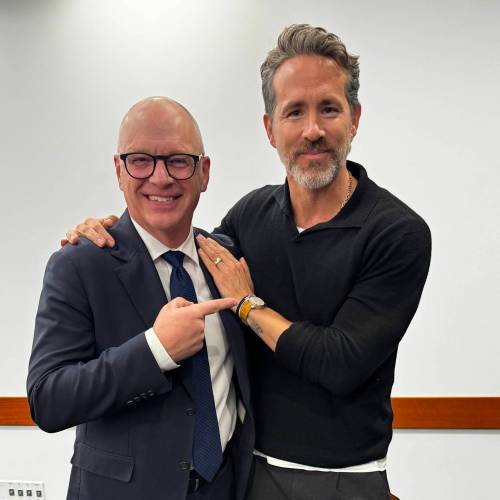
Ryan Reynolds wasn’t wearing his Deadpool suit, but that didn’t stop Mayor Scott Gillingham from wanting to talk about films with the Vancouver-born Hollywood movie star.

Reynolds, who appeared at IG Wealth Management's 100th anniversary celebration Wednesday at the RBC Convention Centre, took to social media afterward, sharing a photo of himself with Gillingham and trumpeting the province’s tax incentives.

“An incredible place to shoot,” the Instagram post read.

On Thursday, Gillingham said the actor, best known for portraying an irreverent, erratic anti-hero on the big screen, is a “really nice gentleman.”

Read
Updated: Yesterday at 8:13 PM CDT

Rocky Horror star prepared for a rude reception in all the best ways

Conrad Sweatman 5 minute read Preview

Rocky Horror star prepared for a rude reception in all the best ways

Conrad Sweatman 5 minute read 2:01 AM CDT

While it enjoys the longest theatrical release of any movie in history, The Rocky Horror Picture Show was all but ignored by critics when its revolutionary brand of camp first hit silver screens in 1975.

And before it whipped up a cult following, Rocky was a fringe theatre hit in London whose first run’s final night — which had attracted such luminaries as Mick and Bianca Jagger — was derailed by an unlikely culprit: glitter. According to the late Tim Curry (who died at 80 in August), the shiny stuff ended up where the sun don’t shine.

“Well, Rocky got some glitter down his trunks and it set up an irritation. When we arrived at the theatre, he was standing in the shower and the show couldn’t go on,” he told the press in 1974, after crossing the Atlantic to lead the show’s American theatre debut.

Glitter is one of the things audiences may not throw at the stage at The Rocky Horror Picture Show screening tonight at the Centennial Concert Hall. Unlike in the anarchic midnight screenings at the New York’s Waverly Theater beginning in 1976, where audiences chucked everything but the kitchen sink, a prop bag will be courteously supplied at the door.

Read
2:01 AM CDT